
 Worksheets
Energy
Total questions: 37
Worksheet time: 25mins
Name
Class
Date
1.
What is potential energy?
a)
The energy of motion
b)
A combination of two types of energy
c)
Stored energy
d)
How far something goes in a specific time
2.
What is kinetic energy?
a)
The energy of motion
b)
A combination of two types of energy
c)
Stored energy
d)
How far something goes in a specific time
3.
Energy makes everything happen in the universe.
a)
True
b)
False
4.
A roller coaster has both kinetic and potential energy.
a)
True
b)
False
5.
Energy can be classified into two main categories, kinetic energy and potential energy. Kinetic energy is when an object is:
a)
standing still
b)
actively doing something
c)
changing states of matter
d)
objects do not have kinetic energy
6.

A moving skateboard
a)
Potential
b)
Kinetic
7.
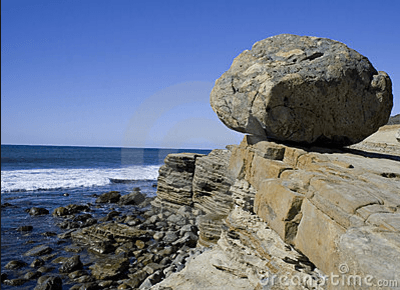
A rock at the edge of a cliff.
a)
Potential
b)
Kinetic
8.
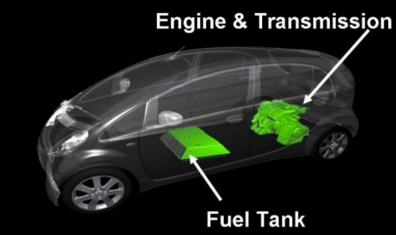
Gasoline in a car tank (car is not on).
a)
Potential
b)
Kinetic
9.

A basketball passing through the hoop.
a)
Potential
b)
Kinetic
10.

A waving hand.
a)
Potential
b)
Kinetic
11.
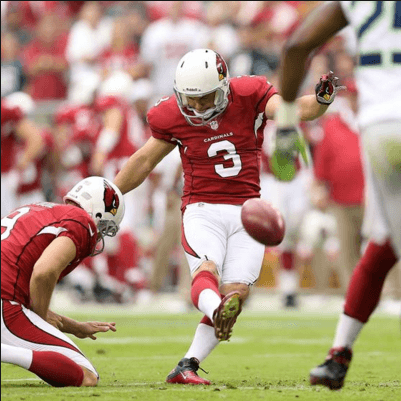
A foot kicking a football.
a)
Potential
b)
Kinetic
12.
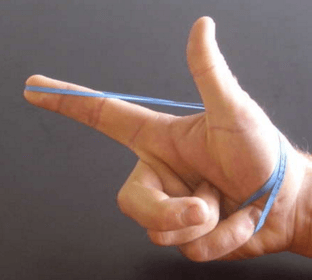
A stretched rubber band.
a)
Potential
b)
Kinetic
13.
According to the Law of Conservation of Energy, energy cannot be _________ or ____________.
a)
destroyed, destroyed
b)
created, saved
c)
created, destroyed
d)
lost, found
14.
Energy cannot be destroyed.
a)
True
b)
False
15.
Imagine dropping a basketball. When would it have the most gravitational potential energy?
a)
When it is closest to the ground
b)
When it is at the highest point
c)
When it is halfway down
d)
It has the same amount of gravitational PE at all points
16.

On a roller coaster, where is maximum potential energy?
a)
At the bottom of a big hill
b)
When going around a corner
c)
When going upside down
d)
At the top of a big hill
17.
Energy due to motion is ____________ energy.
a)
Potential
b)
Energy
c)
Kinetic
d)
Friction
18.

On a roller coaster, where is maximum kinetic energy?
a)
At the bottom of a big hill
b)
When going around a corner
c)
When going upside down
d)
At the top of a big hill
19.

When the cart started rolling the energy transformation was ______.
a)
Potential to kinetic
b)
Kinetic to potential
c)
No energy was transformed
d)
Totally awesome dude!!!!!!
20.
Gravitational potential energy depends on the ________ and ________ of the object.
a)
Height and mass
b)
Friction and movement
c)
Mass and Movement
d)
Height and Friction
21.
____________ is the ability to cause change.
a)
Energy
b)
Force
c)
Friction
d)
Motion
22.
The faster an object moves, the ________ kinetic energy it has.
a)
more
b)
less
c)
none of the above
d)
all of the above
23.
When you are holding a book, energy is stored between the book and Earth; this type of energy is called ________ potential energy.
a)
Kinetic
b)
Elastic
c)
Gravitional
d)
Chemical
24.
If you held a feather and textbook above you head, which has more potential energy?
a)
feather
b)
textbook
c)
they are the same
25.
A bear and a cat are running at the same speed, which has more kinetic energy?
a)
bear
b)
cat
c)
they are the same
26.
Kinetic energy depends on....
a)
mass, energy
b)
mass, height
c)
height, speed
d)
speed, mass
27.
When you eat food the energy from the food is...
a)
lost
b)
disappears
c)
transfers to you
d)
changes
28.
An experiment is performed on plants to see how different liquids affect plant growth. Each plant in the experiment is given a different liquid; water, apple juice, or milk. Each plant has the same amount of soil, sunlight, and listens to the same music. In this investigation, the independent variable is ...
a)
The type of plant
b)
The amount of sunlight
c)
The type of music
d)
The type of liquid
29.
An experiment is performed on plants to see how different liquids affect plant growth. Each plant in the experiment is given a different liquid; water, apple juice, or milk. Each plant has the same amount of soil, sunlight, and listens to the same music. In this investigation, what are the controlled variables?
a)
Type of plant, amount of music, and sunlight
b)
Water, apple juice, milk
c)
Plant growth
30.
An experiment is performed on plants to see how different liquids affect plant growth. Each plant in the experiment is given a different liquid; water, apple juice, or milk. Each plant has the same amount of soil, sunlight, and listens to the same music. In this investigation, what is the dependent variable?
a)
Type of plant
b)
Water, apple juice, milk
c)
Plant growth
31.
A student is planning an experiment to find out how the height from which he drops a ball affects how high the ball bounces. The dependent variable is the _____.
a)
Diameter of the ball
b)
Force acting on the ball
c)
Height that the ball bounces
d)
Height from which the ball is dropped
32.
A student is planning an experiment to find out how the height from which he drops a ball affects how high the ball bounces. What is the control variable?
a)
The ball used
b)
The height the ball bounces
c)
Height of the ball being dropped
33.
Mr. S set up an experiment to see how the mass of a ball affects the distance it rolls off a ramp. What is the controlled variable?
a)
Distance traveled by the ball
b)
Height of the ramp
c)
Mass of the ball
34.
Mr. S set up an experiment to see how the mass of a ball affects the distance it rolls off a ramp. What is the dependent variable?
a)
Distance traveled by the ball
b)
Height of the ramp
c)
Mass of the ball
35.
Mr. S set up an experiment to see how the mass of a ball affects the distance it rolls off a ramp. Identify the independent variable.
a)
Distance traveled by the ball
b)
Height of the ramp
c)
Mass of the ball
36.
What is the independent variable
a)
what you measure
b)
what you change/test
c)
stays the same
37.
What is the dependent variable
a)
what your measure
b)
what you change/test
c)
stays the same
100 %

