
 Worksheets
Food Chain/Web
Total questions: 33
Worksheet time: 21mins
Name
Class
Date
1.

What is the source of energy for food chains/food webs?
a)
The sun
b)
producers
c)
decomposers
d)
water
2.

Which role do plants/phytoplankton play in the flow of energy in a habitat?
a)
Consumers
b)
Omnivores
c)
Herbivores
d)
Producers
3.

What would happen to the amount of plants in the world if herbivores became extinct?
a)
Nothing
b)
Increase
c)
Decrease
d)
Stay the same.
4.

Which type of consumer gets their energy from plants.
a)
Vegetarian.
b)
Herbivore
c)
Omnivore
d)
Carnivore
5.

What is a producer?
a)
Organisms that make their own food
b)
Organisms that eat other organisms for energy
c)
organisms that break down dead organisms
d)
organism that makes you food
6.

What is a consumer?
a)
An organism that makes it's own food
b)
An organisms that eats other organisms for energy
c)
An organism that breaks down dead organisms
d)
An organism that spends money
7.

What is a food chain?
a)
A chain that shows the flow of energy
b)
A triangle that shows trophic levels
c)
A chain used in fishing
d)
A web that shows different possible food chains
8.

What is pictured in the diagram?
a)
A food web
b)
A food chain
c)
An energy pyramid
d)
illuminati
9.
What organisms are at the bottom of an energy pyramid?
a)
Producer
b)
Consumer
c)
Decomposer
d)
Scavenger
10.
How much energy is passed on to each trophic level in an energy pyramid?
a)
10%
b)
90%
c)
50%
d)
80%
11.
Which organisms have the most available energy in an energy pyramid?
a)
Producer
b)
Consumer
c)
Decomposer
d)
Scavenger
12.
What is biodiversity?
a)
When there is a variety of organisms in an area
b)
When there are NOT a variety of different organisms in an area
13.

Where do crickets get their energy?
a)
Cattails
b)
Marsh Grass
c)
Grasshoppers
d)
Shrews
14.
What is an example of a decomposer?
a)
Plum
b)
Mushroom
c)
Deer
d)
Bird
15.

What is indicated by the diagram?
a)
Food web
b)
Food chain
c)
Food map
d)
Food menu
16.
What do the arrows indicate in a food web?
a)
What eats what
b)
Where the energy is being transferred
c)
How the animals are related
17.
Which would be the appropriate term for an organism that eats a producer?
a)
scavenger
b)
decomposer
c)
secondary consumer
d)
primary consumer
18.

In this food web, which two organisms could be harmed if the mouse population were to decrease?
a)
Deer and caterpillar
b)
Wolf and snake
c)
Oak and grass
d)
Hawk and songbird
19.
Food chains include all of the following except
a)
Consumers
b)
Decomposers
c)
Ecosystems
d)
Producers
20.

If 25,000 kg of vegetation is planted in this ecosystem, how would the lion population change?
a)
Decrease by 2,500 kg
b)
Decrease by 25,000 kg
c)
Increase by 250 kg
d)
Increase by 250,000
21.
In an ecosystem, beetles eat grain, and lizards eat the beetles. Which statement is true?
a)
Beetles are carnivores.
b)
Beetles are producers.
c)
Lizards are decomposers.
d)
Lizards are consumers.
22.
When humans burn fossil fuels, most of the carbon quickly enters the as carbon dioxide.
a)
Water
b)
Atmosphere
c)
Sun
d)
Air
23.
Which one of these does not add CO2 to the atmosphere?
a)
cooking with gas
b)
planting trees
c)
burning wood
d)
riding in a bus
24.
Combustion is another word for _______________.
a)
a train
b)
a bus
c)
a dog
d)
burning
25.
What does not produce carbon dioxide?
a)
Photosynthesis
b)
Burning Fossil Fuels
c)
Animal respiration
d)
Plants decaying
26.
How do living organisms return carbon to the atmosphere in the carbon cycle?
a)
respiration and photosynthesis
b)
decomposition and respiration
27.

In the carbon cycle, producers take in the gas __
a)
carbon dioxide
b)
oxygen
c)
nitrogen
d)
carbon monoxide
28.
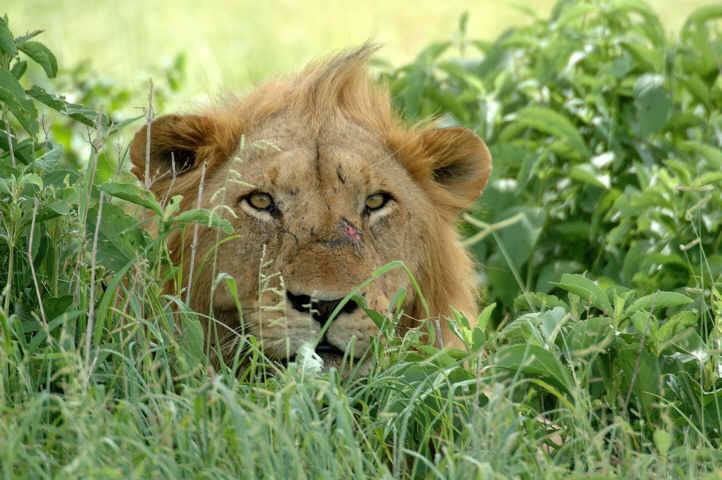
How does the carbon in grass become part of a lion?
a)
The lion eats the grass
b)
Carbon from grass doesn't end up in a lion.
c)
The carbon ends up in the lion's food chain.
d)
The lion breathes in carbon given out by the plant
29.
All of the carbon in existence is continually recycled in the carbon cycle
a)
True
b)
False
30.
Organisms that do not decompose can be buried and become what?
a)
water
b)
nutrients
c)
air
d)
fossil fuels
31.
If the plant population decreased, the amount of carbon would _________.
a)
Stay the same
b)
Increase
c)
Decrease
32.
Why is the ocean important to the carbon cycle?
a)
It keeps sediment containing carbon underwater for millions of years
b)
The ocean gives out more carbon then it takes in (increases global warming)
c)
The ocean isn't important to the carbon cycle.
33.
Carbon can be found in...?
a)
The atmosphere
b)
Inside of the Earth
c)
Fossil fuels
d)
All of the above!
100 %

