
 Worksheets
Energy Review
Total questions: 60
Worksheet time: 52mins
Name
Class
Date
1.
The temperature of a substance increases as___.
a)
the substance expands
b)
the average kinetic energy of its particles increases
c)
the substance's volume increases
d)
the substance's mass increases
2.
If the particles of two substances have the same average kinetic energy, then___.
a)
the specific heats of the substances are identical
b)
the particles will not react chemically
c)
the substances have equal thermal energies
d)
the substances have equal temperatures
3.
In which state do particles move fastest and with little effect on each other?
a)
ice
b)
gas
c)
liquid
d)
solid
4.
If the particles in an object have more kinetic energy, what must be true?
a)
The object's temperature is lower
b)
The object's temperature is higher
c)
The object moves faster
d)
The object is heavier
5.
Heat is thermal energy that flows between objects that differ in___.
a)
temperature
b)
radiation
c)
thermal energy
d)
specific heat
6.
The total kinetic energy of a substance's particles
a)
thermal energy
b)
heat
c)
convection
d)
conduction
7.
The energy transferred between objects at different temperatures
a)
heat
b)
thermal energy
c)
radiation
d)
convection
8.
Thermal energy that flows between an object at a higher temperature to an object at a lower temperature
a)
heat
b)
thermal expansion
c)
insulation
d)
specific heat
9.

The molecules of a liquid vs. a gas...
a)
Move slower in a gas.
b)
Move slower in a liquid.
10.

If you put a burger on the grill...
a)
It's particles will speed up.
b)
It's particles will slow down.
11.

If you place some Gatorade in a cooler with ice...
a)
It's particles will speed up.
b)
It's particles will slow down.
12.

After you bake cookies, you place them on the counter to...
a)
Slow the particles down.
b)
Speed the particles up.
13.

Water with energy removed will....
a)
Warm the water.
b)
Cool the water.
14.

Removing energy from a gas will eventually make a _______.
a)
Solid
b)
Liquid
15.

The main job of a refrigerator is to....
a)
remove energy.
b)
add energy.
16.
Energy due to motion is ____________ energy.
a)
Potential
b)
Energy
c)
Kinetic
d)
Friction
17.
The faster an object moves, the ________ kinetic energy it has.
a)
more
b)
less
c)
none of the above
d)
all of the above
18.
__________ is stored energy.
a)
Potential
b)
Kinetic
c)
None of the above
d)
All of the above
19.
Energy can be _____________ or changed from one type to another.
a)
destroyed
b)
transferred
c)
created
d)
ignored
20.

What kind of energy is in a rock at the edge of a cliff?
a)
Potential
b)
Kinetic
21.

What kind of energy does this device use?
a)
Chemical
b)
Electrical
c)
Mechanical
d)
Nuclear
22.

When you stretch a rubber band, you are storing __________ energy.
a)
kinetic
b)
potential
c)
none of the above
d)
all of the above
23.

A battery converts what type of energy to another?
a)
sound to kinetic
b)
light to heat
c)
mechanical to electrical
d)
chemical to electrical
24.

What kind of energy is represented in this picture?
a)
Thermal
b)
Potential
c)
Nuclear
d)
Mechanical
25.
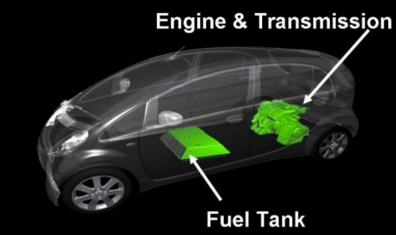
Gasoline in a car tank (car is not on).
a)
Potential
b)
Kinetic
26.
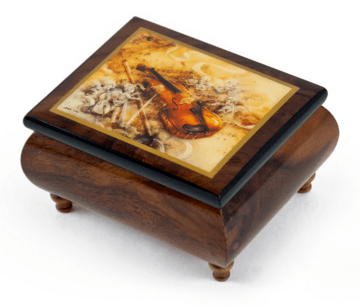
A wound up music box that is closed.
a)
Potential
b)
Kinetic
27.

Which would be greater at Position 2?
a)
Potential Energy
b)
Kinetic Energy
28.

At which position would potential energy be greatest?
a)
W
b)
X
c)
Y
d)
Z
29.
____________ is the ability to cause change.
a)
Force
b)
Motion
c)
Energy
d)
Waves
30.
Gravitational potential energy depends on the ________ and ________ of the object.
a)
Height and mass
b)
Friction and movement
c)
Mass and Movement
d)
Height and Friction
31.
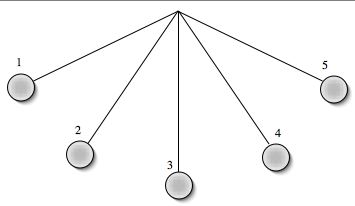
When a pendulum swings, at which point is kinetic energy highest?
a)
1
b)
2
c)
3
d)
4
32.
Energy can be _____________ or changed from one type to another.
a)
destroyed
b)
transferred
c)
created
d)
ignored
33.
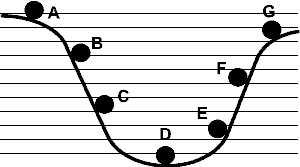
Which point has the most potential energy?
a)
G
b)
f
c)
b
d)
a
34.
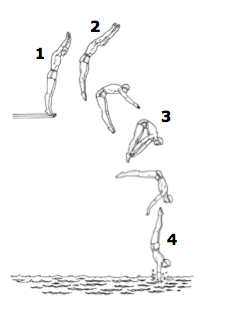
2. The diagram to the right represents a diver’s motion from the top of a high diving board into a pool of water. At what point does the diver have the greatest kinetic energy and the least potential energy?
a)
1
b)
2
c)
3
d)
4
35.
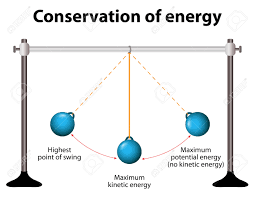
Conservation of energy states that energy cannot be ________ or ________, but can be altered from one form to another.
a)
created, destryoed
b)
gravity, force
c)
heat, created
36.
The
law of conservation of energy describes how the amount of total energy can
change in a closed system. Which of these statements correctly describes this
law?
a)
The amount of kinetic energy in a system is a constant
value.
b)
Energy can be converted from one form into another, but
it cannot be created or destroyed.
c)
An object can have potential energy or kinetic energy,
but not both at the same time.
d)
The amount of energy created when an object moves is
equal to the energy destroyed when it stops moving.
37.
Matt
and Kim use bowling balls with different masses. If they both roll their
bowling balls at exactly the same speed, which statement is true?
a)
There is not enough information to compare the kinetic
energies.
b)
The bowling ball with more mass has more kinetic energy.
c)
The bowling ball with less mass has more kinetic energy.
d)
The kinetic energies of the two bowling balls are the
same.
38.

Where is potential energy converting to kinetic energy
a)
D-G
b)
C-F
c)
A-D
d)
A-G
39.

The glow sticks produce light for a short amount of time. The light from the glow stick is a conversion from what to what?
a)
thermal to light
b)
gravitational to potential
c)
radiant to electrical
d)
chemical to light
40.
Which type of energy can cross space (a vacuum)?
a)
Nuclear
b)
Thermal
c)
Radiant
d)
Convection
41.

You serve a volley ball with a mass of 2.1 kg. The ball leaves your hand with a speed of 30 m/s. Calculate the ball's kinetic energy.
a)
1890 J
b)
3780 J
c)
945 J
d)
31.5 J
42.
When plants convert the sun's energy into food, which type of energy is it?
a)
kinetic
b)
chemical
c)
thermal
d)
radiant
43.

A cheetah can run briefly with a speed of 31 m/s. Suppose a cheetah with a mass of 47 kg runs at this speed. What is the cheetah’s kinetic energy?
a)
22583.5 J
b)
728.5 J
c)
1457 J
d)
0.75 J
44.
Water has a specific heat of 4,184 J/KgºC. Wood has a specific heat of 1,760 J/KgºC. Which material requires more energy to raise the temperature 1ºC?
a)
Wood
b)
Water
c)
Both are the same
45.
How does heat flow?
a)
Always from cold to warm
b)
Always from warm to cold
c)
Both warm to cold & cold to warm
d)
It depends on the temperature
46.
The amount of energy required to raise the temperature 1ºC for every kilogram is called____?
a)
Thermal Energy
b)
Specific Heat
c)
Temperature
d)
Kinetic Energy
47.

Copper, stainless steel, carbon steel, and zinc were all heated using the same thermal energy. What material would be the coolest after being heated?
a)
Copper
b)
Carbon Steel
c)
Zinc
d)
Stainless Steel
48.

The specific heat of aluminum is 0.21 cal/g°C. How much heat(Q) is released when a 10 g piece of aluminum foil is taken out of the oven and cools from 100° to 50°?
a)
105 J
b)
10.5 J
c)
1.05 J
49.

There are four cups of hot cocoa. The cup sizes are shown. The temperature of the cocoa in each cup is 25 degrees Celsius. Which cup has the MOST thermal energy?
a)
Large cup (Trenta)
b)
Small cup (Tall)
c)
Venti
d)
All three are the same temperature so they have same thermal energy
50.

How is the cat being heated?
a)
condensation
b)
conduction
c)
convection
d)
radiation
51.
Which statement correctly compares the difference between conduction and convection in common classroom settings?
a)
Conduction can only occur in solids and gases, while convection can occur in both liquids and gases
b)
Convection can only occur in solids, while conduction can occur in both liquids and gases
c)
Conduction can only occur in liquids and gases, while convection can occur in solids, liquids, and gases
d)
Convection can only occur in liquids and gases, while conduction can occur in solids, liquids, and gases
52.
In a hot summer day, a student jumps in a pool to freshen up. Which of the following is the best explanation of why the student felt much better as soon as he jumped in the water?
a)
The heat of the pool is transferred to the student making the water of the pool cooler
b)
The heat of the student is transferred to the pool making the water of the pool warmer
c)
The heat of the student is conserved and not transferred
d)
The heat of the pool is conserved and not transferred
53.
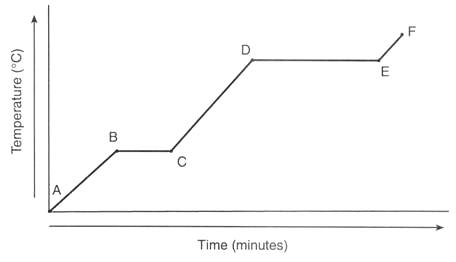
Between which points is the substance changing state?
a)
A-B only.
b)
A-B, C-D, E-F
c)
B-C only.
d)
B-C, D-E
54.
A metal spoon was placed in a dish of ice cream and became cool. Which correctly describes the heat transfer process that resulted in the cooling of the spoon?
a)
conduction, because the spoon was in contact with the cold ice cream
b)
convection, because the spoon was in contact with the cold ice cream
c)
conduction, because cold air currents affected the temperature of the spoon
d)
convection, because cold air currents affected the termpature of the spoon
55.

Three blacksmiths are making new cooking pots. One uses aluminum, one uses copper, and one uses iron. Which substance will cool the fastest?
a)
aluminum
b)
copper
c)
iron
d)
they all cool at the same rate
56.

The warm air from this heater creates a current when the warm air rises and the cold air sinks.
a)
conduction
b)
convection
c)
radiation
57.
A cold-blooded reptile basks on a warm rock in the sun. Its body is warmed by
a)
Radiation
b)
Conduction
c)
Convection
d)
Both (a) and (b)
58.
Which of the following substances is the best conductor of transferring energy as heat?
a)
Carbon dioxide gas
b)
Water
c)
Iron
d)
Rubber
59.
When using a skillet for cooking, do you want a high or low specific heat?
a)
High, so that it will need more energy to heat up
b)
Low, so that it will change temperature quickly
60.

How much energy is required to heat up 12kg of copper from 10 °C to 120 °C? (The specific heat of copper is 390 J/kg °C).
a)
46800 J
b)
561600 J
c)
514800 J
100 %

