wayground logo

Free Printable Worksheets

NEW

Font size

S
M
L
XL
Worksheets

Unit A Chpt 3: Plant Growth and Adaptations

Total questions: 51

Worksheet time: 29mins

Name
Class
Date
1.
What are the basic needs for a plant to survive?
a)
oxygen, right temperature, shelter, food
b)
carbon dioxide, soil/nutrients, water, sunlight
2.
What are the basic plant parts?
a)
leaves, sun, sugar
b)
roots, stems, dormancy
c)
roots, stems, leaves
d)
fibrous roots, taproot
3.
Ferns and fungus reproduce by spreading tiny cells called ___.
a)
seeds
b)
pollination
c)
germination
d)
spores
4.
The seed of a new plant develops in the ovary, which is at the base of the ____.
a)
stamen
b)
pistil
c)
petals
d)
fruit
5.
Water loss from a plant due to evaporation is___.
a)
carbon dioxide
b)
photosynthesis
c)
transpiration
d)
pollination
6.
A single main root that grows deep into the soil is called a ____.
a)
fibrous root
b)
taproot
c)
bulb
d)
tuber
7.
Sprout is another name for ___.
a)
germination
b)
photosynthesis
c)
pollination
d)
transpiration
8.
Animals breathe out a gas called _____ which plants need to survive.
a)
oxygen
b)
carbon dioxide
c)
diesel
d)
nitrogen
9.
The way a plant makes food is ___.
a)
pollination
b)
photosynthesis
c)
transpiration
d)
germination
10.
A root system which has many roots of the same size is called ___.
a)
taproot
b)
fibrous root
c)
tuber
d)
bulb
11.
Potatoes have a swollen underground stem called a ___.
a)
bulb
b)
tuber
c)
runner
d)
taproot
12.
Pollen is made by the _____ of a flower.
a)
pistil
b)
stamen
c)
ovary
d)
root
13.
____ is when broad-leafed trees shed all their leaves in the fall in preparation for the cold winter months.
a)
Transpiration
b)
Dormancy
c)
Photosynthesis
d)
Germination
14.
Substances that all living things need to grow.
a)
nutrients
b)
dormancy
c)
pollination
d)
germination
15.
A plant with a thick stem for storing water would probably grow in the ___.
a)
ocean
b)
mountains
c)
rainforest
d)
desert
16.
Transpiration gives off ___.
a)
oxygen
b)
water vapor
c)
carbon dioxide
d)
nutrients
17.
A ___ is the part of the flower that collects pollen.
a)
stamen
b)
pistil
c)
leaf
d)
root
18.
___ is the term used when a plant sprouts and begins to grow.
a)
Pollination
b)
Decomposition
c)
Photosynthesis
d)
Germination
19.
Which process can end with a "new and improved" plant?
a)
grafting
b)
cutting tubers
c)
placing cuttings in water
d)
splitting apart bulbs
20.
a)
taproot
b)
fibrous root
21.
a)
taproot
b)
fibrous root
22.
a)
This shows photosynthesis.
b)
This shows pollination.
23.
a)
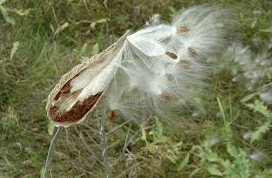
Spores in a seed pod.
b)
Spores in a capsule.
24.
a)
This image is showing germination.
b)
This image is showing pollination.
c)
This image is showing transpiration.
d)
This image is showing photosynthesis.
25.
a)
First: insects feed on nectar.
b)
First: a seed needs warmth, water, and air to grow.
c)
First, the seed sprouts and becomes a seedling.
d)
First: a plant forms seeds.
26.
Photosynthesis: Sunlight is trapped by a leaf's ___.
a)
roots
b)
oxygen
c)
cholorphyll
d)
water
27.
Photosynthesis: The leaves give off ___ as waste.
a)
oxygen
b)
carbon dioxide
28.
Photosynthesis: ___ and ___ in the leaves are used to make sugar.
a)
water, carbon dioxide
b)
sugar, oxygen
c)
nutrients, sunlight
d)
sunlight, water
29.
The ___ take in water for the plant.
a)
leaves
b)
pistil
c)
stamen
d)
roots
30.
What is this plant doing?
a)
Searching for nutrients
b)
Searching for sunshine
c)
Searching for carbon dioxide
d)
Searching for soil
31.
a)
Cactus roots run deep to keep it secure
b)
Cactus roots grow near the surface to absorb water.
32.
"PHOTO"=light
"SYNTHESIS"=putting together
How does the word PHOTOSYNTHESIS describe how a plant makes its own food?
a)
light+water+carbon dioxide=sugar
b)
light+sugar+water=carbon dioxide
33.
a)
A tree needs lots of leaves to gather more sunshine.
b)
Many leaves helps make more clouds.
34.
a)
This plant needs insects for nutrients.
b)
This plant needs insects for water.
c)
This plant needs insects for sunshine.
d)
This plant needs insects for soil.
35.
a)
This is a bulb.
b)
This is a tuber.
c)
This is a runner.
d)
This is a graft.
36.
The gas that plants take in from the air is 
a)
carbon monoxide
b)
oxygen
c)
carbon dioxide
37.
When sprouts begin to grow...
a)
A. Germinate
b)
B. Photosynthesis
c)
C. Pollination
d)
D. None of the above
38.
Tiny cells from which some plants germinate...
a)
A. Pistil
b)
B. Spores
c)
C. Neither
39.
Pollen is carried from a stamen to a pistil...
a)
A. Pollination
b)
B. Photosynthesis
c)
C. Transpiration
d)
D. Germinates
40.
Part of a flower that makes pollen...
a)
A. Stamen
b)
B. Pistil
41.
Part of a flower that collects pollen...
a)
A. Stamen
b)
B. Pistil
42.

Sunlight is trapped by a leaf's...

a)

A. Roots

b)

B. Oxygen

c)

C. Chlorophyll

d)

D. Sugar

43.
What plant has stems that cling to other things?
a)
A. Vines
b)
B. Cacti
c)
B. Lily Pads
44.

This part of the plant uses the sunlight to produce food for the plant

a)

Flower

b)

Cone

c)

Leaf

d)

Seed

45.

Why do some plants produce fruit that contain seeds?

a)

The fruit protects the seeds from animals that would eat them.

b)

The fruit is eaten by animals who then spread the seeds through their droppings.

c)

The seeds grow into seedlings within the fruit before being carried away by animals.

d)

The seeds remain inside the fruit until it rots, then they can be carried away by the wind.

46.

Which is NOT a step of photosynthesis?

a)

light is trapped by chlorophyll

b)

roots take in oxygen

c)

carbon dioxide and water combine to make sugar

d)

oxygen is given off by the leaves as waste

47.

Why do big trees have many leaves instead a just a few large leaves?

a)

It allows the tree to absorb more light at different times of the day

b)

It allows them to create more shade

c)

It allows them to release more oxygen

d)

It allows them to stop more rain

48.

Why are plants with active traps found in areas that have poor soil?

a)

They are trying to catch pokemon

b)

The poor soil provides the plants with the nutrients they need.

c)

The poor soil does not provide the plants with the nutrients they need, so they must get nutrients other ways.

d)

They are going hunting.

49.

Which is not a step of plant reproduction?

a)

The seed germinates, sprouts and becomes a seedling.

b)

Plants release oxygen into the air.

c)

Birds, bees, and bats feed on nectar to help spread the pollen

d)

To begin to grow, seeds need warmth, water, and air.

50.
When a seed sprouts and begins the early growth of a young plant.
a)
germination
b)
pollination
c)
seed dispersal
d)
fertilization
51.

All of the following are examples of seed disbursement except:

a)

wind

b)

volcanic eruptions

c)

physical movement (rolling)

d)

animal droppings