
 Worksheets
Exam 2 Practice Exam
Total questions: 43
Worksheet time: 31mins
Name
Class
Date
1.
What happens during elongation of Transcription?
a)
Each codon is read by a ribosome that then brings in an amino acid
b)
A new mRNA strand is created by the base pairing rule
c)
A stop codon is reached and the mRNA strand is completed
d)
RNA ploymerase binds to a promotor region
2.

Which of the following best describes a DNA molecule?
a)
double helix
b)
contains ribose
c)
made of amino acids
d)
contains Uracil
3.
Which organelle is DNA usually found in?
a)
cell membrane
b)
vacuole
c)
ribosome
d)
nucleus
4.
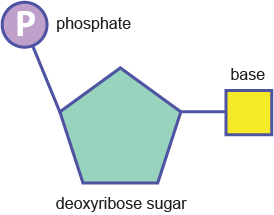
Nucleotides are made up of a sugar, phosphate, and..?
a)
nitrogenous base
b)
nucleic acid
c)
cholesterol
d)
fatty acid
5.

What determines the code, or information, of a DNA molecule?
a)
the shape (structure) of the nitrogen bases
b)
the order (sequence) of the nitrogen bases
c)
the color of the nitrogen bases
d)
the frequency (number) of nitrogen bases
6.
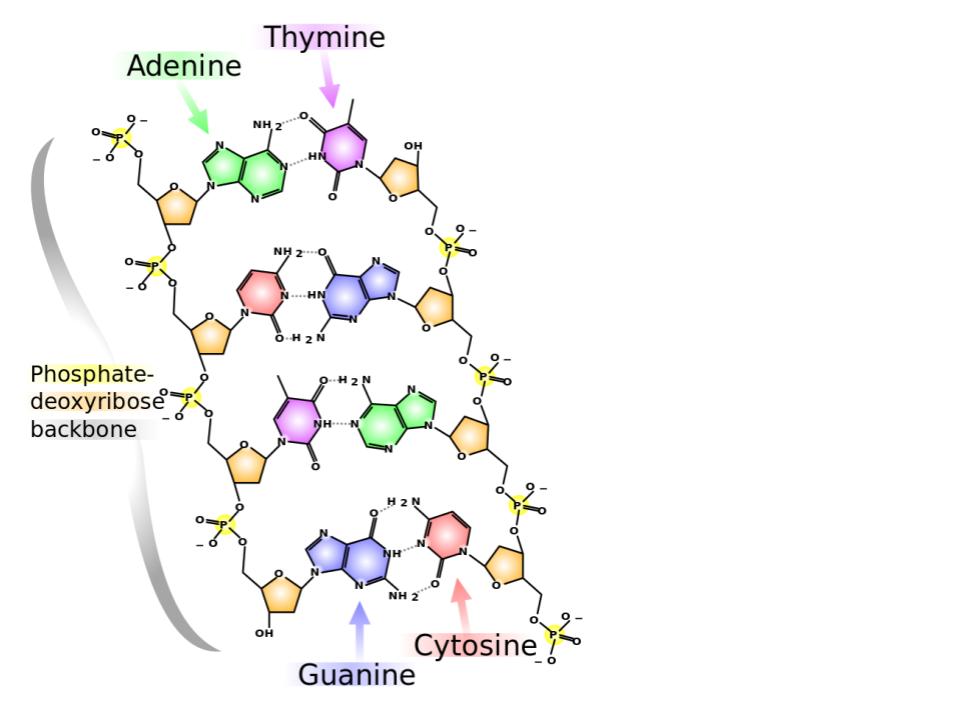
The two strands of DNA are held together by:
a)
Hydrogen Bonds
b)
Phosphodiester Bonds
c)
Glycolsyl Bonds
d)
Glycosidic Linkages
7.
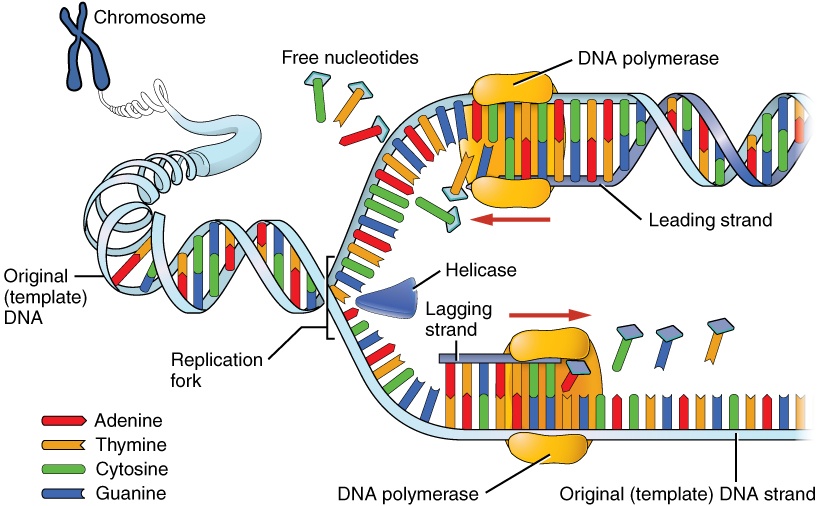
What is the complement to the DNA strand below:
5'-ATGCCAT-3'
5'-ATGCCAT-3'
a)
5'-TACGGTA-3'
b)
3'-TACGGTA-5'
c)
3'-ATGGCAT-5'
d)
5'-ATGGCAT-3'
8.
What is the sequence for building proteins?
a)
DNA-rRNA-tRNA-mRNA
b)
DNA-mRNA-tRNA-rRNA
c)
mRNA-rRNA-tRNA-DNA
d)
DNA-mRNA-rRNA-tRNA
9.
In DNA replication, which enzyme is responsible for building the new DNA strand?
a)
helicase
b)
polymerase
c)
ligase
d)
primase
10.
How many amino acids are coded for by this sequence of nucleotides:
ATG GGA ACT CCA
ATG GGA ACT CCA
a)
4
b)
2
c)
6
d)
12
11.
what does mRNA do?
a)
carry info from genes to ribosomes
b)
carry amino acids to ribosomes
c)
help with RNA splicing
d)
make up ribosomes
12.
Translation is crucial to the process of making proteins. Which statement best describes what takes place during translation?
a)
A copy of chromosomal DNA is created
b)
Information in mRNA is converted into a sequence of amino acids in a protein
c)
A RNA copy of a DNA strand is made.
d)
Instructions from DNA in the nucleus are brought to the cytoplasm
13.
What do all living cells have in common?
a)
Have RNA, ribosomes, centrioles, cytoplasm, and mitochondria
b)
Contain DNA, chloroplasts, mitochondria, and plasma membrane
c)
Contain a plasma membrane, DNA, cytoplasm, and ribosomes
d)
Have DNA/RNA, cytoplasm, chloroplasts, and ribsomoes
14.
What is the function of ribosomes?
a)
Makes macromolecules
b)
Synthesizes lipids
c)
Stores water and other organic compounds
d)
Carries out protein synthesis in the cell
15.
What is found in both plant and animal cells but is much larger in plant cells?
a)
Nucleus
b)
Mitochondria
c)
Chloroplast
d)
Vacuole
16.
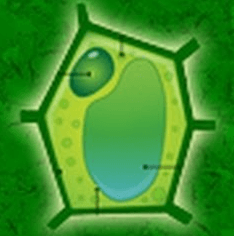
A rigid layer that lies outside the cell's membrane is...
a)
Cytoskeleton
b)
Cilia
c)
Cell Wall
d)
Flagella
17.
What organelle helps with cell digestion?
a)
Lysosomes
b)
Ribosomes
c)
Golgi Complex
d)
ER
18.
What organelle stores waste and water in both plant and animal cells?
a)
Lysosomes
b)
Golgi Complex
c)
Vacuoles
d)
Endoplasmic Reticulum
19.
Pores embedded in the cell membrane that allow cells to communicate described which type of junction?
a)
Tight Junctions
b)
Desmosomes
c)
Gap Junctions
20.
Rank the filaments from largest to smallest in size/thickness
a)
Microtubules, intermediate filaments, microfilaments
b)
Intermediate filaments, microtubules, microfilaments
c)
Microfilaments, intermediate filaments, microtubules
21.
What type of intercellular junction is responsible for the skins ability to resist tear and strain?
a)
Tight Junctions
b)
Gap Junctions
c)
Desmosomes
d)
Plasmodesmata
22.
What is the plasma membrane mostly made out of?
a)
Phospholipids and proteins
b)
Cholesterol and proteins
c)
Macromolecules and lipids
d)
Nucleic acids and proteins
23.
What type of membrane protein spans the entire membrane?
a)
Periphery proteins
b)
Intermembrane proteins
c)
Peripheral proteins
d)
Not listed
24.
The cell membrane is selectively permeable, which means...
a)
All materials can enter and leave the cell
b)
Certain things can enter while others cannot
c)
The cell manually sorts through all materials
d)
Only certain cells can interact with the cell.
25.
diffusion is the movement of
a)
water from low to high concentration
b)
particles from low to high concentration
c)
water from high to low concentration
d)
particles from high to lowconcentration
26.
Which transport does not require energy?
a)
Passive
b)
Active
27.
Which is NOT a form of active transport?
a)
Endocytosis
b)
Osmosis
c)
Exocytosis
d)
Pinocytosis
28.
What is Osmosis?
a)
equal concentration
b)
diffusion of water through a selectively-permeable membrane
c)
high to low concentration
d)
non-polar tail
29.

In the image, the cell would:
a)
gain water and shrink
b)
gain water and swell
c)
lose water and shrink
d)
lose water and swell
30.
The movement of molecules against a concentration gradient
a)
simple diffusion
b)
facilitated diffusion
c)
active transport
31.
When the solutions on both sides of a membrane are isotonic or the same concentration, the molecules will
a)
not move at all
b)
move to the outside of cell
c)
move to the inside of cell
d)
move in both directions in and out at same rate
32.

This diagram is showing...
a)
endocytosis
b)
exocytosis
c)
osmosis
d)
diffusion
33.

Identify the part of the membrane identified in gold?
a)
carbohydrate
b)
cholesterol
c)
protein
d)
phospholipid
34.
Which of the following modes of cellular transport does NOT require energy?
a)
Facilitated Diffusion
b)
Protein Pumps
c)
Endocytosis
d)
Exocytosis
35.
What is plasmolysis?
a)
Pulling away of the plant cell membrane as it loses water in a hypertonic solution.
b)
Pulling away of the animal cell membrane as it undergoes osmosis.
c)
An increase in turgor pressure as the cell undergoes osmosis.
d)
Contraction of the protoplast of a plant cell as a result of gaining water.
36.
The sodium-potassium pump works how?
a)
Uses no ATP to pump 3 sodium out of the cell and 2 potassium into the cell creating a electrical gradient
b)
Requires ATP to bring 3 potassium into the cell and 2 sodium out of the cell to create a electrical gradient
c)
Uses ATP to pump 3 sodium ions out of the cell and 2 potassium inside the cell to create no gradient
d)
Uses ATP to pump 3 sodium out of the cell and 2 potassium into the cell creating a electrical gradient
37.
Before cells can divide, what must be copied?
a)
mitochondria
b)
cytoplasm
c)
DNA
d)
Cell Wall
38.
In the G1 stage of the cell cycle, the cell
a)
Grows
b)
Matures
c)
Carries on normal activities
d)
All of the above
39.
In the S stage of interphase_______________
a)
the cell grows
b)
the nucleus divides
c)
the cell membrane divides
d)
the DNA is replicated
40.
What does NOT happen during interphase?
a)
growth
b)
DNA replication
c)
obtaining nutrients
d)
cell divison
41.
Which of the following shows the correct sequence of the cell cycle?
a)
Mitosis-> G1->S->G2->cytokinesis
b)
S->G1-> G2-> mitosis-> cytokinesis
c)
cytokinesis->mitosis->G1->S->G2
d)
G1->S->G2->mitosis->cytokinesis
42.

Which is NOT true about cancer cell division?
a)
Cancer cells cannot recognize checkpoints that tell them to stop replication
b)
Cancer cells need checkpoints that tell them to start replication
c)
Cancer cell DNA is NOT replicated correctly
43.
What is the G0 phase?
a)
A stage where the cell enters a nondividing state
b)
Happens right before a checkpoint to prepare the cell for review
c)
Condition all cancer cell are in that allow them to grow uncontrollably
d)
Not a real phase
100 %

