
 Worksheets
biomolecules
Total questions: 44
Worksheet time: 35mins
Name
Class
Date
1.
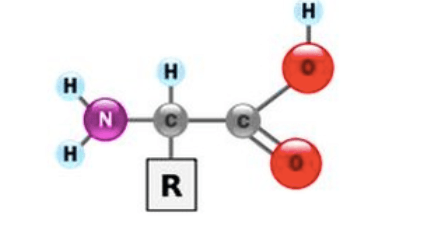
Which biomolecule is this a picture of?
a)
Protein
b)
Nucleic Acid
c)
Lipid
d)
Carbohydrate
2.
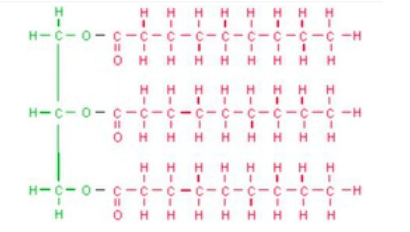
Which biomolecule is this a picture of?
a)
Protein
b)
Nucleic Acid
c)
Lipid
d)
Carbohydrate
3.
Which biomolecule is also known as enzymes?
a)
Carbohydrate
b)
Lipid
c)
Nucleic Acid
d)
Protein
4.
Which biomolecule contains pastas and breads?
a)
Lipid
b)
Protein
c)
Nucleic Acid
d)
Carbohydrate
5.
Which biomolecule has sugars and starches?
a)
Lipids
b)
Proteins
c)
Carbohydrates
d)
Nucleic Acid
6.
Which biomolecule is made of amino acids?
a)
Nucleic Acid
b)
Carbohydrate
c)
Protein
d)
Lipid
7.
Which biomolecule is your main source of energy?
a)
Nucleic Acid
b)
Protein
c)
Lipid
d)
Carbohydrate
8.
Which biomolecule contains fats, oils, and waxes?
a)
Proteins
b)
Nucleic Acid
c)
Lipids
d)
Carbohydrate
9.
Which biomolecule includes fats, such as triglycerides, oils, waxes, and steroids (cholesterol); insoluble in water; provides energy storage, insulation, part of cell membrane, and hormones
a)
Nucleic Acid
b)
Lipids
c)
Carbohydrate
d)
Protein
10.
Four most common elements that make up all living things are carbon, hydrogen,
a)
nitrogen, and iron.
b)
oxygen, and nitrogen.
c)
calcium, and phosphorus.
d)
oxygen, and iron.
11.
The monomer of a protein is called...
a)
an amino acid
b)
a monosaccharide
c)
a fatty acid
d)
a nucleotide
12.

How was the structure in the image built?
a)
By adding 1 H2O
b)
By adding 2 H2O
c)
By removing 1 H2O
d)
By removing 2 H2O
13.

The image is an example of a
a)
Lipid
b)
Polysaccaride
c)
Protein
d)
Lipid (polypeptide)
14.
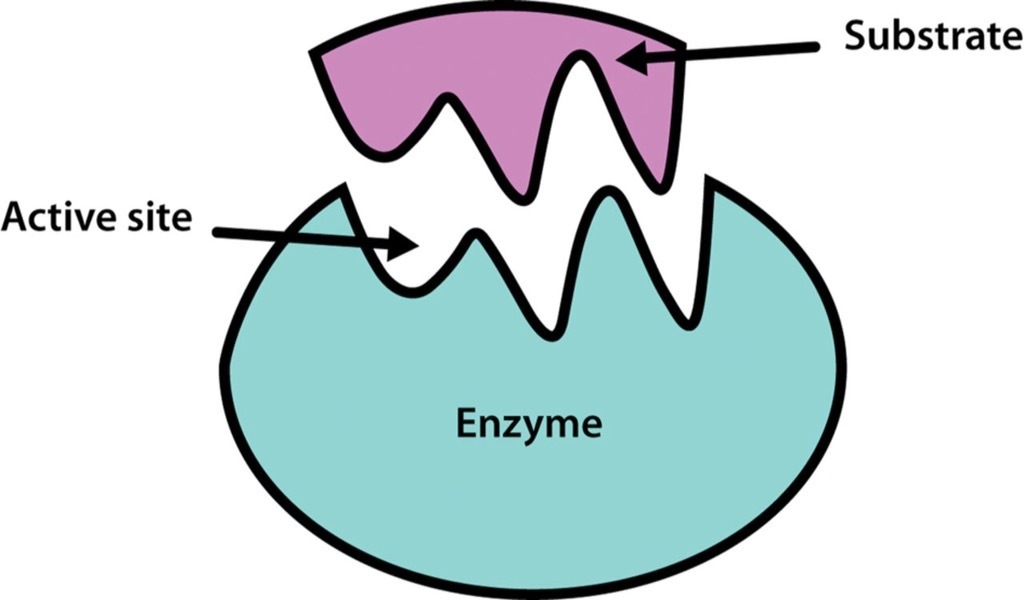
What biomolecule do enzymes belong to?
a)
Carbohydrate
b)
Lipid
c)
Nucleic Acid
d)
Protein
15.

Which biomolecule is a main source of quick energy?
a)
Nucleic Acid
b)
Protein
c)
Lipid
d)
Carbohydrate
16.
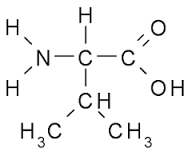
Carbon, Hydrogen, Oxygen and Nitrogen are elements in what biomolecule?
a)
Carbohydrate
b)
Lipid
c)
Protein
d)
Nucleic acid
17.
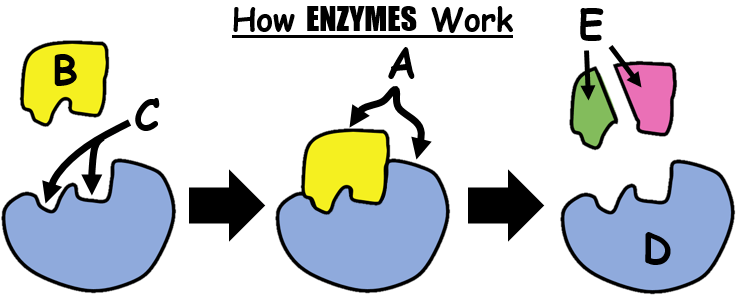
Letter D...
a)
active site
b)
enzyme
c)
substrate
d)
products
18.

Letter C is
a)
Active site
b)
Enzyme
c)
Substrate
d)
Sugar
19.
The purpose of an enzyme is to
a)
slow down reaction
b)
speed up reaction
c)
keep reaction the same
d)
grow the enzyme
20.
What would occur if an enzyme was placed into an acidic solution
a)
Speed up reaction
b)
remain normal
c)
Increase
d)
Denature
21.

Glucose is an example of a
a)
Carbohydrate
b)
Lipid
c)
Protein
d)
Nucleic Acid
22.
What 3 letters do enzymes typically end in?
a)
-ose
b)
-ase
c)
-ese
d)
-tic
23.

This picture represents a
a)
Carbohydrate
b)
Protein
c)
Lipid
d)
Phospholipid
24.

This picture represents a
a)
Carbohydrate
b)
Protein
c)
Lipid
d)
Sugar
25.

This picture represents a
a)
glucose
b)
starch
c)
cellulose
d)
disaccharide
26.
Which of the following is NOT a polymer?
a)
Starch
b)
Nucleic acids
c)
Protein
d)
Lipids
27.

What do disaccharides, such as sucrose, and polysaccharides, such as starch, have in common?
a)
They are lipids made of fatty acids.
b)
They are proteins made of amino acids.
c)
They are nucleic acids made of nucleotides.
d)
They are carbohydrates made of simple sugars.
28.

What type of carbohydrate is this?
a)
polysaccharide
b)
disaccharide
c)
monosaccharide
d)
it isn't a carbohydrate
29.

What type of carbohydrate is this?
a)
glucose
b)
starch
c)
cellulose
d)
disaccharide
30.
Enzymes are capable of increasing the rate of a chemical reaction within a living cell. Enzymes accomplish this through which of the following means?
a)
reducing the number of products
b)
reducing the activation energy
c)
increasing the temperature of the cell
d)
increasing the concentration of reactants
31.
Which best represents a long term energy storage molecule in animals?
a)
cellulose
b)
cholesterol
c)
glycogen
32.

Amino acids
a)
Carbohydrates
b)
Lipids
c)
Proteins
d)
Nucleic Acids
33.

Identify this biomolecule.
a)
Carbohydrate
b)
Lipid
c)
Protein
d)
Nucleic acid
34.

The diagram shows a structural formula of a biomolecule. What type of bond links the monomers.
a)
glyosidic
b)
peptide
c)
ester
d)
polymer
35.
A lock and key is sometimes used as a model to promote understanding of enzymes. Which characteristic of enzymes or their action is best illustrated by this model?
a)
The sensitivity of enzymes to changes in pH
b)
The change in activation energy the enzymes cause
c)
The specificity of fit between an enzyme and a substrate
d)
The increase in reaction rate due to the action of the enzyme
36.
What makes an enzyme substrate specific?
a)
Size
b)
Shape
c)
Name
d)
Location it is found in
37.
Enzymes need certain environmental conditions in order to function properly. What happens when enzymes are heated to a high temperature?
a)
they die
b)
they denature (change shape)
c)
they change their amino acid sequence
d)
they work better
38.
The bonds between amino acids are called
a)
peptide bonds
b)
double bonds
c)
triple bonds
d)
carbon bonds
39.

What is different between these amino acids?
a)
The R-groups
b)
The carboxyl groups
c)
The amino groups
d)
Nothing, they're identical!
40.

Oooh, look at that red circle! What part the amino acid is that?
a)
Carboxyl group
b)
Amino group
c)
R-group
d)
Fatty acid
41.

How crazy!! What's breaking apart lactose??
a)
Lactase
b)
Saturation
c)
Dehydration synthesis
d)
Galactose
42.

Whoa, this molecule is...
a)
GLUCOSE!
b)
FATTY ACID!
c)
AMINO ACID!
d)
GLYCEROL!
43.
Most sugars end with...
a)
ise
b)
ase
c)
ese
d)
ose
44.

What temperature does this enzyme work the best under?
a)
60-ish degrees celsius
b)
0-ish degrees celsius
c)
70-ish degrees celsius
d)
40-ish degrees celsius
100 %

