
 Worksheets
flowering plants
Total questions: 130
Worksheet time: 1hrs 8mins
Name
Class
Date
1.
Are ferns flowering or non-flowering plants?
a)
flowering
b)
non-flowering
2.
Does a sequoia grow cones?
a)
yes
b)
no
3.
Is a shrub a flowering plant or non-flowering plant?
a)
flowering
b)
non-flowering
4.
Seedless plants reproduce with ___.
a)
spores
b)
seeds
c)
binary fission
d)
flowers
5.
What are moss plants produced from?
a)
Seeds
b)
Spores
c)
Cones
d)
Spruce
6.
Some non-flowering plants have seeds.
a)
True
b)
False
7.
All flowering plants produces spores.
a)
True
b)
False
8.
Plants can be classified into __________ main groups.
a)
1
b)
2
c)
3
d)
4
9.
Cedar, Pine, and Spruce trees are example of what type of plant?
a)
Seed tree
b)
Flowering without seeds
c)
Non- flowering with spores
d)
Non-flowering with seeds in cones
10.
Orange trees are examples of a non-flowering plant.
a)
True
b)
False
c)
I don't know
11.
Peach tree, apple tree, and a banana tree are examples of what type of plant?
a)
Eating tree
b)
Flowering
c)
Seedless tree
d)
Non-flowering
12.
An example of a non-flowering plant that produces spores is a
a)
Cedar tree
b)
Dandelion
c)
Water Lilies
d)
Fern
13.
Plants can be classified into two groups:
a)
Seed and fruits
b)
Flowers and colors
c)
flowering and non-flowering
d)
trees and plants
14.
All plants produce flowers.
a)
True
b)
False
15.
Some non-flowering plants have seeds.
a)
True
b)
False
16.
All flowering plants produces spores.
a)
True
b)
False
17.
How do FERNS reproduce?
a)
Both seeds and spores
b)
Seeds
c)
Spores
d)
none of the above
18.
What is another name for a cone-bearing plant?
a)
Fern
b)
Pine cones
c)
Flowers
d)
Conifers
19.

Does this plant produce seeds or spores?
a)
Spores
b)
seeds
20.

What does the Anther contain?
a)
Petals
b)
Ovules
c)
Styles
d)
Pollen
21.
The male structures of the flower
a)
Pistil
b)
Stamen
c)
Pollination
d)
Petals
22.
The thin stalk that supports the anther.
a)
Pistil
b)
Stamen
c)
Anther
d)
Filament
23.
The pistil consists of a sticky part where pollen grains land.
a)
Style
b)
Stigma
c)
Stamen
d)
Anther
24.
The female structures of the flower
a)
Pistil
b)
Stigma
c)
Stamen
d)
Ovary
25.
The long stalk-like part that supports the stigma.
a)
Filament
b)
Anther
c)
Stigma
d)
Style
26.
When pollen from the anther contacts the sticky stigma of a pistil.
a)
Germination
b)
Reproduction
c)
Regeneration
d)
Pollination
27.
Contains a young plant inside that grows into a big plant
a)
Seed
b)
Seed coat
c)
Seed leaves
d)
Seedling
28.
The part of the plant that collects sunlight
a)
Leaves
b)
Stem
c)
Petals
d)
Ovary
29.
The underground part that absorbs water and minerals from soil.
a)
Leaves
b)
Stem
c)
Petals
d)
Roots
30.
The part of the plant that holds the leaves and flowers
a)
Stalk
b)
Stem
c)
Style
d)
Filament
31.
The reproductive part of the plant that attracts bees and butterflies
a)
Petals
b)
Flower
c)
Stem
d)
Stigma
32.
An unopened flower
a)
Plant
b)
Seed
c)
Leaf
d)
Bud
33.
The flower parts that are a varied color
a)
Seed
b)
Petals
c)
Stem
d)
Leaves
34.
The part of the flower that is under the petals
a)
Stem
b)
Roots
c)
Sepal
d)
Stalk
35.
The yellow, powdery stuff on the stamens
a)
Pollen
b)
Dust
c)
Mites
d)
Germs
36.
The male part of the plant that sits on top of the filament
a)
Stamen
b)
Stigma
c)
Anther
d)
Style
37.
The reproductive organ of a flowering plant
a)
Seed
b)
Flower
c)
Pistil
d)
Stamen
38.
The reproductive organ of a flowering plant
a)
Seed
b)
Flower
c)
Pistil
d)
Stamen
39.

In the flower, the Stamen is the
a)
Petals
b)
Leaves
c)
"Male" portion of the flower
d)
"Female" portion of the flower
40.

The Function of fruits is to
a)
Protect the Seed
b)
All of these
c)
Assist with Dispersal of the Seed
d)
Provide Nutrients to the Seed
41.
Flowering plants reproduce
a)
Asexually
b)
Sexually
42.
How do bees aid in pollination?
a)
They transfer pollen from one flower to another.
b)
They produce and release pollen that is given to a plant.
43.
Brightly colored parts of flowers that attract insects.
a)
petals
b)
pistils
c)
stamen
d)
filaments
44.

The stalk connecting the ovaries and stigmas.
a)
filament
b)
pistil
c)
style
d)
anther
45.
The transfer of pollen, containing the sperm cells, to the female part of the flower.
a)
seed disperal
b)
pollination
c)
germination
d)
fertilization
46.

When a seed sprouts and begins the early growth of a young plant.
a)
germination
b)
pollination
c)
seed dispersal
d)
fertilization
47.
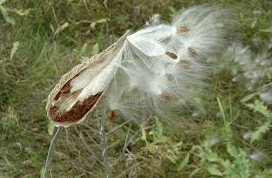
All of the following are examples of seed disbursement except:
a)
wind
b)
volcanic eruptions
c)
physical movement (rolling)
d)
animals feces
48.
Seed dispersal does not reduce competition between the seedlings and the parent plant for
a)
light
b)
oxygen
c)
water
d)
nutrients
49.
Small grains that contain a plant's male reproductive cells.
a)
stamen
b)
pollen
c)
anther
d)
stigma
50.

Small leaf-like structures forming an outer circle at the base of a flower.
a)
petals
b)
sepal
c)
anthers
d)
dicots
51.
When we see growth or a seed sprouts it shows _______.
a)
pollination
b)
sun
c)
germination
d)
reproduction
52.
A young plant that grows from a seed is a ______.
a)
tree
b)
nectar
c)
seedling
d)
bush
53.
A seed can move by wind, water, and ________.
a)
clouds
b)
singing
c)
cars
d)
animals
54.
The stages of growth and change during an organism's life is its ________ _________.
a)
germination
b)
inherited traits
c)
seedling
d)
life cycle
55.
Characteristics passed from parent to offspring are ______ _______.
a)
conifers
b)
seedlings
c)
pollen
d)
inherited traits
56.
A strawberry plant is an axample of a ________. The stem grows along the ground to make new plants.
a)
leaf
b)
potato
c)
cutting
d)
runner
57.
A part of a plant that has been clipped and can produce a new plant is a _______.
a)
runner
b)
cutting
c)
tuber
d)
bulb
58.
A stem that grows underground is a _______.
a)
leaf
b)
potato
c)
cutting
d)
bulb
59.

When the male & female sex cells join together , ______ takes place and a seed is formed.
a)
pollination
b)
fertilization
c)
germination
d)
heredity traits
60.

When the male & female sex cells join together , ______ takes place and a seed is formed.
a)
pollination
b)
fertilization
c)
germination
d)
heredity traits
61.
Pollination occurs when______ travels from the male part of the flower to the female part of the flower.
a)
seed
b)
wind
c)
pollen
d)
roots
62.
Seeds need _______ , warm temperatures, and nutrients in order to start growing.
a)
grass
b)
water
c)
leaves
d)
stems
63.
A __________ is a storage part of a plant.
a)
stem
b)
leaf
c)
tuber
d)
cutting
64.

The Function of fruits is to
a)
Protect the Seed
b)
All of these
c)
Assist with Dispersal of the Seed
d)
Provide Nutrients to the Seed
65.
The male structures of the flower
a)
Pistil
b)
Stamen
c)
Pollination
d)
Petals
66.
What does the Anther contain?
a)
Petals
b)
Ovules
c)
Styles
d)
Pollen
67.
The thin stalk that supports the anther.
a)
Pistil
b)
Stamen
c)
Anther
d)
Filament
68.
The pistil consists of a sticky part where pollen grains land.
a)
Style
b)
Stigma
c)
Stamen
d)
Anther
69.
The female structures of the flower
a)
Pistil
b)
Stigma
c)
Stamen
d)
Ovary
70.
The long stalk-like part that supports the stigma.
a)
Filament
b)
Anther
c)
Stigma
d)
Style
71.
A flower that has only just male or just female reproductive structures
a)
Plants
b)
Perfect flower
c)
Imperfect flower
d)
Weed
72.
When pollen from the anther contacts the sticky stigma of a pistil.
a)
Germination
b)
Reproduction
c)
Regeneration
d)
Pollination
73.
Contains a young plant inside that grows into a big plant
a)
Seed
b)
Seed coat
c)
Seed leaves
d)
Seedling
74.
The underground part that absorbs water and minerals from soil.
a)
Leaves
b)
Stem
c)
Petals
d)
Roots
75.
The reproductive part of the plant that attracts bees and butterflies
a)
Petals
b)
Flower
c)
Stem
d)
Stigma
76.
The part of the plant that holds the leaves and flowers
a)
Stalk
b)
Stem
c)
Style
d)
Filament
77.
An unopened flower
a)
Plant
b)
Seed
c)
Leaf
d)
Bud
78.
Pollination occurs when a ____________ produced by the ______________ lands on and adheres to the ______________________.
a)
stigma, pollen tube, anther
b)
pollen grain, anther, stigma
c)
anther, pollen tube, stigma
d)
stigma, anther, ovary
79.
Wind pollinated flower characteristics usually include all EXCEPT...
a)
being small
b)
producing large amounts of pollen
c)
being large
80.
Characteristics of animal pollinated flowers usually include all EXCEPT ...
a)
being large
b)
producing a lot of nectar
c)
producing less pollen
d)
being small
81.
Which is a more reliable method of pollination?
a)
Animal pollination
b)
Wind pollination
82.
The type of pollination that promotes greater genetic diversity in the plant is ...
a)
cross-pollination
b)
self-pollination
83.
Characteristics that promote cross-pollination include all EXCEPT ...
a)
the anther and stigma being different heights
b)
having male only and female only flowers
c)
the anther and stigma being the same height
d)
having pollen and ovules mature at differnt times
84.
When a pollen grain moves from the anther of one flower to the stigma on a different flower on the same plant it is considered cross pollination.
a)
True
b)
False
85.
Male structures in flowering plants include all EXCEPT ...
a)
Stamen
b)
Anther
c)
Stigma
d)
Filament
86.
Inside each pollen grain is a tube cell and a germ cell.
a)
True
b)
False
87.
Female structures in flowering plants include all EXCEPT ...
a)
pistil
b)
stigma
c)
stamen
d)
style
88.

Which part of a vascular plant produces food through photosynthesis?
a)
flower
b)
root
c)
veins
d)
leaves
89.

Which statement about nonvascular plants is correct?
a)
They have roots that take in water
b)
They have root-like structures that anchor the plant in the soil
c)
They make up the majority of all plants
d)
They do not use photosynthesis to make food
90.

Which of the following vegetables is a root?
a)
Carrots
b)
Broccoli
c)
Celery
d)
Cabbage
91.

Which list shows everything that plants need to produce their own food?
a)
oxygen, carbon dioxide, sugar
b)
sugar, water, carbon dioxide
c)
sunlight, carbon dioxide, water
d)
carbon dioxide, water, sugar
92.

The picture shows the steps that happen during photosynthesis. What is happening on the leaf where the carbon dioxide is pointing to?
a)
Sugar is entering the leaf, and water vapor is exiting
b)
Carbon dioxide is entering the leaf, and water vapor and oxygen are exiting
c)
Carbon dioxide and chlorophyll are entering the leaf, and oxygen is exiting
d)
Water vapor and chlorophyll are entering the leaf, and carbon dioxide is exiting
93.

Plants may have hard woody or soft green ___________.
a)
leaf
b)
root
c)
stems
d)
veins
94.

The process of changing carbon dioxide and water into sugar and oxygen using energy from sunlight is _____________.
a)
Flowers
b)
Veins
c)
Photosynthesis
d)
Nonvascular plants
95.

What is the tube called from the leaf that has lines on?
a)
veins
b)
stems
c)
roots
d)
vascular
96.

Plants with tubes that move water, minerals, and sugar are called _________ plants.
a)
chlorophyll
b)
vascular
c)
nonvascular
d)
photosynthesis
97.

The substance in leaves that captures sunlight is called?
a)
minerals
b)
tubes
c)
flowers
d)
chlorophyll
98.

How do bees help flowers?
a)
by dropping seeds to help others grow
b)
by moving pollen from one flower to another
c)
they help make the flowers bright colors
d)
bees do not help flowers
99.

How do flowers help bees?
a)
Flowers give bees nectar to drink
b)
Flowers give bees a home
c)
Flowers give bees pollen
d)
Flowers do not help bees
100.

Pollination is when pollen is moved from one flower to another.
a)
True
b)
False
101.

What are some ways a seed-forming plant can be pollinated?
a)
by water, ground and leaf
b)
by animals, soil and water
c)
by animals, wind and water
102.

What do seeds and spores have in common with their characteristics?
a)
Both are made up of pockets filled with spores
b)
Both have two forms in their life cycle
c)
Both begin to grow into tiny flat heart-shaped
d)
Both have reproductive structures; develop into a new plant if conditions are good; can be carried by wind
103.

Many animals eat fruit. This help spread the seeds contained in the fruit.
a)
True
b)
False
104.

Which part of the plant is A?
a)
stamen
b)
petal
c)
anther
d)
pistil
105.

Which part of the plant is B?
a)
stamen
b)
pistil
c)
anther
d)
petal
106.

Which part of the plant is C?
a)
petal
b)
pistil
c)
anther
d)
stamen
107.

Which part of the plant is D?
a)
stamen
b)
petal
c)
pistil
d)
stem
108.

Which part of the plant is E?
a)
pistil
b)
petal
c)
stamen
d)
anther
109.
Why are flowers very colorful (and why do they produce odor?)
a)
So people buy them
b)
To make gardens look good
c)
To attract pollinators
d)
To attract sunlight
110.
What is a pollinator?
a)
Animal that moves pollen from plant to plant
b)
Animal that eats pollen
c)
A plant that makes pollen
d)
A plant that does not make pollen
111.
Male reproductive parts of a plant....
a)
Petals and ovary
b)
Ovary and ovule
c)
Anther and filament
d)
Stigma and style
112.
In which part of the flower is pollen found?
a)
Filament
b)
Anther
c)
Ovary
d)
Xylem
113.
How does pollen reach the ovule?
a)
Stigma --> Style
b)
Style --> stigma
c)
Ovary --> stigma
d)
Ovary --> style
114.
How else can pollen be moved besides pollinators?
a)
Sunlight
b)
Wind
c)
Snow
d)
Hail
115.
After fertilization the ovule will....
a)
Be carried away by a pollinator
b)
Be blown away by the wind
c)
Will grow into a new plant
d)
Develop into a fruit that contains seeds
116.
The filament___________
a)
holds up the anther
b)
protects the petal
c)
is the male part of the flower
d)
catches pollen
117.

What is #5 pointing to?
a)
anther
b)
filament
c)
stigma
d)
style
118.
Guard cells close the stomata to keep water in.
a)
True
b)
False
119.

Which stimulus causes a responding plant to demonstrate phototropism?
a)
intensity of light
b)
direction of light
c)
length of day
d)
time of day
120.

Certain flowers will open for twelve hours and then close. Which stimulus do the flowers respond to when they open and then when they close for that time period?
a)
light levels
b)
moon phases
c)
seasonal temperatures
d)
carbon dioxide levels
121.

People take in and release gases from the air when they breathe. Which exhaled gas is a waste product of respiration?
a)
oxygen
b)
hydrogen
c)
helium
d)
carbon dioxide
122.

Carbon dioxide is removed from Earth’s atmosphere by
a)
animal respiration
b)
decaying organisms
c)
plant photosynthesis
d)
burning fossil fuels
123.
What is transpiration?
a)
Excess water being released from the leaves
b)
Excess sugar being released from the leaves
c)
The way a plant makes its food
d)
When the plant uses sugar for energy
124.

Which part of a plant is responsible for the majority of photosynthesis?
a)
leaves
b)
stem
c)
roots
d)
stomata
125.

Where does carbon dioxide enter plants?
a)
The leaves (in the holes called Stomata)
b)
Flowers
126.
What is another name for glucose?
a)
Chlorophyll
b)
sugar
127.
Which of the following are products of photosynthesis?
a)
carbon dioxide and ATP
b)
oxygen and glucose
128.
Which of the following is NOT a necessary input for the process of photosynthesis?
a)
CO ₂ (carbon dioxide)
b)
Sunlight
c)
H ₂O (water)
d)
O ₂ (oxygen)
129.
Where within the cell does photosynthesis take place?
a)
the cytoplasm
b)
the chloroplasts
c)
the mitochondria
d)
the nucleus
130.
What part of the cell opens and closes the stomata?
a)
guard cells
b)
mitochondria
c)
chloroplast
d)
vacuole
100 %

