
 Worksheets
Cambridge Primary Checkpoint Science Review 1
Total questions: 130
Worksheet time: 2hrs 53mins
Name
Class
Date
1.
Living things need air, water, and ______ to survive.
a)
computers
b)
food
c)
animals
d)
school
2.
The sun, clouds and water are all ____ factors
a)
biotic
b)
abiotic
c)
response
3.
Alligators, insects, moss, reeds, trees, fish, algae, water, rocks and the sun are all part of an organism's ______
a)
habitat
b)
stimulus
c)
cells
4.
Worms, fungi, bacteria and bushes are _______.
a)
abiotic
b)
unicellular
c)
biotic
5.
This is a change in the surrounds (e.g., a sudden loud noise).
a)
response
b)
stimulus
c)
habitat
6.
This is a reaction to a stimulus.
a)
response
b)
autotroph
c)
heterotroph
7.
Trees are ________ because they make their own food in their leaves.
a)
heterotrophs
b)
autotrophs
c)
cannibals
8.
To make their own food, plants go through a process called _______
a)
photosynthesis
b)
habitation
c)
development
9.
What does Homeostasis mean?
a)
Don't know
b)
Balance
c)
The condition of a plant druing reproduction
d)
The maintaining of a stable internal condition.
10.
Any living thing is an
a)
organ
b)
organism
c)
old book
d)
octagon
11.
What do you need to breathe?
a)
Carbon Dioxide
b)
Oxygen
c)
Nothing
12.
If you never grow that means...
a)
You are an organism that can speak.
b)
You are a living organism.
c)
You are a non-living organism.
d)
You are an organism that has limbs.
13.
This habitat is cold, dry and covered with snow and ice.
a)
Tropical Rain Forest
b)
Temperate Forest
c)
Polar/Arctic Region
d)
Wetlands
14.
These prairies are good for grazing cows and growing food
a)
Desert
b)
Wetlands
c)
Temperate Forest
d)
Grasslands
15.
These jungles have the most diversity of plants and animals anywhere in the world.
a)
Tropical rain forests
b)
Mountains
c)
Oceanic islands
d)
Coniferous Forests
16.
These habitats are often formed by volcanoes
a)
Oceans
b)
Deserts
c)
Oceanic islands
d)
Coniferous forests
17.

In food chains, plants are
a)
Producers
b)
Consumers
c)
Deconsumers
d)
Not included
18.
Along a food chain, _______ is passed from one organism to the next.
a)
energy
b)
meat
c)
food
d)
water
19.
What is an organism that gets its food through eating other sources?
a)
Consumer
b)
Producer
c)
Autotroph
d)
Decomposers
20.
Animals who sleep during the winter months are:
a)
hibernating
b)
migrating
c)
blubbering
d)
kelping
21.
In a forest food chain, a rabbit eats clover and a hawk eats rabbits. Which of the following is true?
a)
the rabbit is a producer, the hawk is a consumer
b)
the rabbit is a consumer, the hawk is a decomposer
c)
both are consumers
d)
both are producers
22.

A forest is having the trees being cut down, how are the organisms being harmed that are living there?
a)
the organism population increases
b)
the organism habitat will increase
c)
the organism population will remain the same
d)
the organism habitat will decrease
23.

What is this called?
a)
Food Web
b)
Food Chain
c)
Abiotic Factors
24.
What is an organism that breaks down & absorbs dead matter so nutrition can be recycled into the soil?
a)
Consumer
b)
Decomposer
c)
Producers
d)
Scavenger
25.

What is an animal that eats only animals
a)
White Tiger
b)
Herbivore
c)
Omnivore
d)
Carnivore
26.
The wolf is trying to survive in his habitat. What does it need to survive in its habitat?
a)
environment
b)
food, water, shelter
c)
food, shelter, sunlight
d)
shelter, food, sunlight
27.
Which one is NOT an example of a decomposer?
a)
mushroom
b)
leaves
c)
mold
d)
worm
28.
An organism that no longer exists; They couldn’t adapt to environmental changes
a)
organism
b)
extinct
c)
food chain
d)
habitat
29.

What is this habitat?
a)
Desert
b)
Savanna
c)
Rainforest
d)
Freshwater
30.
Humans are considered...
a)
consumers
b)
decomposers
c)
producers
31.
What will an animal do if their habitat changes?
a)
they will adapt
b)
none will adapt and they will all die
c)
some will adapt, some will leave, and others will die
32.
Organisms that live in the desert survive by
a)
gathering the sunlight
b)
conserving water
c)
protecting themselves against the cold
d)
breathing under water
33.
A "biome" is a group of plants and animals in the same region that have adapted together to the region's environment.
a)
True
b)
False
34.
Which biome covers most of the land mass near the Earth's equator?
a)
tundra
b)
desert
c)
grassland
d)
tropical forest
35.
Which biome, because of its climate, has the largest number of species of plants and animals?
a)
tundra
b)
desert
c)
rain forest
d)
pine forest
36.
One characteristic feature of tundra is that only the surface thaws in the summer and refreezes in the winter, leaving a layer of permanently frozen subsoil. This characteristic is known as
a)
glaciation
b)
permafrost
c)
crystallization
d)
soilfrost
37.

Terrestrial refers to
a)
Earth
b)
Land
c)
Ground
d)
All of the above
38.
Brightly colored parts of flowers that attract insects.
a)
petals
b)
pistils
c)
stamen
d)
filaments
39.

The stalk connecting the ovaries and stigmas.
a)
filament
b)
pistil
c)
style
d)
anther
40.
They enclose the egg cells inside the ovaries.
a)
ovules
b)
anther
c)
seeds
d)
angiosperms
41.
The transfer of pollen, containing the sperm cells, to the female part of the flower.
a)
seed disperal
b)
pollination
c)
germination
d)
fertilization
42.
Plants that produce their seeds in wood-like cones.
a)
gymnosperms
b)
legumes
c)
deciduous
d)
conifers
43.

When a seed sprouts and begins the early growth of a young plant.
a)
germination
b)
pollination
c)
seed dispersal
d)
fertilization
44.
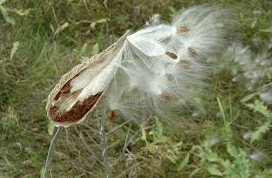
All of the following are examples of seed disbursement except:
a)
wind
b)
volcanic eruptions
c)
physical movement (rolling)
d)
animals feces
45.
This occurs after a tube grows down from the pollen grain through the style to the ovary.
a)
pollination
b)
germination
c)
fertilization
d)
seed dispersal
46.
Seed dispersal does not reduce competition between the seedlings and the parent plant for
a)
light
b)
oxygen
c)
water
d)
nutrients
47.
The stalks in a flower that produce the male reproductive cells
a)
pistil
b)
stamen
c)
filament
d)
stigma
48.
Synonym for not active.
a)
dormant
b)
sterile
c)
spry
d)
mobile
49.
Any seed plant that has no woody stem.
a)
monocot
b)
dicot
c)
herbaceous
d)
gymnosperm
50.

Plants that have their seeds in pods.
a)
legumes
b)
angiosperms
c)
gymnosperms
d)
dicots
51.

Small leaf-like structures forming an outer circle at the base of a flower.
a)
petals
b)
sepal
c)
anthers
d)
dicots
52.
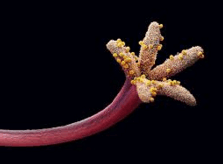
The part of the flower on which the pollen grains land.
a)
pistil
b)
stamen
c)
style
d)
stigma
53.
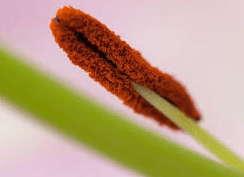
The part of a flower that produces the male reproductive cells.
a)
anther
b)
style
c)
stigma
d)
filament
54.
The structures containing female reproductive cells.
a)
seeds
b)
style
c)
gametes
d)
anthers
55.

Their leaves are not veined, and the flower parts are usually in fours or fives.
a)
monocot
b)
dicot
c)
angiosperm
d)
gymnosperm
56.

A flowering plant with leaves that have parallel veins.
a)
gymnosperms
b)
angiosperms
c)
dicot
d)
monocot
57.
what is the meaning of convection?
a)
cold rises heat falls
b)
heat
c)
cold
d)
hot rises cold falls
58.
what is the meaning of conduction
a)
when heat transfers from objects that are not touching
b)
heat rise
c)
cold fall
d)
when heat transfers from objects that are touching
59.
what kind of heat is happening when the sun heats your body
a)
conduction
b)
convection
c)
density
d)
radiation
60.
whater boiling is an example of ____
a)
conduction
b)
radiation
c)
density
d)
convection
61.
heat rises
a)
true
b)
false
62.
cold falls
a)
false
b)
true
63.
heat energy traveling through space is an example of _____
a)
convection
b)
density
c)
radiation
d)
conduction
64.
heat is energy
a)
false
b)
true
65.
heat always travels from _____ to ______ objects
a)
hot to cold
b)
cold to hot
c)
cold to cold
d)
hot to hot
66.
you get sunburned because of _______
a)
conduction
b)
convection
c)
radiation
67.
convection is steam
a)
true
b)
false
68.

This is a lava lamp. When the light bulb heats the wax, the wax rises. When the wax cools, it falls. This cycle of rising/falling is an example of:
a)
Conduction.
b)
Convection.
c)
Radiation.
69.

The baby chickens are kept warm from the heat lamps demonstrates this type of heat transfer.
a)
conduction
b)
convection
c)
radiation
70.

Warm air rises and the cool air sinks demonstrates this type of heat transfer.
a)
conduction
b)
convection
c)
radiation
d)
Insolation
71.

The Gulf Stream is a current that brings warm ocean water from the south to the north. What type of heat transfer is this?
a)
conduction
b)
convection
c)
radiation
d)
Insolation
72.
Ironing a shirt is an example of...
a)
condensation
b)
conduction
c)
convection
d)
radiation
73.
Which is NOT an insulator.
a)
Wool
b)
Plastic
c)
Copper
d)
Glass
74.
Is Iron a Conductor or Insulator?
a)
Conductor
b)
Insulator
75.
Is Wood a conductor or Insulator?
a)
Conductor
b)
Insulator
76.
What is NOT an example of an insulator in the kitchen?
a)
An oven mitt
b)
Pots and pans
c)
A wooden spoon
d)
A plastic measuring cup
77.
A metal spoon that gets warm when used to stir hot soup is an example of:
a)
Conduction
b)
Convection
c)
Radiation
78.
A great conductor of energy is:
a)
wood
b)
plastic
c)
metal
d)
cloth
79.
Which part of the plant soaks in the sun to help feed the plant?
a)
stem
b)
root
c)
seed
d)
leaf
80.
This part of the plant holds it in the ground
a)
stem
b)
root
c)
leaf
d)
seed
81.
This part of the plant supports it and carries water.
a)
root
b)
stem
c)
leaf
d)
seed
82.

Small openings called ______ are found on the underside of leaves and allow gases to enter or leave the plant cells.
a)
Phloem
b)
Chloroplasts
c)
Xylem
d)
Stomata
83.
Plants COULD NOT survive without _____ and ______.
a)
Transpiration and Gravity
b)
Oxygen and Water
c)
Seeds and Water
d)
Carbon Dioxide and Water
84.
What are the root's job in a plant?
a)
absorb water and sunlight
b)
give off oxygen and absorb water
c)
make sugar and absorb water
d)
anchor the plant to the ground and absorb water
85.

What part of the plant cell stores water?
a)
nucleus
b)
vacuole
c)
chloroplast
d)
ribosome
86.

What part of the plant cell is the control center of the cell?
a)
chloroplast
b)
ribosome
c)
nucleus
d)
cell wall
87.
The process of photosynthesis takes place in organelles (part of cell) called ______.
a)
Phloem
b)
Xylem
c)
Stomata
d)
Cholorplasts
88.

What is the name of the jelly-like filling of the cell?
a)
ribosome
b)
cell membrane
c)
nucleus
d)
cytoplasm
89.

What part of the cell makes proteins?
a)
nucleus
b)
ribosome
c)
cytoplasm
d)
chloroplast
90.
What is the PROCESS by which plants make food?
a)
xylem
b)
phloem
c)
germinate
d)
photosynthesis
91.
What two things do plants need to do the PROCESS of photosynthesis?
a)
Carbon dioxide & water
b)
Oxygen & water
c)
Sugar & water
d)
Carbon dioxide & Sugar
92.
Why do plants do photosynthesis?
a)
to make oxygen for people
b)
to make food for itself
c)
to make a flower
d)
to make carbon dioxide
93.

What dose the cell wall do?
a)
To protect the cell
b)
Make the food
c)
Control the cell
d)
Is the jelly like substance of the cell
94.
What is the color of the chloroplasts?
a)
Red
b)
Blue
c)
Green
d)
None of the above
95.

What job does the Nucleus have?
a)
Control the cell
b)
Store food
c)
Make it green
d)
Store Water
96.

What is "F"?
a)
Chloroplast
b)
Golgi body
c)
ER
d)
Mitochondria
97.

What is structure "B"?
a)
vacuole
b)
chloroplast
c)
nucleus
d)
cell wall
98.
what is cell?
a)
is the basic unit of animal
b)
the basic unit of plant
c)
the basic units of all living things
d)
the basic units of fungis
99.

what of cell is this
a)
animal
b)
plant
c)
human
100.

what cell is this
a)
plant
b)
animal
c)
aminas face
101.
an animal cell has a cell wall
a)
true
b)
false
102.

Can animals produce there own food
a)
yes
b)
no
103.
This type of cell needs a cell wall and chloroplasts
a)
Plant cell
b)
Animal Cell
c)
Bacteria
104.
Tissues work together to make the following.
a)
cells
b)
organs
c)
organ systems
d)
organism
105.
Cells work together to make the following.
a)
tissues
b)
organs
c)
organ systems
d)
organism
106.
What tool do you use to view the cells?
a)
metric ruler
b)
centrifuge
c)
microscope
d)
pipette
107.
I am the brain of the cell and control all cell functions.
a)
nucleus
b)
nucleolus
c)
ribosomes
d)
chloroplast
108.
animals have chloroplasts
a)
false
b)
true
109.
During photosynthesis, leaves take in this gas from the air.
a)
oxygen
b)
nitrogen
c)
carbon dioxde
d)
water
110.
Humans benefit from photosynthesis because plants give off this gas.
a)
carbon dioxide
b)
steam
c)
oxygen
d)
nitrogen
111.
This is your body's largest organ.
a)
heart
b)
skin
c)
lungs
d)
intestines
112.
Which best describes a parallel circuit?
a)
Electricity flows along one pathway.
b)
The flow of electricity comes from one source.
c)
Electricity flows along more than one pathway.
d)
The flow of electricity comes from more than one source.
113.
What is one problem with using a series circuit?
a)
It has a lot of series.
b)
If one goes down, they all go down!
c)
It doesn't work properly.
d)
There are no problems.
114.

The picture shows an electrical circuit. This circuit is a series circuit because:
a)
It has 3 light bulbs.
b)
The same current flows through all three light bulbs.
c)
It uses a single battery.
d)
The electrical current is divided between the three light bulbs.
115.
water is a______?
a)
conductor
b)
insulator
116.
A material in which electrons are able to move easily
a)
Circuit
b)
Insulator
c)
Resistance
d)
Conductor
117.
A material in which electrons are not able to move easily
a)
Circuit
b)
Insulator
c)
Resistance
d)
Conductor
118.

what is this symbol for?
a)
light bulb
b)
cell
c)
battery
d)
resistor
119.

this is the symbol for a _____?
a)
switch
b)
light
c)
battery
d)
wires
120.

This is the symbol for a ...
a)
Bulb
b)
Battery
c)
Horn
d)
Fuse
121.

This is the symbol for a ...
a)
Wire
b)
Battery
c)
Buzzer
d)
Fuse
122.

This is the circuit symbol for ...
a)
an AC current source
b)
a DC current source
c)
a battery
d)
a single cell
123.
A ceiling fan converts electrical energy into ______________________________.
a)
mechanical energy
b)
sound energy
c)
thermal energy
d)
heat energy
124.
The sun is a source of what type of energy?
a)
sound energy
b)
light energy
c)
chemical energy
d)
mechanical energy
125.
Tires are made of rubber. Rubber is an example of ___________________.
a)
a conductor
b)
energy
c)
an insulator
d)
a circuit
126.
When warming up by a fireplace, what type of energy is given off?
a)
mechanical energy
b)
heat energy
c)
sound energy
d)
magnetic energy
127.
When creating a circuit, what type of energy flows out of the battery?
a)
heat energy
b)
electrical energy
c)
light energy
d)
mechanical energy
128.

An electric circuit is a closed loop or pathway that allows electric charges to flow.
a)
True
b)
False
129.

An electric current is a flow of charged particles.
a)
True
b)
False
130.

What kind of circuit is this?
a)
Series
b)
Consecutive
c)
Parallel
d)
Training
100 %

