
 Worksheets
Cells GVMS Maneno
Total questions: 70
Worksheet time: 40mins
Name
Class
Date
1.
What did Hooke first examine?
a)
Pond water
b)
Plant cells
c)
Cork
d)
Animal fat
2.
The smallest living unit is the _______-
a)
cell
b)
molecule
c)
atom
d)
organ
3.

This cell is most likely
a)
a plant
b)
an animal
c)
a unicllular organism
d)
prokaryotic
4.

What are A,B,C,D in order
a)
door, living room, kitchen, basement
b)
wall, membrane, cytoplasm, vacuole
c)
membrane, wall, cytoplasm, vacuole
5.

What would happen to the plant cell without the chloroplasts?
a)
There wouldn't be an organelle that performs photosynthesis
b)
There wouldn't be an organelle that serves as the resevoir for water and waste
c)
There wouldn't be an organelle that regulates what comes in and out of the cell
d)
They wouldn't be an organelle that makes necesary proteins
6.
Which is not a part of cell theory?
a)
All organisms are made of cells
b)
All existing cells come from preexisting cells
c)
All matter is composed of living cells
d)
The cell is the most basic unit of life
7.
Microscopic single-cells that do not have a nucleus or other membrane-bound organelles.
a)
DNA
b)
RNA
c)
Eukaryotes
d)
Prokaryotes
8.

Robert Hooke first saw "tiny boxes" when he looked at ________
a)
teeth scrapings
b)
pond water
c)
cork
d)
plant leaves
9.

What is the correct order (bottom to top)for the blanks on the right side of the image
a)
stage, lens, base, eyepiece, coarse adjustment knob
b)
stage, eyepiece, base, arm
c)
eyepiece, arm, stage, fine adjustment knob, coarse adjustment knob, base
d)
base, fine adjustment knob, coarse adjustment knob, stage, arm, eyepiece
10.
What tool do you use to view the cells?
a)
metric ruler
b)
centrifuge
c)
microscope
d)
pipette
11.
Which of the following is NOT a cell theory.
a)
All non-living things are made of cells
b)
All cells come from pre-existing cells
c)
Cells are the basic unit of structure and function of all living things
12.

What are the green organelles pictured?
a)
cytoplasm
b)
superplasts
c)
breath mints
d)
chloroplasts
13.
Both plant and animal cells have
a)
large vacuoles
b)
cell walls
c)
mitochondria
d)
chloroplasts
14.
Ribosomes, which make proteins, are found on the _______
a)
ER (endoplasmic reticulum)
b)
Golgi Bodies
c)
nucleus
d)
mitochondria
15.
Where are proteins made? These are small, grain-like or rod shaped organelles.
a)
Golgi body
b)
Mitoichondrion
c)
Chromosomes
d)
Ribosomes
16.
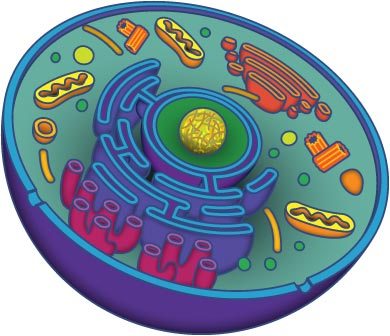
All living things are made up of...
a)
cells
b)
cell tissues
c)
organ
d)
organ systems
17.
When Hooke saw empty boxes he really saw
a)
cell membranes
b)
cell walls
c)
unicellular organisms
d)
M and M's
18.

This scientist improved microscope lenses and looked at what he called animalcules in pond water.
a)
Robert Hooke
b)
Francesco Redi
c)
Anton van Leewenhoek
19.
Stores food and water for the cell.
a)
Cytoplasm
b)
Cell Wall
c)
Vacuole
d)
Nucleus
20.
An organism made of one cell is called
a)
unicellular
b)
multicellular
21.
What is the basic structural and functional unit of all living things?
a)
atom
b)
cell
c)
molecule
d)
human
22.
Rocks are not living because
a)
they never move
b)
they aren't needed for humans
c)
they are not made of cells
d)
they don't break down
23.
also known as the "powerhouse"
a)
cell membrane
b)
storage
c)
cytoskeleton
d)
mitochondria
24.

What are H, I, J in order
a)
mitochondria, Golgi bodies, ER
b)
mitochondria, ER, Golgi bodies
c)
Golgi bodies, chloroplasts, nucleus
25.

What do all of these organisms have in common?
a)
They all have uniform offspring
b)
They are all made of cells
c)
They possess the same features
d)
They have the same internal and external structures
26.

According to cell theory, where did this cell come from?
a)
another living cell
b)
energy from sun
c)
a multicellular organism
d)
the nonliving environment
27.

Robert Hooke, Anton van Leeuwenhoek, Theodor Schwann, Rudolf Virchow, and Matthias Schliden were all responsible for what theory?
a)
The Theory of Gravity
b)
The Theory of Relativity
c)
The Cell Theory
d)
The Theory of Continental Drift
28.

What is the fluid inside a cell called?
a)
Endoplasimic Reticulum
b)
Orange Juice
c)
Water
d)
Cytoplasm
29.
The site of photosynthesis
a)
ribosome
b)
mitochondria
c)
chloroplast
d)
nucleus
30.
This organelle takes food and turns it into ENERGY for plant and animal cells.
a)
Chloroplast
b)
Mitochondria
c)
Lysosome
d)
Ribosome
31.
Which organelle is only found in a plant cell?
a)
nucleus
b)
chloroplast
c)
mitochondria
d)
cell membrane
32.

Directs all cell activities through the DNA located there.
a)
Lysosomes
b)
Nucleus
c)
ribosomes
d)
Mitochondria
33.
Which of the following is directly involved in the transportation of materials inside/within the cell?
a)
Endoplasmic Reticulum
b)
Vacuole
c)
Lysosome
d)
Mitochondria
34.
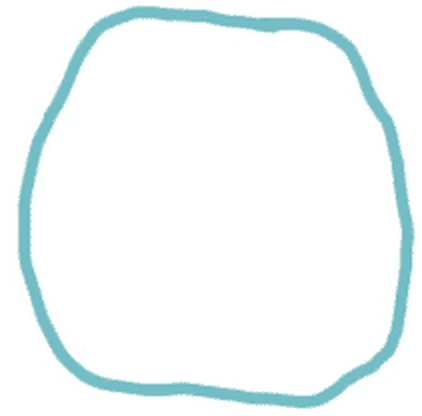
I am the outer most layer of an animal cell. What am I?
a)
cell wall
b)
nucleus
c)
cell membrane
d)
cell skin
35.
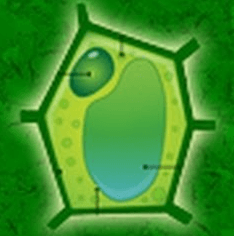
A rigid layer that lies outside the cell's membrane is...
a)
Cytoskeleton
b)
Cilia
c)
Cell Wall
d)
Flagella
36.
Where are proteins made?
a)
Golgi body
b)
Mitoichondria
c)
Chromosomes
d)
Ribosomes
37.
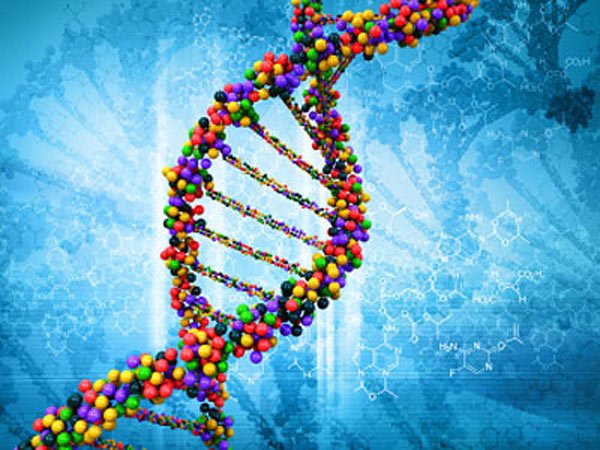
What is the name of the genetic material that is inside the nucleus?
a)
ER
b)
ATP
c)
YOLO
d)
DNA
38.

Which part of the cell is often called "the brain of the cell"?
a)
nuclear membrane
b)
endoplasmic reticulum
c)
nucleus
d)
mitochondria
39.
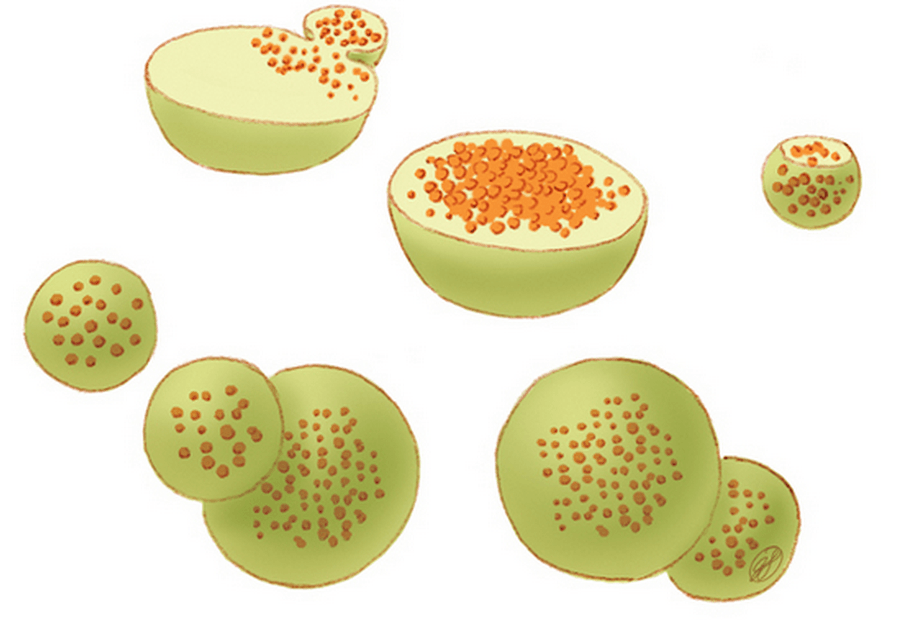
You might think of me as the trash collector, but recycler is maybe more accurate. What am I?
a)
mitochondria
b)
lysosome
c)
vacuole
d)
ribosome
40.
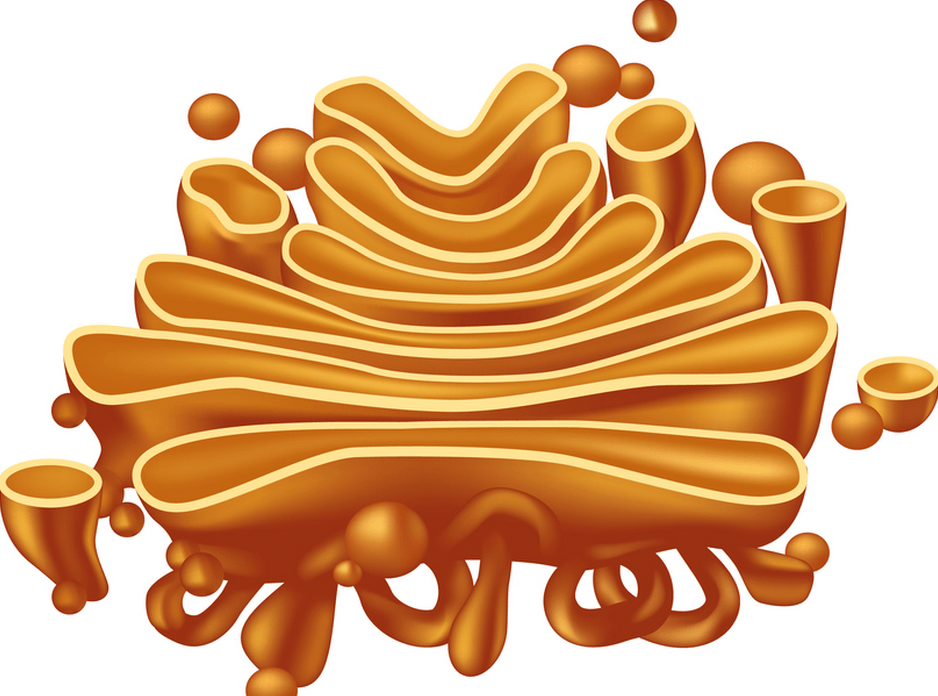
I am a protein packaging and shipping machine! Who am I?
a)
vacuole
b)
ribosome
c)
mitochondrion
d)
golgi apparatus
41.
What is found in both plant and animal cells but is much larger in plant cells?
a)
Nucleus
b)
Mitochondria
c)
Chloroplast
d)
Vacuole
42.
This cell part is in ALL cells. It is the gel-like substance that provides cell shape.
a)
Chloroplasts
b)
Chromosomes
c)
Cytoplasm
d)
Mitochondria
43.
Animal and plant cells are both this type of cell.
a)
Eukaryote
b)
Prokaryote
44.
This scientist discovered and named the cell.
a)
Robert Hooke
b)
Anton Van Leeuwenhoek
c)
John Dalton
d)
Mathias Schleiden
45.
A tiny cell structure that carries out a specific function within a cell.
a)
organelle
b)
cell
c)
nucleus
d)
ribosomes
46.
This thin layer protects the cell and regulates what substances enter and leave the cell.
a)
cell membrane
b)
cell
c)
cell wall
d)
golgi body
47.
Long strands of chromosomes that contain deoxyribonucleic acid (DNA) are located in the __________ of the cell.
a)
nucleus
b)
cell membrane
c)
cytoplasm
48.
Bacteria cells are this type of cell.
a)
Eukaryote
b)
Prokaryote
49.
A typical plant cell is rectangular in shape.
a)
True
b)
False
50.

a small grain shaped organelle found in the cytoplasm of a cell or on the R-ER that produced proteins
a)
cytoplasm
b)
ribosome
c)
cell membrane
d)
mitochondria
51.
Who discovered and named cells?
a)
Captain Hook
b)
Robert Hooke
c)
Zacharias Janssen
d)
Rudolf Virchow
52.
Whose single lens microscope was a vast improvement from the compound microscope?
a)
Anton van Leeuwenhoek
b)
Theodor Schwann
c)
Matthias Schleiden
d)
Zacharias Janssen
53.
The function of this organelle is to break down food, worn out cell/cell organelles.
a)
Nucleus
b)
Vacuole
c)
Ribosome
d)
Lysosome
54.
This organelle function is to package, modify and transport materials in/out of cell.
a)
Rough E.R.
b)
Smooth E.R.
c)
MItochondria
d)
Golgi Body
55.
This function of this organelle is to break down glucose to make cell energy.
a)
Chloroplasts
b)
Mitochondria
c)
Nucleus
d)
ATP
56.

This cell is simple. Only genetic material, cytoplasm and ribosomes inside.
a)
Eukaryotic
b)
Prokaryotic
c)
Plant
d)
Animal
57.
This organelle is in both plants and animals. It is a barrier between the cell and the environment. It controls what goes in and out of a cell.
a)
cell wall
b)
cell membrane
c)
cell organelles
d)
mitochondria
58.
This scientist first used the term cell and built an early microscope
a)
Robert Hooke
b)
Francesco Redi
c)
Schleiden
d)
Anton Van Leeuwenhoek
59.
Which contributed (wrote)to the cell theory
a)
Robert Hooke
b)
Schleiden, Schwann and Virchow
c)
Francesco Redi
60.

This early scientist did experiments to show that life only comes from other life and he disproved spontaneous generation.
a)
Robert Hooke
b)
Francesco Redi
c)
Anton van Leeuwenhoek
61.

Who is the father of microbiology as he was the first to document seeing unicellular organisms
a)
Robert Hooke
b)
Francesco Redi
c)
Anton van Leewenhoek
62.

What are #1 and #7?
a)
arm and base
b)
eyepiece and lens
c)
eyepiece and stage
d)
eyepiece and light
63.

#3 contains the __________
a)
objective lenses
b)
adjustment knobs
c)
light source
d)
eyepiece
64.
When adjusting the microscope focus you should always begin on what power?
a)
low
b)
medium
c)
high
65.
What is not part of the cell theory?
a)
cells are the smallest part of living things
b)
all cells have DNA and a cell membrane
c)
cells come from other cells
d)
every living thing is made of cells
66.
If you have a microscope with an eyepiece of 10x and lens of 35x what is the total magnification?
a)
35x
b)
350x
c)
35.0x
d)
400x
67.

This cell is most likely
a)
a plant
b)
prokaryotic
c)
eukaryotic
d)
a bacteria
68.

What are 1, 2 and 3 in order
a)
cytoplasm, nucleus, membrane
b)
cytoplasm, nucleus, wall
c)
nucleus, cytoplasm, membrane
69.

What feature of the cell is easiest to see
a)
mitochondria
b)
Golgi body
c)
Ribosomes
d)
nucleus
70.
Which is true about the nucleus
a)
control center of the cell
b)
contains DNA
c)
contains chromosomes
d)
all are true
100 %

