
Font size
S
M
L
XL
 Worksheets
Review for Skeletal and Muscular Systems Sports Medicine 1
Total questions: 85
Worksheet time: 46mins
Name
Class
Date
1.
The axial skeleton contains the:
a)
skull
b)
ribs
c)
spine
d)
all of these
2.
Attaches bone to bone
a)
tendon
b)
ligament
3.
Attaches muscle to bone
a)
tendon
b)
ligament
4.
how many bones are in the human body?
a)
200
b)
206
c)
205
d)
204
5.
The appendicular skeleton contains the:
a)
arms
b)
legs
c)
pelvis
d)
all of these
6.
The functions of the skeletal systems includes:
a)
movement
b)
protection
c)
store minerals and make blood cells
d)
all of these
7.
The bumps, grooves, and other structures on a bone are called:
a)
bone markings
b)
age spots
c)
osteoblasts
d)
imperfections
8.
The 2 types of bone markings are:
a)
depressions and bumps
b)
depressions and projections
c)
indentations and holes
d)
none of these
9.
A large round projection is called a:
a)
tuberosity
b)
condyle
c)
ramus
d)
foramen
10.
The ____________ of a bone usually sits on a narrow neck.
a)
head
b)
neck
c)
facet
d)
condyle
11.
A ___________ is a smooth flat surface for articulation.
a)
condyle
b)
facet
c)
spine
d)
tuberosity
12.
A tube or canal in a bone is called a _____________.
a)
line
b)
cave
c)
tubercle
d)
meatus
13.
A narrow ridge of bone is called a ______________.
a)
spine
b)
crest
c)
tuberosity
d)
trochan
14.
A __________ sits on top of a condyle or above the condyle.
a)
tubercle
b)
facet
c)
epicondyle
d)
trochanter
15.
Types of bones are:
a)
Flat, short, and long
b)
Short, long, flat, and circular
c)
Flat, irregular, short, long, and thick
d)
Flat, irregular, short, and long
16.
The middle section of a long bone is called the ___________.
a)
Epiphysis
b)
Endosteum
c)
Diaphysis
d)
Periosteum
17.
The articular cartilage covers the __________ of a long bone.
a)
Endosteum
b)
Medullary cavity
c)
Diaphysis
d)
Weight bearing surface
18.
The _____________ skeleton is for protection.
a)
appendicular
b)
axial
19.
The _____________ skeleton is for movement.
a)
appendicular
b)
axial
20.
How many vertebrae are in the cervical spine?
a)
12
b)
7
c)
5
d)
10
21.
How many vertebrae are in the lumbar spine?
a)
10
b)
7
c)
5
d)
12
22.
How many vertebrae are in the thoracic spine?
a)
5
b)
7
c)
12
d)
10
23.
The process of bone formation is called _________.
a)
Oogenesis
b)
Osseus
c)
Hardening
d)
Ossification
24.
Smooth muscles are found mainly in the ______________.
a)
Walls of hollow organs
b)
walls of the heart
c)
skeletal muscles
d)
walls of the lumbar spine
25.
One contraction followed by another before the muscle relaxes is called a ____________.
a)
hypertrophy
b)
tetanus
c)
twitch
d)
hypotrophy
26.
Which of these is NOT a function of the muscular system?
a)
movement
b)
produce heat
c)
produce osteoblasts
d)
stability of joints
27.
Skeletal muscles are _________ and __________.
a)
Involuntary and striated
b)
Involuntary and unstriated
c)
Voluntary and striated
d)
Voluntary and unstriated
28.
Cardiac muscle is _________ and __________.
a)
Involuntary and striated
b)
Involuntary and unstriated
c)
Voluntary and striated
d)
Voluntary and unstriated
29.
The biceps femoris muscle spans across what two joints?
a)
Knee and ankle
b)
Neck and shoulder
c)
Shoulder and elbow
d)
Hip and knee
30.
The biceps brachii muscle spans across what two joints?
a)
Knee and ankle
b)
Neck and shoulder
c)
Shoulder and elbow
d)
Hip and knee
31.
Cardiac muscle is found in the ______________.
a)
Arm
b)
Lungs
c)
Heart
d)
Colon
32.
If the antagonist performs flexion, the agonist performs __________.
a)
Adduction
b)
Extension
c)
Abduction
d)
Rotation
33.
The menisci are ___________.
a)
Cartilage
b)
Tendons
c)
Ligaments
d)
Bones
34.
The ACL is a ___________.
a)
Cartilage
b)
Ligament
c)
Tendon
d)
Bone
35.
Muscles are made of:
a)
Proteins and water
b)
Creatine and vitamins
c)
Proteins and minerals
d)
Minerals and water
36.
The quadriceps muscles __________ the knee.
a)
flex
b)
extend
c)
adduct
d)
rotate
37.
The hamstring muscles __________ the knee.
a)
flex
b)
extend
c)
rotate
d)
adduct
38.
The hamstring muscles ___________ the hip.
a)
flex
b)
extend
c)
rotate
d)
abduct
39.
___________ tissue covers the body and lines all cavities.
a)
Muscular
b)
Epithelial
c)
Connective
d)
Nervous
40.
Cartilage, bone and adipose are all __________ tissue.
a)
Muscular
b)
Epithelial
c)
Connective
d)
Nervous
41.
The brain, spinal cord, and nerves are __________ tissue.
a)
Muscular
b)
Epithelial
c)
Connective
d)
Nervous
42.
Which is NOT a type of muscle?
a)
Cardiac
b)
Smooth
c)
Skeletal
d)
Grooved
43.

The Five regions of the spine are:
a)
Vetebrae,Lumbar,
Thoracic
Sacrum,
Coccygeal
Thoracic
Sacrum,
Coccygeal
b)
Fascicle, Lumbar, Sacrum, Thoracic
c)
Cervical, Thoracic, Lumbar, Sacrum, Coccygeal
d)
Cervical, Thoracic, Lumbar, Sacrum,
44.
The tailbone; bears body weight when sitting; formed by the fusion of 3 to 5 vertebrae during adolescence;
a)
Axis
b)
Sacral
c)
Atlas
d)
Coccyx
45.
The section of spine directly below the cervical region is called the
a)
Lumbar
b)
Thoracic
c)
Sacral
d)
Coccyx
46.
The section of the spine immediately below the thoracic region is called the
a)
cervical
b)
lumbar
c)
coccyx
d)
sacral
47.
The fused portion of the spine located in the pelvic region is called the
a)
lumbar
b)
sacral
c)
cervical
d)
thoracic
48.

What muscle is this?
a)
Gastrocnemius
b)
Tibialis Anterior
c)
Extensor Digitorum Longus
d)
Plantaris
49.

What muscle is this?
a)
Trapezius
b)
Erector spinae
c)
External obliques
d)
Internal obliques
50.

What muscle is this?
a)
Trapezius
b)
Buccinator
c)
Flatus abdominis
d)
Rectus abdominis
51.

What muscle is this?
a)
Trapizius
b)
External Obliques
c)
Latissmus dorsi
d)
Rectus abdominus
52.

What bone is this?
a)
Ribs
b)
Femur
c)
Clavicle
d)
Patella
53.

What bone is this?
a)
Femur
b)
Humorous
c)
Tibia
d)
Fibula
54.

What is this in red?
a)
Patella
b)
Pelvis
c)
Ulna
d)
Radius
55.

What bone is this in the forearm?
a)
Humorous
b)
Femur
c)
Radius
d)
Ulna
56.

What bone is this
a)
Humerus
b)
Femur
c)
Ulna
d)
Tibia
57.

What bone is this in the lower leg?
a)
Fibula
b)
Femur
c)
Tibia
d)
Radius
58.

What bone is this?
a)
Clavicle
b)
Patella
c)
Vertebrae
d)
Pelvis
59.

What is this?
a)
Brain
b)
Nose
c)
Skull
d)
Vertebrae
60.

What are the bones in red called?
a)
Tarsals
b)
Metatarsals
c)
Phalanges
d)
Metacarpals
61.

What is this bone?
a)
ulna
b)
radius
c)
humerus
d)
clavicle
62.

What are the bones in green called?
a)
metacarpals
b)
phelanges
c)
tarsals
d)
metatarsals
63.

Is this the axial or appendicular skeleton?
a)
Axial
b)
Appendicular
64.

Is this the axial or appendicular skeleton?
a)
Axial
b)
Appendicular
65.
The spinal column is a part of which division of the skeleton?
a)
Axial
b)
Appendicular
66.
The ribs are a part of which division of the skeleton?
a)
Axial
b)
Appendicular
67.

Name the bone shown in green.
a)
Femur
b)
Tibia
c)
Humerus
d)
Fibula
68.

What bone is this?
a)
Humerus
b)
Fibula
c)
Tibia
d)
Femur
69.

What is this bone?
a)
pelvis
b)
tibia
c)
sternum
d)
sacrum
70.
fingers and toes
a)
phalanges
b)
metacarpals
c)
metatarsals
d)
fibula
71.
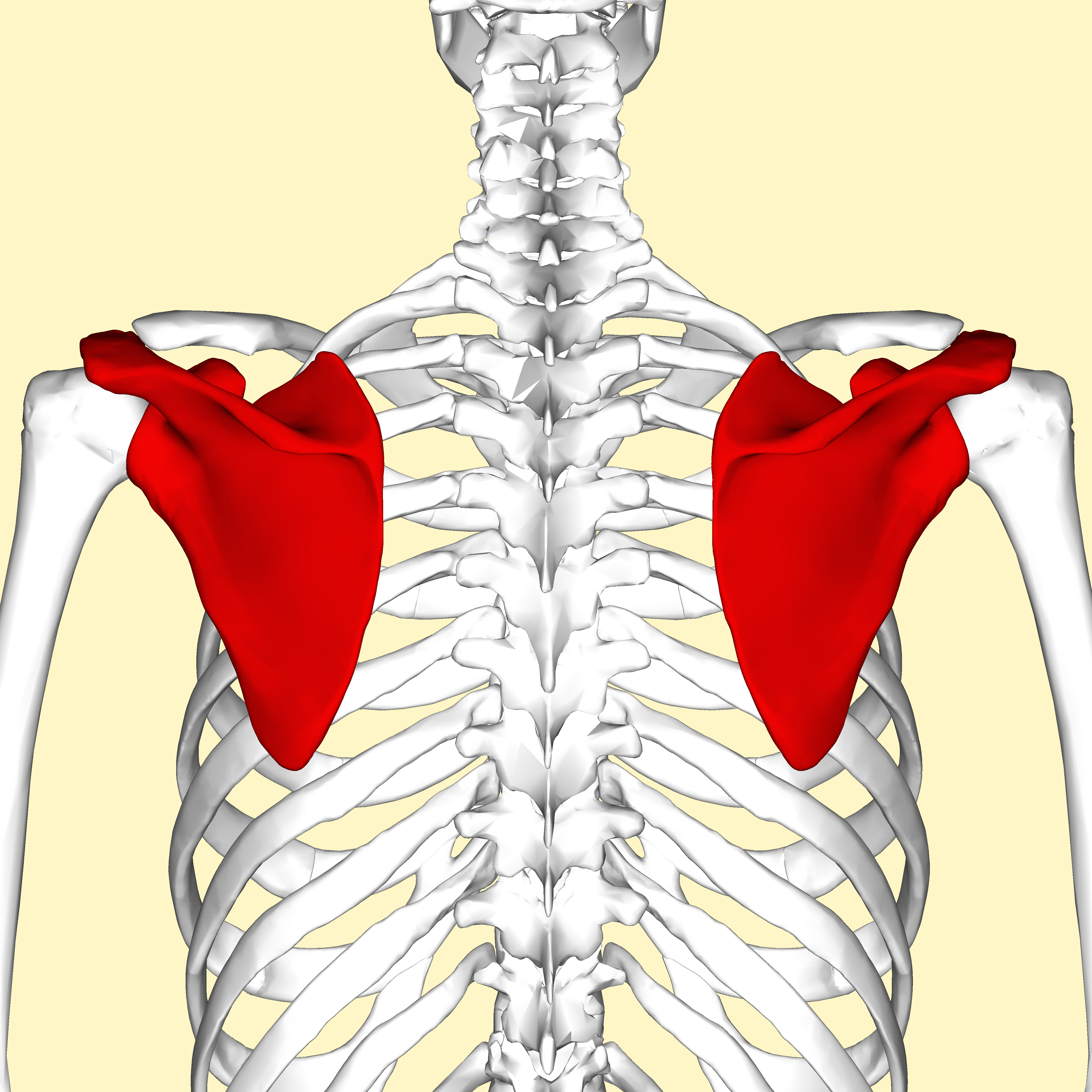
What bones is represented in the picture?
a)
Clavicle
b)
Scapula
c)
Sternum
d)
Carpals
72.

Name the bone shown in green.
a)
Ischium
b)
Pubis
c)
Calcaneus
d)
Ilium
73.

Name the bone shown in green.
a)
Ischium
b)
Pubis
c)
Calcaneus
d)
Ilium
74.

What is this muscle?
a)
Latissimius Dorsi
b)
Trapezius
c)
Triceps
d)
Erectors
75.

What are the muscles in blue?
a)
Hamstring
b)
Quadriceps
c)
Gastronecmius
d)
Satorius
76.

What are the muscles in red?
a)
Pectoral
b)
Tricep
c)
Bicep
d)
Deltoid
77.

What is this muscle?
a)
Glutueal
b)
Hamstring
c)
Quadricep
d)
External Oblique
78.

What is this muscle?
a)
Tricep
b)
Deltoid
c)
Hamstring
d)
Bicep
79.

What are these muscles?
a)
Abdominal
b)
External Oblique
c)
Erectors
d)
Satorius
80.

What are these muscles ?
a)
Biceps
b)
Triceps
c)
Occuli
d)
Trapezius
81.

What hamstring muscle is this?
a)
Sartorius
b)
Biceps femoris
c)
semitendinousus
d)
Gracilis
82.

Name the muscle
a)
sartorius
b)
aductors
c)
gluteus maximus
d)
hamstring
83.

What part of the spine is indicated in yellow?
a)
Cervical
b)
Thoracic
c)
Lumbar
d)
Coccyx
84.

What part of the spine is shown in orange?
a)
Cervical
b)
Thoracic
c)
Lumbar
d)
saccral
85.

What part of the spine is shown in green?
a)
Lumbar
b)
Thoracic
c)
Cervical
d)
Coccyx
Reset

