
 Worksheets
Law Enforcement - Dual Credit Practice Exam
Total questions: 80
Worksheet time: 49mins
Which Constitutional Amendment protects against unreasonable searches and seizures and requires probable cause to issue a warrant?
The 1st Amendment
The 2nd Amendment
The 4th Amendment
The 19th Amendment
What is another name for the "exclusionary rule"
Fruit of the Dead Tree
Fruit of the Poisonous Tree
Fruit of the Forbidden Tree
Which Supreme Court case established an officer's right to "stop and frisk" a suspect?
Wilson v. Arkansas (1995)
Carrol v. United States (1925)
Terry v. Ohio (1968)
What principle did Katz v. United States (1968) affirm?
Places are to be protected by the 4th Amendment, not people.
People are to be protected by the 4th Amendment, not places.
The 4th Amendment does not protect people or places.
In what circumstances are search warrants unnecessary?
When a person consents (agrees) to the search
If the search was conducted pursuant to an arrest
In a exigent (emergency) circumstance
If the search was conducted while the officer was in "hot pursuit" of the suspect
Miranda Rights are connected to what Constitutional Amendment?
The 1st Amendment
The 4th Amendment
The 5th Amendment
The 8th Amendment
Which Supreme Court case allowed officers to conduct "pretextual stops" ?
Whren v. United States (1996)
Maryland v. Wilson (1997)
Standard for a stop and frisk.
Probable cause
Reasonable cause
Reasonable suspicion
Reasonable search
Police officers must knock and announce their presence before entering a dwelling.
Terry v. Ohio
Miranda v. Arizona
Wilson v. Arkansas
Hudson v. Michigan
Two-pronged test for establishing a "reasonable expectation of privacy."
Terry v. Ohio
Katz v. United States
Wilson v. Arkansas
Hudson v. Michigan
Description, in a warrant, must describe the place and things to be seized.
Specificity
Individuality
Particularity
Discretionary
An officer may order the passengers, as well as the driver, out of the car during a traffic stop.
Whren v. United States
Maryland v. Wilson
Katz v. United States
Miranda v. Arizona
Four criteria plain view doctrine establishment.
Whren v. United States
Maryland v. Wilson
Katz v. United States
Coolidge v. New Hampshire
Voluntary waiver of Miranda rights may be done:
Orally
In writing
Orally or in writing
In the presence of counsel
Intent of the suspect waiving Miranda must be clear.
Davis v. United States
Maryland v. Wilson
Katz v. United States
Coolidge v. New Hampshire
Henry Fielding formed "The Bow Street Runners" in 1748
True
False
What era of law enforcement emphasizes the need for police officers to be in close contact with the public?
Political Era
Reform Era
Professional Era
Community Model Era
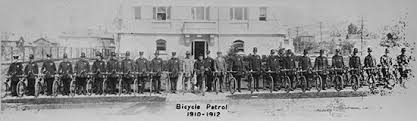
The most famous police reformer in the early part of the 20th century was who?
Stephen Girard
J. Edgar Hoover
August Vollmer
O.W. Wilson
The model of professional policing was developed from Vollmer’s essential elements. Please click all that apply.
Laws should be equally enforced
Merit should be on the basis of personnel procedures
Members should be well trained, disciplined, and tightly organized.
The crime-fighting role should be prominent

What level of proof is required for an officer to conduct a traffic stop?
Probable Cause
Reasonable Suspicion
Reasonable Doubt
Proof Beyond A Reasonable Doubt

What level of proof is required for an officer to make an arrest?
Probable Cause
Reasonable Suspicion
Reasonable Doubt
Proof Beyond A Reasonable Doubt

If this is present, the defendant will be found "Not Guilty".
Probable Cause
Reasonable Suspicion
Reasonable Doubt
Proof Beyond A Reasonable Doubt
Arturo was stopped by a police officer on his way home from school. The police officer wanted to search Arturo’s backpack because he heard a teenage boy had just robbed the candy store on the corner. Arturo said to the officer, “Do you have a warrant?” The officer said, “no.” Arturo informed the officer that he couldn’t search his bag because it violated his rights. What amendment is Arturo exercising?
4th Amendment
5th Amendment
6th Amendment
1st Amendment
Which is not one of the four basic responsibilities of a police officer?
Enforcing laws
Making laws
Preventing crime
Preserving the peace
Providing services
Encompasses protection of, among others, the President, the Vice President, former presidents, visiting heads of state, and major presidential and vice presidential candidates. Protection from this federal agency extends to Congressmen, Foreign Dignitaries, etc.
Department of Homeland Security - U.S. Secret Service
Department of Homeland Security - Bureau of Customs and Border Protection
Department of the Treasury - Internal Revenue Service
Department of Justice - Federal Bureau of Investigations
Department of Justice - Drug Enforcement Agency
Which statement best describes the Due Process Clause included in the 5th Amendment?
“Through an extensive process, every person is guaranteed a trial by Grand Jury - no matter the charge.”
“No person shall be deprived of life, liberty, or property without due process of law.”
“No person cannot be tried for same crime twice.”
“The right to avoid giving testimony that will make you appear guilty of a crime.”
Most agencies require at a minimum that a police officer:
Not have been convicted of a felony
Be a U.S. Citizen
Have or be eligible to have a driver’s license in the state where the department is located
Meet weight and eyesight requirements
All of these are requirements
This federal agency investigates the illegal importation and sale of controlled drugs.
DEA
ICE
U.S. Coast Guard
IRS
If an officer has _________ in a situation, he may frisk or detain (Terry v. Ohio) the suspect briefly.
Reasonable Suspicion
his/her K-9 present
Probable Cause
his/her weapon loaded
_________ must exist for the police to be able to arrest someone or obtain a search warrant.
Reasonable Suspicion
Probable Cause
"Limited Privacy"
Consent
_________ is the logical belief, supported by facts and circumstances, that a crime has been, is being, or will be committed.
Probable Cause
Consent
Search Warrant
Reasonable Suspicion
Which is not included in the 5th Amendment?
Speedy and fair trial
"Due Process" Clause
Self-Incrimination
What does the 6th Amendment include?
Speedy and fair trial
"Double Jeopardy"
Freedom of Religion
Cruel and unusual punishment
This Federal Agency is responsible for protecting the United States from terrorist attacks, protect the United States against foreign intelligence operations and espionage, protect the United States against cyber-based attacks and high-technology crimes working to combat public corruption at all levels.
Federal Bureau of Investigation (FBI)
Drug Enforcement Agency (DEA)
Immigration & Customs Enforcement (ICE)`
U.S. Marshals
This agency within the U.S. Department of Justice manages and sells seized or forfeited assets of criminals, is responsible for the confinement and transportation of federal prisoners who have not been turned over to the Bureau of Prisons, and is the primary federal agency responsible for fugitive investigations.
U.S. Department of Justice
Drug Enforcement Agency (DEA)
U.S. Marshals Service
Federal Bureau of Investigation (FBI)
This cabinet department of the U.S. federal government has responsibilities in public security, roughly comparable to the interior or home ministries of other countries. Its stated missions involve anti-terrorism, border security, immigration and customs, cyber security, and disaster prevention and management.
U.S. Department of Justice
U.S. Department of Homeland Security
U.S. Department of the Treasury
U.S. Department of Transportation
This is a United States federal law enforcement agency under the United States Department of Justice, tasked with combating drug smuggling and distribution within the United States.
U.S. Department of Justice
Drug Enforcement Agency (DEA)
Immigration and Customs Enforcement (ICE)
Internal Revenue Service (IRS)
This agency is charged with regulating and facilitating international trade, collecting import duties, and enforcing U.S. regulations, including trade, customs, and immigration. This is one of the largest law enforcement agencies in the United States. It has a workforce of more than 45,600 sworn federal agents and officers.
Drug Enforcement Agency (DEA)
Immigration & Customs Enforcement (ICE)
U.S. Department of Justice
U.S. Department of Homeland Security
A cargo ship is hijacked with Somalian pirates and is moving towards the United States. Once the ship reaches around 40 miles off the east coast of the US, this department’s agencies work together to halt the ship and prevent an invasion onto United States’ soil. Who handles this situation?
U.S. Department of the Treasury
U.S. Department of Homeland Security
U.S. Coast Guard
U.S. Navy
This Federal Law Enforcement agency caught wind of illegal possession and sale of firearms in interstate commerce. Working in conjunction with state and local law enforcement officers, this federal department tracked down the lawbreakers and charged them.
U.S. Department of Justice
Bureau of Alcohol, Tobacco, Firearms, and Explosives (ATF)
Drug Enforcement Agency (DEA)
Federal Bureau of Investigation (FBI)
Protecting the public Courthouse protection, carrying out orders of the court, sequestering a jury, serving eviction notices & court summonses, and collecting taxes. These are responsibilities of which level of law enforcement?
State
County
Federal
Assist local police agencies, investigate crimes that cross from one county to another, provide law enforcement in areas that don’t have a police agency, break strikes and control labor movements. Which level of law enforcement carries these out?
City
County
State
Federal
The “father of modern police administration” was..
J. Edgar Hoover
August Vollmer
James Comey
Atticus Wickersham
The modern-day sheriff is derived from which early English official?
Parish Constable
Shire Reeve
Henry Fielding
Magistrate
The first ever London Metropolitan Police Force was created by?
Pharaoh Hur Moheb
Sir Robert Peel
Jonathan Wild
Henry Fielding
_______ uses research into everyday police procedures to evaluate current practices and to guide officers and police executives in future decision making.
Evidence-Based Policing
Scientific Police Management
Direct Patrol
The LEAA
Which is the largest segment of law enforcement today?
Federal law enforcement
State-level law enforcement
Local law enforcement
Private protective services
How many principles of policing did Peel establish?
10
11
12
13
What is the correct order of the historical periods of law enforcement:
political, professional, reform, community
community, professional, reform, political
political, reform, professional, community
community, reform, political, professional
3. What is not a characteristic of Community-Oriented Policing?
a) Focus is on proactive crime prevention rather than emergency response
b) Encourages officers to see citizens as partners
c) Shifts decision-making and discretion downward to patrol officers
d) Less visible operations
4. Rapid response is a characteristic of which of the following?
a) Traditional law enforcement
b) Community-Oriented Policing
5. Crime investigation is a characteristic of which of the following?
a) Traditional law enforcement
b) Community-Oriented Policing
12. According to findings done by police research, what kind of effect does the current emphasis on crime fighting and randomized patrolling have on reducing crime?
a) Powerful effect
b) No effect
c) Limited effect
d) Research is inconclusive
14. According to the results of police research, a large portion of serious crimes are not deterred by which of the following?
a) 911 calls
b) Foot patrol
c) Rapid response
d) Police isolation
19. According to recommendations from the police research, rather than performing randomized patrols when not handling calls, the officers’ time is more profitably spent addressing what?
a) Tailored patrol strategies
b) Hot spots
c) Beat profiling
d) Specific criminal activities
20. According to recommendations from the police research, what can police identify to reduce the number of repeated calls to specific locations in a community?
a) Tailored patrol strategies
b) Beat profiling
c) Hot spots
d) Specific criminal activities
24. What improves the attitudes of officers toward their jobs and the communities they serve which encourages the officers to develop creative solutions to complex problems?
a) Tailored patrol strategies
b) Beat profiling
c) Permanent shifts
d) Interaction with the community
25. What can officers gain by getting to know community members?
a) Valuable information about criminal activity
b) Valuable information about perpetrators
c) Specific criminal activities
d) A and B
They are generally the first to arrive on scene.
Patrol Officers
Detectives
Their role is more investigative in general.
Patrol Officers
Detectives
The 1973 Advisory Commission raised the minimum hiring age for Police Officers to what?
18
21
25
30
Your Right to an Attorney is found in which Constitutional Amendment?
4th
5th
6th
7th
The "Miranda Rights" include the reading of which two rights to those being arrested or charged with a crime?
Right to a Jury & Right to a Lawyer
Right to Remain Silent & Right to Legal Searches
Right to Remain Silent & Right to a Lawyer
Right to a Jury & Right to Confront Witnesses
Which Crime Lab Department would typically be responsible for examining a blood sample?
Trace Evidence
Firearms & Toolmarks
DNA
Latent Print
Which Crime Lab Department would be responsible for examining a fiber or physical samples of wood/dirt/etc. ?
Trace Evidence
Questioned Documents
The Cornoner
Latent Print
They would be responsible for determining the official time & cause of death.
The Latent Print Unit
Entomologists
A Coroner
Patrol Officers
In order to secure a warrant an officer must apply for one from whom?
The Attorney General
The Governor
A Judge
A Town/City Selectman
A warrant would be needed even if evidence is left out in plain view.
True
False
The Exclusionary Rule can be applied if what occurs.
No Evidence Exists
Excessive Force is used
Officers make wrongful arrests
Evidence is seized illegally
If someone consents to a search is a warrant still needed?
Yes
No

