wayground logo

Free Printable Worksheets

NEW

Font size

S
M
L
XL
Worksheets

Ecology

Total questions: 42

Worksheet time: 10hrs 47mins

Name
Class
Date
1.

All of the life on Earth exists in

a)

An Ecosystem

b)

a biome

c)

the biosphere

d)

ecology

2.
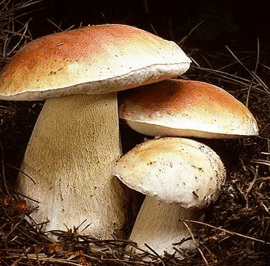
Which of the following is a decomposer
a)
Fox
b)
fungi
c)
virus
d)
brazillian pepper tree
3.
Which of the following describes how ALL consumers get their energy 
a)
from eating primary producers
b)
From inorganic chemicals like hydrogen sulfide
c)
directly from the sun
d)
from eating organisms that were once living or are living
4.
The synthesis of organic compounds by certain bacteria, especially in deep-sea hydrothermal vents, using energy obtained from the chemical oxidation of simple inorganic compounds. 
a)
photosynthesis
b)
chemosynthesis
c)
geochemicalsynthesis
d)
astrosynthesis
5.
Earthworm 
a)
carnivore
b)
herbivore
c)
detrivore 
d)
omnivore
6.
bear
a)
herbivore
b)
carnivore
c)
detritivore
d)
omnivore
7.
COW
a)
herbivore
b)
Carnivore
c)
omnivore
d)
detritivore
8.
Human
a)
herbivore
b)
omnivore
c)
carnivore
9.
The series of steps in which a large fish eats a small fish the has eaten algae is a 
a)
Food web
b)
Food chain 
c)
Pyramid of numbers
d)
Pyramid of biomass
10.
The total amount of living tissue at each trophic level in an ecosystem can be shown is an 
a)
Energy Pyramid
b)
Pyramid of numbers
c)
biomass pyramid 
11.
Which group of organisms is always found at the base of a food chain or food web ?
a)
Producers
b)
Secondary Consumers
c)
The sun
d)
tertiary or third level consumers 
12.
This shows the relative amount of energy or matter contained within each trophic level in a given food chain or food web 
a)
Ecological pyramid
b)
hydrothermal vent system
c)
Ecological math 
d)
Ecodiversity 
13.
Where does chemosynthesis take place?
a)
open ocean
b)
hydrothermal vents
c)
Treetops
d)
in the stratosphere
14.
All of the living and nonliving things in an area that interact with each other are called a/an ______.
a)
community
b)
habitat
c)
population
d)
ecosystem
15.
An area where an organism finds food, shelter and water in a specific arrangement
a)
niche
b)
biosphere
c)
biome
d)
habitat
16.
The non-living part of an ecosystem
a)
Ocean
b)
Lava Flow
c)
Birds
d)
Abiotic
17.
The study of how living things interact with one another and with their environment.
a)
Biology
b)
Lithology
c)
Ecology
d)
Farmacology
18.
Different populations living and interacting with each other in the same area
a)
Biome
b)
Ecosystem
c)
Community
d)
Niche
19.
What is the original source of almost all energy in most ecosystems?
a)
carbohydrates
b)
sunlight
c)
water
d)
carbon
20.
An organism that produces its own food supply from inorganic compounds is called a(an)
a)
heterotroph
b)
consumer
c)
detritivore
d)
autotroph
21.
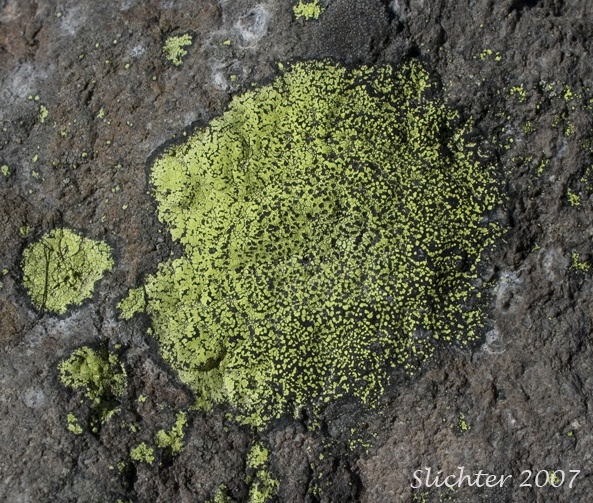
which symbiosis is this 
a)
parasitism 
b)
mutualism
c)
commensalism
d)
nonalism 
22.
symbiotic relationship in which both organisms benefit
a)
competition
b)
Mutualism
c)
nitrogen fixation
d)
energy pyramid
23.
What does a food web represent?
a)
All connections of energy flow throughout all organisms in a habitat.
b)
The specific ways that mutualism is carried out.
c)
A single pathway or energy flow between organisms. 
d)
How carnivores get their food. 
24.
symbiotic relationship in which one organisms benefits and the other organism is not affected
a)
invasive (non-native) species
b)
mutualism 
c)
nitrogen fixation
d)
commensalism
25.
An organism that needs to eat other organisms to obtain energy is known as a:
a)
Autotroph
b)
Producer
c)
Consumer
d)
Mutualist
26.
The living portions of the ecosystem.
a)
Biotic factors
b)
Abiotic factors
27.
 plants that convert energy from the sun
a)
decomposer
b)
primary consumer
c)
secondary consumer
d)
producer
28.
What are the Abiotic factors in this image? 
a)
water, sunlight, dirt, air
b)
birds and plants
c)
birds, water, dirt
d)
plants, water
29.
An organism that gets energy from breaking down dead organisms, non-living material or waste
a)
producer
b)
consumer
c)
decomposer
d)
autotroph
30.
Which of the following illustrates the correct ordering of trophic levels?
a)
decomposers-carnivores-autotrophs-herbivores
b)
herbivores-autotrophs-carnivores-decomposers
c)
producers-herbivores-carnivores-decomposers
d)
carnivores-producers-omnivores
31.

What is the role of the pioneer species in Primary Succession?

a)

To kill any remaining organisms from before the disturbance

b)

To break down rock and rebuild soil

c)

To provide food for large animals

d)

To put fresh oxygen into the air

32.

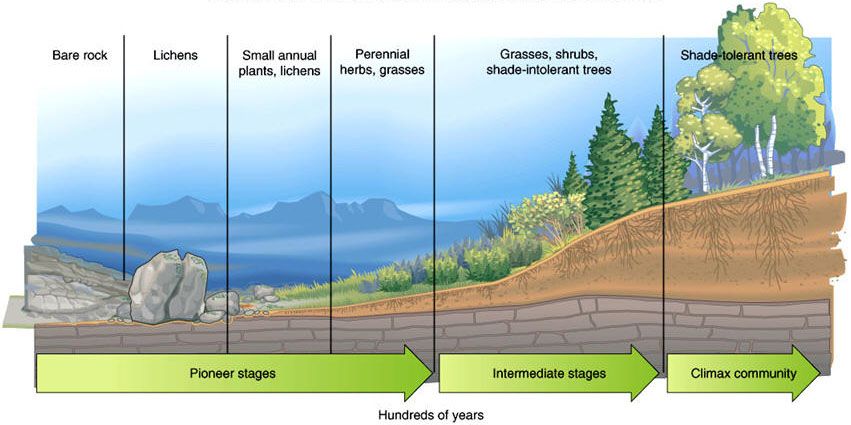
The picture shows what type of succession?

a)

primary

b)

secondary

c)

tertiary

d)

quadanary

33.
What is the name given to lichen or algae after a primary succession?
a)
pioneer species
b)
volunteer species
c)
founder species
d)
conqueror species
34.

After a volcanic eruption, lava covers the land. What is the order that plants grow to repopulate the area?

a)

Lichens → Shrubs → Grasses → Trees

b)

Lichens → tree → shrubs→Grasses

c)

Grasses → Lichens → Shrubs → Trees

d)

Lichens → Grasses → Shrubs → Trees

35.

Succession type?

a)

primary succession

b)

secondary succession

c)

tertiary succession

d)

variable succession

36.

What type of species/community is a redwood forest?

a)

Climax Community

b)

Pioneer Species

c)

Intermediate Species

d)

Tertiary Community

37.

What are "apex predators?"

a)

primary consumers

b)

top predators

c)

producers

38.
An organism that is killed and eaten by another organism
a)
Predator
b)
Prey
c)
Competition
d)
Adaptation
39.
A frog eats a fly. The frog and fly are demonstrating ________.
a)
mutualism
b)
competition
c)
predator/prey
d)
parasitism
40.

This is the largest number of individuals of a population that the environment can support...

a)

carrying capacity

b)

population crash

c)

lag phase

d)

mutualism

41.
If there is more food than usual in an ecosystem, then the population will mostly likely...
a)
stay the same
b)
decrease
c)
increase
d)
reach carrying capacity
42.

When a toucan dies a ____________, such as bacteria will break down its body.

a)

Scavenger

b)

Relationship

c)

Predators

d)

Decomposer