
 Worksheets
Earth Science Quiz
Total questions: 35
Worksheet time: 36mins
Name
Class
Date
1.
Where is the point at which the first movement occurs during an earthquake?
a)
Epicenter
b)
Focus
c)
Fault
d)
Plate
2.
Where is the point on the Earth’s surface directly above the focus of an earthquake?
a)
Epicenter
b)
Fault
c)
Hypocenter
d)
Tremor
3.
What is an instrument that detects and records waves produced by earthquakes? (This piece of equipment can measure the magnitude of an earthquake.)
a)
Epicenter
b)
Fault
c)
Seismogram
d)
Seismograph
4.
What is the measure of the amount of energy released in an earthquake?
a)
Earthquake
b)
Epicenter
c)
Magnitude
d)
Seismogram
5.
Which scale measures the intensity of the ground movement?
a)
Mercalli Scale
b)
Richter Scale
c)
Seismogram Scale
d)
Bernoulli Scale
6.
What is a smaller earthquake that follows a larger earthquake?
a)
Aftershock
b)
Liquefaction
c)
Seismic Gap
d)
Tsunami
7.

Sand Andreas Fault formed at this type of boundary-
a)
Transform Boundary
b)
Convergent Boundary
c)
Divergent Boundary
d)
Hot Spot
8.

This is an example of -
a)
convergent
b)
divergent
c)
transform
9.
Fossils, landforms, glaciers, and puzzle were all evidence of-
a)
big bang theory
b)
tectonic plate theory
c)
sea floor spreading theory
d)
volcanic theory
10.

This is the theory that states that all the continents started as a single massive continent and have been MOVING apart for over 200 million years and the man that proposed it.
a)
The Big Bang Theory, Einstein
b)
The Pangea Theory, Hutton
c)
The Tectonic Plate Theory, Darwin
d)
The Continental Drift Theory, Wegner
11.

The movement of plates at a divergent boundary
a)
move towards each other
b)
slide past each other
c)
move up and down
d)
move away from each other
12.
What is a tectonic plate?
a)
A peice of the earths crust
b)
A peice of the mantle
c)
A peice of the core
d)
A peice of the whole world
13.
Which layer of the earth is in the very center?
a)
Crust
b)
Mantle
c)
Outer Core
d)
Inner Core
14.
From which layer of the earth does lava come from?
a)
Crust
b)
Mantle
c)
Outer Core
d)
Inner Core
15.
Which layer of the earth is much thinner than the others?
a)
Crust
b)
Mantle
c)
Outer Core
d)
Inner Core
16.
What is the name of the layer that contains the uppermost mantle and crust
a)
Asthenosphere
b)
Mesosphere
c)
Lithosphere
d)
Transosphere
17.
This layer of Earth is the thickest part
a)
crust
b)
outer core
c)
mantle
d)
inner core
18.
Is the Outer core solid or liquid?
a)
solid
b)
liquid
19.
What was the name given to all the continents when they were joined as one super continent
a)
Supreme Continent
b)
United States
c)
Bill Nye's World
d)
Pangea
20.
What is molten rock that has formed deep within the Earth?
a)
Hot Spot
b)
Magma
c)
Lava
d)
Volcano
21.
What is molten rock that has reached the Earth's surface?
a)
Aa
b)
Lava
c)
Magma
d)
Pahoehoe
22.

This rock formed when bits of other rocks became pressed into a solid. What type of rock is it?
a)
Sedimentary Rock
b)
Metamorphic Rock
c)
Igneous Rock
23.
What are the 3 major types of rocks?
a)
Igneous, Metamorphic, Sedimentary
b)
Metamorphic, Igneous, Cementation
c)
Brown, Red, Gray
d)
Streak, Hardness, Breakage
24.
Which of the words below describe mud, sand, and tiny bits of rocks that cement together to form a type of rock?
a)
stalactites
b)
magmas
c)
metamorphs
d)
sediments
25.
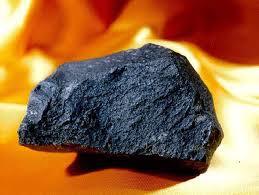
This rock was found near the mouth of a volcano. What type of rock is this?
a)
Sedimentary
b)
Igneous
c)
Metamorphic
26.

The process when rocks break into smaller pieces due to exposure to natural elements is called
a)
erosion
b)
weathering
c)
sediments
27.
The movement of weathered material (sediment) is called?
a)
weathering
b)
erosion
c)
deposition
28.
What is deposition?
a)
Dropping off sediment
b)
Movement of sediment
c)
Breaking down of sediment
29.

A never ending process by which rocks are changed from one type to another.
a)
weathering and erosion
b)
rock cycle
c)
heat and pressure
d)
pressing and cementing
30.

What property of rock is being observed when looking for how easily it breaks or splits evenly?
a)
cleavage
b)
luster
c)
hardness
d)
streak
31.

What property of rock is being observed when looking for whether it is shiny?
a)
luster
b)
hardness
c)
streak
d)
color
32.
Extreme Heat and Pressure creates a _________ rock.
a)
Igneous
b)
Metamorphic
c)
Sedimentary
d)
Mineral
33.
What two processes make sediment?
a)
Weathering
b)
Erosion
c)
Weathering & Erosion
34.
Dull, silky, waxy, pearly, and earthy are terms that best describe which property of minerals?
a)
luster
b)
color
c)
streak
d)
cleavage
35.

A triangle-shaped (deposit) landform at the mouth of a river is called a
a)
weather
b)
delta
c)
landform
100 %

