wayground logo

Free Printable Worksheets

NEW

Font size

S
M
L
XL
Worksheets

Energy and Energy Transformations

Total questions: 40

Worksheet time: 53mins

Name
Class
Date
1.
What three variables have an effect on an object potential energy?
a)
height, mass and velocity
b)
mass, velocity and gravity
c)
mass, height and gravity.
d)
half, mass and velocity squared
2.
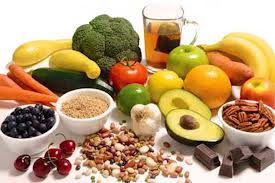
What type of energy in the picture
a)
electrical
b)
potential
c)
nuclear
d)
thermal
3.
What type of energy comes to us from the sun?
a)
potential
b)
electromagnetic or radiant
c)
nuclear
d)
thermal
4.
What type of energy does the sun convert to get light and heat?
a)
potential
b)
electromagnetic or radiant
c)
nuclear
d)
thermal
5.
What type of energy does a car battery have when you aren't using it?
a)
electric
b)
thermal
c)
sound
d)
chemical
6.
A high pitch note that might break glass is an example of which type of energy?
a)
mechanical energy
b)
thermal energy
c)
sound energy
d)
radiant energy
7.
A microwave oven uses which type of energy
a)
mechanical energy
b)
sound energy
c)
thermal energy
d)
electromagnetic or radiant energy
8.
At which of these positions does the ball have both the greatest kinetic energy and the least potential energy?
a)
Position 1
b)
Position 2
c)
Position 3
d)
Position 4
9.
The diagram below shows a hot air balloon rising. Propane gas tanks are seen at the bottom of the balloon.
What energy transformations occur when propane gas is used to lift the balloon?
a)
Gravitational potential -> light -> chemical
b)
Chemical -> Gravitational potential -> thermal
c)
Thermal -> chemical -> light
d)
Chemical -> thermal -> Gravitational potential
10.
A diver bounces on a board, as shown. Where does the diver have the least kinetic energy?
a)
1
b)
2
c)
3
d)
4
11.
At which point is potential energy greatest?
a)
W
b)
X
c)
Y
d)
All points
12.

At which point is total energy greatest?

a)

W

b)

X

c)

Y

d)

All points

13.
What is the KE of a football which has a mass of 0.8 kg and is kicked at a velocity of 10m/s.
a)
80 J
b)
3.2 J
c)
160 J
d)
40 J
14.

What is the kinetic energy of a ball with a mass of 5 kg rolling at 5 m/s

a)

5 000 000 J

b)

12.5 J

c)

125 J

d)

62.5 J

15.
Roller coaters mainly involve energy transformations between which two forms of energy?
a)
Electric and kinetic
b)
Kinetic and thermal
c)
Potential and kinetic
d)
Potential and thermal
16.
You drop a 5 kg ball from a height of 2 m. Just before it reaches the ground, what type of energy does it have?
a)
Potential Energy
b)
Kinetic Energy
c)
Nuclear Energy
d)
Chemical Energy
17.
You drop a 5 kg ball from a height of 2 m. Just before it reaches the ground, roughly how much kinetic energy does it have? 
HINT - Think about Conservation of Energy
a)
10 J
b)
100 J
c)
7 J
d)
20 J
18.
You drop a 5 kg ball from a height of 2 m. At the top, roughly how much Potential Energy does it have?
a)
10 J
b)
100 J
c)
7 J
d)
20 J
19.
The amount of matter in an object is its
a)
mass
b)
volume
c)
density
d)
weight
20.

If you travel to the moon will your mass be greater than, less than, or the same as on Earth?

a)

greater

b)

same

c)

less

d)

E = mc2

21.
If an object's mass is doubled, and its height halved, what happens to its gravitational potential energy?
a)
Nothing
b)
Doubles
c)
Halves
d)
Quadruples
22.

If you travel to the moon will your potential energy at the top of the lander ladder be greater than, less than, or the same as on Earth?

a)

greater

b)

same

c)

less

d)

Unicorns

23.
What type of energy is in this picture?
a)
Kinetic
b)
Potential
c)
Chemical
d)
Sound
24.
What kind of energy is represented in the picture?
a)
Thermal
b)
Chemical
c)
Sound
d)
Nuclear
25.
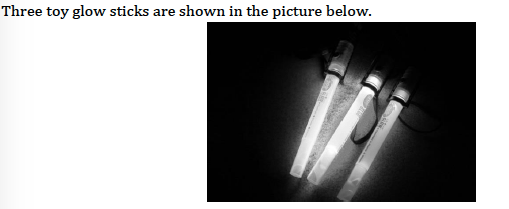
The glow sticks produce light for a short amount of time. The light from the glow stick is a conversion from what to what?
a)
thermal to light
b)
gravitational to potential
c)
radiant to electrical
d)
chemical to light
26.

Wind turbines and windmills convert what energy to another?

a)

Kinetic to electric

b)

Gravitational potential to electric

c)

Mechanical to potential

d)

Thermal to sound

27.

Work is:

a)

A transfer of energy from one object to another, OR the change in type of energy.

b)

Something you get paid for

c)

Something you take home

d)

Makes you sweat

28.

The faster an object moves, the ________ kinetic energy it has.

a)

more

b)

less

c)

none of the above

d)

all of the above

29.

What is the kinetic energy of a zorb and human with a total mass of 90Kg rolling at 10m/s?

a)

3,700J

b)

900J

c)

4,500J

d)

6,500J

30.

What is the kinetic energy of a 4kg shot put thrown with a velocity of 13m/s

a)

676 J

b)

3.25 J

c)

17J

d)

338 J

31.

An explosion of gas from a Hawaiian volcano blows a rock into the sky. the rock has 2000J of kinetic energy. What was its mass if the rock had a velocity of 20m/s

a)

200Kg

b)

20,000Kg

c)

10Kg

d)

200Kg

32.

This panda is 832 kg and is 0.31m off the ground. How much gravitational potential energy have they got?

a)

1341.9 J

b)

268387 J

c)

2579.2 J

d)

257.92 J

33.

Calculate Kevin's Kinetic energy when jogging at 2.9 ms-1 with a mass of 37 kg.

a)

1073 ms-1

b)

3.11.17 ms-1

c)

155.585 ms-1

d)

15558.5 ms-1

34.
What form of energy?
a)
Mechanical (kinetic) energy
b)
Chemical (kinetic) energy
c)
Sound (potential) energy
d)
Sound (kinetic) energy
35.
What kind of energy?
a)
Thermal (kinetic) energy
b)
Thermal (potential) energy
c)
Nuclear (kinetic) energy
d)
Mechanical (kinetic) energy
36.
What form of energy is stored in the bonds between molecules of matter?
a)
chemical energy
b)
heat energy
c)
kinetic energy
d)
mechanical energy
37.
At what position does the rock have the greatest kinetic energy?
a)
A
b)
B
c)
D
d)
E
38.
This would be
a)
Nuclear (kinetic) energy
b)
Nuclear (potential) energy
c)
Chemical (kinetic) energy
d)
Chemical (potential) energy
39.
According to the Law of Conservation of Energy, energy cannot be _________ or ____________. 
a)
destroyed, destroyed
b)
created, saved
c)
created, destroyed
d)
lost, found
40.

What is energy changing from one form to another?

a)

energy conservation

b)

energy transformation

c)

energy transfer

d)

energy metamorphosis