
 Worksheets
Unit Test Chapter 1-3
Total questions: 87
Worksheet time: 2hrs 49mins
Name
Class
Date
1.
This organelle takes food and turns it into ENERGY for plant and animal cells.
a)
Chloroplast
b)
Mitochondria
c)
Lysosome
d)
Ribosome
2.
The site of photosynthesis
a)
ribosome
b)
mitochondria
c)
chloroplast
d)
nucleus
3.
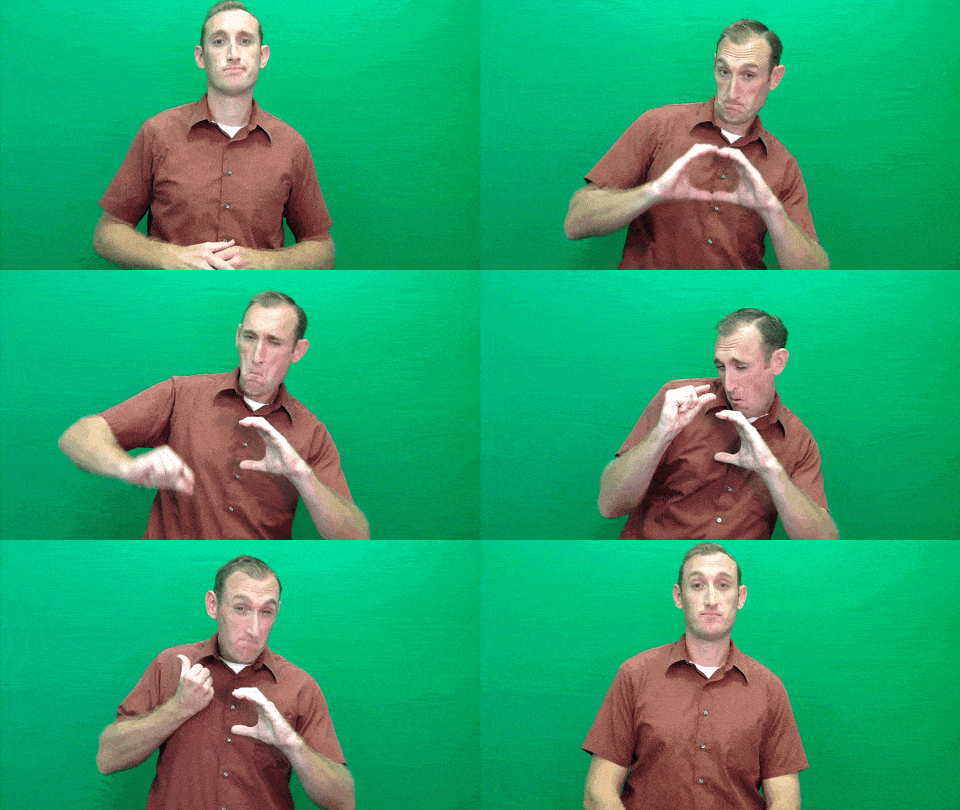
The ___________ is the basic unit of life
a)
organ
b)
cell
c)
atom
d)
tissue
4.
When many organ systems work together it can form...
a)
organ
b)
cells
c)
organ system
d)
organism
5.

This is a example of........
a)
organ system
b)
cells
c)
organ
d)
tissue
6.

This is a example of ........
a)
cell
b)
organ system
c)
organ
d)
tissue
7.
The brain is a part of which organ system?
a)
nervous
b)
skeletal
c)
muscular
d)
digestive
8.
The lungs and the kidneys are examples of
a)
cells
b)
organs
c)
tissues
d)
organ systmes
9.
Which organelle is only found in a plant cell?
a)
nucleus
b)
chloroplast
c)
mitochondria
d)
cell membrane
10.

Directs all cell activities through the DNA located there.
a)
Lysosomes
b)
Nucleus
c)
ribosomes
d)
Mitochondria
11.
Which of the following is directly involved in the transportation of materials inside/within the cell?
a)
Endoplasmic Reticulum
b)
Vacuole
c)
Lysosome
d)
Mitochondria
12.
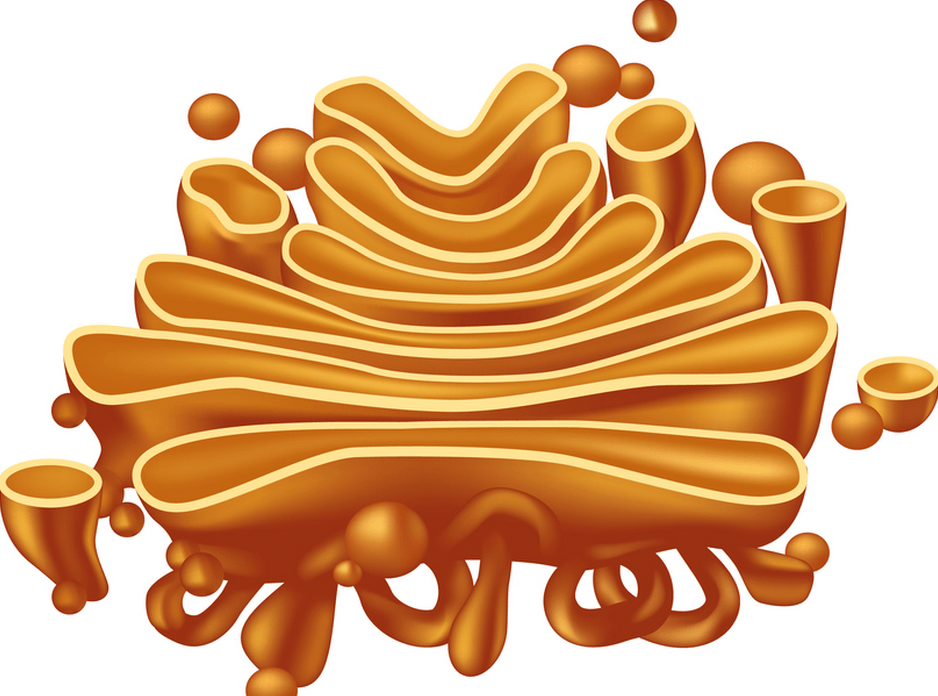
I am a protein packaging and shipping machine! Who am I?
a)
vacuole
b)
ribosome
c)
mitochondrion
d)
golgi apparatus
13.
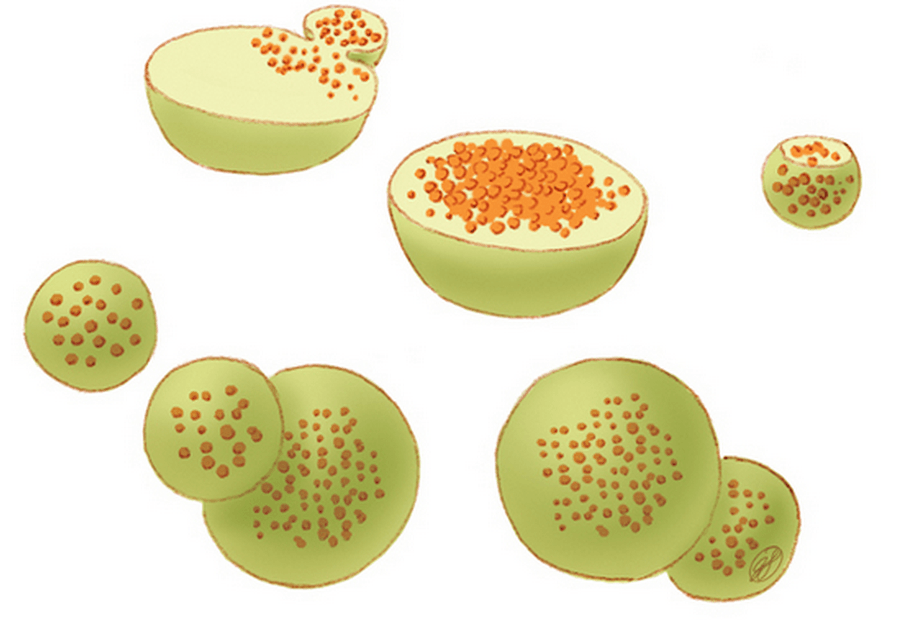
You might think of me as the trash collector, but recycler is maybe more accurate. What am I?
a)
mitochondria
b)
lysosome
c)
vacuole
d)
ribosome
14.
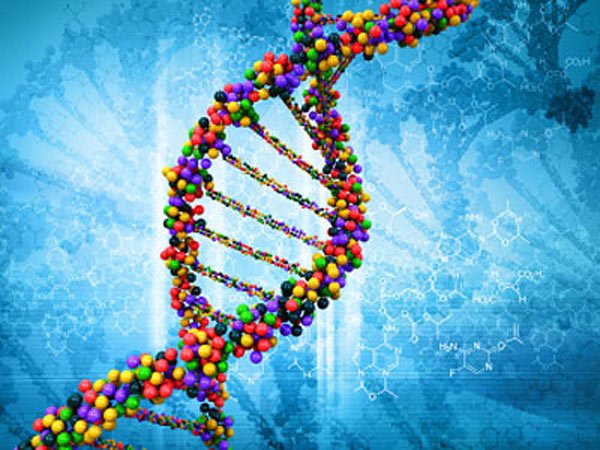
What is the name of the genetic material that is inside the nucleus?
a)
ER
b)
ATP
c)
YOLO
d)
DNA
15.
What is found in both plant and animal cells but is much larger in plant cells?
a)
Nucleus
b)
Mitochondria
c)
Chloroplast
d)
Vacuole
16.
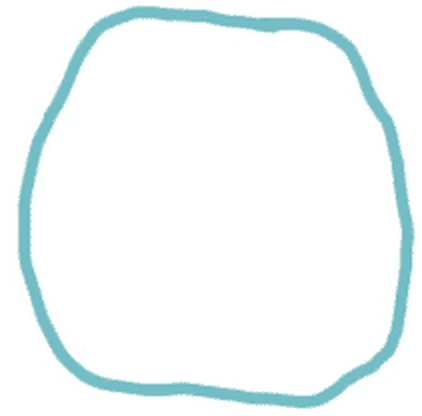
I am the outer most layer of an animal cell. What am I?
a)
cell wall
b)
nucleus
c)
cell membrane
d)
cell skin
17.
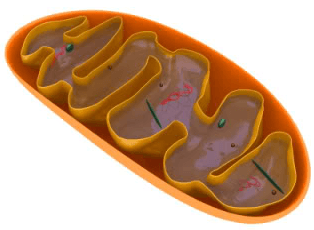
What are tiny organelles that convert glucose into ATP?
a)
Ribosomes
b)
Vesicles
c)
Cytoskeleton
d)
Mitochondria
18.
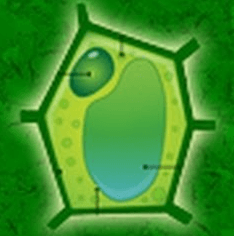
A rigid layer that lies outside the cell's membrane is...
a)
Cytoskeleton
b)
Cilia
c)
Cell Wall
d)
Flagella
19.
What organelle is called the "powerhouse" of a cell?
a)
Endoplasmic Reticulum
b)
Nucleus
c)
Mitochondria
d)
Nucleolus
20.
What is the gel-like substance inside of cells called?
a)
photoplasm
b)
photosynthesis
c)
cytoskeleton
d)
cytoplasm
21.

What would happen to the plant cell without the chloroplasts?
a)
There wouldn't be an organelle that performs photosynthesis
b)
There wouldn't be an organelle that serves as the resevoir for water and waste
c)
There wouldn't be an organelle that regulates what comes in and out of the cell
d)
They wouldn't be an organelle that makes necesary proteins
22.

What do all of these organisms have in common?
a)
They all have uniform offspring
b)
They are all made of cells
c)
They possess the same features
d)
They have the same internal and external structures
23.

According to cell theory, where did this cell come from?
a)
another living cell
b)
energy from sun
c)
a multicellular organism
d)
the nonliving environment
24.

Robert Hooke, Anton van Leeuwenhoek, Theodor Schwann, Rudolf Virchow, and Matthias Schliden were all responsible for what theory?
a)
The Theory of Gravity
b)
The Theory of Relativity
c)
The Cell Theory
d)
The Theory of Continental Drift
25.
The diffusion of WATER across a semi-permeable membrane is
a)
osmosis
b)
diffusion
c)
endocytosis
d)
exocytosis
26.
The movement of molecules from higher concentration to lower concentration is
a)
diffusion
b)
cell division
active transport
active transport
c)
active transport
d)
tonicity
27.
Active transport requires
a)
energy
b)
the nucleus
c)
chloroplasts
d)
lysosomes
28.
What organelles are only found in PLANT cells
a)
lysosomes & centrioles
b)
cell wall & chloroplasts
c)
nucleus & nucleolus
d)
mitochondria & ribosomes
29.
What organelles is NOT found in a PROkaryote
a)
nucleus
b)
cell membrane
c)
Chromosomes (DNA)
DNA
DNA
d)
ribosomes
30.
The movement of substances through a cell membrane with the use of cell energy
a)
Osmosis
b)
Diffusion
c)
Passive Transport
d)
Active transport
31.
The process by which a cell membrane surrounds and encloses a large particle to bring it into the cell
a)
Passive transport
b)
Endocytosis
c)
Exocytosis
d)
Osmosis
32.
The process by which a cell gets rid of large particles by creating vacuoles that become part of the cell membrane
a)
Diffusion
b)
Exocytosis
c)
Endocytosis
d)
Passive Transport
33.
The process of releasing energy from food is called:
a)
Plant respiration
b)
Human circulation
c)
Body perspiration
d)
Cell respiration
34.
Oxygen is released during
a)
Cellular respiration
b)
Photosynthesis
c)
Breathing
d)
Fermentation
35.

Moving from areas of LOW concentration to areas of HIGH concentration is called?
a)
Passive Transport
b)
Active Transport
c)
Diffusion
d)
Osmosis
36.

Our cell membrane only lets certain substance in and out of the cell. This is called?
a)
Semi-Selectively Permeable
b)
Perforated
c)
Non-conductive
d)
Permeable
37.

a)
Endocytosis
b)
Active Transport
c)
Mitochondria
d)
Exocytosis
38.

a)
Osmosis
b)
Cellular Respiration
c)
Photosynthesis
d)
Respiration
39.

a)
Endocytosis
b)
Exocytosis
c)
Diffusion
d)
Osmosis
40.

a)
Passive Transport
b)
Osmosis
c)
Active Transport
d)
Diffusion
41.

a)
Diffusion
b)
Cellular Respiration
c)
Osmosis
d)
Active Transport
42.
What is the chemical formula for cellular respiration?
a)
Carbon Dioxide + Water = Glucose + Oxygen + Energy (ATP)
b)
Glucose + Oxygen = Water + Carbon Dioxide + Energy (ATP)
c)
Water + Carbon Dioxide + Energy = Glucose + Oxygen
43.

I am only found in a plant cell. What am I?
a)
cell wall
b)
mitochondria
c)
cytoplasm
d)
chloroplast
44.
Group of cells
a)
Organ
b)
Tissue
c)
Organism
d)
Function
45.
Organs working together to perform a function of the body
a)
TIssue
b)
Organism
c)
Organ System
d)
Structure
46.
What do eukaryotic cell have that prokaryotic cells lack?
a)
genetic information
b)
cytoplasm
c)
plasma membrane
d)
membrane bound organelles
47.

This is a example of ........
a)
cell
b)
tissue
c)
organ
d)
organ system
48.

Using this image, what organelle is C?
a)
Cell Wall
b)
Mitochondria
c)
Large Cell Vacuole
d)
Chloroplast
49.

What is the process that plant and algae cells use to make food?
a)
Water Cycle
b)
Photosynthesis
c)
Decomposition
d)
Vegetarian
50.
Structure determines function
a)
True
b)
False
51.
Certain tasks of cells
a)
Organ System
b)
Structure
c)
Specialization
d)
Biotic
52.

Fruit fly body cells have 8 chromosomes. After mitosis, you would expect a resulting fruit fly daughter cell to have ...
a)
16 chromosomes.
b)
46 chromosomes.
c)
8 chromosomes.
d)
4 chromosomes.
53.
The process by which the nuclear material is divided equally between two new cells
a)
mitosis
b)
cancer
c)
spindle
d)
centromere
54.

Name the phase:
a)
Anaphase
b)
Telophase
c)
Metaphase
d)
Prophase
55.

What is the next phase of mitosis?
a)
Prophase
b)
Metaphase
c)
Anaphase
d)
Telophase
56.

Name the phase:
a)
Prophase
b)
Metaphase
c)
Anaphase
d)
Telophase
57.

Name the phase:
a)
Prophase
b)
Metaphase
c)
Anaphase
d)
Telophase
58.

The stages of mitosis in order
a)
Metaphase, Anaphase, Prophase, Telophase
b)
Prophase, Anaphase, Metaphase, Telophase
c)
Prophase, Metaphase, Anaphase, Telophase
d)
Anaphase, Prophase, Telophase, Metaphase
59.
This is when a new organism grows by mitosis and cell division on the body of its parent. The bud, or offspring is identical to the parent. The bud, when large enough, can break off of the parent and live on its own.
Examples of this include yeast, hydra and cactus
Examples of this include yeast, hydra and cactus
a)
Regeneration
b)
Vegetative propagation
c)
Fission
d)
Budding
60.
A white cat had a litter of kittens that were orange, grey, and black and white spotted. Is this the result of sexual or asexual reproduction? And how would you characterize the offspring listed above?
a)
Sexual reproduction with uniform offspring
b)
Asexual reproduction with diverse offspring
c)
Sexual reproduction with diverse offspring
d)
Asexual reproduction with uniform offspring
61.
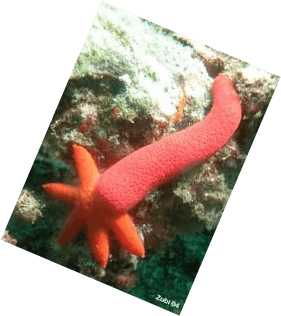
What type of asexual reproduction is taking place?
Fishermen work hard to catch and remove all the starfish that get into their favorite shell fishing beds and the “underwater farms” where they raise clams and oysters. In the past, they put the starfish into their boats, cut them up with knives, and then throw the pieces of starfish overboard. They thought this would kill the starfish. What they did not know was that each piece of starfish will grow into a whole new animal.
Fishermen work hard to catch and remove all the starfish that get into their favorite shell fishing beds and the “underwater farms” where they raise clams and oysters. In the past, they put the starfish into their boats, cut them up with knives, and then throw the pieces of starfish overboard. They thought this would kill the starfish. What they did not know was that each piece of starfish will grow into a whole new animal.
a)
Regeneration
b)
Vegetative propagation
c)
Budding
d)
Fission
62.
Requires two parents
a)
sexual
b)
asexual
63.
Requires only one parent
a)
sexual
b)
asexual
64.
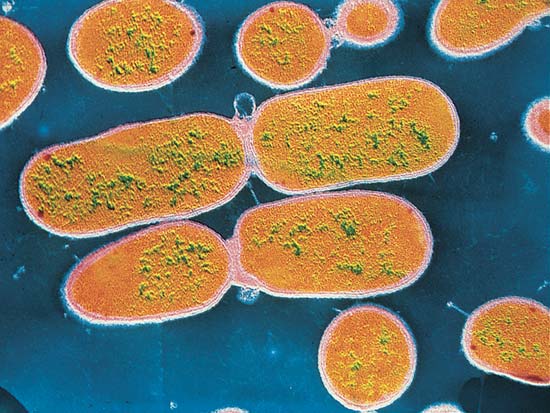
The offspring from asexually reproduced organisms are?
a)
Different than their parents
b)
Identical to parents
c)
Like a combination from both parents
d)
A different species
65.
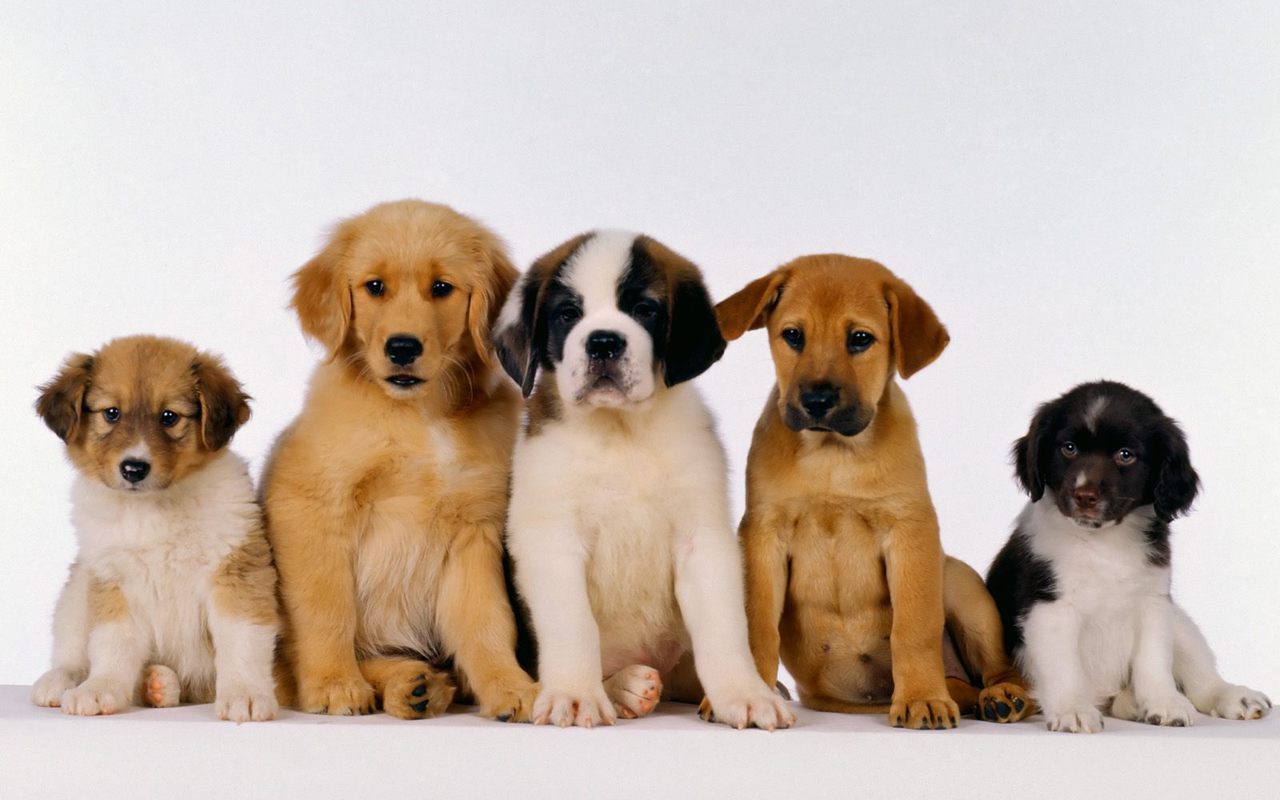
If two organisms reproduce sexually, then their offspring will exhibit a genetic makeup that is -
a)
identical to only one parent
b)
identical to all of its siblings
c)
a unique combination of traits
d)
the recessive traits of each parent
66.

Prokaryotes (bacteria) reproduce asexually via -
a)
spore formation
b)
bud creation
c)
vegetative propagation
d)
binary fission
67.

All of the offspring of an organism have the same genetic material, which is identical to the parent organism. From this, we can conclude that this organism -
a)
makes its own food
b)
is unicellular
c)
live in a marine habitat
d)
reproduces asexually
68.
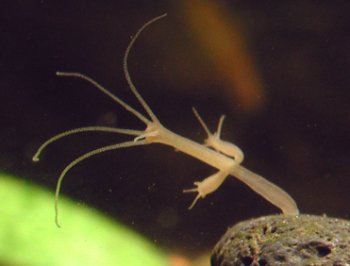
This is when a new organism grows by cell division on the body of its parent. The bud, or offspring is identical to the parent. The bud, when large enough, can break off of the parent and live on its own. Examples of this include yeast, hydra and potatoes.
a)
Regeneration
b)
Vegetative propagation
c)
Fission
d)
Budding
69.
Which type of reproduction is taking place?
Salamanders have a lizard-like appearance, with slender bodies, short noses, and long tails. The female salamander lays its eggs on a stick or rock near water or on land. Some salamander species bury themselves with their eggs underground to keep them safe. There are several different species of salamdars with different colorful patterns.
Salamanders have a lizard-like appearance, with slender bodies, short noses, and long tails. The female salamander lays its eggs on a stick or rock near water or on land. Some salamander species bury themselves with their eggs underground to keep them safe. There are several different species of salamdars with different colorful patterns.
a)
Asexual reproduction with uniform offspring
b)
Sexual reproduction with diverse offspring
c)
Asexual reproduction with diverse offspring
d)
Sexual reproduction with uniform offspring
70.
This is when a new organism grows by mitosis and cell division on the body of its parent. The bud, or offspring is identical to the parent. The bud, when large enough, can break off of the parent and live on its own.
Examples of this include yeast, hydra and cactus
Examples of this include yeast, hydra and cactus
a)
Regeneration
b)
Vegetative propagation
c)
Fission
d)
Budding
71.
This occurs when an offspring grows from a piece of its parent. Examples include Sea Stars, Sea urchins, sea cucumber, sponges, and planarians
a)
Vegetative propagation
b)
Budding
c)
Regeneration
d)
Fission
72.
What are the steps of the cell cycle in order?
a)
Interphase, Mitosis, Cytokinesis
b)
Interphase, Cytokinesis, Mitosis
c)
Mitosis, Cytokinesis, Interphase
d)
Cytokinesis, Mitosis, Interphase
73.
A human cell has 46 chromosomes before mitotic division. How many chromosomes will the daughter cells after mitosis.
a)
12
b)
23
c)
46
d)
92
74.
Uncontrollable cell growth is known as _____
a)
obesity
b)
cancer
c)
diabetes
d)
hepatitis
75.

Label #3
a)
Nucleus
b)
Mitochondria
c)
Vacuole
d)
Golgi Body
76.

Label #4
a)
Cell wall
b)
Cell membrane
c)
Nuclear membrane
d)
Gatekeeper
77.

Label #5
a)
Nucleus
b)
Nucleolus
c)
Endoplasmic Reticulum
d)
Mitochondria
78.

Label #6
a)
Mitochondria
b)
Chromatins
c)
Golgi Bodies
d)
Ribosomes
79.

Label #8
a)
Vacuoles
b)
Lysosomes
c)
Cytoplasm
d)
Endoplasmic Reticulum
80.

Label #10
a)
Endoplasmic Reticulum
b)
Golgi Bodies
c)
Ribosomes
d)
Nucleolus
81.

Label #11
a)
Cell membrane
b)
Cytoplasm
c)
Mitochondria
d)
Ribosomes
82.

Label A
a)
Cell wall
b)
Cell membrane
c)
Cytoplasm
d)
Chloroplast
83.

Label B
a)
Cell membrane
b)
Cytoplasm
c)
Chloroplasts
d)
Cell wall
84.

Label C
a)
Mitochondria
b)
Vacuole
c)
Nucleus
d)
Cytoplasm
85.

Label D
a)
Cytoplasm
b)
Chloroplast
c)
Vacuole
d)
Mitochondria
86.

Label E
a)
Lysosomes
b)
Ribosomes
c)
Cytoplasm
d)
Nucleus
87.

Label F
a)
Cell membrane
b)
Vacuole
c)
Chloroplast
d)
Chromatin
100 %

