
NEW
Font size
S
M
L
XL
 Worksheets
Atoms, PT, PBCTO, Chemical Equations
Total questions: 49
Worksheet time: 1hrs 10mins
Name
Class
Date
1.

What is the missing mass?
a)
10g
b)
20g
c)
20.32g
d)
10.32g
2.
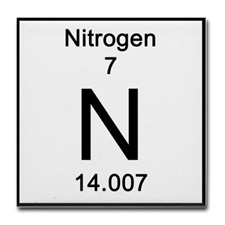
What is the number of protons that the element in this image contain?
a)
14
b)
7
c)
15
d)
18
3.

What is the atomic mass of "F"
a)
9
b)
18
c)
17
d)
19
4.
The positive particles of an atom are
a)
electrons
b)
positrons
c)
neutrons
d)
protons
5.
the central region of an atom where its neutrons and protons are is its
a)
nucleus
b)
electron cloud
c)
core
d)
center
6.
an atom with atomic number 6 would have how many protons
a)
6
b)
12
c)
3
d)
cannot be determined
7.
Particles in an atom that are neutral and have no charge are
a)
negatrons
b)
electrons
c)
neutrons
d)
protons
8.
Which of the following is a negatively charged subatomic particle?
a)
Electron
b)
Proton
c)
Neutron
d)
Quark
9.
The particles that are found in the nucleus of an atom are
a)
neutrons and electrons
b)
electrons only
c)
protons and neutrons
d)
protons and electrons
10.
The atomic number of an elements is the total number of which particles in the nucleus?
a)
neutrons
b)
protons
c)
electrons
d)
protons and electrons
11.
Which of the following is a positively charged subatomic particle found in the nucleus of an atom?
a)
Electron
b)
Proton
c)
Neutron
d)
Quark
12.
Which of the following is a subatomic particle with no charge that is found in the nucleus of an atom?
a)
Electron
b)
Proton
c)
Neutron
d)
Quark
13.
Where are electrons of an atom found?
a)
Nucleus
b)
Electron Cloud
c)
Some are in the nucleus and some in the electron cloud.
d)
They are moving everywhere.
14.
electrons have this type of charge?
a)
negative
b)
positive
c)
neutral
15.
What is the atomic number for an element with three protons?
a)
2
b)
1
c)
3
d)
6
16.
A particle that moves around the nucleus is a(n)...
a)
Proton
b)
Neutron
c)
Electron
d)
Quark
17.
Most of the mass in an atom is concentrated in the...
a)
electrons
b)
nucleus
c)
protons
d)
empty space
18.
What does the nucleus consist of?
a)
Protons + Electrons
b)
Neutrons + Electrons
c)
Atoms
d)
Protons + Neutrons
19.
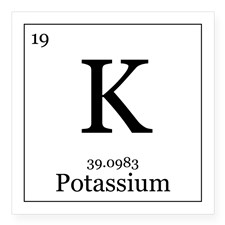
How many neutron are in the atom "K"?
a)
7
b)
2
c)
39
d)
12
20.
In a ___________change, a substance changes into a different substance.
a)
Physical
b)
Chemical
21.
Which of these is NOT a sign that a chemical change has occurred?
a)
A loss of transparency
b)
An unexpected color change
c)
A temperature change
d)
The formation of a precipitate
22.
The Law of Conservation of Mass states
a)
that matter exists in all states and reacts the same
b)
that matter can only be changed into new substances by introducing a catalyst
c)
that matter exists in the same state throughout any chemical change
d)
that matter cannot be created or destroyed and that the mass of the products must equal the mass of the reactants
23.
How many Al atoms are in this compound? 4Al2O3
a)
2
b)
8
c)
6
d)
4
24.
How many F atoms are in this compound?
6MgF2
6MgF2
a)
2
b)
6
c)
8
d)
12
25.

a copper penny turning greenish after a few years.
a)
Chemical Change
b)
Physical Change
26.

An gel ice pack getting cold after you put it in the freezer for an hour.
a)
Chemical Change
b)
Physical Change
27.
Ca is an example of a(n)
a)
Compound
b)
Reaction
c)
Element
d)
Exothermic
28.
Which contains the most number of total atoms?
a)
CO2
b)
2H2O
c)
C12H22O11
d)
C6H12O6
29.
Chemical equations/reactions must always show...
a)
Substances remaining the same
b)
Change in physical state
c)
Law of Conservation of Mass
d)
New elements on each side
30.
The formation of a solid due to a chemical reaction...
a)
Precipitate
b)
State Change
c)
Physical Change
d)
Freezing
31.
Which of the following is a physical change?
a)
A rusting bike
b)
Folding paper
c)
Fireworks
d)
Baking a cake
32.
How many total atoms make up CaCO3?
a)
2
b)
3
c)
4
d)
5
33.
Element or Compound?
H2SO4
H2SO4
a)
Element
b)
Compound
34.
Element or Compound?
Au
Au
a)
Element
b)
Compound
35.
Element or Compound?
Ru
Ru
a)
Element
b)
Compound
36.
Element or Compound?
Salt (NaCl)
Salt (NaCl)
a)
Element
b)
Compound
37.
CO2
a)
Element
b)
Compound
38.

a)
Organic
b)
Not Organic
39.

a)
Organic
b)
Not Organic
40.

a)
Organic
b)
Not Organic
41.

a)
Organic
b)
Not Organic
42.

a)
Organic
b)
Not Organic
43.

a)
Organic
b)
Not Organic
44.

a)
Organic
b)
Not Organic
45.

In this image, what are the information in red is called the_______.
a)
Product
b)
Reactant
c)
Chemical Subscript
46.

In this image, what are the information to the right of the arrow (in black) is called the_______.
a)
Product
b)
Reactant
c)
Chemical Subscript
47.
Read the following chemical formula: C6H12O6. How many hydrogen atoms are in the formula?
a)
12
b)
6
c)
4
48.
Is the following equation balanced or unbalanced?
Fe + S --> FeS
Fe + S --> FeS
a)
balanced
b)
unbalanced
49.

What is the missing mass?
a)
30g
b)
10.39g
c)
40g
d)
40.39
Reset

