
Font size
S
M
L
XL
 Worksheets
General Science A - Final Exam Review
Total questions: 124
Worksheet time: 1hrs 22mins
Name
Class
Date
1.
In the following equation, what are the reactants?
NaHCO3 + HCl →NaCl + H2O + CO2
NaHCO3 + HCl →NaCl + H2O + CO2
a)
NaHCO3 and HCl
b)
HCl and NaCl
c)
NaHCO3 and NaCl
d)
NaCl, H2O and CO2
2.
Which of the following is a statement of the law of conservation of mass?
a)
Mass is created but not destroyed
b)
Mass is destroyed but not created
c)
Mass is neither created nor destroyed
d)
Mass is both created and destroyed, depending on the chemical reaction
3.
In what type of reaction does one reactant form two or more products?
a)
synthesis
b)
decomposition
c)
single replacement
d)
double replacement
4.
Which of the following is a single replacement reaction?
a)
KOH + HCl → KCl + H2O
b)
2Na + Zn(NO3)2 → 2NaNO3 + Zn
c)
2C2H6 + 7O2 → 4CO2 + 6H2O
d)
H2O + CO2 → H2CO3
5.
How are reactions related to chemical bonds?
a)
Bonds in the reactants are broken and bonds in the products are formed
b)
Bonds in the products are broken and bonds in the reactants are formed
c)
Bonds in both the reactants and the products are broken
d)
Bonds are formed in both the reactants and the proucts
6.
In general, an increase in temperature
a)
increases reaction rate
b)
decreases reaction rate
c)
does not affect reaction rate
d)
acts as a catalyst
7.
What type of equation is the following:
C4H10 + O2 → CO2 + H2O
C4H10 + O2 → CO2 + H2O
a)
Combustion
b)
Decomposition
c)
Single Replacment
d)
Double Replacement
8.
Which reaction describes a synthesis?
a)
Ba(OH)2 + 2HCl → BaCl2 + 2H2O
b)
CH4 + 2O2 → CO2 + 2H2O
c)
Zn + CuSO4 → Cu + ZnSO4
d)
2H2 + O2 → 2H2O
9.
In a ___________change, a substance changes into a different substance.
a)
Physical
b)
Chemical
10.
How many F atoms are in this compound?
6MgF2
6MgF2
a)
2
b)
6
c)
8
d)
12
11.

What is the atomic number?
a)
The number of protons in an element
b)
The number of neutrons in an element
c)
The number of protons and neutrons.
d)
The number of protons and electrons.
12.

How many protons are in an atom of carbon?
a)
12.01
b)
8
c)
6
d)
14
13.

What is the name of the atom in the picture. Hint: Look at the proton # and then use the periodic table
a)
Carbon
b)
Silicon
Calcium
Calcium
c)
aluminum
Sodium
Sodium
d)
Calcium
Silicon
Silicon
14.

Which is an electron?
a)
A
b)
B
c)
C
15.

Which is a proton?
a)
A
b)
B
c)
C
16.
An element can be defined by the number of ___________ in the nucleus of its atoms.
a)
protons
b)
neutrons
c)
electrons
d)
atoms
17.

What parts of the atom make up most of its mass?
a)
protons and electrons
b)
protons and neutrons
c)
neutrons and electrons
d)
electrons
18.

Where are protons located in an atom?
a)
nucleus
b)
electron cloud
c)
neutron
d)
who knows?
19.

Where are electrons located in an atom?
a)
nucleus
b)
electron cloud
c)
neutron
d)
who knows?
20.

The number of protons is equal to the
a)
atomic mass
b)
atomic number
c)
atomic structure
d)
atomic link
21.

An atom's protons and neutrons are concentrated in a dense, central region called the...
a)
electron cloud
b)
nucleus
c)
proton
d)
neutron
22.
The nucleus of the atom is considered to have _________________.
a)
A Neutral charge
b)
A negative charge
c)
A positive charge
23.

How many valence electrons are there in this atom?
a)
2
b)
13
c)
3
d)
0
24.

What is the name of the atom in the picture. Hint: Use the periodic table.
a)
Carbon
b)
Oxygen
c)
Aluminum
d)
Cobalt
25.

Which of the lewis models is for carbon?
a)
1
b)
2
c)
3
d)
4
26.
Which of these is the correct definition for subatomic?
a)
An atom
b)
Bigger than an atom
c)
Smaller than an atom
d)
Anything relating to an atom
27.
The subatomic particles that make up neutrons and protons are called __________.
a)
Groupons
b)
Mendelev
c)
Nucleus
d)
Quarks
28.

What is the atomic mass number?
a)
the number of protons in an element
b)
the number of neutrons in an element
c)
the number of protons and neutrons
d)
the number of protons and electrons
29.

What is the mass of a neutron?
a)
about 1/1800th of an amu
b)
0 amu
c)
1 amu
d)
2/3 amu
30.

Electrons have virtually no mass (weight).
a)
True
b)
False
31.
All matter is made of what?
a)
energy
b)
atoms
c)
electrons
d)
compounds
32.

How many of these substances are elements?
a)
2
b)
3
c)
4
d)
5
33.
Atoms are the ______ building blocks
a)
Largest
b)
Smallest
34.
What is the atomic number of Neon
a)
89
b)
73
c)
10
d)
12
35.
Do Electrons Carry Positive or Negative Charges
a)
Positive
b)
Negative
36.
What is Carbons Atomic Number
a)
8
b)
89
c)
6
d)
50
37.
the central region of an atom where its neutrons and protons are is its
a)
nucleus
b)
electron cloud
c)
core
d)
center
38.
an atom with atomic number 6 would have how many protons
a)
6
b)
12
c)
3
d)
cannot be determined
39.
Particles in an atom that are neutral and have no charge are
a)
negatrons
b)
electrons
c)
neutrons
d)
protons
40.
True or False? Neutrons have a negative charge
a)
True
b)
False
41.
What is the atomic number for an element with three protons?
a)
2
b)
1
c)
3
d)
6
42.
In the modern periodic table elements are arranged by:
a)
atomic mass
b)
atomic number
c)
valence electrons
d)
number of isotopes
43.

What does the 1.00794 stand for?
a)
Hydrogen
b)
atomic number
c)
atomic mass
d)
atomic explosion
44.

What is the atomic mass of "F"
a)
9
b)
18
c)
17
d)
19
45.
The first energy level can hold up to how many electrons?
a)
8
b)
4
c)
2
d)
5
46.
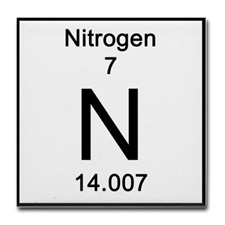
What is the number of protons that the element in this image contain?
a)
14
b)
7
c)
15
d)
18
47.
The particles that are found in the nucleus of an atom are
a)
neutrons and electrons
b)
electrons only
c)
protons and neutrons
d)
protons and electrons
48.
electrons have this type of charge?
a)
negative
b)
positive
c)
neutral
49.
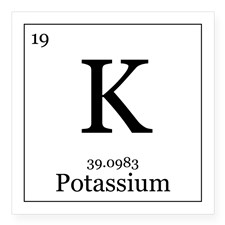
How many neutron are in the atom "K"?
a)
7
b)
2
c)
39
d)
21
50.

What is the number of protons that the element in this image contain?
a)
14
b)
7
c)
15
d)
18
51.
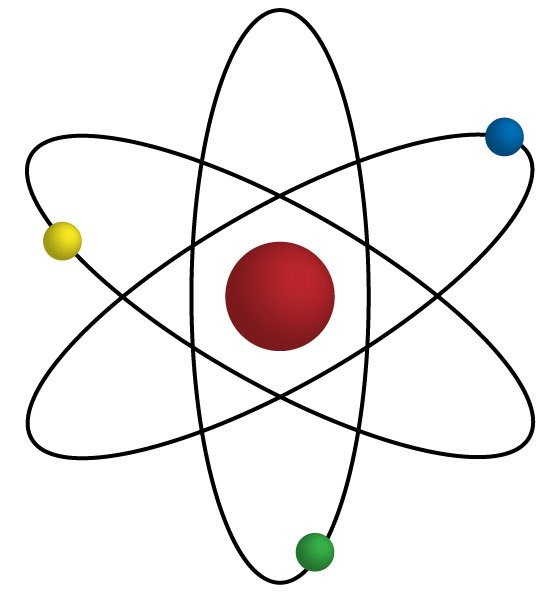
What are the 3 particles that make-up the atom?
a)
protons, neutrons, and isotopes
b)
neutrons, isotopes, and electrons
c)
positives, negatives, and electrons
d)
protons, neutrons, and electrons
52.
What element contains 26 protons?
a)
Iron
b)
Sodium
c)
Aluminum
d)
Helium
53.

How do we solve for number of neutrons?
a)
Mass + Atomic Number= Neutrons
b)
Mass x Atomic Number = Neutrons
c)
Mass - Atomic Number = Neutrons
d)
Mass + Number of Protons = Neutron
54.

What is the mass number of this atom?
a)
4
b)
5
c)
9
d)
none of the above
55.

?
a)
Lithium
b)
Boron
c)
Carbon
d)
Neon
56.

What element is represented in this Bohr Model?
a)
Helium
b)
Hydrogen
c)
Argon
d)
Silver
57.

What element is represented in this Bohr Model?
a)
Lithium
b)
Boron
c)
Carbon
d)
Neon
58.

What element is represented in this Bohr Model?
a)
Beryllium
b)
Boron
c)
Barium
d)
Bromine
59.

This is the correct dot diagram for sodium (Na)
a)
true
b)
false
60.

This is a correct dot diagram for oxygen (O)
a)
true
b)
false
61.

This is a correct dot diagram for carbon (C)
a)
true
b)
false
62.

What is a dependent variable?
a)
A variable being tested in an experiment.
b)
A variable that changes depending on another variable.
c)
A variable that is kept the same in an experiment.
63.

What is a controlled variable?
a)
A variable being tested in an experiment.
b)
A variable that changes depending on another variable.
c)
A variable that is kept the same in an experiment.
64.

What is an independent variable?
a)
A variable being tested in an experiment.
b)
A variable that changes depending on another variable.
c)
A variable that is kept the same in an experiment.
65.

How many independent variables should be in an experiment?
a)
One
b)
Unlimited
66.

How many dependent variables should be in an experiment?
a)
One
b)
Unlimited
67.

How many controlled variables should be in an experiment?
a)
One
b)
Unlimited
68.

In the StudyJams video, what was the independent variable?
a)
The amount of food the hummingbirds ate.
b)
The amount of food in the feeders.
c)
The colors of the feeders.
69.

In the StudyJams video, what was one of the controlled variables?
a)
The amount of food the hummingbirds ate.
b)
The amount of food in the feeders.
c)
The colors of the feeders.
70.

In the StudyJams video, what was the dependent variable?
a)
The amount of food the hummingbirds ate.
b)
The amount of food in the feeders.
c)
The colors of the feeders.
71.

The scientific method is only used in science class to conduct experiments.
a)
False.
b)
True.
72.
An experiment is performed on plants to see how different liquids affect plant growth. Each plant in the experiment is given a different liquid; water, apple juice, or milk. Each plant has the same amount of soil, sunlight, and listens to the same music. In this investigation, the independent variable is ...
a)
The type of plant
b)
The amount of sunlight
c)
The type of music
d)
The type of liquid
73.
An experiment is performed on plants to see how different liquids affect plant growth. Each plant in the experiment is given a different liquid; water, apple juice, or milk. Each plant has the same amount of soil, sunlight, and listens to the same music. In this investigation, what are the controlled variables?
a)
Type of plant, amount of music, and sunlight
b)
Water, apple juice, milk
c)
Plant growth
74.
A student is planning an experiment to find out how the height from which he drops a ball affects how high the ball bounces. The dependent variable is the _____.
a)
Diameter of the ball
b)
Force acting on the ball
c)
Height that the ball bounces
d)
Height from which the ball is dropped
75.
A student is planning an experiment to find out how the height from which he drops a ball affects how high the ball bounces. What is the control variable?
a)
The ball used
b)
The height the ball bounces
c)
Height of the ball being dropped
76.
This variable in an experiment is the one being deliberately changed by the scientist.
a)
dependent variable
b)
independent variable
c)
data
d)
control group
77.
Should experiments be repeated over and over to see if the results are the same each time?
a)
yes
b)
no
78.
A series of steps used by scientists to solve a problem or answer a question.
a)
scientific method
b)
recipe
c)
data collection
d)
metric system
79.
In a controlled experiment, how many independent variables can be worked with at a time?
a)
one
b)
none
c)
two or more
d)
how ever many makes sense.
80.
Mr. S. sets up an experiment to see how the mass of a ball affects the distance it rolls off a ramp. Identify the independent variable.
a)
distance traveled by the ball
b)
height of the ramp
c)
mass of the ball
d)
weight of the ball
81.
Mr. S. sets up an experiment to see how the mass of a ball affects the distance it rolls off a ramp. Identify the dependent variable.
a)
height of the ramp
b)
distance traveled by the ball
c)
mass of the ball
d)
weight of the ball
82.
A student is planning an experiment to find out how the height from which he drops a ball affects how high the ball bounces. The dependent variable is the _____.
a)
Diameter of the ball
b)
Force acting on the ball
c)
Height that the ball bounces
d)
Height from which the ball is dropped
83.
An experiment is performed on plants to see how different liquids affect plant growth. Each plant in the experiment is given a different liquid; water, apple juice, or milk. Each plant has the same amount of soil, sunlight, and listens to the same music. In this investigation, what is the dependent variable?
a)
Type of plant
b)
Water, apple juice, milk
c)
Plant growth
d)
Color of the plant's leaves
84.
Each column in the periodic table is called a
a)
period
b)
group
c)
cluster
d)
unit
85.

The yellow atoms are called
a)
metals
b)
nonmetals
c)
metalloids
d)
noble gases
86.
Group 18 elements are known as the _____ _____ and have full valence shells.
a)
royal gases.
b)
supreme solids.
c)
noble gases.
d)
legit liquids.
87.
Which element is not in the Alkali metal family?
a)
Li
b)
H
c)
Fr
d)
Cs
88.
Which of the following is not a property of metals?
a)
brittle
b)
malleable
c)
lustrous
d)
conductive
89.
How many Valance electrons does Iodine Have?
a)
6
b)
16
c)
7
d)
17
90.
Which group of the periodic table is composed of inert (not reactive) gases?
a)
alkali metals
b)
alkaline earth metals
c)
halogens
d)
noble gases
91.
Elements which are shiny, conduct electricity and heat are called
a)
metal
b)
nonmetal
c)
metalloid
d)
nonexistent
92.
Convert from meters to cm: 9 meters
a)
900 cm
b)
90 cm
c)
0.9 cm
d)
0.09 cm
93.
Convert 17 m to cm:
a)
0.17 cm
b)
0.017 cm
c)
1,700 cm
d)
170 cm
94.
Convert 300 meters to centimeters:
a)
3000 cm
b)
0.3 cm
c)
30,000 cm
d)
3 cn
95.
Convert 8 kilometers to meters
a)
800 m
b)
80,000 m
c)
8,000 m
d)
.008 m
96.
Convert 5 cm to mm:
a)
5,000mm
b)
0.5 mm
c)
0.05 mm
d)
50 mm
97.
Convert 300 cm to m:
a)
3 m
b)
30 m
c)
0.3 m
d)
0.03 m
98.
1000 grams = _____ kilograms
a)
0.0001
b)
1,000,000
c)
10
d)
1
99.
7,000 g = ____ kg
a)
70
b)
700
c)
7
d)
0.07
100.
490,000 g =____ kg
a)
490
b)
49
c)
4,900
d)
0.49
101.
5,000 mg = ____ g
a)
50
b)
5
c)
500
d)
5,000
102.
648 g = ____ mg
a)
6,480
b)
64,800
c)
648,000
d)
64.8
103.

This picture represents which of the following?
a)
Element
b)
Compound
c)
Mixture
104.

This picture represents which of the following?
a)
element
b)
compound
c)
mixture
105.

This picture represents which of the following?
a)
element
b)
compound
c)
mixture
106.
Is salt (NaCI) a compound or a element
a)
Compound
b)
element
107.
which one can be found on the periodic table
a)
Compound
b)
Element
108.
The chemical symbol for Silicon is
a)
S
b)
Sn
c)
Sc
d)
Si
109.
The chemical symbol for Carbon is
a)
C
b)
Cb
c)
Ca
d)
Cn
110.
Elements are represented by chemical symbol. Symbols are written with
a)
all lower case letters
b)
all capital letters
c)
always only one letter
d)
At least and ONLY one capital letter
111.

a copper penny turning greenish after a few years.
a)
Chemical Change
b)
Physical Change
112.

An gel ice pack getting cold after you put it in the freezer for an hour.
a)
Chemical Change
b)
Physical Change
113.
Is making salt water to gargle with a physical or chemical change?
a)
physical
b)
chemical
114.

Baking a cake by mixing flour, sugar, chocolate powder, eggs, and milk, and then heating them in the oven.
a)
Chemical Change
b)
Physical Change
115.
Which of the following is NOT an example of a physical change?
a)
crumpled paper
b)
pencil sharpening
c)
shrunken clothing
d)
sour milk
116.
A change in which NEW substances are formed.
a)
Chemical change
b)
Physical change
c)
Casual change
d)
Formal change
117.
Particles move quickest
a)
solid
b)
liquid
c)
gas
d)
solid, liquid and gas
118.
Particles closest together
a)
solid
b)
liquid
c)
gas
d)
solid, liquid and gas
119.
Definite shape and definite volume
a)
solid
b)
liquid
c)
gas
d)
solid, liquid and gas
120.
No definite shape or volume
a)
solid
b)
liquid
c)
gas
d)
solid, liquid and gas
121.
Definite volume but not definite shape
a)
solid
b)
liquid
c)
gas
d)
solid, liquid and gas
122.

What does this picture represent?
a)
solid
b)
liquid
c)
gas
d)
plasma
123.

Which state of matter do the particles in this picture represent?
a)
solid
b)
liquid
c)
gas
d)
plasma
124.

What does this picture represent?
a)
solid
b)
liquid
c)
gas
d)
plasma
Reset

