
 Worksheets
Natural Selection/Evolution
Total questions: 88
Worksheet time: 2hrs 38mins
Name
Class
Date
1.

characteristic or trait that helps an organism survive in its environment
a)
skills
b)
speciation
c)
natural instinct
d)
adaptation
2.

According to the law of superposition, the oldest fossils are found
a)
At the top of the rock layers
b)
Near the bottom of the rock layers
c)
In the middle of the rock layers
d)
Somewhat near the surface
3.
The differences among a species, like different bird beaks, are called
a)
genes.
b)
variations.
c)
traits.
d)
theories.
4.
A group of organisms capable of interbreeding or exchanging genes
a)
Mutation
b)
Species
c)
Adaptation
d)
Fitness
5.
What is a species?
a)
A group of organisms that can mate with each other and produce fertile offspring.
b)
A group of organisms that genetically are very different from each other.
c)
A group of organisms that can mate and produce offspring even if those offspring are infertile.
d)
Indivual organisms that live in the same environment.
6.

Charles Darwin came up with this theory
a)
Natural Selection
b)
Mutation
7.

To adjust to a changing environment
a)
Mutation
b)
Adapt
8.

Darwin wrote that organisms with traits that are best suited to the environment will ________________
a)
increase in number
b)
become extinct
9.

Another word for adapt is ____________.
a)
change
b)
create
10.
Which term refers to the process by which individuals that are better suited to the environment survive and reproduce therefore passing down their genes to their offspring?
a)
Evolution
b)
Variation
c)
Adaptation
d)
Natural Selection
11.

Change over time...
a)
Evolution
b)
Nucleotide
12.
The white feathers of a snowy owl allow it to blend in with its environment during the winter months (snow). This is an example of ________________
a)
Species
b)
Environmental Change
c)
Adaptation
d)
Variation
13.
Survival of the fittest or when favorable adaptations reproduce faster is called what?
a)
Evolution
b)
Adaptation
c)
Natural selection
d)
Fossilization
14.
Inherited trait that helps an organism survive is a(n) __________.
a)
Fossil
b)
Adaptation
c)
Ancestor
d)
Natural selection
15.
Butterflies blending their wing color with their environment is an example of what?
a)
Adaptation
b)
Evolution
c)
Camouflage
d)
None of the above
16.
Behavioral changes of individuals of a species that allow for better survival. (Acquired traits)
a)
Variation
b)
Adaptation
c)
Behavior
d)
Environment
17.
Survival of the Fittest and Evolution were proposed by what scientist?
a)
Charles Darwin
b)
Albert Einstein
c)
Steven Hawking
d)
Isaac Newton
18.
What was the name of the ship Darwin traveled the world on?
a)
HMS Beagle
b)
SS Beagle
c)
HMS Bugle
d)
SS Bugle
19.
What is the advantage of having different shaped beaks?
a)
To look different from other species.
b)
To be able to eat the food readily available in the environment.
c)
To protect itself against predators.
d)
To protect itself against prey.
20.
The theory of evolution by natural selection means that what is changing over time?
a)
The inherited traits of a population.
b)
The acquired traits of a population.
c)
Hair color and eye color
d)
Attractive features.
21.
Why are advantageous traits more likely to be passed onto offspring?
a)
Because they are more likely to survive and reproduce.
b)
Because they come from dominant alleles.
c)
Because they come from recessive alleles.
d)
Because the trait is an acquired phenotype.
22.
In what kind of rock can fossils be found?
a)
Sedimentary Rocks
b)
Igneous Rocks
c)
Metamorphic Rocks
d)
Granite
23.

What is the correct order of the rock layers from oldest to youngest?
a)
B, C, D, E, A
b)
A, B, C, D, E
c)
E, D, C, B, A
d)
B, C, D, A, E
24.
What type of rock are fossils most commonly preserved in?
a)
igneous
b)
metamorphic
c)
sedimentary
d)
lava
25.
What is the process where individuals that are better adapted for their environment are more like to survive and reproduce?
a)
species
b)
adaptation
c)
evolution
d)
natural selection
26.
What is the term for a gradual change in a whole species over time?
a)
species
b)
adaptation
c)
evolution
d)
natural selection
27.
What is a group of organisms that are closely related and can mate to produce fertile offspring?
a)
species
b)
adaptation
c)
evolution
d)
natural selection
28.
What is a characteristic that improves an individual's ability to survive and reproduce in a particular environment?
a)
species
b)
adaptation
c)
evolution
d)
natural selection
29.
Which of the following phrases best describes natural selection?
a)
Survival of the Fastest
b)
Survival of the Strongest
c)
Survival of the Fittest
d)
Survival of the Smartest
30.
What are the traces or remains of an organism that lived long ago?
a)
species
b)
fossil
c)
rock
d)
adaptation
31.

Which of the following is a term for a group of similar organisms that can reproduce fertile offspring?
a)
individual
b)
population
c)
species
d)
fossil
32.

How would you describe these two features?
a)
Homologous structure
b)
Analogous structure
c)
Structural adaption
d)
Functional adaption
33.
Which of the following ideas proposed by Lamarck was later found to be incorrect?
a)
Acquired characteristics can be inherited
b)
All species are descended from other species
c)
Living things change over time
d)
There is a relationship between an organism and its environment
34.
Structures that are inherited from a common ancestor are homologous.
a)
True
b)
False
35.
Bird wings and butterfly wings are an example of
a)
Homologous structure
b)
Analogous structure
c)
Mimicry
d)
Camoflague
36.
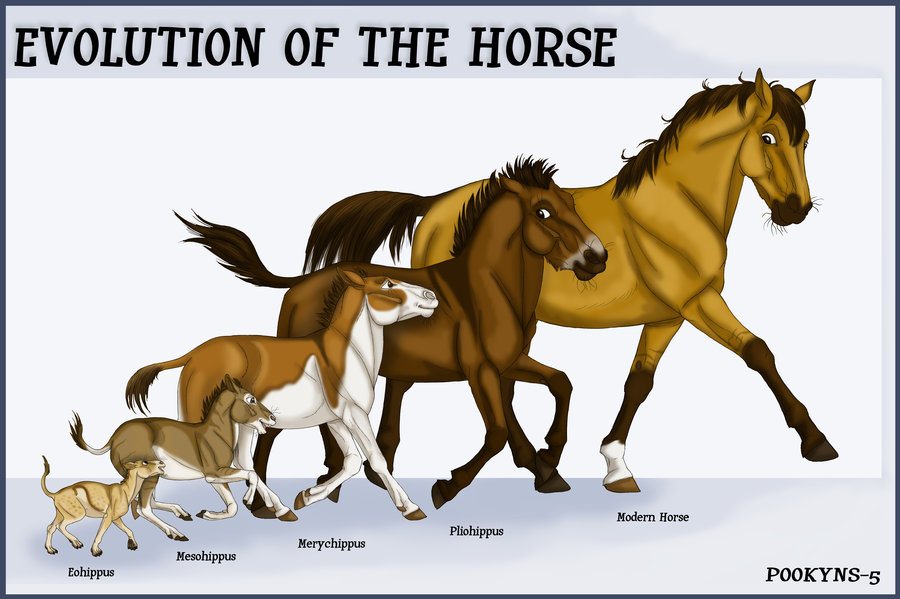
Some organisms that share a common ancestor have features that have different functions, but similar structures. These are known as
a)
vestigial structures
b)
analogous structures
c)
homologous structures
d)
fossil structures
37.
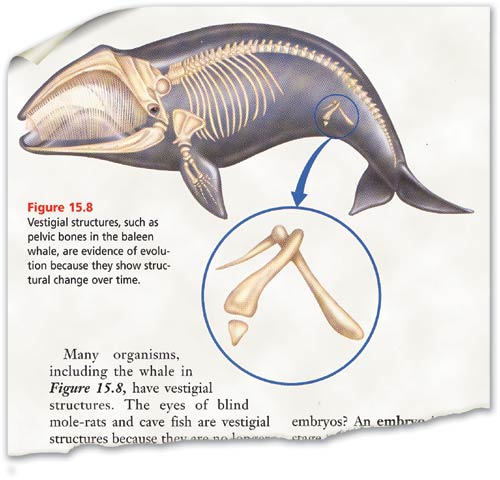
The hind leg bones in a whale are examples of
a)
homologous structures
b)
analogous structures
c)
fossils
d)
vestigal structures
38.
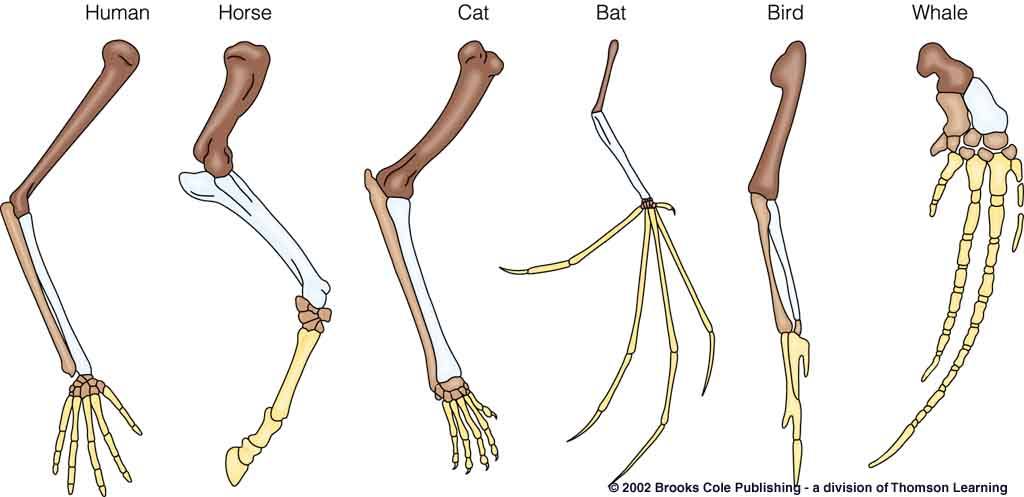
The structures shown are_________
a)
homologous
b)
heterologous
c)
analogous
d)
vestigial
39.
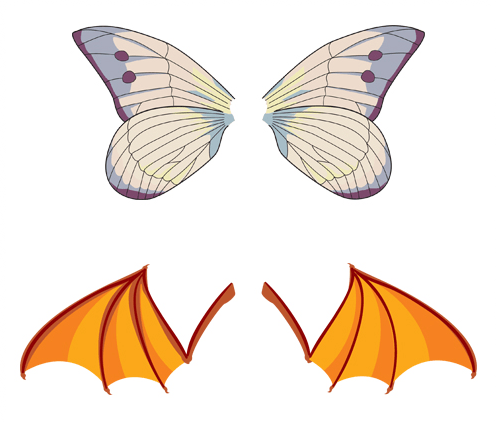
How would you describe this evolution?
a)
Homologous structure
b)
Analogous structure
c)
Structural adaption
d)
Functional adaption
40.
Match the correct term with the following definition:
A slow evolutionary process where one species changes into a new species
A slow evolutionary process where one species changes into a new species
a)
Gradualism
b)
Adaptation
c)
Natural selection
d)
Fossil
41.
The idea that evolution seems to occur in spurts of time.
a)
stabilizing selection
b)
directional selection
c)
disruptive selection
d)
puntuated equilibrium
42.

Wise man.
a)
Homo denisova
b)
Homo ergaster
c)
Homo sapiens
d)
Homo Erectus
43.
______________ are a group of mammals that includes humans, apes, monkeys, and lemurs.
a)
primates
b)
hominoids
c)
hominins
d)
primoids
44.

An _______________ first digit, either a thumb or a toe, can be brought across the palm or foot to touch (or nearly touch) the other digits allowing primates to grasp objects.
a)
opposable
b)
flexible
c)
operable
d)
adjustable
45.

_______________________ (forward-looking eyes) provide depth perception and enable primates to judge distance and movement of an object.
a)
Binocular vision
b)
Monocular vision
c)
Optical vision
d)
Holoptic vision
46.

What is the correct order of the rock layers from oldest to youngest?
a)
F, E, C, B, A, D
b)
A, B, C, D, E, F
c)
F, E, D, C, B, A
d)
D, F, E, C, B, A
47.
This species is the name for modern humans
a)
Homo Habilis
b)
Neanderthal
c)
Homo Sapien
d)
Homo Erectus
48.
A hominid is
a)
a bipedal primate
b)
the predecesor of apes
c)
similar to primates
49.
Similar organisms whose members reproduce to produce fertile offspring
a)
species
b)
fossils
50.
A difference in an inherited trait of an organism that may lead to new species
a)
adaptation
b)
variation
51.

Which rock layer in the diagram seems to be the oldest?
a)
F
b)
E
c)
B
d)
A
52.
Organisms with traits best suited to their environments are more likely to survive
a)
Population
b)
Natural Selection
53.
Model showing slow change in a species
a)
gradualism
b)
punctuated equilibrium
54.
Remains of once living things
a)
Fossils
b)
Vestigial Structures
55.
Change in heredity over time
a)
variation
b)
evolution
56.
any variation that makes an organism better suited to its environment.
a)
adaptation
b)
evolution
c)
gradualism
d)
natural selection
57.
study of embryos and their development.
a)
species
b)
embryology
c)
vestigial structure
d)
DNA correlation
58.
change in inherited characteristics over time.
a)
adaptation
b)
natural selection
c)
evolution
d)
variation
59.
model describing evolution as a slow process by which one species changes into a new species through a continuing series of mutations and variations over time.
a)
adaptation
b)
natural selection
c)
variation
d)
gradualism
60.
humanlike primate that appeared about 4 million to 6 million years ago, ate both plants and meat, and walked upright on two legs.
a)
hominid
b)
primates
c)
Neanderthals
d)
Cro-Magnons
61.
a process by which organisms with traits best suited to their environment are more likely to survive and reproduce; includes concepts of variation, overproduction, and competition.
a)
relative dating
b)
gradualism
c)
variation
d)
natural selection
62.
a type of rock, such as limestone, that is most likely to contain fossils and is formed when layers of sand, silt, clay, or mud are cemented and compacted together or when minerals are deposited from a solution.
a)
radioactive element
b)
sedimentary rock
c)
fossil
d)
radiometric dating
63.

Which of the following correctly lists the layers in order from oldest to youngest?
a)
A, B, C, D, E
b)
E, B, C, D, A
c)
E, D, C, B, A
d)
C, B, A, D, E
64.
a group of organisms that share similar characteristics and can reproduce among themselves producing fertile offspring.
a)
Neanderthals
b)
hominid
c)
primates
d)
species
65.

Is intrusion V older or younger than layer W?
a)
older
b)
younger
66.
inherited trait that makes an individual different from other members of the same species and results form a mutation in the organism's genes.
a)
variation
b)
adaptation
c)
evolution
d)
DNA correlation
67.
structure, such as the human appendix, that doesn't seem to have a function and may once have functioned in the body of an ancestor.
a)
DNA correlation
b)
vestigial structure
c)
homologous structures
d)
embryology
68.
the preserved remains or traces of an organism that lived in the past
a)
sedimentary rock
b)
relative dating
c)
fossil
d)
radioactive element
69.
method of determining the age of a fossil by comparing its placement with that of fossils in other layers of rock
a)
radioactive element
b)
sedimentary rock
c)
radiometric dating
d)
relative dating
70.
compares the amount of radioactive element with the amount of non-radioactive element
a)
radiometric dating
b)
radioactive element
c)
sedimentary rock
d)
relative dating
71.
can provide evidence about how closely related organisms are based on genetics
a)
embryology
b)
DNA correlation
c)
homologous structures
d)
vestigial structure
72.
the first human-like primate
a)
Neanderthals
b)
Cro-Magnons
c)
Australopithecus
d)
Homo sapiens
73.
some characteristics are short, heavy bodies with thick bones, small chins, and heavy brow ridges; They lived in caves and used stone tools to hunt large animals they disappeared 30,000 years ago
a)
Australopithecus
b)
Cro-Magnons
c)
Homo sapiens
d)
Neanderthals
74.
have been found in Europe, Asia, and Australia and date from 10,000 to 40,000 years in age; They look like modern humans but were 1.6-7 meters tall; They lived in caves and made stone carvings. they buried their dead; They painted bison, horses, and people with spears on their caves
a)
Cro-Magnons
b)
Australopithecus
c)
Neanderthals
d)
Homo-habilis
75.
the first tool makers "handy-man"
a)
Homo-erectus
b)
Homo-habilis
c)
Homo sapiens
d)
Cro-Magnons
76.

Which of the following is the oldest?
a)
Layer L
b)
Intrusion D
c)
Intrusion H
d)
Layer E
77.

According to the law of superposition, which layer is the youngest?
a)
A
b)
B
c)
C
78.

Is extrusion E older or younger than layer D?
a)
older
b)
younger
79.
Fossils are usually found in
a)
igneous rock
b)
extrusions
c)
intrusions
d)
sedimentary rock
80.

Which layer is oldest?
a)
A
b)
W
c)
G
d)
Z
81.
Primates have opposable thumbs.
a)
True
b)
False
82.
Primates lack binocular vision.
a)
True
b)
False
83.
Binocular vision
a)
vision with the ability to zoom in
b)
vision with two eyes and overlapping fields of view
c)
vision that covers 270 degress
84.
Hominids appear, based on fossil evidence, to have first evolved from
a)
East Africa
b)
Asia
c)
Siberia
d)
Deep in the Brazilian rain forest
85.
Opposable thumbs allow humans to
a)
hold utensils
b)
write
c)
tie knots
d)
all of the above
86.
The primate family tree does NOT include
a)
lemurs
b)
apes
c)
new world monkeys
d)
marsupials
87.
Which of the following is NOT a shared primate characteristic?
a)
opposable thumbs
b)
forward facing eyes
c)
ability to rotate neck 270 degrees
d)
color vision
88.

Which is the oldest of these four species?
a)
Australopithecines
b)
Tool-making hominins
c)
Neanderthals
d)
Homo sapiens
100 %

