
 Worksheets
Physics Final Exam
Total questions: 100
Worksheet time: 2hrs 8mins
Name
Class
Date
1.
How many sig. fig. are in the number below:
106.00
106.00
a)
2
b)
3
c)
4
d)
5
2.
1900 / 170
a)
11.18
b)
11.2
c)
11
d)
10
3.
Solve: 3.12 g + 0.8 g + 1.033 g =
a)
4.953 g
b)
4.9 g
c)
5.0 g
d)
5 g
4.
How many sig figs:
0.00001
0.00001
a)
2
b)
1
c)
3
d)
4
5.
John took 90 minutes to bicycle to his grandmother's house, a total of six kilometers. What was his speed (pay attention to units)?
a)
540 km/hr
b)
.066 km/hr
c)
4 km/hr
d)
9 km/hr
6.
Which of the following is a unit for acceleration?
a)
km/s
b)
m/s2
c)
mi/hr
d)
ft
7.
Acceleration of an object happens when things ________
a)
slow down
b)
go faster
c)
change direction (turn)
d)
All of the above
8.
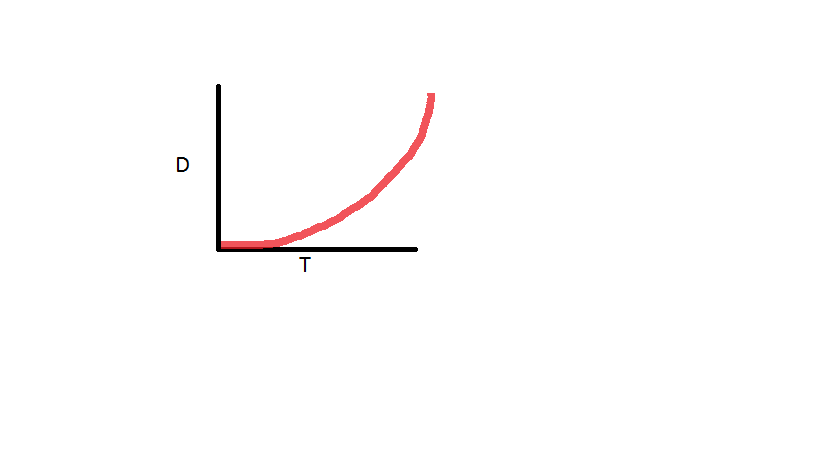
The graph below represents
a)
Speed
b)
Velocity
c)
Acceleration
d)
Deceleration
9.
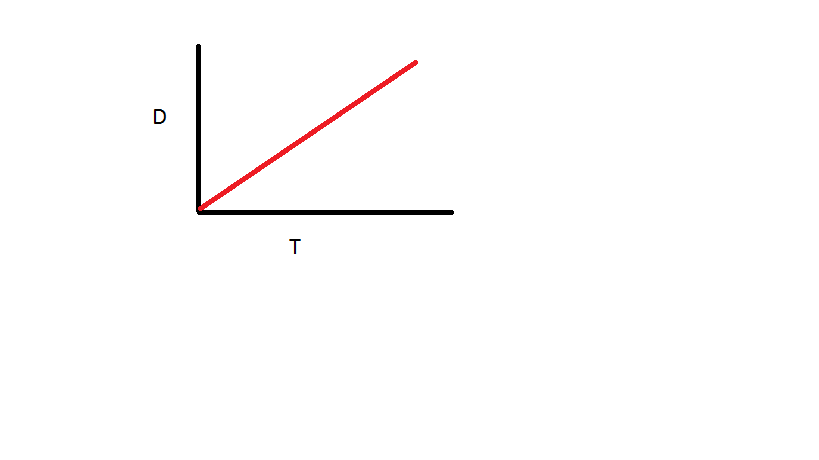
The graph represents
a)
Acceleration
b)
No motion
c)
Deceleration
d)
Constant Velocity
10.
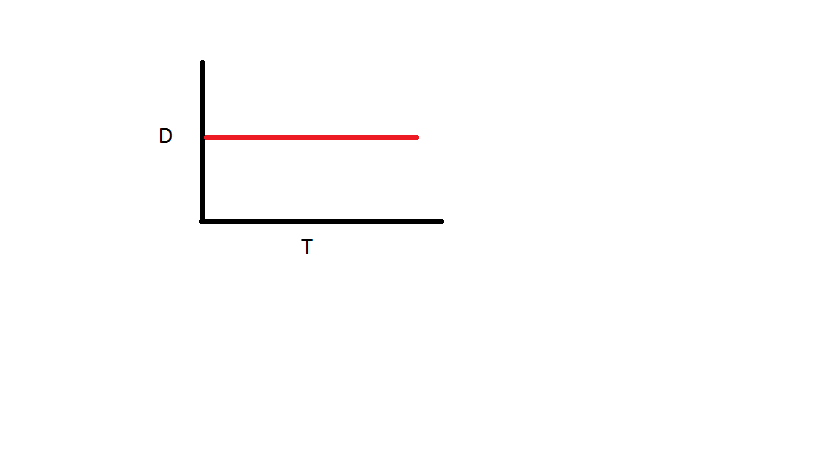
The graph represents
a)
No motion
b)
Constant velocity
c)
Acceleration
d)
Deceleration
11.

The graph represents
a)
no motion
b)
constant velocity
c)
acceleration
d)
negative acceleration
12.

The graph represents
a)
no motion
b)
Constant velocity
c)
Acceleration
d)
negative acceleration
13.
How much time does it take for a car travelling at 65 miles/hour to travel 300 miles?
a)
4.6 hours
b)
0.22 hours
c)
19,500 hours
d)
none of the above
14.
If a car is traveling forward at 15 m/s, how fast will it be going in 1.2 seconds if the acceleration is -10 m/s/s?
a)
27 m/s
b)
3 m/s
c)
-27 m/s
d)
-3 m/s
15.
If a bullet is horizontally shot at the same moment another bullet is dropped from the same height, which has a larger vertical speed when they hit the ground?
a)
Shot Bullet
b)
Dropped Bullet
c)
Same for Both
16.
What can you say about motion in the x and y direction?
a)
x is dependent on y
b)
y is dependent on x
c)
They are dependent on each other.
d)
They are independent of each other.
17.

If you drop a banana, how fast is it going after 2 seconds?
a)
4.9m/s
b)
9.8m/s
c)
19.6m/s
d)
29.4m/s
18.
When ignoring air resistance, how do objects with different masses travel in free fall?
a)
All objects fall at the same rate
b)
Heavy objects fall faster
c)
Light objects fall faster
19.
A free falling object falls for 2.4 s. What is its displacement?
a)
-28.2 m
b)
-11.76 m
c)
-56.45 m
d)
-9.8 m
20.
A distance vs. time graph shows an object's
a)
frame of reference
b)
speed
c)
acceleration
d)
favorite food
21.
2 objects traveling at the same speed have different velocities if they....
a)
start at different times
b)
travel different distances
c)
have different masses
d)
move in different directions
22.
Which of the following represents a velocity?
a)
40 m
b)
40 m north
c)
40 m/s
d)
40 m/s north
23.
If a spider has an initial distance of 10 m, and an initial time of 1 s. After it has a final time of 3 s, and a final distance of 26 m. What is the velocity?
a)
8 m/s
b)
0.125 m/s
c)
1.25 m/s
24.

A golf ball accelerates off a tee at 15m/s2, changing its velocity from 0m/s to 50 m/s down the fairway. How long did it take the golf ball to accelerate?
a)
750 seconds
b)
35 seconds
c)
0.3 seconds
d)
3.3 seconds
25.

A box sliding down an inclined plane attains a velocity of 27 m/s in 3 seconds from rest. Find the acceleration.
a)
30 m/s
b)
24 m/s2
c)
9 m/s2
d)
81 km/hr
26.
The SI unit for force.
a)
Grams (g)
b)
Newtons (N)
c)
Liter (L)
d)
Velocity (V)
27.
The force that causes a moving object to slow down when it touches another object.
a)
Gravity
b)
Force
c)
Friction
28.
When an object falls in physics world, what happens?
a)
It accelerates at a constant rate until it hits the ground
b)
It accelerates at a non-constant rate until it hits the ground
c)
It accelerates at a constant rate until it reaches terminal velocity
d)
It accelerates at a non-constant rate until it reaches terminal velocity
29.
What kind(s) of objects have inertia?
a)
all objects with mass
b)
only objects at rest
c)
only objects in motion
d)
only objects whose motion is being changed
30.
An object in motion will stay in what kind of motion as long as the net forces acting on it are zero?
a)
slowing motion in a straight line
b)
accelerating motion in a straight line
c)
constant motion in a straight line
d)
constant motion in an unpredictable direction
31.
After a cannonball is fired into frictionless space, the amount of force needed to keep it going equals
a)
twice the force with which it was fired
b)
the same amount of force with which it was fired
c)
1/2 the force with which it was fired
d)
zero, since no force is requires to keep it moving.
32.
Which one needs a greater net force to move, a kilogram of feathers or a kilogram of iron?
a)
feathers
b)
iron
c)
same
d)
depends on their friction
33.
Why does a book on a table not move?
a)
No forces are acting on the book
b)
Gravity is the only force acting on the book
c)
Forces of the table pushing up and gravity pulling down are balanced
34.
If a 10 kilogram object accelerates suddenly at 15 m/s2, how much force was applied to the object?
a)
150 Newtons
b)
15 Newtons
c)
150 kilograms
d)
100 kilograms
35.
The mass of a wagon is 40 kg. The wagon accelerates at 8 m/s2 . What is the force?
a)
38.25 Kg
b)
38.25 N
c)
3.825 N
d)
3.825 Kg
36.
The mass of a wagon is 45 kg. The wagon accelerates at 0.85 m/s2 . What is the force?
a)
38.25 Kg
b)
38.25 N
c)
3.825 N
d)
3.825 Kg
37.
Newton's third law is the law of __________________.
a)
action and reaction
b)
inertia
c)
acceleration
d)
science rocks
38.
Suppose two carts, one twice as massive as the other, fly apart when the compressed spring that joins them is released. How fast does the heavier cart roll compared with the lighter cart?
a)
twice as fast
b)
the same
c)
half as fast
39.
What is the net force?
100 N 230 N
<------ --------->
100 N 230 N
<------ --------->
a)
30 N to the right
b)
230 N to the right
c)
130 N to the right
d)
This is a balanced force
40.

What is the x component of the vector given in the diagram?
a)
77N
b)
92N
c)
120N
d)
60N
41.

What is the y component of the vector given in the diagram?
a)
77N
b)
92N
c)
120N
d)
60N
42.

What is the x component of the vector given in the diagram?
a)
-87 N
b)
23 N
c)
-23N
d)
75N
43.

What is the y component of the vector given in the diagram?
a)
-87 N
b)
23 N
c)
-23N
d)
75N
44.

In practice A of the figure, What is the magnitude of the resultant displacement?
a)
5 km
b)
8 km
c)
11 km
d)
15 km
45.

In practice A of the figure, what is the direction of the resultant displacement?
a)
63 degrees, South of East
b)
63 degrees, North of West
c)
27 degrees, North of West
d)
27 degrees, South of West
46.
If a car moves 12 km North, 19 km East, and 12 km South, what is its displacement?
a)
12 km
b)
19 km, East
c)
31 km
d)
43 km, East
47.
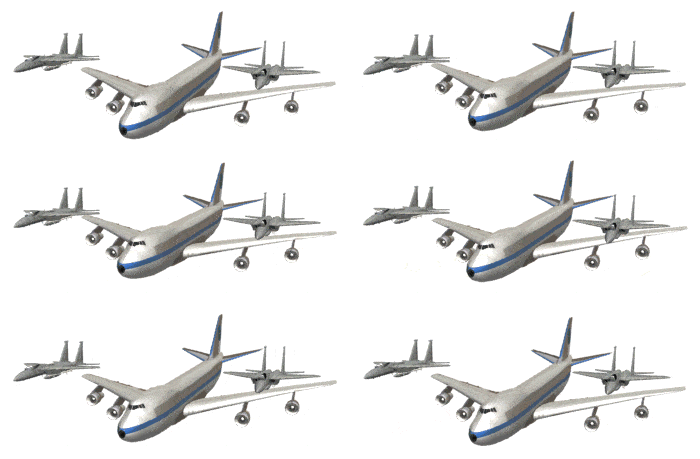
An airplane traveling north at 220 meters per second encounters a 50.0-meters-per-second crosswind from west to east.
a)
170 m/s
b)
214 m/s
c)
226 m/s
d)
270 m/s
48.

The president’s airplane, Air Force One, flies at 250 m/s to the east with respect to the air. The air is moving at 35 m/s to the north with respect to the ground. Find the velocity of Air Force One with respect to the ground.
a)
252 m/s
b)
222 m/s
c)
435 m/s
d)
125 m/s
49.
A motorboat, which has a speed of 5 meters per second in still water, is headed east as it crosses a river flowing south at 3.3 meters per second. What is the magnitude of the boat’s resultant velocity with respect to the starting point?
a)
3.3 m/s
b)
5.0 m/s
c)
6.0 m/s
d)
8.3 m/s
50.
At the top of a projectile's path above Earth, the vertical acceleration of an object is
a)
is zero
b)
goes from positive to negative
c)
goes from negative to positive
d)
remains unchanged
51.
A baseball was thrown with an initial velocity of 24m/s at an angle above the horizontal. It remained in the air for 2 seconds. Which of the following quantities was constant while the baseball was in the air?
a)
acceleration
b)
displacement
c)
position
d)
velocity
52.
A ball is thrown horizontally from the top of a building with an initial velocity of 13m/s. At the same time, a second ball is dropped from the top of the same building. Which of the following is the same for the two balls?
a)
Their final displacement
b)
Their paths as they fall
c)
Their initial horizontal velocities
d)
Their final vertical velocity as they reach the ground
53.

What is the horizontal acceleration of a projectile?
a)
0 m/s2
b)
-9.8 m/s2
c)
0 m/s
d)
-9.8 m/s
54.
What angle will give you the greatest range in the x direction?
a)
30 degrees
b)
45 degrees
c)
60 degrees
d)
90 degrees
55.
If Vx and Vy are equal, what do you know about the angle the object was launched at?
a)
Greater than 45 degrees
b)
Less than 45 degrees
c)
At 45 degrees.
56.
A ball is thrown horizontally at a height of 2.2 meters at a velocity of 65 m/s. Assume no air resistance. How far did the ball travel horizontally when it hit the ground?
a)
14.3 m
b)
30.55 m
c)
65 m
d)
43.55 m
57.
A bullet is fired horizontally at a height of 1.3 meters at a velocity of 950 m/s. Assume no air resistance. How long until the bullet reaches the ground?
a)
0.52 s
b)
0.27 s
c)
0.13 s
d)
0.36 s
58.
A bullet is fired horizontally at a height of 1.3 meters at a velocity of 950 m/s. Assume no air resistance. How far did the bullet travel horizontally when it hit the ground?
a)
252.04 m
b)
489.32 m
c)
126.02 m
d)
346.00 m
59.
A cannonball is fired at a 45.0° angle and an initial velocity of 625 m/s. Assume no air resistance. What is the vertical component of the cannonball’s velocity? What is the horizontal component of the cannonball’s velocity?
a)
-625 m/s; 625 m/s
b)
441.9 m/s; 441.9 m/s
c)
-441.9 m/s; 441.9 m/s
d)
0 m/s; 625 m/s
60.
A baseball is thrown at a 22.5° angle and an initial velocity of 65 m/s. Assume no air resistance. What is the vertical component of the ball’s velocity? What is the horizontal component of the ball’s velocity?
a)
24.9 m/s; 60.1 m/s
b)
60.1 m/s; 24.9 m/s
c)
0 m/s; 65 m/s
d)
17183.25 m
61.
A baseball is thrown at a 22.5° angle and an initial velocity of 65 m/s. Assume no air resistance. How far did the ball travel horizontally when it hit the ground?
a)
500.76 m
b)
31.63 m
c)
103.7 m
d)
305.05 m
62.
Energy of motion is which type of energy?
a)
Potential
b)
Kinetic
c)
Sound
d)
Gravitational
63.
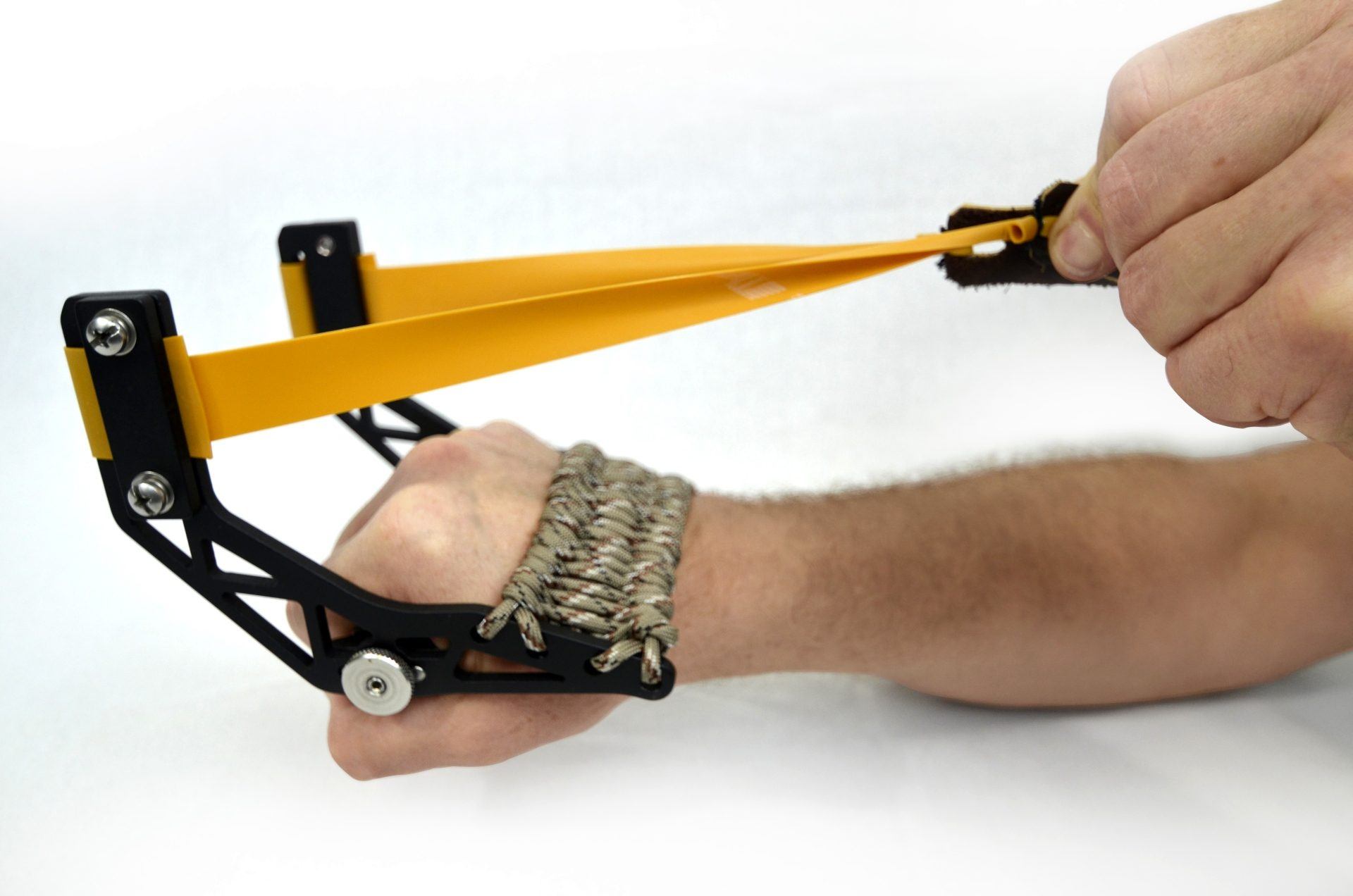
What type of energy is in this picture?
a)
Kinetic
b)
Potential
c)
Chemical
d)
Sound
64.
When plants convert the sun's energy into food, which type of energy is it?
a)
kinetic
b)
chemical
c)
thermal
d)
radiant
65.

What kind of energy is represented in this picture?
a)
Thermal
b)
Potential
c)
Nuclear
d)
Mechanical
66.

What kind of energy does this device use?
a)
Chemical
b)
Electrical
c)
Thermal
d)
Chemical
67.

What kind of energy is represented in the picture?
a)
Thermal
b)
Chemical
c)
Sound
d)
Nuclear
68.
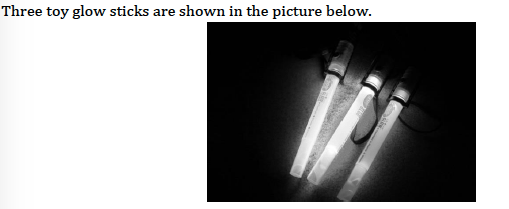
The glow sticks produce light for a short amount of time. The light from the glow stick is a conversion from what to what?
a)
thermal to light
b)
gravitational to potential
c)
radiant to electrical
d)
chemical to light
69.
Wind turbines and windmills convert what energy to another?
a)
Kinetic to electric
b)
Gravitational potential to electric
c)
Mechanical to potential
d)
Thermal to sound
70.
Work is:
a)
A transfer of energy by a force to move and object
b)
Something you get paid for
c)
Something you take home
d)
Makes you sweat
71.
What machine changes electrical energy into light and sound energy?
a)
battery
b)
lightbulb
c)
alarm clock
d)
apple
72.
On a roller coaster, where is maximum potential energy?
a)
At the bottom of a big hill
b)
When going around a corner
c)
When going upside down
d)
At the top of a big hill
73.
On a roller coaster, where is maximum kinetic energy?
a)
At the bottom of a big hill
b)
When going around a corner
c)
When going upside down
d)
At the top of a big hill
74.

The purpose of the panels is to change solar energy into ____________.
a)
light energy
b)
electrical energy
c)
chemical energy
d)
mechanical energy
75.
According to which law of energy, energy can't be created or destroyed?
a)
First law of motion
b)
The law of tacos
c)
Laws of Energy
d)
law of conservation of energy
76.
Energy that comes from the nucleus of an atom. A form of potential energy.
a)
chemical energy
b)
Nuclear energy
c)
Sound energy
d)
Electrical energy
77.
Potential Energy is:
a)
The energy of motion
b)
always conserved
c)
The energy due to position
78.
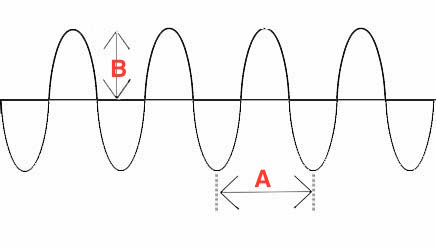
What property of this wave is represented by the letter "A"
a)
amplitude
b)
crest
c)
trough
d)
wavelength
79.
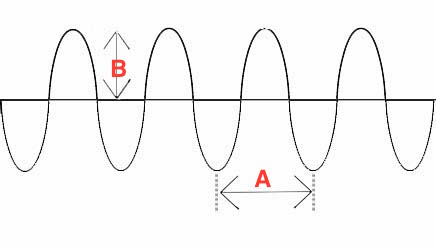
What property of the wave is represented by the letter "B"?
a)
amplitude
b)
crest
c)
trough
d)
wavelength
80.
The number of wavelengths that pass a point each per second is:
a)
frequency
b)
period
c)
longitudinal
d)
transverse wave
81.
The type of waves that require medium to pass:
a)
Mechanical Waves
b)
Electromagnetic Waves
82.
The highest point on a wave is:
a)
the crest
b)
the trough
c)
the top
d)
the coast
83.
The lowest point on a wave is the:
a)
Amplitude
b)
Crest
c)
Trough
d)
Wavelength
84.
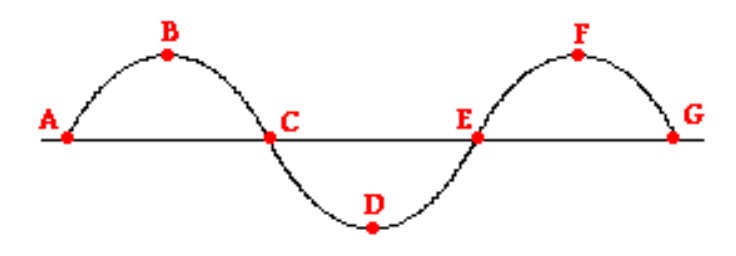
Which letter(s) represent the trough of the wave?
a)
A
b)
B & D
c)
D
d)
C & G
85.
Electromagnetic waves include the following except
a)
radio waves
b)
X-rays
c)
doing the wave at a football game
d)
microwaves
86.
which material does sound travel the fastest?
a)
solid
b)
liquid
c)
gases
87.
Mechanical waves cannot be transmitted through a vacuum. Therefore, which of the following are NOT mechanical waves?
a)
Water waves
b)
Seismic waves
c)
Sound waves
d)
Light waves
88.
What do mechanical waves travel through?
a)
Medium
b)
empty space
c)
vacuum
d)
the boo
89.
Which answer best explains how a wave is created?
a)
A wave is created when energy stays still
b)
A wave is created when a force causes a vibration
c)
A wave is created when molecules become a medium
d)
A wave is created when a liquid becomes a solid
90.
Which of the following is transmitted by waves?
a)
atoms
b)
matter
c)
energy
d)
resonance
91.

How would a person measure the wavelength on this sound wave?
a)
dense to less dense
b)
trough to crest
c)
compression to compression
d)
beginning of illustration to the end
92.
What is another name for wave height?
a)
Frequency
b)
Amplitude
c)
Wavelength
d)
Origin
93.
(4.2 x 3.12) + 2 =
a)
15
b)
13
c)
13.10
d)
13.104
94.
Subtract: 7.987 m - 0.54 m =
a)
7.447 m
b)
7.45 m
c)
7.4 m
d)
7.5 m
95.
When performing the calculation 34.530 g + 12.1 g + 1 222.34 g, the final answer must have
a)
Only one decimal place
b)
Units of g3
c)
Three significant figures
d)
Three decimal places
96.
How far an object has moved?
a)
displacement
b)
distance
c)
motion
d)
reference point
97.
David walks 3 km north, and then turns east and walks 4 km. What is the distance?
a)
7 km
b)
3 km
c)
4 km
d)
1 km
98.
1. Amy runs 2 miles south, then turns around and runs 3 miles north. What is displacement?
a)
5 miles
b)
1 miles
c)
2 miles
d)
3 miles
99.

What is happening at E?
a)
Stationary
b)
Accelerating
c)
Fast steady speed; moving away from the starting position
d)
Steady speed; returning to start position
100.
Who is ready for Christmas Break?
a)
You
b)
Your Friend
c)
Coach Lynch
d)
EVERYONE (this one)
100 %

