
 Worksheets
Benchmark Review
Total questions: 52
Worksheet time: 35mins
Name
Class
Date
1.
How do you calculate speed?
a)
Distance/Time
b)
Distance x Time
c)
Time/Distance
2.
A push or pull on an object is called what?
a)
friction
b)
gravity
c)
inertia
d)
force
3.

What kind of forces are being applied in the picture?
a)
unbalanced forces
b)
gravitational forces
c)
balanced forces
4.

Which type of energy is best illustrated at point (c)?
a)
potential energy
b)
kinetic energy
c)
resistant energy
d)
electrical energy
5.

Choose the correct forces below which would result in a balanced force.
a)
Top arrow 12N; Right arrow 12N
b)
Top arrow 8N; Right arrow 12N
c)
Top arrow 10N; Right arrow 6N
d)
Top arrow 6N; Right arrow 10N
6.

Two bulldozers exert 600 N of force on a boulder from opposite directions. In which direction will the boulder move?
a)
The boulder will move up and to the right.
b)
The boulder will not move. The forces are balanced.
c)
The boulder will move to the right.
d)
The boulder will move to the left.
7.
These can be found on the periodic table.
a)
Element
b)
Compound
c)
MIxture
8.
Which of the following chemical formulas represents a compound?
a)
C
b)
O2
c)
CaCO3
d)
H2
9.

This picture represents which of the following?
a)
element
b)
compound
c)
mixture
10.

This picture represents which of the following?
a)
element
b)
compound
c)
mixture
11.
Iron is a good conductor, malleable and has luster. What type of element is Iron?
a)
Metal
b)
Nonmetal
c)
Metalloid
d)
Pretty
12.
Silicon is a semiconductor and has properties of both metals and nonmetals. What type of element is Silicon?
a)
Metal
b)
Nonmetal
c)
Metalloid
d)
Pretty
13.
Which elements are found on the right side of The Periodic Table?
a)
Metals
b)
Nonmetals
c)
Metalloids
d)
Water
14.
Which elements are found on the left and middle of The Periodic Table?
a)
Metals
b)
Nonmetals
c)
Metalloids
d)
Candles
15.
All of these properties describe metals except...
a)
malleable
b)
conductors
c)
brittle
d)
shiny
16.

Which element is least likely to conduct heat and electricity?
a)
O
b)
Si
c)
Po
d)
Ca
17.

How would this element be classified?
a)
Metal
b)
Nonmetal
c)
Metalloid
d)
Metamorphic
18.

Which element is a metalloid?
a)
Titanium
b)
Selenium
c)
Potassium
d)
Polonium
19.

How is Selenium classified?
a)
Metal
b)
Nonmetal
c)
Metalloid
d)
Sedimentary
20.
Marie had a beaker with a small amount of baking soda. She added a few drops of pickle juice to the baking soda and observed fizzing and bubbling. Based on her observation, which of these can Marie determine about the new substance formed by mixing the baking soda and pickle juice?
a)
A chemical reaction produced a
solid.
b)
A chemical reaction produced
a gas.
c)
No chemical reaction took place.
d)
Only a physical change happened.
21.
Which of the following characteristics is shared by all chemical reactions?
a)
Produce a precipitate
b)
Show a color change
c)
Release heat energy
d)
Form new substances
22.
A granular substance is added to a liquid. Which of the following would provide evidence to suggest a chemical change has taken place?
a)
The liquid gives off heat.
b)
The granules dissolve completely.
c)
The volume of the liquid increases.
d)
The granules seem to get smaller.
23.
A student added white crystals to a clear liquid. The crystals dissolved in the liquid. After a few seconds, the liquid became quite warm and then turned bright red in color. Indications that a chemical change was taking place could be observed when –
a)
the white crystals were added to the clear liquid.
b)
the crystals dissolved in the liquid leaving only the liquid visible.
c)
There are no indications of chemical change
d)
the temperature of the liquid increased and an unexpected color change occurred.
24.

Which evidence demonstrates that a chemical change has occurred.
a)
water level rises
b)
water becomes cloudy
c)
gas is produced (bubbles)
d)
tablet dissolves
25.
____________ is the ability to cause change.
a)
Energy
b)
Force
c)
Friction
d)
Motion
26.
The faster an object moves, the ________ kinetic energy it has.
a)
more
b)
less
c)
none of the above
d)
all of the above
27.
__________ is stored energy.
a)
Potential
b)
Kinetic
c)
None of the above
d)
All of the above
28.
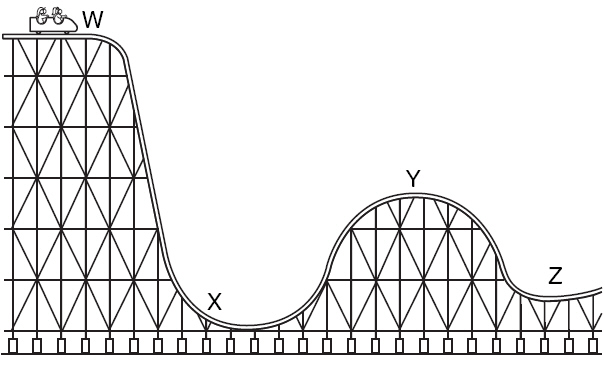
At which point is potential energy greatest?
a)
W
b)
X
c)
Y
d)
Z
29.

At which point is kinetic energy greatest?
a)
W
b)
X
c)
Y
d)
Z
30.

What energy is pulling an arrow back
a)
kinetic energy
b)
potential energy
c)
energy
31.
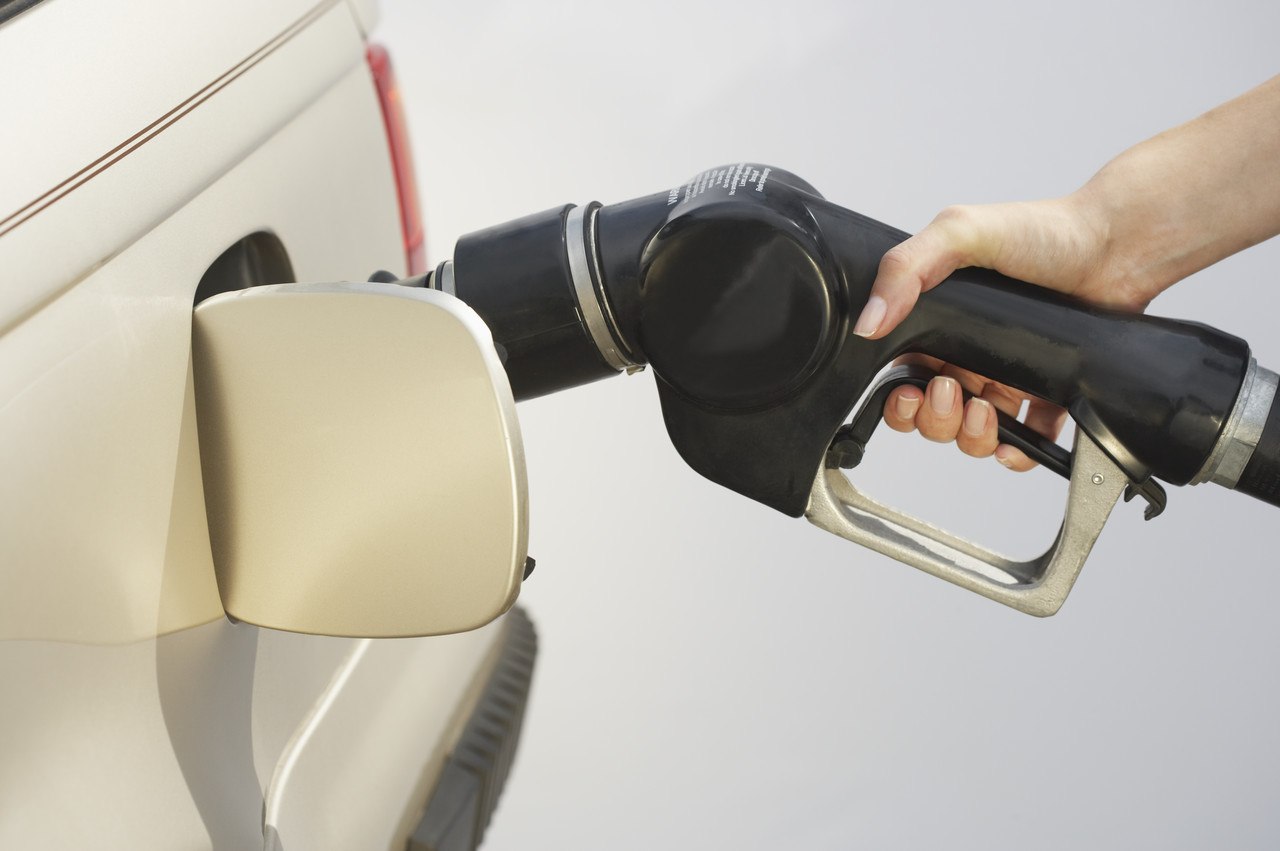
Which energy transformation is taking place when you put gasoline in a car?
a)
thermal -> electrical
b)
mechanical -> electrical
c)
chemical -> mechanical
d)
mechanical -> electromagnetic
32.

What type of energy is stored in a battery?
a)
electrical
b)
chemical
c)
thermal
d)
mechanical
33.

Electrical energy is transferred to _____ energy in an oven.
a)
thermal
b)
solar
c)
electrical
d)
mechanical
34.
According to the Law of Conservation of Energy, energy cannot be _________ or ____________.
a)
destroyed, destroyed
b)
created, saved
c)
created, destroyed
d)
lost, found
35.
Which items would have this energy transformation: chemical energy -> mechanical energy?
a)
person running
b)
candle burning
c)
windmill turning
d)
playing a violin
36.
A hairdryer converts --
a)
electrical energy into chemical
b)
electrical energy into thermal
c)
chemical energy into mechanical
d)
thermal energy into mechanical
37.
Energy is renewable. This is an advantage of _____.
a)
Fossil Fuels
b)
Nuclear
c)
Biomass
d)
Coal
38.
What type of natural resource is unlimited and does not produce pollution.
a)
Natural Gas
b)
Geothermal
c)
Biomass
d)
Solar
39.
Practical only in locations near hot spots and the waste water can damage soil. This is a disadvantage of ____.
a)
Solar
b)
Wind
c)
Geothermal
d)
Hydroelectric
40.
Practical only in windy areas. This is a disadvantage of ____.
a)
Solar
b)
Hydroelectric
c)
Geothermal
d)
Wind
41.
Dams disrupt a river’s ecosystem and are only available in areas that have large, fast-flowing rivers. This is a disadvantage of ___.
a)
Geothermal
b)
Fossil Fuels
c)
Nuclear
d)
Hydroelectric
42.
Wind, hydropower, and solar can call be used to make _____.
a)
fuel
b)
electrical energy
c)
heat
d)
thermal energy
43.
Electricity produced by moving water.
a)
geothermal
b)
hydroelectric
c)
wind
d)
solar
44.
A resource that can be easily replaced.
a)
renewable
b)
alternative
c)
nonrenewable
45.
What kind of heat transfer happens when the sun is heating your body?
a)
Conduction
b)
Radiation
c)
Convection
d)
Density
46.
What heat transfer happens when you burn your hand by touching a fire?
a)
Radiation
b)
Conduction
c)
Convectio
d)
I don't know!!!!!!!!!!!
47.
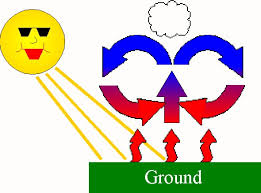
Warm air rises and the cool air sinks demonstrates this type of heat transfer.
a)
conduction
b)
convection
c)
radiation
d)
Insolation
48.
Ironing a shirt is an example of...
a)
condensation
b)
conduction
c)
convection
d)
radiation
49.

A toaster toasting bread is an example of
a)
condensation
b)
conductio
c)
convection
d)
radiation
50.

What happens when ice cubes melt in a glass?
a)
Heat travels from the ice to the warmer water.
b)
No energy is transferred.
c)
Heat is transferred from the warmer water to the ice cubes.
d)
The water warms up due to the humidity
51.
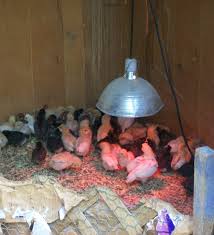
The baby chickens are kept warm from the heat lamps demonstrates this type of heat transfer.
a)
conduction
b)
convection
c)
radiation
52.
In heat transfer, heat always flows from the _______________ substance to the _______________ substance.
a)
Hotter to colder
b)
Colder to hotter
c)
Hotter to hotter
d)
Colder to colder
100 %

