
NEW
Font size
S
M
L
XL
 Worksheets
Earth Science Midterm
Total questions: 56
Worksheet time: 51mins
Name
Class
Date
1.
Which of the following explains how mountains are formed?
a)
Plates collide at divergent boundaries causing the crust to push upward.
b)
Plates collide at convergent boundaries causing the crust to push upward.
c)
Plates slide past each other at transform boundaries causing the crust to push upward.
d)
Plates collide at convergent boundaries causing the mantle to push upward
2.
How are ridges formed?
a)
Two plates collide with one another.
b)
Two plates sink below Earth's surface.
c)
Two plates slide beside each other.
d)
Two plates move away from one another.
3.

If plates move in the direction show in the picture, what will likely occur?
a)
Mountain Formation
b)
Earthquakes
c)
Trench formation
d)
Volcanic island formation
4.

What type of plate boundary is shown in the picture?
a)
convergent
b)
divergent
c)
transform
5.

What type of boundary does the picture show and what does it form?
a)
divergent; mountains
b)
divergent; mid ocean ridge
c)
convergent; mid ocean ridge
d)
transform; earthquake
6.
Why do plates move?
a)
Convection currents in the mantle cause plates to move.
b)
The outer core spins
c)
The inner core is magnetic
d)
The plates are floating on an ocean
7.

Rock X is produced by "cooling". What type of rock is Rock X?
a)
Sedimentary Rock
b)
Metamorphic Rock
c)
Sediment
d)
Igneous Rock
8.
When the sea floor spreads apart, ridges are formed because....
a)
sediments are deposited where the sea floor spreads
b)
as the plates pull apart, magma moves to the surface
c)
ocean water pushes down on the surrounding sea floor
d)
underwater earthquakes lift the sea floor into long ridges
9.
When magma is cooled and solidified it becomes what type of rock?
a)
igneous
b)
metamorphic
c)
sedimentary
d)
conglomerate
10.

The picture gives a description of what type of rock?
a)
Sedimentary
b)
Igeneous
c)
Metamorphic
d)
Lava
11.

The picture gives a description of what type of rock?
a)
Sedimentary
b)
Igneous
c)
Lava/maga
d)
Sediment
12.
Which layer of the earth is the thinnest?
a)
Mantle
b)
Inner Core
c)
Outer Core
d)
Crust
13.
Lines of latitude run in a north-south direction.
a)
True
b)
False
14.

This image is an example of a ______________.
a)
Map Legend
b)
Map Scale
c)
Map Compass
d)
Map Help
15.
The equator divides the Earth into two halves- the _________ and the _________ hemisphere.
a)
northern, western
b)
western, eastern
c)
northern, southern
d)
eastern, southern
16.
Earth's outermost layer (the part on which we live on) is the _______.
a)
Mantle
b)
Inner Core
c)
Crust
d)
Outer Core
17.
Hardness is the ability of a mineral to resist being scratched.
a)
True
b)
False
18.
Fracture is the tendency of a mineral to break along a flat surface where layers of atoms are attached weakly to each other.
a)
True
b)
False
19.
A convergent boundary forms where plates ________.
a)
diverge
b)
erupt
c)
collide
d)
separate
20.
What event often occurs along transform (two plates rubbing against each other) boundaries?
a)
Volcanos
b)
Earthquakes
c)
Mountians
d)
Islands
21.
What event often occurs along Sub ducting (One plate going underneath the other) boundaries?
a)
Volcanos
b)
Mountians
c)
Earthquakes
d)
Islands
22.
What event often occurs along Colliding continental Plates?
a)
Volcanos
b)
Earthquakes
c)
Mountains
d)
Islands
23.
This layer of Earth is solid Iron and Nickel
a)
Outer Core
b)
Mantle
c)
Inner Core
d)
Crust
24.
This layer of Earth is the thickest part
a)
crust
b)
outer core
c)
mantle
d)
inner core
25.

Polar Bears hunt seals on ice:
a)
Biosphere-Hydrosphere
b)
Biosphere-Atmosphere
c)
Hydrosphere-Atmosphere
d)
Hydrosphere-Geosphere
26.

A farmer plowing a field to plant crops:
a)
Biosphere-Atmosphere
b)
Biosphere-Geosphere
c)
Biosphere-Hydrosphere
d)
Geosphere-Hydrosphere
27.

This picture shows
a)
Atmosphere
b)
Biosphere
c)
Hydrosphere
d)
Geosphere
28.
What is the name given to the boundary between two tectonic plates that are moving away from each other?
a)
Divergent
b)
Insurgent
c)
Convergent
d)
Transform
29.

What is a naturally occurring, inorganic solid that has a crystal structure and definite chemical composition?
a)
Rock
b)
Caldera
c)
Mineral
d)
Fault
30.
The way a mineral breaks unevenly and unsmooth like refers to its ______ ,
a)
Cleavage
b)
Fracture
c)
Hardness
d)
Shatter
31.
What does NOT make a mineral a mineral?
a)
Solid
b)
Inorganic
c)
Color
d)
Fixed Chemical Formula
32.
What is the way light reflects off of a surface called?
a)
fracture
b)
color
c)
streak
d)
luster
33.
A rift valley forms at a
a)
convergent plate boundary
b)
divergent plate boundary
c)
transform boundary
d)
deep ocean trench
34.
All living things are a part of the
a)
hydrosphere
b)
geosphere
c)
biosphere
d)
astmosphere
35.
Where the warm and cold air meet and stall, clouds and fog form, and it may rain or snow. It could bring many days of clouds and precipitation.
a)
Warm Front
b)
Cold Front
c)
Occluded Front
d)
Stationary Front
36.
When a cold front overtakes a warm front, the temperature drops as the warm air mass is cut off from the ground and pushed upward. It can bring strong winds and heavy precipitation.
a)
Warm Front
b)
Cold Front
c)
Occluded Front
d)
Stationary Front
37.

This is the symbol for a...
a)
Cold Front
b)
Warm Front
c)
Stationary Front
d)
Occluded Front
38.

This is the symbol for a...
a)
Occluded Front
b)
Stationary Front
c)
Warm Front
d)
Cold Front
39.

This is the symbol for a...
a)
Stationary Front
b)
Occluded Front
c)
Cold Front
d)
Warm Front
40.

This is the symbol for a...
a)
Stationary Front
b)
Occluded Front
c)
Cold Front
d)
Warm Front
41.
Located at the leading edge of a temperature drop off. Bring heavy thunderstorms, rain, and hail. Cool, fair weather is likely to follow.
a)
Warm Front
b)
Cold Front
c)
Occluded Front
d)
Stationary Front
42.
Located at the leading edge of a warm air mass. Brings gentle rain or light snow, followed by warmer, milder weather.
a)
Warm Front
b)
Cold Front
c)
Occluded Front
d)
Stationary Front
43.

An instrument that measures air pressure
a)
thermometer
b)
barometer
c)
rain guage
d)
wind sock
44.
An instrument used to measure how hot or cold something is
a)
barometer
b)
thermometer
c)
wind sock
d)
rain guage
45.
The place where two air masses meet.
a)
air mass
b)
air pressure
c)
water cycle
d)
front
46.
Where you will find the ozone layer.
a)
stratosphere
b)
thermosphere
c)
exosphere
d)
mesosphere
47.
Where weather occurs.
a)
stratosphere
b)
thermosphere
c)
troposphere
d)
mesosphere
48.
Where we live.
a)
stratosphere
b)
thermosphere
c)
troposphere
d)
mesosphere
49.
Where satellites orbit.
a)
troposphere
b)
thermosphere
c)
exosphere
d)
mesosphere
50.
Which of these layers is farthest from Earth?
a)
thermosphere
b)
stratosphere
c)
mesosphere
d)
exosphere
51.
Which layer is the outermost layer?
a)
troposphere
b)
thermosphere
c)
exosphere
d)
mesosphere
52.
Which lines run on a globe from east to west?
a)
longitude lines
b)
latitude lines
c)
north pole
d)
south pole
53.
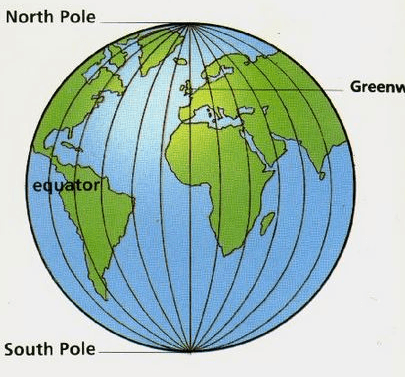
a)
The map show the lines of longitude.
b)
The map shows the lines of latitude.
c)
global lines
d)
poles
54.
Latitude lines measure _________ and _______ of the Equator.
a)
east to west
b)
north to south
c)
north to west
d)
south to east
55.
Longitude lines measure the distance _________ and ___________ of the prime meridian.
a)
North and South
b)
East and West
56.
The color of a mineral in powder form is called the mineral's
a)
hardness
b)
specific gravity
c)
luster
d)
streak
Reset

