
 Worksheets
Exam Review
Total questions: 103
Worksheet time: 1hrs 14mins
Name
Class
Date
1.
How many elements are in C6H12O6?
a)
1
b)
2
c)
3
d)
4
2.
How many atoms of carbon (C) are in C6H12O6?
a)
3
b)
6
c)
12
d)
24
3.
Which is the correct formula for:
three hydrogen (H)
one sulfur (S)
four oxygen (O)
three hydrogen (H)
one sulfur (S)
four oxygen (O)
a)
H3SO4
b)
HSO4
c)
H4S3O
d)
H2O
4.

The red numbers in the image below represent ________
a)
subscripts
b)
coefficients
c)
I don't know, and don't want to try
d)
None of the answers are correct
5.
A physical change is?
a)
It changes the object into something different
b)
Objects or substances undergo a change that does not change their chemical composition
c)
it is just like a chemical reaction
d)
Paper burning
6.
A chemical change is?
a)
a shoe lace cut in half
b)
doesn't change anything
c)
changes the look of an object
d)
change that results in the formation of new chemical substances
7.

Black = Carbon (C)
White = Hydrogen (H)
What would be the formula for ethane?
White = Hydrogen (H)
What would be the formula for ethane?
a)
CH4
b)
CH6
c)
C2H2
d)
C2H6
8.
How many atoms of lead (Pb) are in Pb(NO₃)₂?
a)
1
b)
2
c)
3
d)
6
9.
What will weigh more when a chemical change is complete? The reactants before the chemical reaction, or the product after the reaction is complete?
a)
They both will weigh the same
b)
The product always weighs more than the reactant
c)
The reactant will weigh more than the product
d)
They both will loose mass after the reaction
10.
What is the Law of Conservation of mass?
a)
Mass is created in a chemical reaction
b)
Mass is created in a physical change
c)
New chemicals formed from a chemical reaction have a larger overall mass than the original reactants
d)
Mass is never created or destroyed
11.
Since gasses weigh nothing, when they are produced in a reaction they do not have to be accounted for.
a)
True
b)
False
12.
The coefficient in 3H2O is
a)
6
b)
2
c)
3
d)
5
13.
If reaction starts with 20g of reactants it should produce
a)
a total of 40g of products
b)
a total of 10g of products
c)
a total of 80 g of products
d)
a total of 20g of products
14.
Which are the reactants in the following reaction?
2Mg + O2 ---> 2MgO
2Mg + O2 ---> 2MgO
a)
Mg and O
b)
MgO
c)
Mg and MgO
d)
O and MgO
15.
A chemical reaction is balanced when
a)
both sides have the same elements
b)
Both sides have the same number of atoms
c)
Same subscripts
d)
Same coefficients
16.
Which is Chemical Equation is Balanced?
a)
CH₄+O₂------CO₂+2H₂O
b)
H₂+O₂-----2H₂O₄
c)
4Al+3O₂-----2Al₂O₃
17.

What is the net force?
a)
20 N
b)
0 N
c)
400 N
d)
40 N
18.
What is the unit to MEASURE force?
a)
Kilogram
b)
Meter
c)
Pascal
d)
Newton
19.

A ____________ is a push or a pull on an object.
a)
friction
b)
force
c)
magnet
d)
gravity
20.

What is the net force?
a)
30 N
b)
25 N
c)
5 N
d)
55 N
21.

What is the net force?
a)
10 N
b)
0 N
c)
25 N
d)
1 N
22.
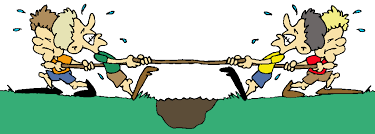
If these teams are pulling with the same amount of force what will happen?
a)
The boy in blue will win.
b)
They will not move at all.
c)
The boy in red will win.
d)
Both will fall down.
23.

Balanced or unbalanced?
a)
balanced
b)
unbalanced
24.

Forces that have a net force of zero
a)
Balanced force
b)
Unbalanced force
25.
The sum of all forces acting on an object.
a)
Contact Force
b)
Balanced Force
c)
Unbalanced Force
d)
Net Force
26.
What will cause an object to move?
a)
Applied forces
b)
Balanced forces
c)
Unbalanced forces
27.

Balanced or Unbalanced?
a)
Balanced
b)
Unbalanced
28.

This is an example of what kind of force?
a)
Balanced Force
b)
Pushing Force
c)
Gravity Force
d)
Unbalanced Force
29.

If an object is not moving the forces acting upon it are _____________
a)
unbalanced
b)
weak
c)
balanced
d)
Hulk Smash!
30.
A push or pull that causes a change in motion
a)
Friction
b)
Gravity
c)
Force
d)
Mass
31.
The force that pulls objects towards Earth.
a)
Gravity
b)
Friction
c)
Inertia
d)
Force
32.
Examples of forces that make something move are...
a)
pushes
b)
pulls
c)
both pushes and pulls
33.
When forces are _________ the object DOES NOT move.
a)
unbalanced
b)
balanced
c)
heavy
d)
light
34.

A wheeled cart is moving to the right at a constant speed. Two forces of equal magnitude are acting upon the cart. Which of the following best describes the forces and motion of the cart?
a)
Balanced Forces, Constant Speed
b)
Balanced Forces, Acceleration
c)
Unbalanced Forces, Constant Speed
d)
Unbalanced Forces, Acceleration
35.

What is the net force?
a)
10 N
b)
0 N
c)
25 N
d)
1 N
36.
You and your dad are moving the couch from one side to another. Your dad pushes with a force of 35 N to the right and you push with a force of 25 N right. What is the net force on the couch?
a)
60 N right
b)
10 N left
c)
60 n right
d)
50 N left
37.

Calculate the Net Force.
a)
40N, Left
b)
40N, Right
c)
0N, Balanced
d)
75N, Right
38.
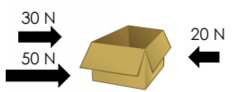
Calculate the Net Force.
a)
60N, Left
b)
40N, Right
c)
0N
d)
60N, Right
39.
A force acting in the opposite direction of an object in motion
a)
Gravity
b)
Buoyant
c)
Friction
d)
Normal
40.
A subscript is the small number below a(n) ________ that tells the number of _______ of that element.
a)
element symbol; atoms
b)
atom; element symbol
c)
subscript; protons
d)
compound; elements
41.
How many Oxygen are in H2O?
a)
1
b)
2
c)
0
d)
4
42.
How many Hydrogen are in 4H2O?
a)
6
b)
8
c)
2
d)
4
43.
How many Oxygen atoms are in Al₂(SO₄)₃
a)
4
b)
12
c)
7
d)
24
44.
Number of H in 3(NH₄)₂CrO₄
a)
4
b)
2
c)
8
d)
24
45.
How many atoms are there TOTAL in:
H2SO4
H2SO4
a)
6
b)
5
c)
7
d)
3
46.
How many Sodium (Na) are in 6NaCl?
a)
1
b)
12
c)
6
47.
Number of N in (NH₄)₂CrO₄
a)
1
b)
2
c)
8
d)
16
48.
Is this balanced?...
Al + O2 --> 2Al2O3
Al + O2 --> 2Al2O3
a)
Yes!
b)
NO!
49.
The substances at the beginning of a chemical equation are called the ____
a)
product
b)
yield
c)
chemical symbol
d)
reactants
50.
Number of H in 3(NH₄)₂CrO₄
a)
4
b)
2
c)
8
d)
24
51.

The blue numbers in the image below represent ________
a)
I don't know, and don't want to try
b)
coefficients
c)
subscripts
d)
none of the answers are correct
52.
How many atoms of aluminum are on each side of the following equation: 4Al + 3O2 --> 2Al2 O3
a)
2
b)
6
c)
1
d)
4
53.
Is the following equation balanced or unbalanced?
Fe + S --> FeS
Fe + S --> FeS
a)
balanced
b)
unbalanced
54.
What subatomic particles would you find in the nucleus of an atom?
a)
Protons only
b)
Protons and Neutrons
c)
Neutrons and Electrons
d)
Protons and Electrons
55.
What subatomic particle is electrically neutral (no charge)?
a)
Proton
b)
Ion
c)
Neutron
d)
Electron
56.
What subatomic particle(s) would be found orbiting the nucleus?
a)
Neutrons only
b)
Electrons only
c)
Protons and Neutrons
d)
Protons and Electrons
57.

What is the number of protons that the element in this image contain?
a)
14
b)
7
c)
15
d)
18
58.
Electrons have this type of charge
a)
negative
b)
positive
c)
neutral
59.
Which subatomic particles are used to determine the atomic mass?
a)
Protons, Neutrons, Electrons
b)
Protons only
c)
Protons and Electrons
d)
Protons and Neutrons
60.
Protons and Electrons balance the charge of an atom and are therefore always equal
a)
True
b)
False
61.
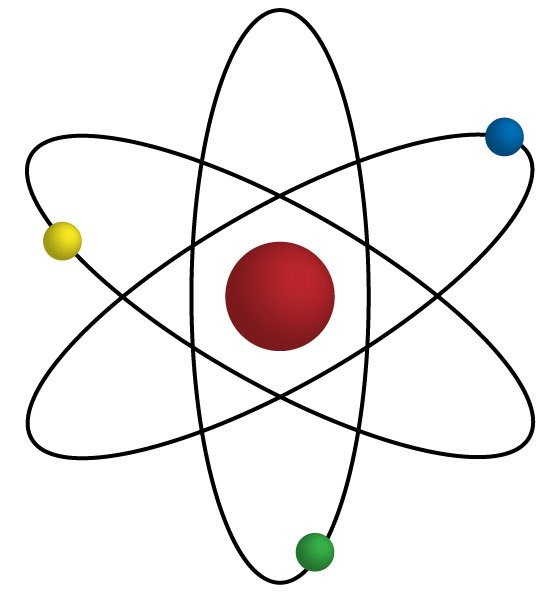
What are the 3 subatomic particles?
a)
elements, compounds, mixtures
b)
neutrons, isotopes, and electrons
c)
positives, negatives, and neutrals
d)
protons, neutrons, and electrons
62.
What is the atomic mass?
a)
the number of protons
b)
the number of protons and neutrons
c)
the number of neutrons
d)
the number of protons and electrons
63.
What is the atomic number?
a)
the number of protons
b)
the number of protons and neutrons
c)
the number of neutrons
d)
the number of protons and electrons
64.
If an atom has 10 protons, 10 neutrons, and 10 electrons, what is the mass of the atom?
a)
10
b)
20
c)
30
65.
If an atom has 12 positively charged subatomic particles, which of the following must it also have to be considered a neutral atom?
a)
12 neutrons
b)
12 electrons
c)
12 protons
d)
24 protons and neutrons
66.
What element contains 26 protons?
a)
Iron
b)
Sodium
c)
Aluminum
d)
Helium
67.
What is the chemical symbol for Chlorine
a)
C
b)
Cl
c)
Ch
d)
Ce
68.
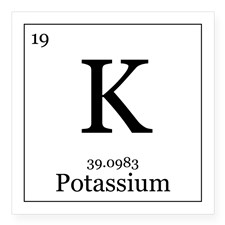
How many neutrons are in the atom "K"?
a)
7
b)
2
c)
39
d)
12
69.

What is the atomic mass of the atom pictured?
a)
9
b)
10
c)
18
d)
19
70.

Which letter represents the nucleus?
a)
A
b)
B
c)
D
d)
E
71.
Which letter represents a proton?
a)
A
b)
B
c)
C
d)
D
72.

The mass of one proton is greater than the mass of one...
a)
neutron
b)
electron
73.
The particles of the atom you can find by knowing the atomic number.
a)
neutrons
b)
protons and electrons
c)
protons and neutrons
d)
atomic mass
74.

Which two groups on the Periodic Table are the MOST reactive?
a)
Group 1 and Group 17
b)
Group 2 and Group 16
c)
Group 13 and Group 15
d)
Group 17 and Group 18
75.

Which group on the Periodic Table is inert?
a)
Group 1
b)
Group 2
c)
Group 17
d)
Group 18
76.
How many valence electrons are elements trying to reach in their outer shells?
a)
1
b)
2
c)
5
d)
8
77.
Reactivity is a(n) ________property of Metal
a)
Chemical Property
b)
Physical Property
78.
What correctly describes the nucleus of an atom?
a)
protons and electrons
b)
neutrons and electrons
c)
neutrons and protons
d)
protons, electrons, and neutrons
79.

What do all of these elements have in common?
a)
They all have 3 valence electrons
b)
They all have 3 protons
c)
They all have 3 energy levels
d)
They all have 3 neutrons
80.

Which of the following elements is the most reactive?
a)
Helium
b)
Oxygen
c)
Bromine
d)
Sulfur
81.

What is the identity of an atom with the atomic number 20?
a)
Be
b)
Mg
c)
Ca
82.
the central region of an atom where its neutrons and protons are is its
a)
nucleus
b)
electron cloud
c)
core
d)
center
83.
The positive particles of an atom are
a)
electrons
b)
positrons
c)
neutrons
d)
protons
84.
How many neutrons does Hydrogen (H) have?
a)
1
b)
0
c)
2
d)
-1
85.
How many electrons does Beryllium (Be) have?
a)
4
b)
2
c)
9
d)
5
86.
How many neutrons does Barium (Ba) have?
a)
56
b)
81
c)
137
d)
218
87.
How many neutrons does Beryllium (Be) have?
a)
4
b)
2
c)
9
d)
5
88.
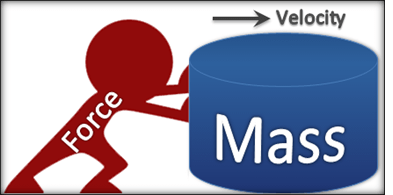
a)
1st
b)
2nd
c)
3rd
89.
What law is best described by inertia?
a)
1st
b)
2nd
c)
3rd
90.

a)
1st
b)
2nd
c)
3rd
91.

a)
1st
b)
2nd
c)
3rd
92.

a)
1st
b)
2nd
c)
3rd
93.

a)
1st
b)
2nd
c)
3rd
94.

a)
1st
b)
2nd
c)
3rd
95.

a)
1st
b)
2nd
c)
3rd
96.
Object at rest stays at rest.
a)
1st
b)
2nd
c)
3rd
97.
F = MxA
a)
1st
b)
2nd
c)
3rd
98.
Acceleration is due to a force put on an objects mass.
a)
1st
b)
2nd
c)
3rd
99.
Acceleration is due to a force put on an objects mass.
a)
1st
b)
2nd
c)
3rd
100.
Equal and Opposite
a)
1st
b)
2nd
c)
3rd
101.
Force exerted between the surfaces of two objects.
a)
Friction
b)
Inertia
c)
Force
d)
Gravity
102.
Objects tendency to resist change
a)
Friction
b)
Inertia
c)
Force
d)
Gravity
103.
Push or Pull
a)
Friction
b)
Inertia
c)
Force
d)
Gravity
100 %

