wayground logo

Free Printable Worksheets

Font size

S
M
L
XL
Worksheets

IIT-JEE & NEET LEVEL-3 (8-O)

Total questions: 100

Worksheet time: 2hrs 40mins

Name
Class
Date
1.
Is 8.27 rational or irrational?
a)
Rational
b)
Irrational
c)
Both
d)
None of the above
2.
Zero is a ___________.
a)
whole number
b)
natural number
c)
whole number, integer, and rational
d)
irrational
3.
A fraction is which type of number?
a)
Rational
b)
Irrational
4.
A repeating decimal is what type of number?
a)
Rational 
b)
Irrational
5.
Is √2 Irrational?
a)
Yes
b)
No
6.
Which of the following is rational?
a)
.211232112421125. . . .
b)
π
c)
√25
d)
√12
7.
Classify this number:  6.7
a)
real
b)
real      rational
c)
real      rational        integer
d)
real   rational   integer   whole
8.
What is the LCM for 3 and 9?
a)
3
b)
9
c)
27
d)
18
9.
What is the LCM for 4 and 7?
a)
4
b)
7
c)
14
d)
28
10.
What is the LCM of 5 and 10
a)
5
b)
10
c)
50
d)
100
11.

Which number is a factor of 10

a)

3

b)

4

c)

5

d)

8

12.
A prime number is...
a)
a number that has only one factor.
b)
a number that has at least two factors.
c)
a number that has more than two factors.
d)
a number that has only two factors.
(1 and itself)
13.
Which one is a multiple of 4?
a)
33
b)
22
c)
18
d)
24
14.
Find the HCF of 21 and 28
a)
3
b)
4
c)
7
d)
14
15.

A number is divisible by 4 if...

a)

The last two digits is divisible by 2 at least twice

b)

The last number is divisible by 2 and 3

c)

The last digit is 0

d)

The last two digits is divisible by 2 at least 3 times

16.

The number 642 is divisible by...

a)

2, 4, and 6.

b)

2, 9, and 10

c)

2, 3, and 6

d)

This is a prime number.

17.

Tough Question!

The number 51,840 is divisible by...

a)

Only 2, 5, and 10.

b)

Only 3, 5, and 10.

c)

2, 3, 4, 5, 6, 8, and 9!

d)

Only 13.

18.

A number is divisible by 9 if...

a)

The sum of the digits is divisible by 9

b)

The number is divisible by 2 and 3.

c)

The sum of the digits is divisible by 3

d)

The last digit of the number is 9.

19.

List all of the factors of 27

a)

1,27

b)

1,3,9,27

c)

1,3,9,12,27

20.

These numbers 14,21,28,35,42 are multiples of what number?

a)

5

b)

3

c)

8

d)

7

21.
What type of cell has a nucleus? 
a)
eukaryotic
b)
prokaryotic 
22.

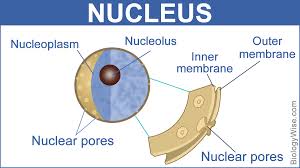
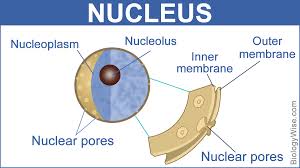
Directs all cell activities through the DNA located there.

a)

Endomembrane System

b)

Nucleus

c)

Ribosomes

d)

Mitochondria

23.

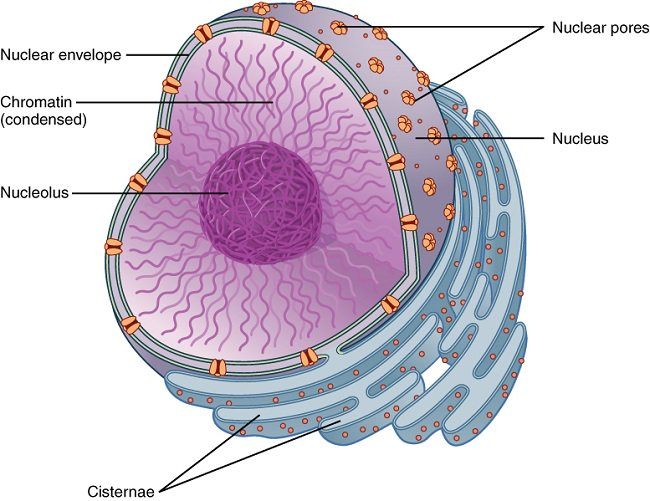
Made up of two layers (an inner and an outer), this acts like a cushiony outer shell of protection.

a)

nucleoplasm

b)

nuclear pores

c)

nuclear membrane

d)

nucleolus

24.

Tiny holes in the nuclear membrane that allow different cellular materials to come in and go out of the cell.

a)

nucleus

b)

nucleoplasm

c)

nucleolus

d)

nuclear pores

25.

Helps assemble ribosomes, which are combinations made of protein and RNA (ribonucleic acid ).

a)

nuclear membrane

b)

nuclear pores

c)

nucleoplasm

d)

nucleolus

26.

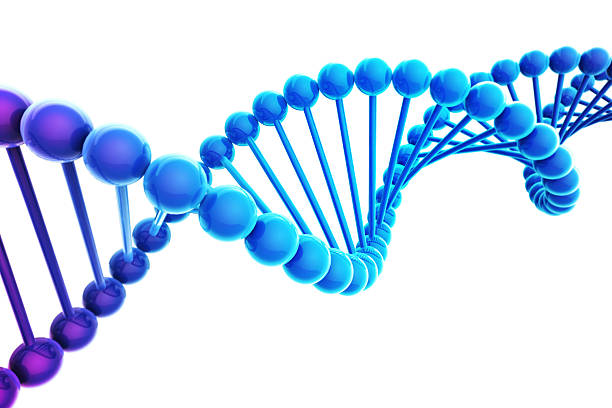
A double stranded helix that holds the code for all the cells in the body.

a)

RNA

b)

DNA

c)

Chromatin

d)

Nucleus

27.

What is a cell?

a)

A place where criminals live.

b)

The smallest structural and functional unit of an organism.

c)

Small circles on top of your body.

28.

What is the nucleus?

a)

A part of the cell that tells everything else what to do.

b)

An organ that makes you healthy.

c)

A wall that protects everything in the cell.

29.

Where is the nucleus located?

a)

In the cell

b)

In the brain

c)

In the blood

30.

What important material is contained in the nucleus?

a)

Jeans

b)

Digestive enzymes

c)

DNA

d)

Nuclear ladders

31.

What is the function of the nucleus?

a)

The nucleus gives the cell energy

b)

The nucleus protects the cell from outside things

c)

The nucleus controls what happens in the cell

d)

The nucleus does not have a job in the cell

32.
All cells come from other...
a)
cells 
b)
plants 
c)
nucleus 
d)
microscopes 
33.
Which scientist mathematically proved the existence of atoms and molecules in 1905?
a)
Robert Brown
b)
Albert Einstein
c)
Antoine Lavoisier
d)
Ernest Rutherford
34.
Named after a botanist, the random motion of particles suspended in a fluid is called _____
a)
Mendelian motion
b)
Einsteinian motion
c)
Brownian motion
d)
Rutherford motion
35.
The word "atom" is from the _____
a)
Latin for "three parts"
b)
Greek for "indivisible"
c)
Gaelic for "uncuttable"
d)
French for "tiny"
36.

The mass number of a nucleus is equal to

a)

the number of neutrons in the nucleus

b)

the number of protons in the nucleus

c)

the number of nucleons in the nucleus

d)

none of them

37.

How is the nuclear membrane similar to a cell membrane?

a)

Has pores

b)

Has proteins

c)

Consist of bilayers

d)

Has no holes

38.

How is the nuclear membrane different from a cell membrane?

a)

Only nuclear membrane has bilayer

b)

Only nuclear membrane can move nucleic acid

c)

Only nuclear membrane is consist of phospholipid

d)

Only nuclear membrane has holes to move something

39.

What are the chromatin composed of?

a)

RNA

b)

DNA

c)

Phospholipid

d)

Chromosome

40.

Where are the ribosomes made?

a)

Chromatin

b)

Nuclear pores

c)

Nuclear membrane

d)

Nucleolus

41.
Subatomic particle with a charge of 0
a)
neutron
b)
proton
c)
electron
d)
quark
42.

Subatomic particles with a negative charge

a)

Electrons

b)

Neutrons

c)

Protons

d)

Quarks

43.
Subatomic particles with a positive charge
a)
neutrons
b)
atomic mass
c)
protons
d)
isotopes
44.

The smallest particle of an element.

a)

Element

b)

Molecule

c)

Atom

45.

The number 16 for the atomic element sulfur is the

a)

ionic number

b)

isotope

c)

atomic mass

d)

atomic number

46.

How many protons does sulfur have?

a)

32

b)

16

c)

48

d)

12

47.

How many electrons does sulfur have

a)

16

b)

32

c)

48

d)

12

48.

In an atom, the number of protons is equal to the number of ____________.

a)

energy levels

b)

neutrons

c)

neurons

d)

electrons

49.
What is the atomic mass of "F"
a)
9
b)
18
c)
17
d)
19
50.
An atom of the element with atomic number 6 always has _____.
a)
six protons in its nucleus
b)
an atomic mass of six
c)
more than six neutrons
d)
six electron clouds
51.
What are subatomic particles? 
a)
the nucleus 
b)
electron cloud
c)
positive charge
d)
electrons, protons, and neutrons
52.
How many electrons does potassium K contain? (click to see image)
a)
19
b)
39
c)
20
d)
40
53.

How many neutrons does a Hydrogen atom have?

a)

1

b)

2

c)

3

d)

0

54.

How many neutrons does an Oxygen atom have?

a)

8

b)

16

c)

24

d)

7.999

55.

How many electrons does a Copper atom have?

a)

63

b)

29

c)

92

d)

34

56.
How many protons are in Beryllium?
a)
4
b)
9
c)
5
d)
2
57.
What is atomic number?
a)
Number of protons in an atoms 
b)
Number of neutrons in an atom
c)
Mass of an atom
d)
Charge on an atom
58.
Which subatomic particles are found in the nucleus of an atom?
a)
Protons and Electrons
b)
Protons and Neutrons
c)
Neutrons and Electrons
d)
Protons, Neutrons and Electrons
59.
What electrical charge does a proton have?
a)
+1
b)
0
c)
-1
d)
+2
60.
The total number of protons and neutrons in an atom is called the...
a)
Atomic number
b)
Proton number
c)
Mass number
d)
Weight number
61.

0.01 liter, or a 10x10x1 box (all cm)

a)

liter

b)

centiliter

c)

quart

d)

cup

62.

1/100 of a m OR width of 1 euro cent

a)

cm

b)

mm

c)

inch

d)

foot

63.

1000 liters

a)

cubic meter

b)

cubic yard

c)

cubic foot

d)

cubic centimeter

64.

8 fluid ounces or about 250ml

a)

milliliter

b)

quart

c)

liter

d)

cup

65.

2 tablespoons or about 30ml

a)

cup

b)

ounce

c)

fluid ounce (fl oz)

d)

inch

66.

12 inches OR about 30cm

a)

millimeter

b)

foot

c)

yard

d)

meter

67.

4 quarts or about 3.74 liters

a)

cubic meter

b)

cubic centimeter

c)

gallon

d)

pint

68.

basic metric unit of weight

a)

ounce

b)

pound

c)

gram

d)

decagram

69.

exactly 2.54 cm

a)

foot

b)

gram

c)

ounce

d)

inch

70.

1000 g

a)

1 kilogram

b)

1 megagram

c)

1 ton

d)

1 milligram

71.

volume of a box of size 10cm by 10cm by 10cm

a)

cubic meter

b)

cubic centimeter

c)

centiliter

d)

liter

72.

1/1000 of a km

a)

meter

b)

centimeter

c)

foot

d)

yard

73.

1000 kg

a)

2000 lbs

b)

ton

c)

gigagram

d)

metric ton

74.

1 mile is exactly

a)

1760 yards

b)

1600 yards

c)

1000 meters

d)

5000 feet

75.
How many significant digits are there in the following number:   0.00530
a)
2
b)
3
c)
5
d)
6
76.
How many significant digits are there in the following number:   590800
a)
2
b)
3
c)
4
d)
6
77.
If you add 20 ml to 172 ml, how many ml do you have to the correct significant digits?
a)
190
b)
192
c)
200
d)
2.0 x 10²
78.
A student poured three samples of solution.  In their beaker, they had 22.5 ml, 22.4 ml and 22.8 ml.  They needed 26 ml per sample.  Were they accurate or precise in their measurements?
a)
Precise
b)
Accurate
c)
Both
d)
Neither
79.
If you needed 25.4 ml of solution, which piece of glassware would you need to use?
a)
100 ml beaker
b)
100 ml graduated cylinder
c)
125 ml flask
d)
50 ml graduated cylinder
80.
How many milliliters are in 2 liters?
a)
0.002
b)
2
c)
200
d)
2000
81.
The side of a cube whose surface area is 600 cm2 is____
a)
10 cm
b)
10 cm2
c)
60 cm
d)
6 cm
82.
The area of a rhombus whose diagonals are 9 cm and 7 cm is ______
a)
16 cm2
b)
63 cm2
c)
63 cm2
d)
16 cm2
83.
Two cubes with 9 cm edge are joined end to end. Find the length of the newly formed solid.
a)
18 cm
b)
9 cm
c)
27 cm
d)
None of the above
84.

The formula to find the volume of a hemisphere =

a)

 2πr22\pi r^2 

b)

 4πr24\pi r^2  

c)

 43πr3\frac{4}{3}\pi r^3  

d)

 23πr3\frac{2}{3}\pi r^3 

85.

The formula to find the volume of a right circular cylinder =

a)

πr2\pi r^2

b)

πr2h\pi r^2h

c)

2πrh2\pi rh

d)

2πr(h+r)2\pi r\left(h+r\right)

86.

What is the formula to find the volume of a sphere ?

a)

23πr3\frac{2}{3}\pi r^3

b)

53πr3\frac{5}{3}\pi r^3

c)

43πr3\frac{4}{3}\pi r^3

d)

πr3\pi r^3

87.
a)
15 square units
b)
15 units
c)
16 units
d)
16 square units
88.

The length of the edge of a cube is 60 cm. Find the volume of the cube.

a)

180 cm3180\ cm^3

b)

21600 cm221600\ cm^2

c)

216000 cm3216000\ cm^3

d)

720 cm3720\ cm^3

89.

Calculate the volume of the cuboid.

(a)  

90.

The curved surface area of a a right circular cone of height 15 cm and base diameter 16 cm is

a)

60π

b)

68π

c)

120π

d)

136π

91.
Fill in the blanks:
1 m² = ___________ cm²
a)
100
b)
10000
c)
1000
d)
500
92.
The sum of lengths of all sides of plane figure is called its____
a)
Area
b)
Perimeter
c)
Boundary
d)
None of the above
93.

Shape of all faces of cuboid are

a)

squares

b)

rectangles

c)

parallelograms

94.

Perimeter of circle is equal to

a)

πr2

b)

πr

c)

2πr

d)

4πr

95.
The area of a rhombus whose diagonals are 9 cm and 7 cm is ______
a)
16 cm2
b)
63 cm2
c)
63 cm2
d)
16 cm2
96.
If the base of the triangle is doubled and height is halved, its area will be _____
a)
Doubled
b)
Halved
c)
one-fourth
d)
Same
97.

AREA OF CIRCLE IS ....

a)

2πr2\pi r

b)

πr2\pi r^2

c)

πr\pi r

98.

AREA OF SECTOR OF A CIRCLE IS .....

a)

X°360°×πr2\frac{X\degree}{360\degree}\times\pi r^2

b)

X°360°×2πr\frac{X\degree}{360\degree}\times2\pi r

c)

X°360°×πr3\frac{X\degree}{360\degree}\times\pi r^3

99.

CALCULATE THE PERIMETER OF THIS SHAPE

a)

440cm

b)

565cm

c)

630cm

100.

6 km 435 m

a)

64,350 meters

b)

6,435 grams

c)

6,435 liters

d)

6,435 meters