
 Worksheets
Review euro
Total questions: 124
Worksheet time: 1hrs 23mins
Name
Class
Date
1.
This type of government gives all powers to the king in a nation.
a)
Constitutional Monarchy
b)
Absolute Monarchy
c)
Oligarchy
d)
Democracy
2.
The idea that a monarch gets their power from God.
a)
Absolutism
b)
Balance of Power
c)
Divine Right
d)
Sacraments
3.
Divine Right of Kings is the theory that . . .
a)
Kings are Gods and all people must worship the king
b)
Kings rule because God chose them to rule
c)
Kings should only be advised by clergy
d)
Kings should be running the churches in their kingdoms
4.
Peter the Great implemented this to make Russia stronger.
a)
Mercantilism
b)
Westernization
c)
Balance of Power
d)
Trickle down economics
5.
This government was started by William and Mary and forces monarchs to share powers with Parliament.
a)
Absolute Monarchy
b)
Dictatorship
c)
Democracy
d)
Constitutional Monarchy
6.
Which document limited the powers of English monarchs?
a)
Petition of Rights
b)
English Bill of Rights
c)
Magna Carta
d)
All of them
7.
Who built St. Petersburg to establish a warm water port for his country?
a)
Frederick the Great
b)
Louis XIV
c)
Peter the Great
d)
Ivan the Terrible
8.
Who responded to Elizabeth I's support of protestant uprisings (Balance of Power) by sending his armada to invade England?
a)
Louis XIV
b)
Phillip II
c)
Frederick the Great
d)
Cardinal Mazarin
9.
Extreme spending on his estate and wars led to debt for this monarch's country and they lost power in Europe.
a)
Phillip II
b)
Louis XIV
c)
James II
d)
Frederick the Great
10.
Who is associated with the phrase, "I am the State?"
a)
Louis XIV
b)
Peter I
c)
Phillip II
d)
Charles I
11.
What inspired Peter I to adopt Western style and dress?
a)
He lived and studied in western europe
b)
He read about them in books
c)
His cousin shared these ideas
d)
The Holy Roman Empire invaded Russia
12.
A famous work during the Spanish Golden Age was . . .
a)
Liberty, Leading her People
b)
Love and Friendship
c)
Don Quixote
d)
The Marriage of Figaro
13.
What document was signed by William and Mary in 1689?
a)
The Declaration of the Rights of Man
b)
The Edict of Nantes
c)
The Magna Carta
d)
The English Bill of Rights
14.
Who was overthrown in the Glorious Revolution?
a)
Louis XIV
b)
Charles I
c)
James II
d)
William and Mary
15.
Who was overthrown in the Glorious Revolution?
a)
Louis XIV
b)
Charles I
c)
James II
d)
William and Mary
16.
Humanism...
a)
emphasized the Bible
b)
leads to happier lives
c)
encourages people to learn Latin and Greek
d)
focuses on the potential of humans to achieve
17.
Who strengthened the French monarchy during the reign of Louis XIII?
a)
Colbert
b)
Rousseau
c)
Mazarin
d)
Richelieu
18.
When Oliver Cromwell defeated Charles I in the English Civil War, the King of England was ________.
a)
executed by chopping off his head with an axe
b)
imprisoned
c)
fired
d)
drawn and quartered
19.
Which economic theory would have been employed by the absolute monarchs of Europe?
a)
Mercantilism
b)
Calitalism
c)
Socialism
d)
Fascism
20.

Louis XIV built this as a symbol of his power and wealth?
a)
Arc De Triumph
b)
Palace of Versailles
c)
Eiffel Tower
d)
El Escorial
21.

Who is this magnificent specimen of humanity? (Hint: he called himself the Sun King.)
a)
Frederick the Great
b)
Louis XIV
c)
Richelieu
d)
Henry IV
22.
In becoming an absolute ruler, Peter the Great had to control the power of the _______ Church.
a)
Roman Catholic
b)
Saint's of Russia
c)
Greek Reformed
d)
Eastern Orthodox
23.
Allowed religious toleration for French Protestants.
a)
Edict of Nantes
b)
Diet of Worms
c)
Council of Trent
d)
Magna Carta
24.
They are French Protestants
a)
Huguenots
b)
Puritans
c)
Pilgrams
d)
Boyars
25.
A dictator is similar to an absolute monarchy, in that in both forms of government, the leaders
a)
obtain their authority through elections
b)
are limited by a written constitution
c)
first establish their rule through the use of force
d)
exercise supreme power over others
26.
Tsarina Catherine the Great built schools, hospitals, and promoted women's education. Historians categorize Catherine the Great as an:
a)
Enlightened Despot
b)
Bourgeoisie
c)
Capitalist
d)
Communist
27.

Peter the Great's main reason for visiting the west was to
a)
gain allies for Russia
b)
gain a warm water port for Russia
c)
learn about western culture and technology
d)
impress the west with Russia's learning and technology
28.

Holy Roman Empire; abdicated throne to Philip II
a)
Louis XIV
b)
Charles V
c)
Philip II
d)
Charles II
29.

Last Tudor monarch; Protestant; defeated Spanish Armada;
a)
Maria Theresa Hapsburg
b)
Elizabeth II
c)
Catherine the Great
d)
Elizabeth I
30.
Which of the following was a way in which Napoleon's reforms positively impacted the French economy?
a)
Created a centralized banking system known as the National Bank of France
b)
Created an equal taxation system that helped finance new roads and canals
c)
Created a new currency which led to France's most stable economy in recent years
d)
All of the above
31.
Which of the following was NOT a domestic reform under Napoleons imperial rule?
a)
Established public education opportunities
b)
Institutes a period of persecution and execution known as the "Reign of Terror"
c)
Set up a fair and equal tax code that led to a stable economy
d)
Seized power through a coup'etat and issued the Napoleonic code
32.
Which of the following describes why Napoleon was able to quickly gain power?
a)
The French political system was finally stable after Robespierre executed any enemy of the republic
b)
The political and economic problems that the revolution tried to fix still existed and the people were desperate for change
c)
The newly created French republic of virtue insisted on having a firm leader that would expand the empire across all of Europe
d)
All of the above
33.
The great French empire that Napoleon created eventually fell after the unsuccessful invasion of Russia. Why was the invasion considered a great disaster for Napoleon?
a)
There was a massive air attack by the Russians that wiped out most of Napoleons army
b)
Russia's scorched-earth policy and cold winter wiped out most of Napoleons army
c)
The Battle of the Bulge wiped out most of Napoleons army
d)
The newly formed United States allied with Russia to wipe out most of Napoleons army
34.
Which of the following describes what happened when Napoleon instituted the Continental System?
a)
His brother Joseph was not able to withstand the guerrilla warfare tactics used by Spanish nationalists
b)
The British navy was too strong for the blockade and France's economy suffered as a result
c)
The Russians used the scorched-earth policy to eventually starve Napoleons army
d)
The blockade successfully restricted British trade and led to fall of Great Britain
35.
Napoleon assumed dictatorial powers through a sudden seizure of power known as a coupd'etat
a)
True
b)
False
36.
The Napoleonic Code also established a secret force that arrested people without a fair and equal trial
a)
True
b)
False
37.
Napoleon conquered all of Europe and died a hero
a)
True
b)
False
38.
Napoleon completely ignored women's rights
a)
True
b)
False
39.
What happened to Napoleon after he lost the Battle of Waterloo during the hundred days?
a)
He was sent to the island of Elba
b)
He was sent to the island of St. Helena where he died of stomach cancer three years later
c)
He was executed by means of the guillotine
d)
He was sent to the island of Elba where he drank a red bull, grew wings, and escaped
40.
Why was the Peninsular War considered one of Napoleons three costly mistakes?
a)
His brother Joseph was not able to withstand the guerrilla warfare tactics used by Spanish nationalists.
b)
The British navy was too strong for the blockade and France's economy suffered as a result
c)
The Russians used the scorched-earth policy to eventually starve Napoleons army
d)
The blockade successfully restricted British trade and led to fall of Great Britain
41.
Which leader during the French Revolution said "I love power as much as a musician loves his violin"
a)
Maximilian Robespierre
b)
King Louis 16th
c)
Napoleon Bonaparte
d)
Jacques Necker
42.
The French Revolution began in
a)
1776
b)
1789
c)
1876
d)
1798
43.
One cause of the French Revolution was the emergence of a new middle class of merchants and professionals called the
a)
bourgeoisie
b)
aristocracy
c)
sans culottes
d)
denoument
44.
France was deep in debt because
a)
money spent on the American Revolution
b)
Marie Antoinette's lavish spending
c)
the 1st and 2nd estates did not pay taxes
d)
all of the above
45.
The idea that reason should guide society rather than tradition helped cause the revolution and came from
a)
the Declaration of Independence
b)
the Scientific Revolution
c)
the Enlightenment
d)
all of the above
46.
Revolutions in France and the US shared Enlightenment ideas in all the following areas except
a)
Where governments get their powers
b)
the purpose of governments
c)
what the people can do if their government does not do its job
d)
what religion governments should promote
47.
The French Revolution began when King Louis XVI
a)
was executed
b)
had his troops attack Paris
c)
called the Estates General together
d)
abdicated
48.
The First Estate in French society was composed of
a)
the Clergy
b)
people with special courts
c)
people who did not pay taxes
d)
all of the abve
49.
The Second Estate was composed of
a)
Church leaders
b)
Nobility
c)
Peasants
d)
none of the above
50.
Most of the people of France belonged to the
a)
1st
Estate
Estate
b)
2nd Estate
c)
3rd Estate
d)
4th Estate
51.
Why was voting in the Estates General unfair
a)
votes were not secret
b)
each estate voted by how many members there were
c)
each estate got the same number of votes
d)
the King got two votes
52.
When the other estates refused to change voting rules the 3rd Estate
a)
met separately
b)
declared themselves the new government
c)
Created the National Assembly
d)
all of the above
53.
When the people of Paris heard that the military was going to stop the revolution their response was to
a)
leave the city
b)
storm the Bastille
c)
force the King to come to Paris
d)
none of the above
54.
In 1789, the hungry women of Paris marched to Versailles and
a)
forced the King to return to Paris
b)
demanded that the King abdicate
c)
demanded that the King leave France
d)
all of the above
55.
This Enlightenment thinker was especially important for the ideas of the Revolution
a)
John Locke
b)
Montesquieu
c)
Jean-Jacques Rousseau
d)
David Hume
56.
The National Assembly set down the ideas of the Revolution in
a)
the Declaration of Independence
b)
the Declaration of the Rights of Man
c)
the US Constitution
d)
The Edict of Nantes
57.
Radicals are people who
a)
try to prevent change
b)
believe in capital punishment
c)
support the old government
d)
believe in extreme measures
58.
The radicals who took over the revolution were led by
a)
Louis XVI
b)
Robespierre
c)
Rousseau
d)
Marquis de Lafayette
59.
The radicals attempted to deal with the influence of the church by
a)
making it part of the revolution
b)
making it illegal
c)
forcing everyone to join the church
d)
all of the above
60.
During the revolution many of these people left France for fear of their lives.
a)
nobles
b)
relatives of the King
c)
members of the Second Estate
d)
all of the above
61.
Conservatives are people who
a)
distrust change
b)
have strict rules
c)
believe in tradition
d)
all of the above
62.
The Radicals eliminated anyone accused of being against the Revolution during
a)
the Terror
b)
the Great Fear
c)
Thermidorian Reaction
d)
Thermidorian Reaction
63.
The extreme actions of the Radicals began with the
a)
storming of the Bastille
b)
Great Fear
c)
execution of Louis XVI
d)
the meeting of the Estates General
64.
Robespierre was sent to the guillotine because
a)
he was accused of a crime he did not committ
b)
other radicals thought he might execute them next
c)
the King's supporters captured him
d)
none of the above
65.
The end of the Revolution came with
a)
France's surrender to England
b)
Napoleon's coup
c)
the Louisiana Purchase
d)
the Invasion of Russia
66.
The killing carried out by the Radicals led to the
a)
invasion of France
b)
the New Revolution
c)
takeover by the Church
d)
a conservative reaction
67.
Most Enlightenment thinkers were speaking out against
a)
Democracy
b)
Absolute Monarchy
68.
The Enlightenment is
a)
a time of rebirth
b)
a time when science ruled
c)
a time with people used reason and logic to explain the world
d)
a time when technology ruled
69.

Enlightenment philosopher who did not agree with censorship.
a)
Voltaire
b)
Denis Diderot
c)
Mary Wollstonecraft
d)
Adam Smith
70.

Enlightenment philosopher who believed men and women should be equal
a)
Voltaire
b)
Denis Diderot
c)
Mary Wollstonecraft
d)
Adam Smith
71.

Enlightenment philosopher who edited the Encyclopedia to help educate the public.
a)
Voltaire
b)
Denis Diderot
c)
Mary Wollstonecraft
d)
Adam Smith
72.
Enlightenment philosopher who edited the Encyclopedia to help educate the public.
a)
Voltaire
b)
Denis Diderot
c)
Mary Wollstonecraft
d)
Adam Smith
73.

Enlightenment philosopher who believed people had natural rights of life, liberty, and property.
a)
John Locke
b)
Montesquieu
c)
Rousseau
d)
Voltaire
74.

Enlightenment philosopher who believed to limit government, that it should be divided into separate branches that shared power.
a)
John Locke
b)
Montesquieu
c)
Rousseau
d)
Voltaire
75.
Enlightenment philosopher who believed to limit government, that it should be divided into separate branches that shared power.
a)
John Locke
b)
Montesquieu
c)
Rousseau
d)
Voltaire
76.

Enlightenment philosopher who believed people were born good, but society corrupted them.
a)
John Locke
b)
Montesquieu
c)
Rousseau
d)
Voltaire
77.
Natural Rights
a)
Life, Liberty, and the Pursuit of Happiness.
b)
Life, Liberty, and Property
c)
Freedom
d)
Rights to say what we want, when we want to.
78.
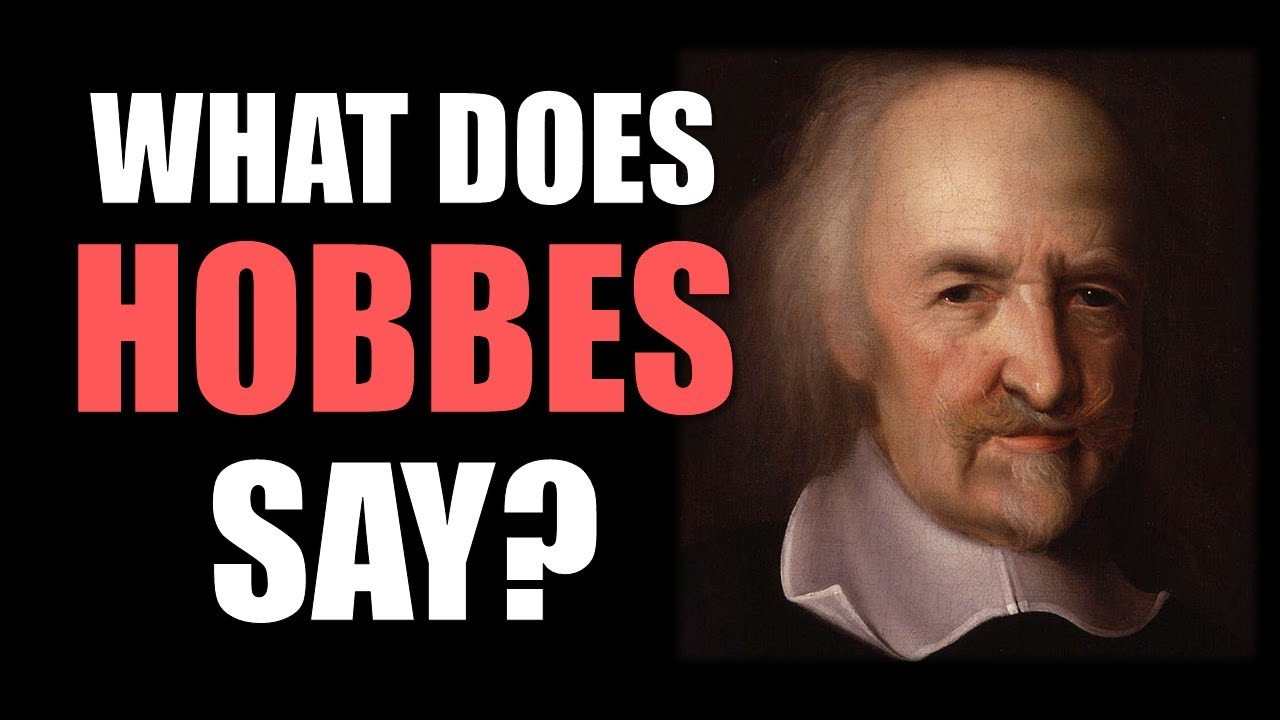
How did Hobbes view human nature?
a)
We are inquisitive and industrious.
b)
We are naturally selfish and quick to fight.
c)
We are naturally altruistic and usually willing to compromise.
d)
We are born a 'blank slate', and we develop differently according to our life's experiences..
79.
What is another name for the Enlightenment?
a)
The Age of Reason
b)
The Age of Great Philosophers
c)
The Age of Religion
d)
The Age of Revolution
80.
John Locke, Jean Rousseau, and Voltaire all lived during what was called the:
a)
Dark Ages
b)
Middle Ages
c)
Enlightenment
d)
Depression
81.

According to John Locke, why are governments created?
a)
God gives monarchs a divine right to rule over their people
b)
People are naturally selfish and need a strong ruler to create order
c)
People set up governments to protect their lives and property
d)
Civil government must be established to offset the power of the church
82.
Which Enlightenment philosopher argued that people have the right to abolish their government and create a new one?
a)
Montesquire
b)
Locke
c)
Voltaire
d)
Rousseau
83.
The ability of one branch of government to limit the power of the other is called ___.
a)
a natural law
b)
checks and balances
c)
a social contract
d)
laissez-faire
84.
An agreement between people and the government to give up some rights for safety and protection
a)
Philosophers
b)
Democracy
c)
Social Contract
d)
Divine Right of Kings
85.
Voltaire was a big believer in which of the following?
a)
Freedom of Speech
b)
People are born wicked
c)
People are born free and equal
d)
The social contract
86.
Voltaire was a big believer in which of the following?
a)
Freedom of Speech
b)
People are born wicked
c)
People are born free and equal
d)
The social contract
87.
Wrote the book, Leviathan, during the English Civil War
a)
Hobbes
b)
Rousseau
c)
Montesquieu
d)
Locke
88.
A book that Montesquieu wrote was entitled
a)
The Social Contract
b)
Two Treatises of Government
c)
On the Spirit of the Laws
d)
A Vindication of the Rights of Women
89.
Enlightenment philosphers believe that if government abuses power the people should change it.
a)
True
b)
False
90.
Natural Rights
a)
Life, Liberty, and the Pursuit of Happiness.
b)
Life, Liberty, and Property
c)
Freedom
d)
Rights to say what we want, when we want to.
91.
Social Contract
a)
Government protect people, people follow(give power) to the government
b)
Government protects people and people don't complain.
c)
People cannot trust a government.
d)
People must trust the government and in return they cannot have a say in government.
92.
Social Contract
a)
Government protect people, people follow(give power) to the government
b)
Government protects people and people don't complain.
c)
People cannot trust a government.
d)
People must trust the government and in return they cannot have a say in government.
93.
Galileo was tried for heresy because he argued
a)
That heaven did not exist
b)
That Earth revolved around the sun
c)
Against the law of gravity
d)
That the sun revolved around the Earth
94.
According to Copernicus, the sun
a)
Revolved around the earth
b)
Was the center of the Universe
c)
Was the biggest star
d)
Had many moons
95.
During the Scientific Revolution the heliocentric view of the universe was first proposed by __.
a)
Ptolemy
b)
Francis Bacon
c)
Isaac Newton
d)
Nicolaus Copernicus
96.
The Scientific Revolution challenged many medieval ideas about science. All of the following were astronomers during the Scientific Revolution except __.
a)
Nicolaus Copernicus
b)
Ptolemy
c)
Galileo Galilei
d)
Johannes Kepler
97.
The idea that the earth is the center of the universe is the ___________ theory.
a)
geocentric
b)
heliocentric
c)
earthcentric
d)
world's worst
98.
The idea that the sun is the center of the universe is the ____________ theory.
a)
geocentric
b)
heliocentric
c)
solar
d)
sunny
99.
What is the first step to the scientific method?
a)
Make a hypothesis
b)
State a question or problem
c)
Do the experiment
d)
Analyze the data
100.
What is the heliocentric theory?
a)
There is no sun
b)
The sun is smaller than the Earth
c)
The sun is the center of the universe
d)
The Earth in the center of the universe
101.
What did the geocentric theory state?
a)
The sun was at the center of the universe
b)
The earth was at the center of the universe
102.
Who created the heliocentric theory?
a)
Copernicus
b)
Galileo
c)
Ptolemy
d)
Kepler
103.
What did Galileo Improve?
a)
The astrolabe
b)
the stars
c)
The Telescope
d)
cat food.
104.
Who created the geocentric theory?
a)
Issac Newton
b)
Ptolemy
c)
Copernicus
d)
Galileo
105.
Who created the geocentric theory?
a)
Issac Newton
b)
Ptolemy
c)
Copernicus
d)
Galileo
106.
What did Kepler add to Copernicus’ heliocentric theory?
a)
That Jupiter had four moons
b)
That the planets revolved around the earth
c)
That the sun was the biggest star
d)
That the planets move in eliptical (oval shaped) orbits around the sun
107.
_____________________ was an Italian astronomer who developed the telescope, which then confirmed Copernicus’ Heliocentric Theory
a)
a. Isaac Newton
b)
b. Galileo Galilei
c)
c. Adam Smith
d)
d. Dennis Diderot
108.
Nicolaus Copernicus used _________________ to come up with his theory.
a)
Luck
b)
Mathematical formulas
c)
Guesses
d)
Friends
109.
During the scientific revolution people started using experiments to test theories rather than just believing the ___________
a)
King
b)
Family
c)
Church
d)
Sir Salami
110.
During the scientific revolution people started using experiments to test theories rather than just believing the ___________
a)
King
b)
Family
c)
Church
d)
Sir Salami
111.
Legislative, or law-making, body in government representing the interests of the people.
a)
Congress
b)
House of Burgesses
c)
Duma
d)
Parliament
112.
An English document signed in 1215 saying that the king is not above the law.
a)
Articles of Confederation
b)
Declaration of Independence
c)
Declaration of Rights of Man
d)
Magna Carta
113.
The name given to the Army of supporters of Parliament and Oliver Cromwell in their rebellion against King Charles I.
a)
Wizards
b)
Celtics
c)
Roundheads
d)
Cavaliers
114.
The name given to the Army of supporters of Parliament and Oliver Cromwell in their rebellion against King Charles I.
a)
Wizards
b)
Celtics
c)
Roundheads
d)
Cavaliers
115.
A government led by a monarchy who is limited by the law or constitution.
a)
unlimited government
b)
constitutional democracy
c)
constitutional monarchy
d)
none of the above
116.
A document limiting the power of the monarchy in England which also established that the people of England had certain rights.
a)
Magna Carta
b)
Declaration of Independence
c)
English Bill of Rights
117.
A period of time when King Charles I locks Parliament out of their meeting place at Westminster.
a)
Eleven Years Tyranny
b)
Seven Years Sabbatical
c)
Four Years Fistfight
d)
none of the above
118.
The time period when William and Mary are invited by Parliament to take the throne in England & agree to limit their power by signing the English Bill of Rights.
a)
Enlightenment
b)
Glorious Revolution
c)
French Revolution
d)
Age of Exploration
119.
Which of the following events happened last?
a)
Charles I is tried, found guilty, and beheaded.
b)
Oliver Cromwell becomes Lord Protector of England.
c)
James II become King of England after his brother, Charles II, dies.
d)
William and Mary sign the English Bill of Rights.
120.
The supporters of Charles I and the monarchy during the English Civil War were known as...
a)
Stallionaires
b)
Cavaliers
c)
Matadors
d)
War Eagles
121.
All of the following factored into arguments between Parliament and the monarchy leading up to the English Civil War EXCEPT...
a)
power
b)
money
c)
taxes
d)
royal lineage
122.
Who signed the Magna Carta in 1215 effectively limiting his power as King of England?
a)
King Henry VIII
b)
King John
c)
King James I
d)
King Charles II
123.
After the English Civil War, Charles I was tried and found gullty of treason. What was his punishment?
a)
He was exiled to France.
b)
He was forced to relinquish the monarchy.
c)
He was beheaded.
d)
He was allowed to be a non-voting member of Parliament.
124.
During the timeframe between the English Civil War and the Glorious Revolution, England was known as...
a)
The English Federation
b)
The Republic of England
c)
The Democratic Republic of the British Isles
d)
The Commonwealth of England
100 %

