
 Worksheets
1st Semester Science Review
Total questions: 100
Worksheet time: 1hrs 13mins
Name
Class
Date
1.
Something that takes up space and has mass.
a)
volume
b)
matter
c)
mass
d)
density
2.
A state of matter that has a definite volume and shape.
a)
solid
b)
liquid
c)
gas
d)
matter
3.
A measure of how much mass is contained in a given unit of volume.
a)
mass
b)
density
c)
volume
d)
matter
4.
The amount of space something takes up
a)
density
b)
volume
c)
mass
d)
matter
5.
Shape is a ____ that helps identify an object.
a)
physical property
b)
chemical property
c)
mass
d)
matter
6.
A watermelon has more matter than a grape, so it has more
a)
mass
b)
eat
c)
solid
d)
greater
7.
The ability of a metal to allow heat or electricity to pass through it.
a)
conductivity
b)
insulator
c)
mass
d)
density
8.
What are the three states of matter?
a)
solid, volume, mass
b)
density, volume, mass
c)
solid, liquid, gas
d)
density, gas, volume
9.
Solids have a definite _______________.
a)
smell
b)
shape
c)
picture
d)
sound
10.
What is one way matter change states?
a)
matter loses mass
b)
heat is added
c)
it doesn't change
d)
by doing nothing
11.
At 32 degrees Fahrenheit, water _________.
a)
evaporates
b)
boils
c)
freezes
d)
remains the same
12.
Water in the form of a gas is called _________.
a)
water vapor
b)
gasoline
c)
ice
d)
liquid
13.
Liquid matter takes the shape of _______.
a)
a gas
b)
water
c)
a pet
d)
Its container
14.
Water in its solid form is _____________.
a)
a vapor
b)
ice
c)
a liquid
d)
boiling
15.
At 212 degrees Fahrenheit, water __________________.
a)
freezes
b)
stays the same
c)
boils
d)
turns to Coke
16.
When a solid is turned into a liquid, the solid _______________.
a)
melts
b)
freezes
c)
turns into a gas
d)
floats
17.
______________ + heat = water vapor
a)
liquid
b)
solid
c)
gas
18.
______________ does not have a definite shape or volume.
a)
liquid
b)
solid
c)
gas
19.
Gasoline is a ________________.
a)
liquid
b)
solid
c)
gas
20.
Sand is a ___________________.
a)
liquid
b)
solid
c)
gas
21.
Helium is a ____________.
a)
liquid
b)
solid
c)
gas
22.

Which state of matter has particles that are tightly packed?
a)
liquid
b)
gas
c)
solid
23.
When you see steam, fog or clouds, which state of matter is it?
a)
solid
b)
liquid
c)
gas
24.
When you stretch a rubber band, you are storing __________ energy.
a)
kinetic
b)
potential
c)
none of the above
d)
all of the above
25.

which point has the most potential energy
a)
G
b)
f
c)
b
d)
a
26.

Which 2 letters have the most kinetic energy
a)
W & Y
b)
X & Z
27.
How much pontential energy is at the top of a hill on a rollar coaster ride
a)
100%
b)
50%
c)
0%
d)
20%
28.
Can energy be destroyed
a)
no
b)
yes
29.

As a pendulum swings from its highest to lowest position, what happens to its kinetic and potential energy?
a)
Both the potential energy and kinetic energy decrease
b)
The potential energy decreases while the kinetic energy increases
c)
The kinetic energy decreases while the potential energy increases
d)
Bothe the potential energy and kinetic energy increase
30.
Energy can be _____________ or changed from one type to another.
a)
destroyed
b)
transferred
c)
created
d)
ignored
31.
Energy due to motion is ____________ energy.
a)
Potential
b)
Energy
c)
Kinetic
d)
Friction
32.
__________ is stored energy.
a)
Potential
b)
Kinetic
c)
None of the above
d)
All of the above
33.
The faster an object moves, the ________ kinetic energy it has.
a)
more
b)
less
c)
none of the above
d)
all of the above
34.

What kind of energy is in a moving skateboard?
a)
Potential
b)
Kinetic
35.

What kind of energy is in a rock at the edge of a cliff?
a)
Potential
b)
Kinetic
36.
Which is the best example that something has kinetic energy?
a)
a. a car parked on a steep hill
b)
b. a tennis ball rolling across the court
c)
c. a picture hanging on the wall
d)
d. a piece of coal before it's burned
37.
Conduction is heat transfer by -
a)
Touch
b)
Circles
c)
Waves
38.
Convection is heat transfer by-
a)
Touch an object
b)
The heating and cooling of a fluid
c)
Electromagnetic Waves
39.

Warm air rises and the cool air sinks demonstrates this type of heat transfer.
a)
conduction
b)
convection
c)
radiation
d)
Insolation
40.

The heat from a hot burner to a pot is transferred by ______.
a)
convection
b)
insulation
c)
radiation
d)
conduction
41.

When the 2nd story of a house is warmer than the 1st floor of a house is heat transfer through
a)
conduction
b)
convection
c)
radiation
d)
thermal equilibrium
42.

The sun warming your skin is an example of heat transfer through
a)
conduction
b)
convection
c)
radiation
d)
thermal electricity
43.

Heat transfer through electromagnetic waves is called
a)
conduction
b)
convection
c)
radiaton
d)
thermal
44.
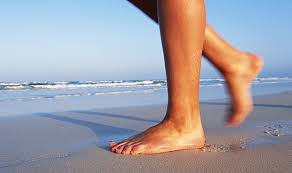
Walking on the warm sand sand with your bare feet demonstrates this type of heat transfer.
a)
conduction
b)
convection
c)
radiation
45.

A group of friends gather around a fire to stay warm.
a)
conduction
b)
convection
c)
radiation
46.
Hot coffee is stirred with a spoon; the spoon gets hot due to
a)
conduction
b)
convection
c)
radiation
47.
What type of heat transfer takes place in solids?
a)
Conduction
b)
Convection
c)
Radiation
48.
What type of heat transfer takes place in liquids and gasses?
a)
Conduction
b)
Convection
c)
Radiation
d)
Thermal Equilibrium
49.
As you touch a hot stove the heat transfers -
a)
from your hand to the stove
b)
from the stove to your hand
c)
It doesn't transfer
50.
Heat transfer always goes from-
a)
Cold to Hot
b)
Hot to Cold
c)
Heat doesn't transfer
d)
Freezing to Cold
51.
What happens to particles as they heat up?
a)
They slow down
b)
Nothing
c)
They don't move
d)
They speed up
52.
What happens to particles as they cool down?
a)
They slow down
b)
Nothing
c)
They don't move
d)
They speed up
53.
Mittens help keep your hands warm in winter because:
a)
They are conductors of heat.
b)
They are fuzzy.
c)
They are conductors of electrical energy.
d)
They are insulators.
54.
Conductors are materials that...
a)
Allow heat to pass through
b)
Stop heat from passing through
c)
Allow cold to pass through
d)
Stop cold from passing through
55.
An object that doesn't conduct heat well is known as:
a)
a conductor
b)
an insulator
c)
conduction
d)
insulation
56.
Conduction, Convection and Radiation are three types of...
a)
Electrical energy
b)
Thermal Energy
c)
Chemical Energy
d)
Sound Energy
57.
A possible explanation to a problem that has not yet been tested.
a)
data
b)
theory
c)
hypothesis
d)
fact
58.
This variable in an experiment is the one being deliberately changed by the scientist.
a)
dependent variable
b)
independent variable
c)
data
d)
control group
59.
The summary at the end of an experiment that explains the results.
a)
conclusion
b)
procedures
c)
materials
d)
responding variable
60.
A series of steps used by scientists to solve a problem or answer a question.
a)
scientific method
b)
recipe
c)
data collection
d)
metric system
61.
In a controlled experiment, how many independent variables can be worked with at a time?
a)
one
b)
none
c)
two or more
d)
how ever many makes sense.
62.
What is a hypothesis?
a)
A hypothesis is the right answer to an experiment.
b)
A hypothesis is the wrong answer to an experiment.
c)
A hypothesis is an educated guess.
d)
I don't know.
63.
Which is NOT a step in the scientific method?
a)
Make observation
b)
Form a theory
c)
Collect data
d)
Form a hypothesis
64.
What step does every scientific experiment begin with?
a)
hypothesis
b)
question/problem
c)
procedures
d)
conclusion
65.
True or False: Your hypothesis can never be wrong.
a)
True
b)
False
66.
What is a PUSH or PULL of an object?
a)
Motion
b)
Force
c)
Friction
d)
Gravity
67.
What is MOVEMENT?
a)
Inertia
b)
Force
c)
Work
d)
Motion
68.
What is a force that works AGAINST MOTION?
a)
Force
b)
Motion
c)
Gravity
d)
Friction
69.
An object may move when a _______ is applied to it.
a)
force
b)
gravity
c)
friction
70.
When an unbalanced force acts on an object, the force...
a)
Changes the motion of the object
b)
Is canceled by another force
c)
Does not change the motion of the object
d)
Is equal to the weight of the object
71.
Which will be different on the moon?
a)
Mass of an object
b)
Weight of an object
72.
_______ is a force that acts between two objects which are touching. This force slows any movement between the two objects.
a)
pressure
b)
magnetism
c)
friction
73.

__________ is the sum of all forces acting on an object. It is capable of accelerating a mass.
a)
velocity
b)
gravity
c)
net force
d)
distance
74.
If the net force is 0 the object is...
a)
in motion
b)
in the same place
75.

The force that pulls things toward earth.
a)
Speed
b)
Gravity
76.

Forces that have a net force of zero ( the object is still).
a)
Balanced force
b)
Unbalanced force
77.
With unbalanced forces, the object will move in the direction of the _______ force.
a)
larger
b)
smaller
c)
equal
78.
What is force?
a)
A push exerted on an object
b)
A push or pull exerted on an object
c)
A pull exerted on an object
d)
Nothing
79.
What is the unit of measurement for force?
a)
AMP
b)
Seconds
c)
Newtons
d)
Miles
80.
You and your friend, are playing tug of war. Your friend pulls with a force of 55 N, to the rights. You pull with a force of 65 N, to the left. What is the net force on the rope?
a)
10 n, to the left
b)
20 N
c)
10 N, to the left
d)
10 N, to the right
81.
the tendency of an object to resist a change in its motion
a)
acceleration
b)
inertia
c)
mass
d)
frame of reference
82.
Inertia is the tendency of an object to resist a change in its ___________.
a)
temperature
b)
shape
c)
size
d)
motion
83.
Objects with greater _________ also have greater inertia.
a)
speed
b)
mass
c)
temperature
d)
friction
84.
What kind(s) of objects have inertia?
a)
all objects with mass
b)
only objects at rest
c)
only objects in motion
d)
only objects whose motion is being changed
85.
The law of inertia (Newton’s First Law) applies
a)
to both moving and nonmoving objects
b)
only to moving objects
c)
only to objects that are not moving
86.

What is the net force?
a)
50 N ------->
b)
<-------- -200 N
c)
250 N -------------->
87.
Newton's 1st law is also called....
a)
friction
b)
inertia
c)
unbalanced forces
d)
Newtons
88.
An object in motion tends to stay in motion unless an ___ force acts on it.
a)
unbalanced
b)
balanced
89.
If you increase the mass on an object, its acceleration
a)
decreases
b)
stays the same
c)
also increases
d)
stops
90.
If you increase the force on an object, its acceleration
a)
decreases
b)
stays the same
c)
also increases
d)
stops
91.
You push on a tree with 20 N of force. If the tree doesn't move, the tree is pushing back on you with _____of force.
a)
20N
b)
40N
c)
10N
d)
70N
92.
What University did Newton attend?
a)
The University of Notre Dame
b)
The University at Cambridge
c)
Princeton University
d)
Oxford University
93.
What was the name of the book that introduced Newton's three laws of motion?
a)
Newton's Three Laws of Motion
b)
The Principia
c)
Calculus
d)
Trigonometry
94.
When an object resists change, like a body in a turning car, it is called ________________.
a)
inertia
b)
force
c)
friction
d)
drag force
95.
For every action, thereʼs an equal and opposite reaction. *Action-Reaction*
a)
Newton's First Law
b)
Newton's Second Law
c)
Newton's Third Law
d)
force
96.
The scientist who is most famous for developing the Laws of Motion is _____.
a)
Albert Einstein
b)
Stephen Hawking
c)
Sir Isaac Newton
d)
Galileo Galilei
97.
An object will accelerate in the direction of the force applied to it.
a)
Newton's 1st Law
b)
Newton's 2nd Law
c)
Newton's 3rd Law
d)
Newton's 4th Law
98.
Which has more Inertia? (and more force to move)
a)
Truck
b)
Ant
99.
Flammability (burns)
a)
Physical Property
b)
Chemical Property
100.
Solubility (dissolves)
a)
Physical Proeprty
b)
Chemical Property
100 %

