
NEW
Font size
S
M
L
XL
 Worksheets
IPC A Final Exam Review
Total questions: 34
Worksheet time: 30mins
Name
Class
Date
1.
Particles (molecules) in a ______________________ have more energy than the other states of matter.
a)
gas
b)
solid
c)
liquid
2.
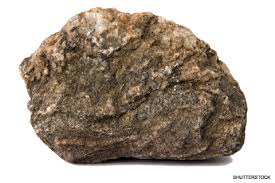
Which state of matter has tightly packed molecules?
a)
solid
b)
liquid
c)
gas
3.
Define a liquid.
a)
Indefinite shape, indefinite volume
b)
Definite shape, definite volume
c)
Found in stars
d)
Definite volume, indefinite shape
4.
The state of matter that has no definite size or shape is
a)
Solid
b)
Liquid
c)
Gas
5.
What term describes a solid changing to a gas?
a)
Deposition
b)
Sublimation
c)
Evaporation
d)
Freezing
6.
A physical change is...
a)
a change that doesn't change the identity
b)
a change that makes something new.
c)
a chemical reaction
7.
A chemical change
a)
doesn't really change much.
b)
creates a new substance
c)
is a change in the state of matter
8.
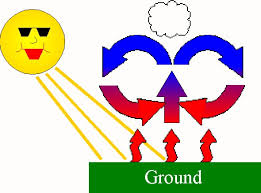
Warm air rises and the cool air sinks demonstrates this type of heat transfer.
a)
conduction
b)
convection
c)
radiation
d)
Insolation
9.
Ironing a shirt is an example of...
a)
condensation
b)
conduction
c)
convection
d)
radiation
10.
What kind of heat transfer happens when the sun is heating your body?
a)
Conduction
b)
Radiation
c)
Convection
d)
Density
11.
2. A change of state from a liquid to a solid is called....
a)
Melting
b)
Freezing
c)
Evaporation
12.

What is happening at "D" on the graph?
a)
Water is boiling
b)
water is evaporating
c)
water is melting
d)
the sublimation of water
13.

What phase of matter is illustrated in "C"
a)
solid
b)
liquid
c)
gas
d)
melting
14.

Is this equation balanced?
a)
yes
b)
no
c)
Not enough information
15.
Balance this equation
_Al +_HCl --> _H2 +_AlCl3
_Al +_HCl --> _H2 +_AlCl3
a)
2, 6, 3, 2
b)
it is already balanced
c)
4, 12, 3, 4
d)
2, 1, 4, 5
16.
At the end of chemical reactions, what is the total mass of the reactants compared to the total mass of the products?
a)
the product is doubled
b)
the product is half the mass of the reactants
c)
the mass is the same
d)
the mass changes depending on the reaction
17.
How many atoms of aluminum are on each side of the following equation: 4Al + 3O2 --> 2Al2 O3
a)
2
b)
6
c)
1
d)
4
18.
Balance this equation.
_SnO2 +_H2-->_Sn +_H2O
_SnO2 +_H2-->_Sn +_H2O
a)
1,1,2,1
b)
1,2,1,1
c)
1,2,1,2
d)
1,2,2,1
19.

When 20 grams of potassium chlorate, KClO3, is dissolved in 100 grams of water at 80 ºC, the solution can be correctly described as:
a)
supersaturated
b)
saturated
c)
unsaturated
20.

When 50 grams of KCl is dissolved in 100 grams of water at 50 ºC, the solution can be correctly described as:
a)
supersaturated
b)
unsaturated
c)
saturated
21.
The pH of a solution is tested, and it is found to be a basic solution. Of the following choices, what could the pH have been?
a)
3
b)
9
c)
7
d)
5
22.
What is the range of pH values in an acidic solution?
a)
0-7
b)
7-14
c)
15-239058204958
d)
pH = 7
23.
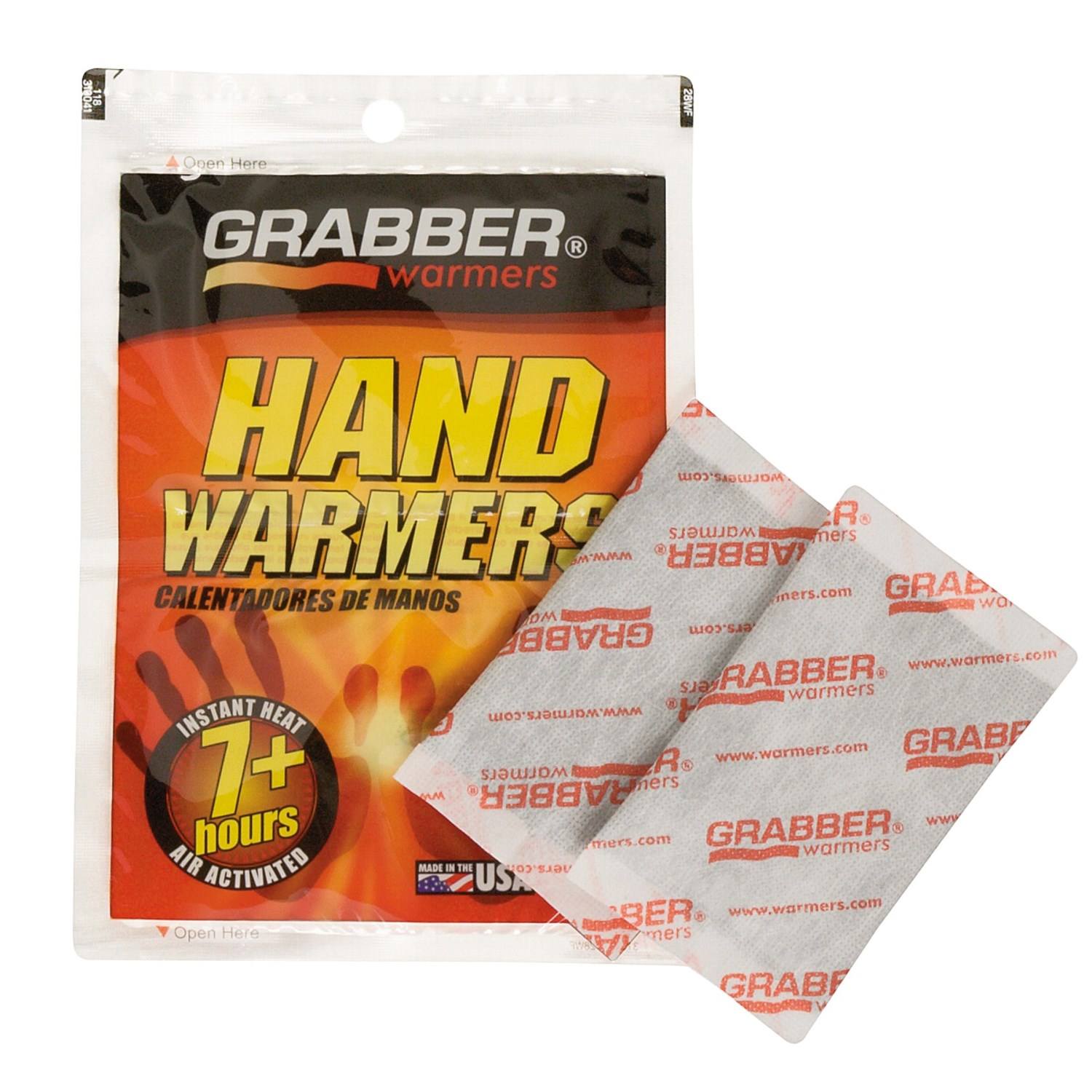
What type of reaction occurs in a hand warmer
a)
exothermic
b)
endothermic
24.

If a chemical reaction is EXOTHERMIC, the temperature would....
a)
Stay the same
b)
Increase
c)
Decrease
25.
The splitting of a nucleus into smaller nuclei is
a)
fusion
b)
fission
c)
decay
d)
gamma radiation
26.
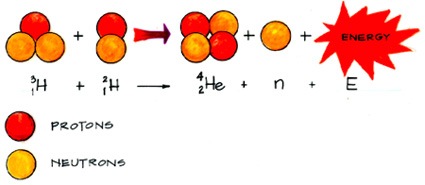
Which process involves the joining of small nuclei?
a)
Beta decay
b)
Alpha decay
c)
Nuclear fission
d)
Nuclear fusion
27.
Which is a Chemical property?
a)
Thermal Conductivity
b)
Density
c)
Malleability
d)
Flammability
28.
Which is a physical change?
a)
burning match
b)
vinegar in baking soda
c)
melting butter
d)
cooking an egg
29.
What kind of properties can only be observed when a substance changes into a different substance?
a)
physical properties
b)
chemical properties
c)
liquid properties
d)
real properties
30.
Is "sugar dissolves in water" a chemical or physical change?
a)
Chemical change
b)
Physical change
31.
The substance that gets dissolved is called
a)
Material
b)
solvent
c)
solution
d)
solute
32.
Which particle has a positive charge?
a)
electron
b)
orbital
c)
proton
d)
neutron
33.
This particle determines what element you have - the elements identity.
a)
electron
b)
proton
c)
neutron
d)
valence shell
34.
What are valence electrons?
a)
electrons on the first orbital always
b)
nucleus
c)
the outermost shell
d)
the number of electrons on the outermost orbital
Reset

