
Font size
 Worksheets
Unit 11: Cold War & Civil Rights
Total questions: 39
Worksheet time: 26mins
Led a revolution in Cuba, eventually naming himself president for life.
Robert Kennedy
Fidel Castro
John F Kennedy
Joseph Stalin
To prevent the US from invading, the Soviets placed missiles in Cuba. This led to the:
Cuban Missile Crisis
Bay of Pigs
Cuban Revolution
American Revolution
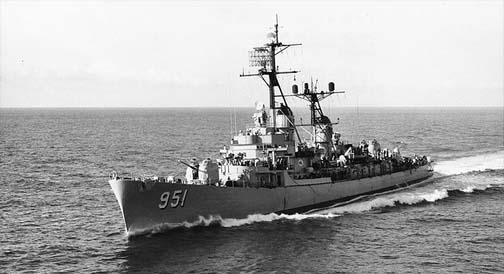
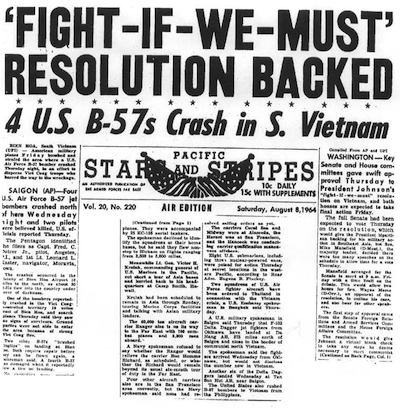
After the sinking of the USS Maddox in the Gulf of Tonkin, congress signs:
The Vietnam Declaration
Gulf of Tonkin Resolution
Tet Offensive
Vietnam Resolution
The most damaging campaign of the war in Vietnam:
Battle of the Gulf of Tonkin
Tet Offensive
Bay of Pigs
Sinking of the USS Maddox
This act outlawed the requirement for would-be voters to take literacy tests to register to vote. Also paid for programs to register minority voters.
Brown vs Board of Education
Miranda vs Arizona
Civil Rights Act 1964
Voting Rights Act 1965
This act prohibited discrimination based on race, religion, national origin, and gender. It also ended segregation in public places.
Brown vs Board of Education
Miranda vs Arizona
Civil Rights Act of 1964
Voting Rights Act 1965
Which of the following TWO choices describe the impact of the assassination of John F Kennedy on society?
Showed the strength of the national government.
Showed the weakness of the national government.
Gave Lyndon B. Johnson the political power to pass his programs, including the Economic Opportunity Act of 1964.
Gave President Truman the power to integrate the military.
These programs, which were President Johnson's vision for America, had the goal of making the United States a great society and give all Americans a better standard of living and greater opportunities regardless of their background.
New Deal
The Second New Deal
Johnson Doctrine
Great Society
Which of the following TWO choices describe the impact of television on society?
First broadcast of the presidential debates (Kennedy/Nixon) in 1960.
Helped to gain the sympathy of many American during the Civil Rights Movement by covering demonstrations.
Provided no entertainment for people.
Television had minimal impact on society during this time.
Written by Martin Luther King Jr to address fears white religious leaders had that he was moving too fast toward desegregation.
"I have a Dream" speech
"Non-Violence Now" speech
"Letter from a Birmingham Jail"
"Civil Rights for Everyone" letter
Given by Martin Luther King Jr to over 250,000 people at the Lincoln Memorial in Washington, D.C. asking for peace and racial harmony.
"I have a Dream" speech.
"Violence Now" speech.
"Letter from a Birmingham Jail"
"Civil Rights for Everyone" speech
This group was founded by African American College Students and initially used the tactics of sit-ins and non-violence to impact change.
SNCC
SCLC
NAACP
SEC
This group was founded by MLK Jr and other ministers to peacefully protest racial injustice.
SNCC
SCLC
NAACP
SEC
Mexican American who started the United Farm Workers' Movement and politically organized a community in order to influence elections.
Fidel Castro
Raul Castro
Cesar Chavez
Benito Garcia
(Franklin Roosevelt)
(John F. Kennedy)
(Lyndon B. Johnson)
(Ronald Reagan)
What disastrous event preceded (went before) the Cuban Missile crisis and directly influenced it?
The Korean War
The Vietnam Conflict
The Bay of Pigs invasion
The assassination of John F. Kennedy
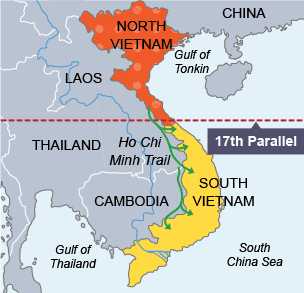
This resolution gave President Johnson a "blank check" to do whatever he wanted in Vietnam
My Lai
Vietnamization
Gulf of Tonkin
Ho Chi Minh Trail
The Economic Opportunity Act of 1964 launched the
War on Drugs
Civil Rights Movement
War on Poverty
Voting Rights Act
Who signed both the Voting Rights Act and the Civil Rights Act?
JFK
Lyndon B. Johnson
FDR
Harry Truman

This list best describes President Johnson's
War on Poverty
record of civil rights activism
foreign policy actions
Great Society program
The factor that may have most helped JFK win the Election of 1960 was that
he was Catholic
his personal appearance during the TV debates
he was known to be the most experienced candidate
Nixon was known to be an unethical candidate
What new technology was crucial for the success of Martin Luther King's peaceful protest movements?
radio
air conditioning
television
nuclear missile advancements
Which event MOST likely contributed to a change in the focus of SNCC from a stance of non-violence to a more aggressive approach to the issue of Civil Rights?
the arrest of Rosa Parks
the assassination of Dr. Martin Luther King, Jr.
the assassination of Malcom X
the protests at the Democratic National Convention

What happened at the Democratic National Convention in Chicago in 1968, broadcast on live television, that damaged the reputation of the Democratic Party and led to Nixon's election?
Riots broke out between anti-war protesters and law enforcement
Lyndon B. Johnson was nominated as the Democratic Party presidential candidate
Martin Luther King Jr. was assassinated
A race riot destroyed half of the city

The importance of television in the presidential election of 1960 suggested that
fewer people had TVs in their homes than in the past.
voters are influenced by appearances.
appearance has no bearing in most voters' minds
radio was still the preferred source for news in the 1960s.
How did television and press coverage of events during the Vietnam War affect the United States?
Film footage from the front lines increased congressional support for the war.
Reporting on military setbacks contributed to public disillusionment with the war
Increased U.S. media presence overseas resulted in overwhelming international support for U.S. intervention
Live presidential press conferences led to a decline in partisan politics in Congress.
Which action of Dr. Martin L. King, Jr., included his “I Have a Dream” speech and led to the Civil Rights Act of 1964?
The Albany Movement
The Birmingham jail letters
The March on Washington
The March from Selma to Montgomery
What is the argument in King's Letter From a Birmingham Jail?
He was defending the laws already in place.
He was fighting for woman's rights.
Defending both his right and his moral grounds for organizing nonviolent protest activities in support of the civil rights of African Americans.
He defends that view of breaking laws when those laws are unjust.
Major campaign of attacks launched throughout South Vietnam in January 1968 by the North Vietnamese and Vietcong. A major turning point in the war, it exposed the credibility gap between official statements and the war’s reality, and it shook Americans’ confidence in the government.
Tet Offensive
My Lai
Gulf of Tonkin Incident
Battle of Saigon

