
NEW
Font size
S
M
L
XL
 Worksheets
The Moon and Mercury
Total questions: 51
Worksheet time: 30mins
Name
Class
Date
1.
How long after a new moon will it take to see another new moon?
a)
12 days
b)
29.5 days
c)
27.3 days
d)
365 days
2.
Tides are caused by ___________
a)
wind
b)
gravitational pull of moon
c)
waves gravitation toward land
d)
rain
3.
Which way does the moon revolve?
a)
clockwise
b)
counter clockwise
c)
some times it changes direction
d)
it doesn't revolve
4.
When the moon is in between the earth and the sun it is a
a)
New Moon
b)
Full Moon
c)
First Quarter
d)
Third Quarter
5.
Waxing means...
a)
Growing
b)
Dying
c)
Losing light
d)
Moving
6.
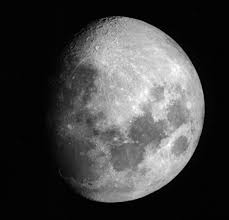
Name the moon phase
a)
waning crescent
b)
waxing crescent
c)
waning gibbous
d)
waxing gibbous
7.
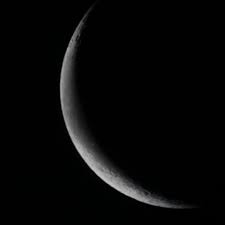
Name the moon phase
a)
waning crescent
b)
waxing crescent
c)
waning gibbous
d)
waxing gibbous
8.
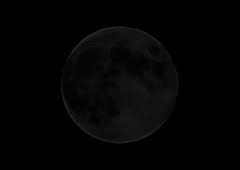
Name the moon phase
a)
First Quarter
b)
Last Quarter
c)
New Moon
d)
Full Moon
9.
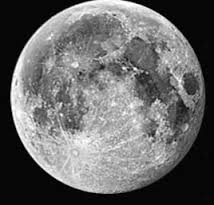
Name the moon phase
a)
First Quarter
b)
Last Quarter
c)
New Moon
d)
Full Moon
10.
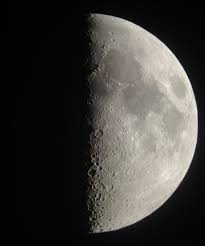
Name the moon phase
a)
First Quarter
b)
Last Quarter
c)
New Moon
d)
Full Moon
11.
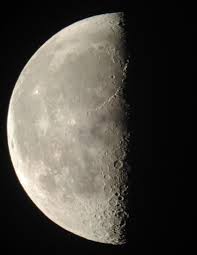
Name the moon phase
a)
First Quarter
b)
Last Quarter
c)
New Moon
d)
Full Moon
12.

Name the moon phase that would come AFTER this moon.
a)
waning crescent
b)
waxing crescent
c)
waning gibbous
d)
waxing gibbous
13.
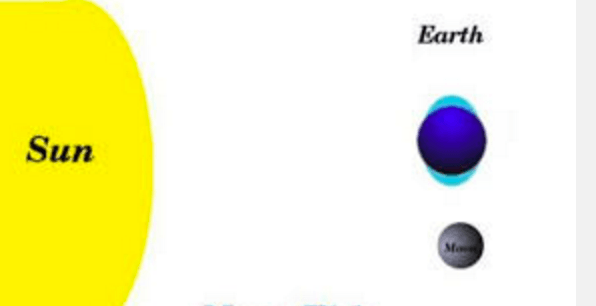
Which moon phase is shown in this diagram?
a)
new moon
b)
1st quarter
c)
full moon
d)
last quarter/3rd quarter
14.

Which moon phase is shown in this diagram?
a)
new moon
b)
first quarter
c)
full moon
d)
last quarter/3rd quarter
15.
What is a lunar month?
a)
The time from one new moon to the next new moon.
b)
The time from one full moon to the next full moon.
c)
The time it takes the moon to orbit the earth.
d)
The month of October .
16.

Which tide causes the biggest change in ocean levels?
a)
Spring Tide
b)
Neap Tide
c)
Summer Tide
d)
Leap year Tide
17.
a natural body, like the moon, or an artificial object that orbits another object
a)
space probe
b)
comet
c)
planet
d)
satellite
18.
the moon has
a)
craters
b)
water
c)
land
d)
air
19.
both the moon and Earth have
a)
liquid water
b)
weather
c)
day and night cycles
d)
gravity
20.
The moon has
a)
plants
b)
inactive volcanoes
c)
active volcanoes
d)
liquid water
21.
How does Mercury's orbit around the sun compare to its rotation on its axis?
a)
It rotates slowly and orbits quickly
b)
It orbits slowly and rotates quickly
c)
It orbits quickly and rotates quickly
d)
It orbits slowly and rotates slowly
22.
What makes it difficult for astronomers to see Mercury? Choose the best answer.
a)
Its location in the solar system
b)
its size
c)
its distance from Earth
d)
the chemical composition
23.
Which word best describes what nights on Mercury are like?
a)
balmy
b)
cool
c)
hot
d)
frigid
24.
If you want to see Mercury in the sky, when is the best time to look?
a)
around midnight
b)
around 6:30 p.m.
c)
around noon
d)
during a lunar eclipse
25.
If you are 10 years old in Earth years, how long have you lived in Mercury years?
a)
3 years
b)
9 and a half years
c)
20 years
d)
40 years
26.
Mercury's orbit around the sun most resembles:
a)
a circle
b)
an oval
c)
a curved line
d)
a straight line
27.
How do days on Mercury compare to days on Earth?
a)
Days on Mercury are slightly longer
b)
Days on Mercury are slightly shorter
c)
Days on Mercury are much longer
d)
Days on Mercury are much shorter
28.
What's the best description of Mercury's core?
a)
metallic
b)
rocky
c)
frozen
d)
Gaseous
29.
Mercury is the second smallest planet
a)
True
b)
False
30.
Mercury has....
a)
no moons
b)
no rings
c)
Lots of rings and moons
d)
no moons and no rings
31.
Mercury was named after
a)
A Greek God
b)
An Egyptian pharoh
c)
An old philosopher
d)
A Roman God
32.
Mercury is both cold and hot because of this one critical thing.
a)
It has carbon dioxide instead of air
b)
It has no atmosphere
c)
it has too many cows
33.
Which planet is mercury?
a)
the third from the sun
b)
the first gas giant
c)
the first planet from the sun
34.
How close is Mercury to the sun?
a)
59 million km.
b)
55 million km.
c)
58 million km.
d)
None of the above
35.
How many days in earth days is a day on Mercury?
a)
60
b)
56
c)
61
d)
59
36.
How many moons does Mercury have?
a)
2
b)
0
c)
1
d)
None of the above
37.
What is the coldest recorded temperature on Mercury?
a)
800 degrees Fahrenheit
b)
300 degrees Fahrenheit
c)
0 degrees Fahrenheit
d)
-300 degrees Fahrenheit
38.
How many earth days does it take Mercury to orbit around the sun?
a)
48 days
b)
68 days
c)
88 days
d)
108 days
39.
What is the weather like on Mercury?
a)
Violent and rainy
b)
Nice and sunny
c)
Windy
d)
There is no weather because there is no atmosphere
40.
Water on Mercury can be found....
a)
in rivers and streams
b)
in lakes and oceans
c)
in mud puddles
d)
as ice in craters that are shaded from the sun
41.
Why is Mercury so extremely difficult to study?
a)
The extreme range in surface temperature
b)
It's distance from the Earth
c)
Because it orbits so close to the sun
d)
All of the craters on it's surface
42.
What spacecraft did NASA send to Mercury that went into permanent orbit with the planet?
a)
Mariner 10
b)
Messanger
c)
Calipso
d)
Hubble
43.
Why is the sky of the Moon and Mercury black?
a)
temperature differences
b)
small sizes
c)
no atmosphere
44.
Which moon feature are the circular pits created by rocky fragments that struck the surface?
a)
rilles
b)
regolith
c)
craters
d)
maria
45.
How is the planet Mercury similar to Earth's moon?
a)
their surfaces both appear heavily cratered by impacts.
b)
their lowland regions were flooded by ancient lava flows.
c)
rotational periods are almost equal to their orbital periods
d)
all of the above.
46.
What do we call the long streaks of pulverized rocks that surround many crater?
a)
Rilles
b)
Craters
c)
Maria
d)
Rays
47.
What do we call the dark, smooth areas on the Moon?
a)
Rilles
b)
Craters
c)
Maria
d)
Rays
48.
What do we call the crushed blanket of rock that covers the Moon's surface?
a)
Regolith
b)
Craters
c)
Maria
d)
Rays
49.
Why haven't the astronaut's footprints on the moon been destroyed?
a)
No atmosphere
b)
No wind
c)
No erosion
d)
No atmosphere, wind or erosion
50.
Which theory of Moon formation is currently accepted by astronomers?
a)
Capture Theory
b)
Fission Theory
c)
Giant Impact Theory
d)
Co-Accretion Theory
51.
How is the distance of the Moon from Earth changing per year?
a)
It is getting 1.5 feet farther from us per year.
b)
It is getting 1.5 feet closer to us per year.
c)
It is getting 1.5 inches closer to us per year.
d)
It is getting 1.5 inches farther from us per year.
Reset

