
 Worksheets
Photography Exposure Triangle
Total questions: 20
Worksheet time: 13mins
Name
Class
Date
1.

A long shutter speed is good for stopping action.
a)
True
b)
False
2.

Exposure is the term used for the arrangement of elements in a photograph.
a)
True
b)
False
3.

A focal point is a natural resting place for the eye (usually the main subject) in a composition.
a)
True
b)
False
4.

The empty area or seemingly unimportant background area, in an artwork is called positive space.
a)
True
b)
False
5.

Underexposure is when an image that appears too light.
a)
True
b)
False
6.

Shutter Speed controls how long that light can pass through the camera lens.
a)
True
b)
False
7.

The amount of light that reaches the image sensor is controlled by a combination of the lens aperture and shutter speed.
a)
True
b)
False
8.

ISO is the size of the hole through which light enters the camera.
a)
True
b)
False
9.

Aperture is the diameter of the lens opening.
a)
True
b)
False
10.

ISO is the sensitivity of the image sensor or film.
a)
True
b)
False
11.

The aperture, shutter speed, and ISO settings make up the Exposure triangle.
a)
True
b)
False
12.

When taking a portrait photo and blurring the background you need a an aperture of f/16 or higher.
a)
True
b)
False
13.

To capture something moving quickly, a shutter speed of 1/600 or higher is needed.
a)
True
b)
False
14.

A higher f/# means the shutter will be open for a longer period of time.
a)
True
b)
False
15.

The lower the ISO # the more clear/sharp the image will be, but much more light is needed for proper exposure.
a)
True
b)
False
16.

"Noise" is when there are little blurry dots that make up the image.
a)
True
b)
False
17.

An image will have more "noise" when the aperture is very large.
a)
True
b)
False
18.
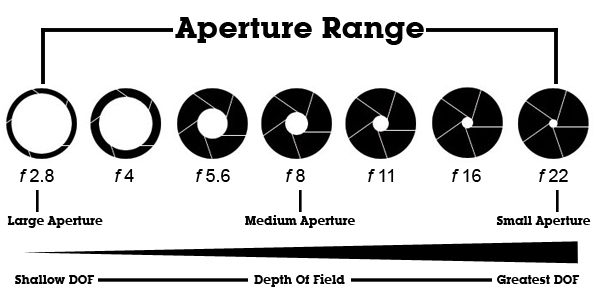
A higher f/# = longer depth of field.
a)
True
b)
False
19.

"Light painting" is just a new term for long exposure photography.
a)
True
b)
False
20.

Creating art using a camera is sooooooo easy.
a)
True
b)
False
100 %

