
 Worksheets
Auto Tech Chapter 31
Total questions: 79
Worksheet time: 1hrs 5mins
Name
Class
Date
1.

Tech A says that regenerative braking converts brake heat into electricity. Tech B says that regenerative braking converts electrical energy into braking energy. Who is correct?
a)
Tech A
b)
Tech B
c)
Both A and B
d)
Neither A nor B
2.

Tech A says that an ABS Allows the front wheels to be steered during a panic stop. Tech B says that ABS sensor inputs control wheel speed during brake events who is correct.?
a)
Tech A
b)
Tech B
c)
Tech A and B
d)
Neither Tech A nor B
3.

Tech A says that water-soaked brake shoes will cause brake fade. Tech B says that disc brakes dissipate heat faster than drum Brakes. Who is correct?
a)
Tech A
b)
Tech B
c)
Techs A and B
d)
Neither Tech A nor B
4.

Tech A says that a brake-by-wire system can start to apply brakes before the driver can step on the brake pedal. Tech B says that brake-by-wire systems use heavy cables to transmit the brake pedal force to the wheel brake units. Who is correct?
a)
Tech A
b)
Tech B
c)
Techs A and B
d)
Neither Tech A nor B
5.

Tech A says that tire pressure does not affect braking. Tech B says that heavy vehicle loads increase stopping distance. Who is correct?
a)
Tech A
b)
Tech B
c)
Both Techs A and B
d)
Neither Tech A nor B
6.

Tech A says that light-duty service brakes are applied hydraulically. Tech B says that light-duty parking brakes are appled hydraulically. Who is correct?
a)
Tech A
b)
Tech B
c)
Both Techs A and B
d)
Neither Tech A nor B
7.

Tech A says that the heavier the vehicle, the more stopping power is needed. Tech B says that the faster a vehicle is moving, the more braking power is needed. Who is correct?
a)
Tech A
b)
Tech B
c)
Both Techs A and B
d)
Neither Tech A nor B
8.

Tech A says that kinetic energy is created during braking to stop the vehicle. Tech B says that kinetic energy is converted to heat energy during braking. Who is correct?
a)
Tech A
b)
Tech B
c)
Both Techs A and B
d)
Neither Tech A nor B
9.
Tech A says that the brake pedal uses leverage to multiply foot pressure. Tech B says that when braking hard while moving forward, the vehicle's weight transfers to the rear wheels, increasing their traction. Who is correct?
a)
Tech A
b)
Tech B
c)
Both Techs A and B
d)
Neither Tech A nor B
10.

Tech A says that friction brakes can fade due to overheating of the brake lining. Tech B says that friction brakes can fade due to overheating of the brake fluid. Who is correct?
a)
Tech A
b)
Tech B
c)
Techs A and B
d)
Neither Tech A nor B
11.

What law states that pressure applied to a fluid in one part of a closed system will be transmitted without loss to all other areas of the system?
a)
Newton's Law
b)
Pascal's law
c)
Kirchoff's law
d)
Ohm's law
12.

All of the following are variables to consider when talking about pressure and force in hydraulic systems, except:
a)
input force
b)
fluid type
c)
output force
d)
working pressure
13.

Standard brake fluid is ________, which means it absorbs water.
a)
hydrotropic
b)
aeratd
c)
hygroscopic
d)
hydraulic
14.

Brake fluids are tested to ensure they meet the standards of quality for _______.
a)
stability
b)
resistance to oxidation
c)
boiling point
d)
allof the above
15.

What type of brake fluid is silicone-based?
a)
DOT 2
b)
DOT 3
c)
DOT 4
d)
DOT 5
16.

When the brake pedal is released quickly, the use of small holes drilled in the piston so that brake fluid from the reservoir can pass through the inlet port and past the edge of the primary cup, thus preventing a vacuum from being created is called _______.
a)
recuperation
b)
compensating
c)
aeration
d)
residual pressure release
17.

The ______ master cylinder is a tandem master cylinder used in divided systems.
a)
single-piston
b)
dual-piston
c)
ABS
d)
quick take-up
18.

What type of flare is sometimes called a bubble flare?
a)
inverted double flare
b)
International Standards organization flare
c)
Mushroom flare
d)
DIN flare
19.

Which of the following components is used to modify pressures within the hydraulic braking system?
a)
Proportioning valves
b)
Pressure differential valves
c)
Antilock hydraulic control units
d)
all of the above
20.

All of the following conditions will cause the brake warning light to illuminate, except:
a)
Parking brake is engaged
b)
Brake fluid is low
c)
Brake pedal is pressed
d)
Prove out circuit
21.

In a closed system, hydraulic pressure is transmitted equally in all directions throughout the system.
a)
True
b)
False
22.

Because silicone-based fluid tends to aerate when force at high pressure through small passages, it is not to be used in any vehicle equipped with antilock brakes.
a)
True
b)
False
23.

The outlet port adjusts for changes in the volume of the brake fluid ahead of the piston.
a)
True
b)
False
24.

Tandem systems can be split diagonally so one front wheel is paired with the rear wheel on the opposite side of the vehicle in one brake circuit, and vice versa in the other circuit.
a)
True
b)
False
25.

Master cylinder reservoirs can be built into the master cylinder housing or can be a separate unit.
a)
True
b)
False
26.

Master cylinder reservoirs should be filled all the way to the top to prevent air bubbles from entering the system.
a)
True
b)
False
27.

A front-engine rear-wheel drive car has around 40% of its load on its rear wheels and 60% on its front wheels.
a)
True
b)
False
28.
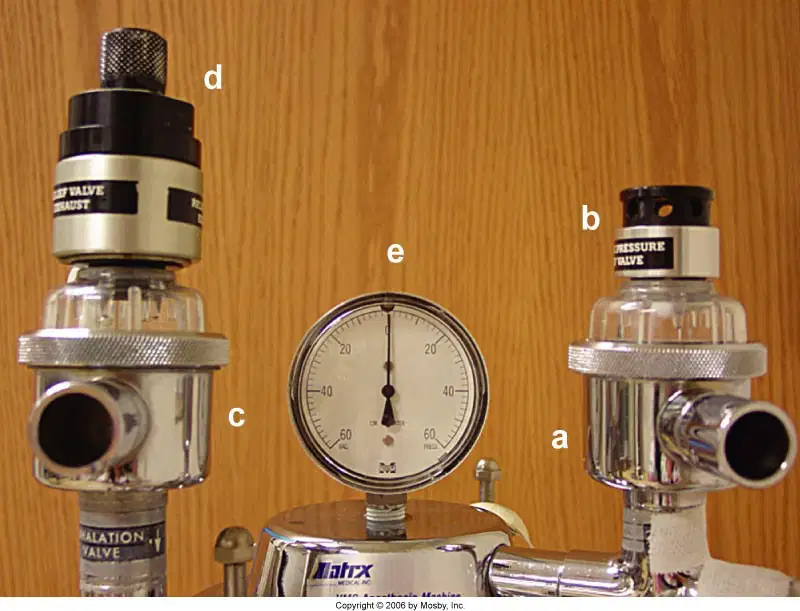
While brake hoses are designed to be flexible, they should never be pinched, kinked, or bent tighter than a specified radius.
a)
True
b)
False
29.
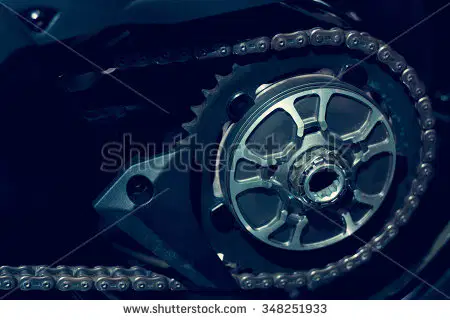
During heavy braking, master cylinder pressure can reach the poppet vale's crack point.
a)
True
b)
False
30.
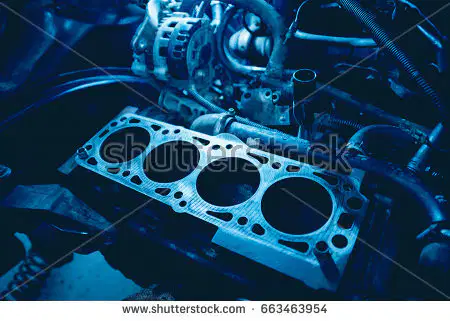
Adjustable proportioning valves are not recommended for most applications due to the amount of trial and error necessary to set them properly.
a)
True
b)
False
31.
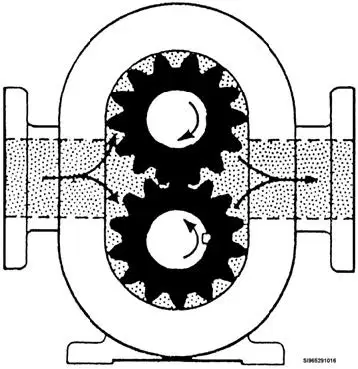
The combination valve can combine the pressure differential valve, metering valve, and proportioning valve(s) in one unit.
a)
True
b)
False
32.
The brake warning light is activated by a normally closed swithc located on the brake pedal assembly.
a)
True
b)
False
33.

The vacuum-assisted power booster uses the difference between engine vacuum and atmospheric pressure to increase the force that acts on the master cylinder pistons.
a)
True
b)
False
34.
Dual-diaphragm power boosters work on the same principle of operations as the single-diaphragm power booster but are much larger in diameter
a)
True
b)
False
35.

While hydraulic brake boosters use power steering fluid to operate the booster, the master cylinder portion of the system still uses brake fluid.
a)
True
b)
False
36.
From where "Hydraulic" comes from ?
a)
Georgia
b)
Greek
c)
Roma
d)
Saudi Arabia
37.
What are the component of Hydraulic?
a)
Pump
b)
Hose
c)
Reservoir
d)
All of Them
38.
Hydraulic is depending on?
a)
Oil
b)
Propine
c)
Uncompressed Fluid
d)
Hydraulic Fluid
39.
The principle of hydraulic is "Applying a certain pressure on a liquid to transmit the power from point to anther"
a)
NO
b)
YES
c)
UNDERSTOOD SOMETHING
d)
COULD BE TRUE
40.
The Unit of Pressure is..
a)
Bar/PSI/N/PA
b)
PA/N
c)
PSI/BAR/PA
d)
Pascal
41.
Which of the following is not the Si unit of pressure?
a)
N/m2
b)
Pa
c)
newton
d)
pascal
42.
Pressure is
a)
force x area
b)
area/force
c)
force + area
d)
force/area
43.
At higher elevations, air pressure is
a)
less because there is less air above
b)
greater because there is more air below
c)
less because gravity is stronger
d)
less because the air is moving faster
44.
When pressure is applied to a confined fluid, the increase in pressure is transmitted equally to all parts of the fluid.
a)
Pascal's principle
b)
Newton's principle
c)
Archimedes' principle
d)
Bernoulli's principle
45.
The brake system that applies and releases the brakes when the driver uses the brake pedal is the _____________ system.
a)
Emergency
b)
Service
c)
Parking
46.
Air brake systems combine three different systems. They are the service, parking and the ___________ brakes.
a)
Drum
b)
Emergency
c)
Fool
47.
During normal driving, spring brakes are usually held back by:
a)
Bolts
b)
Air pressure
c)
Spring pressure
48.
The application pressure gauge shows how much air pressure you:
a)
are applying to the brakes
b)
have in the air tanks
c)
have used on this trip
49.
The supply pressure gauge shows how much pressure:
a)
is in the air tanks
b)
you have used in this trip
c)
is going to the brake chambers
50.
All air brake equipped vehicles have:
a)
a hydraulic system, in case the air system fails
b)
at least one other brake heater
c)
a supply pressure gauge
51.
The emergency brakes on a tractor trailer rig can only be held in position by something that cannot leak away, like:
a)
fluid pressure
b)
spring pressure
c)
air pressure
52.
The braking power of spring brakes:
a)
can only be tested by highly-trained brake service people
b)
depends on the service brakes being in adjustment
c)
in not affected by the condition of the service brakes
53.
The most common type of foundation brake found on heavy vehicles is the:
a)
disc
b)
S-cam drum
c)
wedge drum
54.
Parking or emergency brakes of trucks and buses can be legally held on by _______ brakes.
a)
Fluid
b)
Spring
c)
Air
55.
Why should you drain the water from the compressed air tanks?
a)
the low boiling point of water reduces braking power
b)
water can freeze in cold weather and cause brake failure.
c)
water cools the compressor too much
56.
If your vehicle has an alcohol evaporator, everyday during cold weather you should
a)
check and fill the alcohol level
b)
change the alcohol from a new bottle
c)
clean the air filter with alcohol
57.
If you do not have automatic tank drains, how often should you drain the oil and water from the bottom of compressed air storage air tanks?
a)
after every 6 hours of service
b)
at the end of each day of driving
c)
once a week
58.
If your vehicle has an alcohol evaporator, it is there to:
a)
rid the wet tank of alcohol that condenses and sits at the bottom
b)
eliminate the need for daily tank draining
c)
reduce the risk of ice in air brake valves in cold weather
59.
Your vehicle has a dual air brake system. If a low air pressure warning comes on for the secondary system you should:
a)
bring the vehicle to a safe stop and continue only when the system is fixed.
b)
reduce your speed, and test the remaining system while under way
c)
reduce your speed, and drive to the nearest garage for repairs
60.
If your truck or bus has dual parking control valves, you can use pressure from a separate tank to:
a)
Balance the service brake system whenever you are parked
b)
apply more brake pressure if the main tank is getting low
c)
release the spring/emergency brakes to move a short distance
61.
Your truck or bus has a duel air brake system. If a low air pressure warning comes on for only one system. What should you do?
a)
stop right away and safely park. Continue only after the system is fixed.
b)
reduce your speed, and drive to the nearest garage for repairs
c)
reduce your speed, and test the remaining system while underway
62.
To check the free play in manual slack adjusters on S-cam brakes, you should park on:
a)
level ground with the parking brake, then apply the service brake
b)
level ground and drain off air pressure before adjusting
c)
level ground, chock the wheel, and turn off the parking brakes
63.
A straight truck or bus air brake system should not leak at a rate of more than ____ psi per minute with the engine off and the brakes released.
a)
2
b)
3
c)
4
64.
Air brake systems take more time than hydraulic brake systems because
a)
air takes more time to flow through the lines than hydraulic fluid
b)
air brakes use different brake drums
c)
air brakes require heavier return springs
65.
For emergency stab braking, you should:
a)
pump the brake pedal rapidly and lightly
b)
brake hard until the wheels lock, then get off the brakes for as much time as the wheels are locked
c)
press on the brake pedal as hard as you can, release the brakes when the wheels lock and when the wheels start rolling put the brakes on fully again
66.
If you must make an emergency stop, brake so you:
a)
can steer and your vehicle stays in a straight line
b)
can steer hard while braking hard
c)
use the full power of the brakes and lock them
67.
With air brake vehicles, the parking brakes should be used
a)
to hold your speed when going downhill
b)
whenever you leave the vehicle unattended
c)
as little as possible
68.
On long downhill grades, experts recommend using a low gear and light pedal pressure. Why?
a)
you can keep vehicle speed constant in a low gear with light pressure
b)
air usage is more with light pressure
c)
brake lining will heat up more with light pressure
69.
You should know that your brakes are fading out when:
a)
you have to push harder on the brake pedal to control your speed on a downgrade
b)
pressure on the brake pedal is released and speed increases
c)
the brake pedal feels spongy when pressure is applied
70.
Total stopping distance for air brakes in longer than that for hydraulic brakes due to ________ distance.
a)
brake lag
b)
reaction
c)
perception
71.
A vehicle with a vacuum brake booster has a hard pedal with little stopping power. Technician A says a kink in the check valve's hose will result in this condition. Technician B says a vacuum booster needs at least 12 Hg of vacuum to operate properly. Who is correct?
a)
Technician A only
b)
Technician B only
c)
Both Technician A and B
d)
Neither Technician A nor B
72.
Technician A says passive permanent magnet ABS wheel speed sensors produce an A/C voltage signal. Technician B says input from wheel speed sensors are used for anti-lock brake, electronic traction control, and electronic stability control systems. Who is correct?
a)
Technician A only
b)
Technician B only
c)
Both Technician A and B
d)
Neither Technician A nor B
73.
The brakes of a four wheel disc brake system are self-applying and locking up after only a few miles of travel. Which of the following is MOST likely the cause of this condition?
a)
A blocked master sylinder replenishing port.
b)
A blocked mater cylinder vent port.
c)
Worn master cylinder cup seals.
d)
Low intake manifold vacuum.
74.
A vehicle suffers from uneven pad wear. Technician A says to check for sticking slide pins. Technician B says this could be caused by a sticking caliper piston. Who is correct?
a)
Technician A only
b)
Technician B only
c)
Both Technician A and B
d)
Neither Technician A nor B
75.
A vehicle's right front wheel has a growl that increases with vehicle speed. The MOST likely cause is:
a)
Excessive rotor lateral run-out.
b)
Warped rear brake drums.
c)
Worn CV-joint.
d)
Worn wheel bearing.
76.
Two technicians are discussing master cylinder residual check valves. Technician A says the check valve is used on four wheel disc brake systems. Technician B says the valve maintains pressure when the brakes are released. Who is correct?
a)
Technician A only
b)
Technician B only
c)
Both Technician A and B
d)
Neither Technician A nor B
77.
A vehicle stops but the brake pedal fades completely to the floorboard afterwards.There are no external leaks. Which of these is the MOST likely cause of this condition?
a)
Faulty vacuum brake booster.
b)
Clogged vacuum booster check valve.
c)
Dark discolored brake fluid.
d)
Master cylinder cup seals.
78.
The brake shoes on the rear of a vehicle are worn and must be replaced. Technician A says the primary shoe faces the front of the vehicle. Technician B says the lining of the primary shoe must be riveted to the shoe plate. Who is correct?
a)
Technician A only
b)
Technician B only
c)
Both Technician A and B
d)
Neither Technician A nor B
79.
Rust and corrosion have damaged the brake lines on the axle of a light truck and caused them to leak fluid. These brake lines cannot be repaired and must be replaced. Technician A says double flare copper tubing is used for brake lines. Technician B says single flare steel tubing is used for brake lines. Who is correct?
a)
Technician A only
b)
Technician B only
c)
Both Technician A and B
d)
Neither Technician A nor B
100 %

