
 Worksheets
Cells Review
Total questions: 55
Worksheet time: 33mins
Name
Class
Date
1.
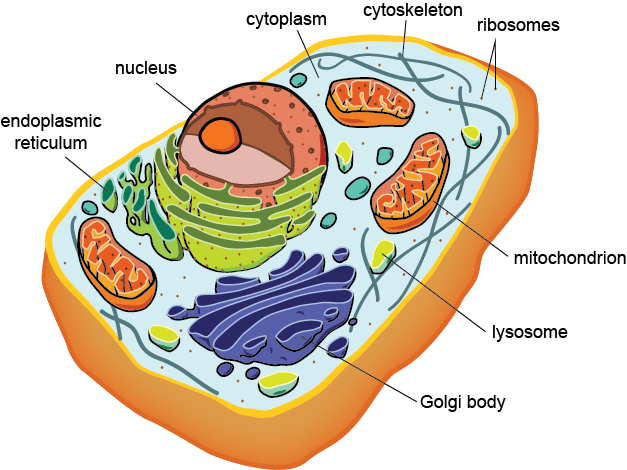
Which of the following statements is not part of the cell theory?
a)
Cells are the basic unit of structure and function in all living things.
b)
All cells are produced from other cells.
c)
Only animal cells are composed of cells.
d)
All living things are composed of cells.
2.

The invention of the microscope made it possible for people to discover and learn about
a)
Plants
b)
Skin
c)
Animals
d)
Cells
3.

What is one way in which all living things on Earth are alike?
a)
All living things have hair.
b)
All living things are made of cells and come from other cells.
c)
The cells of all living things have chloroplast.
d)
All living things can move.
4.

Which statement reflects one of the major components of the cell theory?
a)
All living things are multi-cellular.
b)
Organs are the basic unit of structure and function for all living things.
c)
All cells come from previously existing cells.
d)
Every organism has a reproductive system to ensure survival of the species.
5.
What structures distinguish a plant cell from an animal cell?
a)
Plant cells have cell walls and ribosomes.
b)
Plant cells have cell walls and chloroplasts.
c)
Plant cells have chloroplasts and ribosomes.
d)
Plant cells have chloroplasts and mitochondria.
6.
Which is NOT consistent with Cell Theory?
a)
All cells come from pre-existing cells
b)
All living things are made of cells
c)
All cells are identical in structure and function
d)
Cells are the basic units of structure and function
7.
An organism made of one cell is called
a)
unicellular
b)
multicellular
8.
Why couldn't humans see cells before the 1600's?
a)
Because there were no jails
b)
Because microscopes hadn't been invented yet
c)
Cells were too big to be around humans.
d)
they didn't exist until 1600
9.
Which type of cell is bigger?
a)
Prokaryotic
b)
Eukaryotic
10.
What type of cell has a nucleus?
a)
eukaryotic
b)
prokaryotic
11.
One example of a prokaryote is a...
a)
fungus
b)
bacteria
c)
animal
d)
plant
12.
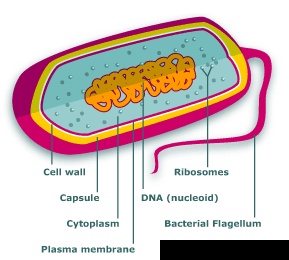
Which type of cell?
a)
Prokaryote
b)
Eukaryote
13.
Has membrane bound organelles
a)
Prokaryote
b)
Eukaryote
c)
both
14.
Which of the following is found inside a prokaryote?
a)
cytoplasm
b)
DNA
c)
ribosomes
d)
all of these
15.
Eukaryotic cells are complex.
a)
true
b)
false
16.
Which of the following is a characteristic of both Eukaryotic and Prokaryotic cells?
a)
ribosomes
b)
nucleus
c)
membrane bound organelles
d)
simple
17.
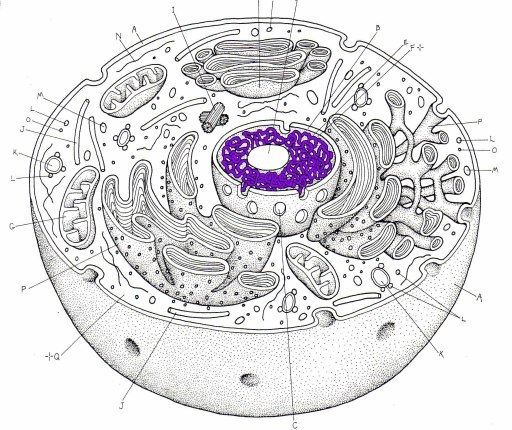
What kind of cell is this?
a)
Eukaryotic
b)
Prokaryotic
18.
What is multicellular?
a)
one cell
b)
no cells
c)
many cells
d)
no nucleus
19.
Plants and animal cells are examples of ___ cells
a)
prokaryotic cells
b)
eukaryotic cells
20.

What kind of cell is this?
a)
Plant
b)
Animal
c)
Bacterial
d)
Gross
21.
What part of the cell is gel like and holds everything in place
a)
cytoplasm
b)
chloroplast
c)
skeleton
d)
nucleus
22.

Which part of the cell is often called "the brain of the cell"?
a)
nuclear membrane
b)
endoplasmic reticulum
c)
nucleus
d)
mitochondria
23.
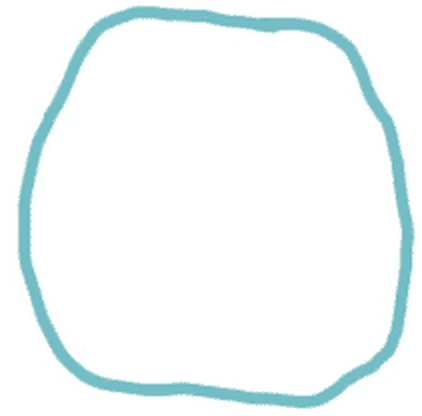
I am the outer most layer of an animal cell. What am I?
a)
cell wall
b)
nucleus
c)
cell membrane
d)
cell skin
24.
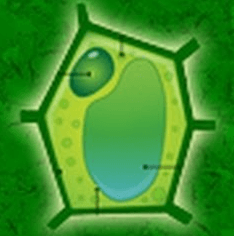
A rigid layer that lies outside the cell's membrane is...
a)
Cytoskeleton
b)
Cilia
c)
Cell Wall
d)
Flagella
25.
What organelle is called the "powerhouse" of a cell?
a)
Endoplasmic Reticulum
b)
Nucleus
c)
Mitochondria
d)
Nucleolus
26.
"Storage tanks" Can hold food, water or waste for the cell
a)
Ribosomes
b)
Vacuole
c)
Chloroplast
d)
Nucleolus
27.

Which of the following is NOT found in all cells?
a)
Cell Wall
b)
Cell Membrane
c)
Cytoplasm
d)
Genetic Material
28.
In what organelle does the food making process in plants take place?
a)
Endoplasmic Reticulum
b)
Vacuole
c)
Chloroplasts
d)
Mitochondria
29.
What are the tiny structures that carry out jobs inside cells called?
a)
membranes
b)
nucleus
c)
organelles
d)
animalicules
30.
This small structures break down materials in the cell.
a)
Cholorplasts
b)
Ribosomes
c)
Lysosomes
d)
Golgi Body
31.
This structure packages and distributes proteins throughout the cell.
a)
Golgi Body
b)
Lysosome
c)
Ribosome
d)
Mitochondria
32.
This structure produces protein in the cell.
a)
Ribosomes
b)
Cytoplasm
c)
Nucleus
d)
Lysosomes
33.
What is the function of the mitochondria?
a)
Structure that manufactures ribosomes
b)
Structures that converts nutrients to energy
c)
Stack of membranes that packages chemicals
d)
Structure that contains DNA and directs the cell
34.

Complex cell. Can be plant or animal. Contains membrane bound organelles.
a)
Eukaryotic Cell
b)
Prokaryotic Cell
c)
Bacteria
d)
Blood cell
35.

What does this organism use for movement?
a)
Pseudopod
b)
Cilia
c)
Flagella
d)
legs
36.

What does this organism use for movement?
a)
Pseudopod
b)
Cilia
c)
Flagella
d)
legs
37.
Controls what enters and leaves the cell
a)
Mitochondria
b)
Cell Membrane
c)
Cell Wall
d)
Nucleus
38.

I am a protein packaging and shipping machine! Who am I?
a)
vacuole
b)
ribosome
c)
endoplasmic reticulum
d)
golgi apparatus
39.
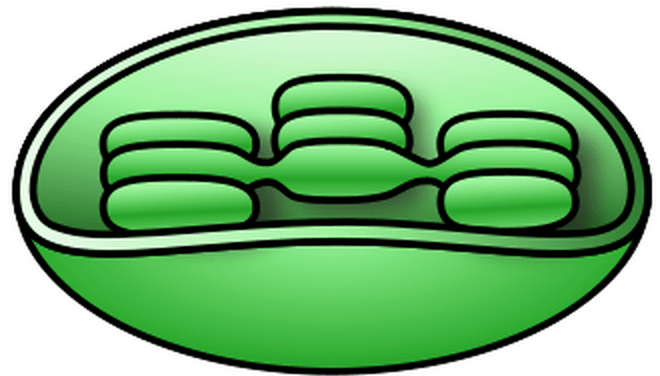
I am only found in a plant cell. What am I?
a)
cell wall
b)
mitochondria
c)
cytoplasm
d)
chloroplast
40.
Scaffolding-like structure that helps cell keep its shape
a)
cytoskeleton
b)
mitochondria
c)
endoplasmic reticulum
41.
Which organelle aids with the detoxification of the cell as well as makes lipids for cell membranes?
a)
Smooth Endoplasmic Reticulum
b)
Rough Endoplasmic Reticulum
c)
Mitochondria
d)
Golgi Body
42.
Which organelle is filled with enzymes that aid in intra-cellular digestions, breaking down waste and old organelles?
a)
Mitochondria
b)
Golgi Body
c)
Lysosomes
d)
Ribosomes
43.
Plant vacuoles are larger because...
a)
plants require water
b)
plants have chloroplasts
c)
plants cannot move to find water and nutrients
d)
plants have cell walls
44.
The structure helps support the cell as well as aids in cell movement
a)
Centrioles
b)
Cell Wall
c)
Cytoskeleton
d)
Chromatin
45.
These are found in animal cells. They play a major part in cell division.
a)
Centrioles
b)
Lysosomes
c)
Vacuoles
d)
Smooth Endoplasmic Reticulum
46.

What is the difference between rough and smooth ER?
a)
There is no difference.
b)
Plants have rough ER, animals have smooth ER.
c)
What type of injuries the Doctors treat.
d)
Rough has ribosomes, smooth does not.
47.
Region inside the nucleus that assembles ribosomes
a)
Ribosome
b)
Lysosome
c)
Nucleolus
d)
Endoplasmic Reticulum (ER)
48.
This bring the specimen into sharp focus
a)
Coarse Adjustment Knob
b)
Fine Adjustment Knob
c)
Eyepiece
d)
Diaphragm
49.
This moves the specimen up or down to adjust the slide containing specimen
a)
Fine Adjustment Knob
b)
Coarse Adjustment Knob
c)
Stage
d)
Diaphragm
50.
Used to control the amount of light reaching the specimen
a)
Illuminator
b)
Stage
c)
Eyepiece
d)
Diaphragm
51.
The higher the magnification, the ________ you see of the specimen.
a)
more
b)
less
c)
higher
d)
lower
52.
What power do you start with when using a microscope?
a)
High
b)
Medium
c)
Low
53.
What will be the total magnification if the ocular lens is 10X and the objective lens is 40X?
a)
40X
b)
10X
c)
100X
d)
400X
54.
What will be the total magnification if the ocular lens is 10X and the objective lens is 10X?
a)
10X
b)
100X
c)
1000X
d)
1X
55.
What is the total magnification of a microscope when one lens has a magnification of 10x, and the other lens has a magnification of 30x?
a)
15x
b)
30x
c)
40x
d)
300x
100 %

