
 Worksheets
Moon and Moon Phases
Total questions: 50
Worksheet time: 28mins
Name
Class
Date
1.
Any object that travels around another object in space is called _______
a)
Moon
b)
Satellite
c)
Planet
d)
Star
2.
What is the shape of the moon?
a)
Circle
b)
Sphere
c)
Square
d)
Cylinder
3.
The stronger the pull of gravity, the _______ an object weighs.
a)
more
b)
lesser
c)
same
4.
Which of the following statements about mass and weight is TRUE?
a)
Mass changes based on the gravity while weight does not change
b)
Weight changes based on the gravity while mass does not change
c)
The mass of a person on earth is lesser than his/her mass on the moon.
d)
The weight of the person on the moon is greater than his/her weight on the moon.
5.
Maria is a Latin word that means ___________
a)
Seas
b)
Rain
c)
Crater
d)
Land
6.
The movement of the moon around the earth is _____
a)
Revolution
b)
Rotation
c)
Axis
d)
Orbit
7.
The path that the moon takes as it moves around the earth is called _____
a)
Revolution
b)
Rotation
c)
Axis
d)
Orbit
8.
The term that means becoming bigger is _____
a)
Crescent
b)
Waning
c)
Waxing
d)
Gibbous
9.

What shape of the moon does the image show?
a)
Crescent
b)
Waning
c)
Waxing
d)
Gibbous
10.

What does the image show?
a)
Waxing
b)
Waning
11.
When one object passes into the shadow of another object, it is called ______
a)
Ellipse
b)
Eclipse
c)
Eklips
d)
Elipse
12.

What kind of eclipse does this image show?
a)
Solar Eclipse
b)
Lunar Eclipse
13.
This occurs during the full moon phase
a)
Solar Eclipse
b)
Lunar eclipse
c)
Solar and Lunar eclipse
d)
neither solar nor lunar
14.
This occurs during the new moon phase
a)
Solar Eclipse
b)
Lunar eclipse
c)
Solar and Lunar eclipse
d)
neither solar nor lunar
15.
Happens when either the moon or earth blocks the light from the sun
a)
Solar Eclipse
b)
Lunar eclipse
c)
Solar and Lunar eclipse
d)
neither solar nor lunar
16.
About how many days does it take to moon to go through a complete cycle?
a)
7 days
b)
365 days
c)
29 days
d)
20 days
17.

When the Earth is between the moon and sun, it is most likely a:
a)
new moon
b)
full moon
c)
waxing crescent
d)
waxing gibbous
18.
Changes in the moon's appearance are
a)
phases
b)
eclipses
c)
stages
d)
cycle
19.
What causes the moon's phases
a)
Where you are standing on Earth
b)
the amt of sunlight reflected onto the moon from the sun
c)
The tilt of Earth
d)
how fast the moon is moving
20.

How long does it take the moon to complete an orbit around Earth?
a)
23 days
b)
29 days (1 month)
c)
2 weeks (half a month)
d)
365 days (a year)
21.

The Moon orbits Earth in a ________________ direction
a)
clockwise
b)
counterclockwise
c)
upwards
d)
downwards
22.

Name the moon phase
a)
Waxing Gibbous
b)
Waxing Crescent
c)
Waning Crescent
d)
Waning Gibbous
23.

Name the moon phase
a)
Waning Crescent
b)
Waxing Crescent
c)
Waning Gibbous
d)
Waxing Gibbous
24.
The phase of the moon that occurs between the sun and Earth
a)
Full moon
b)
Waxing crescent
c)
Waning Crescent
d)
New Moon
25.
Waxing means...
a)
Growing
b)
Dying
c)
Losing light
d)
Moving
26.
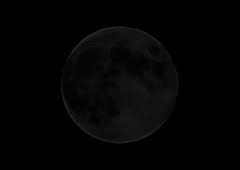
Name the moon phase
a)
First Quarter
b)
Last Quarter
c)
New Moon
d)
Full Moon
27.
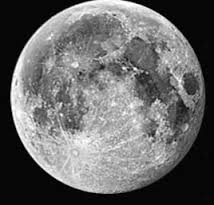
Name the moon phase
a)
First Quarter
b)
Last Quarter
c)
New Moon
d)
Full Moon
28.
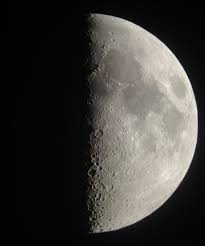
Name the moon phase
a)
First Quarter
b)
Last Quarter
c)
New Moon
d)
Full Moon
29.
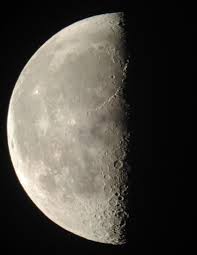
Name the moon phase
a)
First Quarter
b)
Last Quarter
c)
New Moon
d)
Full Moon
30.

Name the moon phase that would come AFTER this moon.
a)
waning crescent
b)
waxing crescent
c)
waning gibbous
d)
waxing gibbous
31.
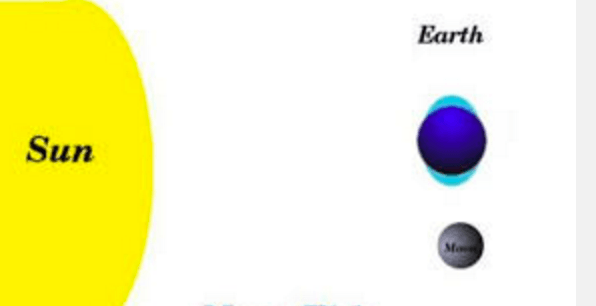
Which moon phase is shown in this diagram?
a)
new moon
b)
1st quarter
c)
full moon
d)
last quarter/3rd quarter
32.

What phase is this?
a)
Waning Gibbous Moon
b)
Waxing Gibbous Moon
c)
Waning Crescent Moon
d)
Waxing Crescent Moon
33.

What phase is this?
a)
First Quarter Moon
b)
Last Quarter Moon
c)
Waxing Gibbous Moon
d)
Waning Gibbous Moon
34.

What phase is this?
a)
Full Moon
b)
First Quarter Moon
c)
Last Quarter Moon
d)
New Moon
35.
What is a lunar month?
a)
The time from one new moon to the next new moon.
b)
The time from one full moon to the next full moon.
c)
The time it takes the moon to orbit the earth.
d)
The month of October .
36.

Name the phase of the moon for letter a
a)
First Quarter
b)
Last Quarter
c)
Waxing Gibbous
d)
Waning Gibbous
37.

Name the phase of the moon for letter f
a)
Waning Gibbous
b)
Waxing Gibbous
c)
Waning Crescent
d)
Waxing Crescent
38.
What is illuminating the Moon?
a)
Nuclear Fusion
b)
Sunlight
c)
Mirrors
d)
Flood Lights
39.

Name the moon phase
a)
waning crescent
b)
waxing crescent
c)
waning gibbous
d)
waxing gibbous
40.
Which moon phase is when you can't see the moon at all?
a)
Waning crescent
b)
Full moon
c)
Waxing gibbous
d)
New moon
41.

Why does the moon appear bigger than the planets and stars?
a)
The lack of atmosphere on the moon makes it look bigger.
b)
In reality, the moon is much bigger than the planets and stars.
c)
The planets and stars are farther away.
d)
The moon's gravity makes it look bigger.
42.
What is the correct alignment during a total lunar eclipse?
a)
Sun, moon, earth
b)
Earth, sun, moon
c)
Sun, earth, moon
43.
How many people have walked on the moon?
a)
8 astronauts
b)
12 astronauts
c)
22 astronauts
44.
Which of these statements about the Moon's atmosphere are TRUE?
a)
Moon has a thin atmosphere with few clouds
b)
Moon has a thin atmosphere but no clouds
c)
Moon has almost no atmosphere
45.
How many phases does the moon go through?
a)
4
b)
8
c)
10
d)
16
46.
We see the same side of the moon all the time.
a)
True
b)
False
47.
On EArth, what are the effects of the moon's gravitational pull?
a)
There are no effects on the Earth.
b)
The phases of the moon.
c)
The ocean tides.
d)
Earthquakes.
48.
How many moon does Earth have?
a)
1
b)
0
c)
2
d)
67
49.

Which type of eclipse is shown in this picture?
a)
Solar Eclipse
b)
Orbit
c)
Lunar Eclipse
d)
Total Eclipse
50.

Which type of eclipse is shown in the diagram?
a)
Solar Eclipse
b)
Lunar Eclipse
c)
Total Eclipse
d)
Partial Eclipse
100 %

