
 Worksheets
Force and Motion
Total questions: 79
Worksheet time: 1hrs 12mins
Name
Class
Date
1.
What is a PUSH or PULL of an object?
a)
Motion
b)
Force
c)
Friction
d)
Gravity
2.
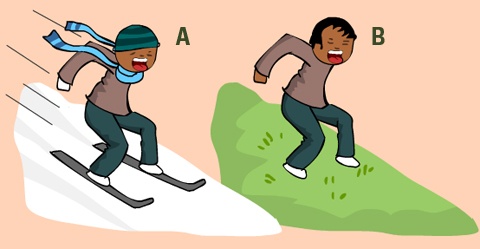
Why is it harder for the boy in Image B to get down the hill?
a)
Motion
b)
Friction
c)
Work
d)
Displacement
3.
Which force produces a change in motion?
a)
unbalanced force
b)
balanced force
c)
gravitational force
d)
frictional force
4.
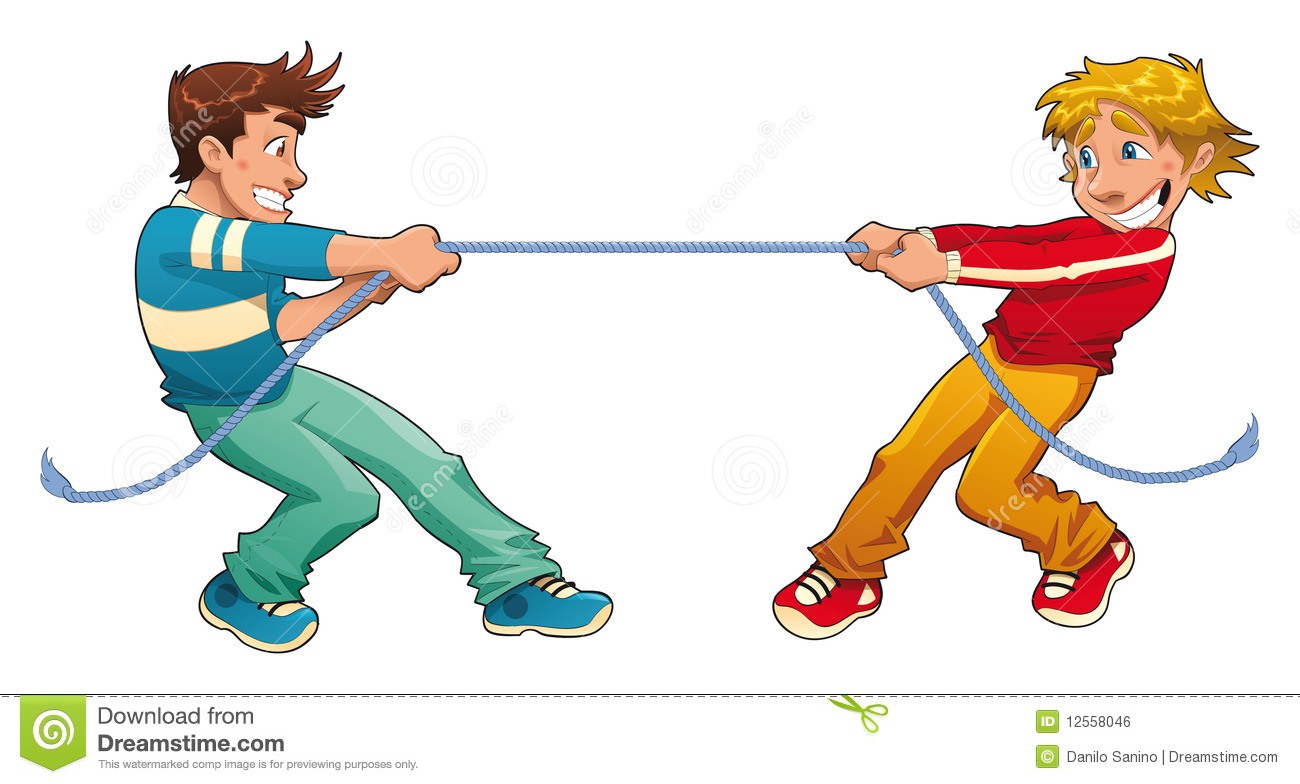
If these boys are pulling with the same amount of force. What will happen?
a)
The boy in blue will win.
b)
They will not move at all.
c)
The boy in red will win.
d)
Both will fall down.
5.
_______________ is how fast an object changes over time.
a)
speed
b)
velocity
c)
momentum
d)
acceleration
6.
What is the formula for force?
a)
F=M/A
b)
F=A/M
c)
F=M*A
d)
F=M*F
7.
What happens when two forces act in the same direction?
a)
They cancel each other out.
b)
The stronger one prevails.
c)
Their strengths are added.
d)
Their sum divided by the two is the total force.
8.
Any time the forces are unbalanced, an object will remain at rest. True or false?
a)
true
b)
false
9.
When you tell the direction and speed of an object, you give its
a)
motion
b)
velocity
c)
acceleration
d)
mass
10.
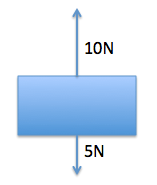
What is the net force on the block? (click on the words to view the picture)
a)
5 Newtons up
b)
5 Newtons down
c)
15 Newtons up
d)
15 Newtons down
11.
Which of the following statements is true?
a)
Balanced forces cause a change in motion.
b)
Unbalanced forces cause a change in motion.
c)
Forces do not effect the change in motion.
12.
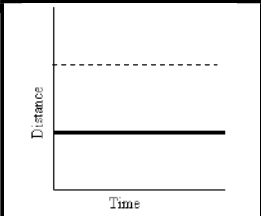
What does this graph represent?
a)
Constant speed
b)
Acceleration
c)
Not moving
13.
Which of the following objects has the least acceleration?
a)
a. an empty shopping cart pushed with a hard force
b)
b. a full shopping cart pushed with a hard force
c)
c. an empty shopping cart pushed with a light force
d)
d. a full shopping cart pushed with a light
force
14.
Speed is equal to
a)
Distance/Time
b)
Time/Distance
c)
Time x Distance
d)
Acceleration
15.
Speed is different from velocity because
a)
Velocity has a direction
b)
Speed uses Distance /Time
c)
Velocity doesn't include time
d)
Velocity doesn't include distance
16.

During which interval is the object speeding up?
a)
A to B
b)
B to C
c)
D to E
d)
E to F
17.

What is this graph showing?
a)
Constant Speed
b)
Acceleration (speeding up)
c)
Deceleration (slowing down)
d)
No motion
18.
8 N to the left , and 4 N to the right. Find the net force. Is this balanced
a)
12 N Right No
b)
4 N Left No
c)
12 N Right Yes
d)
4 N Left Yes
19.
What is MOVEMENT?
a)
Inertia
b)
Force
c)
Work
d)
Motion
20.
What happens when one force PULLS an object toward another?
a)
Friction
b)
Motion
c)
Gravity
d)
Magnetism
21.
How is gravity affected by mass?
a)
the larger the mass of the object, the greater the gravity
b)
small objects have no gravity
c)
gravity is not affected by mass of objects, whether large or small
22.
Why does a rolling ball stop?
a)
Gravity
b)
Friction
c)
Waterfalls
d)
Sand
23.
What pulls a ball back to earth?
a)
Gas
b)
Gravity
c)
Friction
d)
Molecules
24.
What pulls a ball back to earth?
a)
Gas
b)
Gravity
c)
Friction
d)
Molecules
25.
What is the standard unit force is measured in?
a)
Newtons
b)
pounds
c)
grams
d)
meters
26.
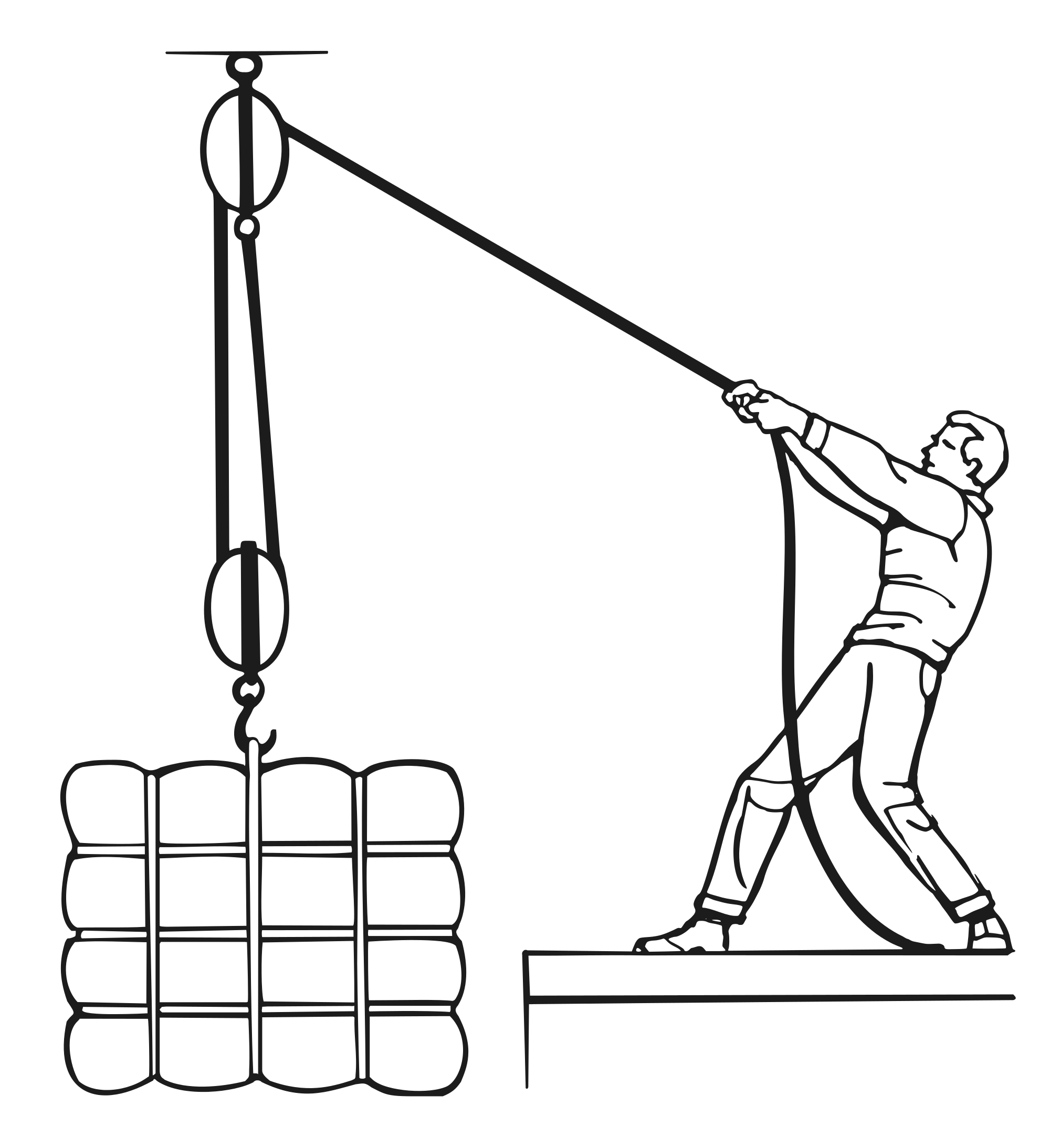
If you pull the cord, what direction will the box move?
a)
Up
b)
Down
c)
Left
d)
Right
27.
Which will be different on the moon?
a)
Mass of an object
b)
Weight of an object
28.
An object may move when a _______ is applied to it.
a)
force
b)
gravity
c)
friction
29.
1. It is easier to ride a bicycle down a hill than to ride up a hill because _______ helps the bicycle move down the hill.
a)
gravity
b)
friction
c)
rotation
30.
_______ is a force that acts between two objects which are touching. This force slows any movement between the two objects.
a)
pressure
b)
magnetism
c)
friction
31.

What does this graph represent?
a)
Constant Speed
b)
Acceleration
c)
Deacceleration
d)
Not moving
32.

Which runner won the race?
a)
A
b)
B
c)
C
d)
It was a tie
33.

According to the graph how far does the person travel in the first 5 seconds?
a)
2 m
b)
10 m
c)
0 m
d)
5 m
34.

What is the person doing from 5 seconds to 10 seconds?
a)
Walking
b)
Running
c)
Standing Still
d)
Walking Fast
35.

What is happening at A?
a)
Stationary
b)
Accelerating
c)
Slower steady speed; moving away from the starting position
d)
Steady speed; returning to start position
36.

What is happening at E?
a)
Stationary
b)
Accelerating
c)
Fast steady speed; moving away from the starting position
d)
Steady speed; returning to start position
37.
Objects that are changing their speed or their direction
a)
force
b)
energy
c)
acceleration
d)
friction
38.
the tendency of an object to resist a change in its motion
a)
acceleration
b)
inertia
c)
mass
d)
frame of reference
39.
Inertia is the tendency of an object to resist a change in its ___________.
a)
temperature
b)
shape
c)
size
d)
motion
40.
Objects with greater _________ also have greater inertia.
a)
speed
b)
mass
c)
temperature
d)
friction
41.
Because of inertia, a resting object will remain at ________.
a)
rest
b)
a constant speed
c)
school
d)
inertia
42.
Because of inertia, a moving object will keep ________.
a)
at rest
b)
moving
c)
in one spot
d)
inertia
43.
What kind(s) of objects have inertia?
a)
all objects with mass
b)
only objects at rest
c)
only objects in motion
d)
only objects whose motion is being changed
44.
The law of inertia (Newton’s First Law) applies
a)
to both moving and nonmoving objects
b)
only to moving objects
c)
only to objects that are not moving
45.
Inertia refers to ___.
a)
The force that keeps stationary objects at rest
b)
The force which keeps moving objects in motion with a constant
c)
The tendency of moving objects to remain in motion
d)
All of the above
46.
You push on a car and it does not move. What is true about the inertia?
a)
The inertia is changing
b)
The inertia of the car is too great
c)
The inertia of the person is equal to the car
d)
There is not inertia because of no movement
47.
What two forces affect gravity?
a)
mass and inertia
b)
mass and distance
c)
mass and force
d)
mass and weight
48.

What is the net force?
a)
50 N ------->
b)
<-------- -200 N
c)
250 N -------------->
49.
Newton's 1st law is also called....
a)
friction
b)
inertia
c)
unbalanced forces
d)
Newtons
50.
An object in motion tends to stay in motion unless an ___ force acts on it.
a)
unbalanced
b)
balanced
51.
What is the net force on an object?
a)
the sum of all the forces on an object
b)
the negative forces on an object
52.

If two forces are balanced, what is the net force?
a)
zero
b)
negative
c)
positive
53.
Objects with greater _________ also have greater inertia.
a)
speed
b)
mass
c)
temperature
d)
friction
54.
A sled slides down a hill, reaches the level surface and eventually comes to a stop. The fact that the sled ultimately stops is best explained by _?__
a)
An unbalanced force would be required to keep the sled moving forward at constant speed
b)
The presence of an unbalanced force (e.g. friction) can cause a moving object to stop
c)
The presence of inertia causes it to stop
d)
The natural tendency of any object is to ultimately stop
55.
If you increase the mass on an object, its acceleration
a)
decreases
b)
stays the same
c)
also increases
d)
stops
56.
If you increase the force on an object, its acceleration
a)
decreases
b)
stays the same
c)
also increases
d)
stops
57.
You push on a tree with 20 N of force. If the tree doesn't move, the tree is pushing back on you with _____of force.
a)
20N
b)
40N
c)
10N
d)
70N
58.

True of False?
An object's inertia is effected by its mass.
An object's inertia is effected by its mass.
a)
False
b)
True
59.
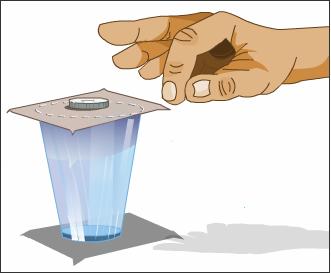
What is the tendency of an object to resist a change in motion?
a)
coffee
b)
motion
c)
inertia
d)
gravity
60.
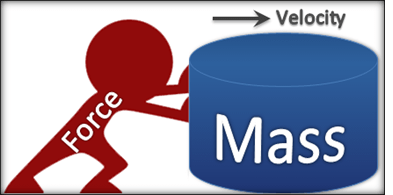
a)
1st
b)
2nd
c)
3rd
61.
What law is best described by inertia?
a)
1st
b)
2nd
c)
3rd
62.

a)
1st
b)
2nd
c)
3rd
63.

a)
1st
b)
2nd
c)
3rd
64.

a)
1st
b)
2nd
c)
3rd
65.

a)
1st
b)
2nd
c)
3rd
66.

a)
1st
b)
2nd
c)
3rd
67.

a)
1st
b)
2nd
c)
3rd
68.
Object at rest stays at rest.
a)
1st
b)
2nd
c)
3rd
69.
F = MxA
a)
1st
b)
2nd
c)
3rd
70.
Equal and Opposite
a)
1st
b)
2nd
c)
3rd
71.
Force exerted between the surfaces of two objects.
a)
Friction
b)
Inertia
c)
Force
d)
Gravity
72.
Objects tendency to resist change
a)
Friction
b)
Inertia
c)
Force
d)
Gravity
73.
Objects attraction to one another - like us to earth.
a)
Friction
b)
Inertia
c)
Force
d)
Gravity
74.
45 m/s2 is the...
a)
Mass
b)
Force
c)
Acceleration
d)
weight
75.
Acceleration is caused by a force acting on a mass.
a)
Newton’s first law of motion
b)
Newton’s second law of motion
c)
Newton’s third law of motion
76.

What is the net force?
a)
400 N Up
b)
400 N Down
c)
- 400 N Down
d)
800 N Down
77.
What is the unit to MEASURE force?
a)
Kilogram
b)
Meter
c)
Pascal
d)
Newton
78.
A rocket with less ________ will have a greater acceleration.
a)
Mass
b)
At Rest
c)
Reaction
d)
Resist
79.

To compare the two pictures would require...
a)
Newton's 1st Law
b)
Newton's 2nd Law
c)
Newton's 3rd Law
d)
Newton's 11th Law
100 %

