wayground logo

Free Printable Worksheets

Font size

S
M
L
XL
Worksheets

Test #2: Bonding, Balancing & LOC

Total questions: 36

Worksheet time: 31mins

Name
Class
Date
1.

Which is most likely to form a negative ion?

a)

an element from group 17

b)

a metal

c)

an element from group 1

d)

an element with atoms that have eight valence electrons

2.

Which of the following is the correct name for MgCl2?

a)

magnesium chlorine

b)

magnesium dichlorine

c)

magnesium chloride

d)

magnesium dichloride

3.
When an atom loses a valence electron, it becomes a(n) _____________ ion.
a)
positive
b)
negative
c)
neutral
d)
polyatomic
4.
In order to have a stable arrangement of 8 valence electrons, metal atoms are likely to _____________ electrons.
a)
lose
b)
gain
c)
share
d)
gain or share
5.

If an aluminum atom has 13 protons (+) and 10 electrons (-), what is it's charge?

a)

Al3+

b)

Al13+

c)

Al10+

d)

Al10-

6.
If an oxygen atom has 8 protons (+) and 10 electrons (-), what is it's charge?
a)
O10-
b)
O8+
c)
O2-
d)
O10+
7.
Write the formula when Al and O bond?
a)
Al3O2
b)
AlO
c)
Al2O3
d)
O2Al3
8.

Write the formula when Potassium and Sulfur bond?

a)
SK
b)
KS
c)
K2S
d)
S2K
9.

Name the following compound: CaO

a)

Calcium

b)

Calcium Oxide

c)

Carbon Oxygen

d)

Calcium Oxate

10.
Which of the following is an ionic bond?
a)
H2O
b)
C2H6
c)
F2
d)
Li2O
11.
How are covalent bonds explained?
a)
When one atom takes the other atom's electron
b)
When the atom shares an electron with an another atom
c)
When the two nucleus merge
d)
When the neutrons leave the nucleus
12.

What type of bond is the strongest?

a)

ionic

b)

covalent

13.
Name the following compound: 
CO2
a)
monocarbon dioxide
b)
carbon oxide
c)
carbon dioxide
d)
oxygen carbonide
14.
Which element is most likely to form a covalent bond?
a)
Nitrogen
b)
Lithium
c)
Sodium
d)
Potassium
15.
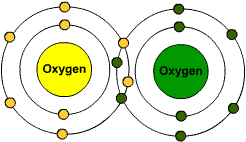
Is this image an example of covalent bonding?
a)
Yes
b)
No
16.
Atoms want
a)
A full outer shell of electrons
b)
One electron short of a full shell
c)
kit kats
17.
What region of the periodic table contains atoms that form covalent bonds?
a)
the left side
b)
the middle
c)
the right side
d)
top left
18.

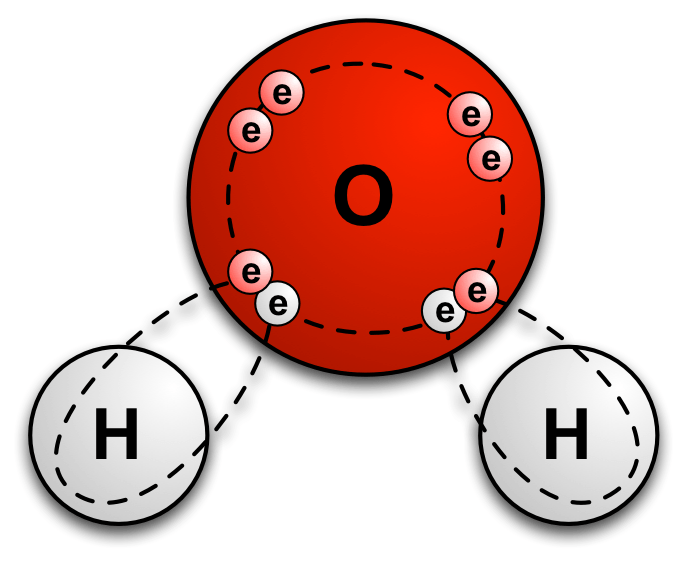
What would you name this molecule?

a)

SNa3

b)

H3O

c)

NaCl

d)

H2O

19.
A sealed test tube containing 8 grams of iron filings and 5 grams of sulfur is heated until the material in the test tube glows bright red.  What is the mass of products? 
a)
Mass is less than 13 grams
b)
Mass is equal to 13 grams
c)
Mass is greater than 13 grams
d)
Mass cannot be measured
20.
What does the Law of Conservation of Mass state?
a)
Matter cannot be gained or lost in a chemical reaction.
b)
Matter can only be lost in a chemical reaction.
c)
Matter can only be gained in a chemical reaction.
d)
Matter can be gained and lost in a chemical reaction. 
21.
In the following chemical equation
H2 and O2 are the 
2H2 + O2 --> 2H2O
a)
Reactants
b)
Products 
c)
Yields 
d)
Chemical Equation 
22.
In the following chemical equation 2H2O is a...
2H2 + O --> 2H2O
a)
Reactant
b)
Product 
c)
Yields 
d)
Chemical Equation 
23.
Which of the following shows the correct way to balance the chemical equation?
Fe + O2 -> Fe2O3
a)
4Fe + 3O2 -> 2Fe2O3
b)
2 Fe + 3O2 -> Fe2O6
c)
4 Fe + O6 -> 2Fe2O3
d)
None of the options are correctly balanced.
24.
Which of the following reactions is balanced?
a)
2CH4 + O2 -> CO2 + H2O
b)
CH4 + 2O2 -> CO2 + H2O
c)
CH4 + 2O2 -> CO2 + 2H2O
d)
None of the chemical equations are balanced.
25.
Balance this equation...
H2 + Cl2 --> HCl
a)
It is balanced 
b)
3H2 + Cl2 --> 6H2Cl
c)
H2 + Cl2 --> 2HCl
d)
I don't know! Oh well.
26.
Balance this equation...
HgO --> Hg + O2
a)
It is balanced 
b)
2HgO --> Hg + O2
c)
2HgO --> 2Hg + O2
d)
I don't know...Oh well!
27.
NaBr + H3PO4 --> Na3PO4 + HBr
a)
synthesis
b)
decomposition
c)
single replacement
d)
double replacement
28.
PbSO4 --> PbSO3 + O2
a)
synthesis
b)
decomposition
c)
double replacement
d)
single replacement
29.
NH3 + HCl ---> NH4Cl 
a)
Synthesis
b)
Decomposition
c)
Single Replacement
d)
Double Replacement
30.
Which type of reaction can be recognized by the general pattern?
A + BC--> AC + B
a)
Decomposition
b)
Combustion
c)
Single Replacement
d)
Double Replacement
31.

3KOH + H3PO4 --> K3PO4 + 3H2O

a)

Synthesis

b)

Decomposition

c)

Single replacement

d)

Double replacement

32.

In a reaction A + B ----> C, reactant A has 5g and product C has 9g. How many grams will reactant B have?

a)

4g

b)

5g

c)

9g

d)

14g

33.
If reaction starts with 20g of reactants it should produce 
a)
a total of 40g of products
b)
a total of 10g of products
c)
a total of 80 g of products
d)
a total of 20g of products
34.

A chemical reaction is balanced when

a)

Both sides have the same elements

b)

Both sides have the same number of atoms

c)

Both sides have the same elements and same number of atoms of each element

d)

Same subscripts and coefficients

35.

Does this chemical equation follow the Law of Conservation of Mass? Use evidence from the equation to support your response. (CER Format)

H2 + O2 → H2O

4 lines
36.

Which equation supports this model?

a)

2H2O2 → 2H2O

b)

H2 + O2 → 2H2O

c)

2H2 + O2 → H2O

d)

2H2 + O2 → 2H2O