
Font size
S
M
L
XL
 Worksheets
3rd 9 Weeks Review
Total questions: 119
Worksheet time: 2hrs 55mins
Name
Class
Date
1.
Cell with a nucleus, DNA is found in the nucleus of this cell.
a)
Prokaryotic
b)
Eukaryotic
c)
Unicellular
d)
Multicellular
2.
Cell with no nucleus, DNA floats freely in the cytoplasm.
a)
Prokaryotic
b)
Eukaryotic
c)
Unicellular
d)
Multicellular
3.
Organism made of only one cell
a)
Prokaryotic
b)
Eukaryotic
c)
Unicellular
d)
Multicellular
4.
Organism made of many cells
a)
Prokaryotic
b)
Eukaryotic
c)
Unicellular
d)
Multicellular
5.
Organism that can make its own food
a)
heterotroph
b)
autotroph
6.
Organism that cannot make its own food. Consumes other organisms.
a)
heterotroph
b)
autotroph
7.
In what organelle is the genetic material found inside?
a)
Endoplasmic Reticulum
b)
Golgi Complex
c)
Nucleolus
d)
Nucleus
8.
What organelle helps with cell digestion?
a)
Lysosomes
b)
Ribosomes
c)
Golgi Complex
d)
ER
9.
What is the function of nucleus?
a)
Structure that organizes motion of chromosomes.
b)
Structure that contains DNA and directs the cell
c)
Membrane that surrounds and protects the cell
d)
Stack of membranes that packages chemicals
10.
What is the function of the mitochondria?
a)
Structure that manufactures ribosomes
b)
Structures that converts nutrients to energy
c)
Stack of membranes that packages chemicals
d)
Structure that contains DNA and directs the cell
11.

What is the difference between rough and smooth ER?
a)
There is no difference.
b)
Plants have rough ER, animals have smooth ER.
c)
What type of injuries the Doctors treat.
d)
Rough has ribosomes, smooth does not.
12.

I am a protein packaging and shipping machine! Who am I?
a)
vacuole
b)
ribosome
c)
endoplasmic reticulum
d)
golgi apparatus
13.

I make proteins for the cell. What am I?
a)
ribosome
b)
mitochondria
c)
chloroplast
d)
lysosome
14.
What is the function of the Golgi apparatus?
a)
Stack of membranes that packages chemicals
b)
Structures that converts nutrients to energy
c)
Small structure that converts nutrients to energy
d)
Sac that stores water, nutrients, or waste products
15.
What is the function of the lysosomes?
a)
Membrane that surrounds and protects the cell
b)
Sac filled with digestive chemicals
c)
Sac that stores water, nutrients, or waste products
d)
Membrane that protects the nucleus
16.
Which organelle is often called the freeway of the cell because they transport things around the cell?
a)
Mitochondria
b)
Endoplasmic Recticulum
c)
Golgi Apparatus
d)
Chloroplast
17.
Where are proteins made?
a)
Golgi body
b)
Mitoichondrion
c)
Chromosomes
d)
Ribosomes
18.
Where are ribosomes produced?
a)
Nucleolus
b)
Endoplasmic reticulum
c)
Golgi body
d)
Vessicle
19.

Ribosomes are organelles made of protein and DNA that direct protein synthesis in the cytoplasm.
a)
True
b)
False
20.
chromatin
a)
DNA and proteins of a non-dividing cell
b)
Either of the two strands of a replicated chromosome joined at the centromere
c)
Coiled up DNA, made of compressed chromatin
d)
Area where the chromatids of a chromosome are attached
21.
Which organelle is considered the "brain" of the cell?
a)
Cell Membrane
b)
Chloroplast
c)
Nucleus
d)
Mitochondria
22.
Which of the following is considered an organelle?
a)
Cell Membrane
b)
Cell Wall
c)
Cytoplasm
d)
Mitochondria
23.
What organelle of the cell produces energy?
a)
Mitochondria
b)
Nucleus
c)
Cell membrane
d)
Lysosome
24.
Which organelle is considered the "janitor" of the cell, cleaning up dead cells?
a)
Cytoplasm
b)
Lysosomes
c)
Nucleolus
d)
Nucleus
25.
What kind of cell has a cell wall?
a)
Plant cell
b)
Animal cell
26.
Destroys and breaks down molecules and old cell parts.
a)
lysosome
b)
ribosome
c)
cell wall
d)
cytoplasm
27.
Power house of the cell; where cellular respiration takes place
a)
nucleus
b)
golgi apparatus
c)
nucleolus
d)
mitochondria
28.
Supports and protects organelles, place where reactions take place
a)
cytoplasm
b)
nucleus
c)
nucleoulus
d)
lysosome
29.
Control center; has everything needed to make a new cell
a)
mitochondria
b)
nucleus
c)
ribosome
d)
cell wall
30.
Modifies proteins and packages them for export
a)
golgi apparatus
b)
chloroplast
c)
cytoplasm
d)
cell membrane
31.
Makes proteins
a)
ribosome
b)
golgi apparatus
c)
cytoplasm
d)
cell membrane
32.
Has proteins, carries materials through the cell, aids in making proteins
a)
smooth ER
b)
rough ER
c)
lysosome
d)
nucleolus
33.
Controls what enters and leaves the cell
a)
golgi apparatus
b)
cell membrane
c)
mitochondria
d)
chloroplast
34.
Part of the ER that does not contain proteins
a)
smooth ER
b)
rough ER
c)
golgi apparatus
d)
nucleus
35.
Center of the nucleus, where DNA is found
a)
smooth ER
b)
rough ER
c)
golgi apparatus
d)
nucleolus
36.
What does a plant cell have that an animal cell doesn't have?
a)
A. chloroplasts
b)
B. cell wall
c)
C. cytoplasm
d)
D. A & B
37.
What does the nucleus do?
a)
stores foods
b)
tells the cell what to do
c)
a jelly like fluid
d)
none of the above
38.
What's the nucleus' nickname?
a)
The Boss
b)
The Game Center
c)
Mr. Awesome
d)
Storage Unit
39.
What shape is an animal cell?
a)
A. rectangular
b)
B. round
c)
c. irreular
d)
D. B & C
40.
What is the cell membrane?
a)
a thin outer layer
b)
a thick outside wall
c)
a jelly like fluid
41.
What are cells' nickname?
a)
Building Blocks of Life
b)
Construction Workers
c)
Tiny
42.
What is cytoplasm?
a)
a jelly-like fluid
b)
storae
c)
controls the cell
43.
what do both animal and plant cells have in common?
a)
their parts
b)
they're microscopic
c)
rectangular
d)
make their own food
44.
What is an example of a unicellular organism?
a)
fungi
b)
bacteria
c)
plants
d)
none of the above
45.

An animal cell has the following except a/an...
a)
Centriole
b)
Lysosome
c)
Cell Wall
d)
Endoplasmic reticulum
46.
Acts like a gatekeeper- allowing some materials to pass through it, but not others.
a)
cytoplasm
b)
cell membrane
c)
mitochondria
d)
vacuoles
47.
food making structure of the plant cell
a)
chloroplasts
b)
cell wall
c)
vacuole
d)
cell membrane
48.
Provides extra support for the plant cell and gives in shape
a)
chlorophyll
b)
chloroplast
c)
cell wall
d)
vacuole
49.
In plant cells, I turn light energy into food and I give these cells their color.
a)
animal cells
b)
vacuole
c)
chloroplast
d)
cell wall
50.
The shape of this type of cell is rectangular.
a)
plant cell
b)
animal cell
c)
bacteria cell
51.
The shape of this type of cell can be round or oval.
a)
animal cell
b)
plant cell
c)
bacteria cell
52.
What type of cell(s) have cell walls?
a)
Plant cells only
b)
Both plant and animal cells
c)
Animal cells only
53.
Where are chloroplasts found?
a)
Plant cells only
b)
Both plant and animal cells
c)
Animal cells only
54.
What type of cell(s) have a nucleus?
a)
Plant Cell Only
b)
Plant and Animal Cells
c)
Animal Cells
55.

The invention of the microscope made it possible for people to discover and learn about
a)
Plants
b)
Skin
c)
Animals
d)
Cells
56.

What is one way in which all living things on Earth are alike?
a)
All living things have hair.
b)
All living things are made of cells and come from other cells.
c)
The cells of all living things have chloroplast.
d)
All living things can move.
57.

Which of the following is NOT one of the basic points of Cell Theory?
a)
All living things are made of cells.
b)
The cell is the smallest living thing that can perform all the functions of life.
c)
Cells are too small to see without a microscope.
d)
All cells must come from pre-existing cells.
58.

Cells are often called "the ____ of life."
a)
bread
b)
road map
c)
building blocks
d)
meaning
59.
Which of the following is NOT a cell theory.
a)
All non-living things are made of cells
b)
All cells come from pre-existing cells
c)
Cells are the basic unit of structure and function of all living things
60.
Rocks are not living because
a)
they never move
b)
they aren't needed for humans
c)
they are not made of cells
d)
they don't break down
61.
What tool do you use to view the cells?
a)
metric ruler
b)
centrifuge
c)
microscope
d)
pipette
62.
Which of the following is NOT a cell theory.
a)
All non-living things are made of cells
b)
All cells come from pre-existing cells
c)
Cells are the basic unit of structure and function of all living things
63.
The first part of the Cell Theory states: "What happens in Cell Theory, stay in Cell Theory."
a)
True
b)
False
c)
I don't know
d)
Ummmm
64.
All cells come from___________ cells.
a)
pregnant
b)
pre-existing
c)
paternal
d)
pin size
65.
What is the basic structural and functional unit of all living things?
a)
atom
b)
cell
c)
molecule
d)
human
66.
Which classification of cell experiences photosynthesis?
a)
Plants
b)
Chloroplasts
c)
Eukaryotes
d)
All of the above
67.
What does photo mean?
a)
light
b)
make
c)
self
68.
What does synthesis mean?
a)
light
b)
make
c)
self
69.
Plants need ________ for photosynthesis
a)
oxygen
b)
soil
c)
carbon dioxide
d)
sugar
70.
What are the products of photosynthesis?
a)
water and carbon dioxide
b)
oxygen and glucose
c)
oxygen and carbon dioxide
d)
oxygen and water
71.
Which gas is removed from the atmosphere during photosynthesis?
a)
hydrogen
b)
oxygen
c)
nitrogen
d)
carbon dioxide
72.
Which statement about photosynthesis is correct?
a)
Plants get the energy they need for photosynthesis from water.
b)
Plants get the energy they need for photosynthesis from soil.
c)
Plants get the energy they need for photosynthesis from sunlight.
d)
Plants do not require energy to perform photosynthesis.
73.
The main source of energy for all life comes from ____.
a)
the Earth
b)
the moon
c)
the sun
d)
the food we eat/make
74.
The products of photosynthesis are
a)
water and carbon dioxide
b)
oxygen and water
c)
sugar and cabon dioxide
d)
oxygen and sugar (glucose)
75.
Which sentence correctly describes photosynthesis. (assume there is enough sunlight)
a)
CO2 and water combine and make O2 and glucose
b)
O2 and water combine to make glucose and CO2
c)
O2 and CO2 combine to make water and glucose
d)
CO2 and glucose combine to make O2 and water
76.
Which of the following is the correct equation for PHOTOSYNTHESIS?
a)
6CO2 + 6H2O + light energy --> 6O2 + C6H12O6
b)
6CO2 + C6H12O6 + 6H2O --> O2
c)
6O2 + 6H2O --> 6CO2 + C6H12O6
d)
C6H12O6 + 6O2 ---> 6H2O + 6CO2
77.
In photosynthesis ...
a)
water is chloronated
b)
light energy is changed to glucose
c)
osmosis happens
d)
ATP is made
78.
The mitochondria is responsible for ...
a)
photosynthesis
b)
anaerobic respiration
c)
aerobic respiration
d)
fermentation
79.
What is the chemical equation for cellular respiration?
a)
Glucose + Oxygen -> Carbon dioxide + Water + Energy
b)
Oxygen + Carbon dioxide + Energy -> Glucose + Water
c)
Carbon dioxide + Glucose -> Oxygen + Water + Energy
d)
Water + Carbon dioxide + Energy -> Oxygen + Glucose
80.
When an organism breaks down food, the atoms get rearranged into different molecules. When the atoms get rearranged, what is released?
a)
Energy
b)
Water
c)
Glucose
d)
Oxygen
81.
Where does cellular respiration take place?
a)
Mitochondria
b)
Chloroplast
c)
Stomata
d)
Leaf
82.
What is the correct Cellular Respiration equation?
a)
6H2O + 6CO2 --> C6H12O6 + 6O2
b)
C6H12O6 +6O2 --> 6H2O + 6 CO2 + ENERGY
c)
C6H12O6 + ENERGY --> H20 + O2
d)
Water + Oxygen = Carbon Dioxide
83.

Who used x-ray diffraction to get the exact three-dimensional structure of the DNA molecule? (Ultimately,the first scientist to view and confirm the three-dimensional shape of DNA.)
a)
Crick
b)
Watson
c)
Franklin
d)
Griffith
84.
Which sequence of DNA bases would pair with this partial strand
ATG TGA CAG
ATG TGA CAG
a)
ATG TGA CAG
b)
TAC ACT GTC
c)
GTA AGT GAC
d)
CAT TCA CTG
85.
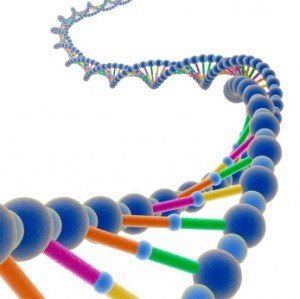
Which of the following best describes a DNA molecule?
a)
double helix
b)
contains ribose
c)
made of amino acids
d)
contains Uracil
86.

In a molecule of double-stranded DNA, the amount of Adenine present is always equal to the amount of
a)
cytosine
b)
guanine
c)
thymine
d)
uracil
87.
Adenine bonds with ______________.
a)
Guanine
b)
Thymine
c)
Cytosine
d)
Adenine
88.
Why is DNA important?
a)
it is very small and very complicated
b)
it's in everything
c)
it serves as the blueprint for traits of all living things
d)
because we eat it every day for energy
89.
Which 2 molecules form the sides (backbone) of the DNA ladder?
a)
deoxyribose sugar and adenine
b)
deoxyribose sugar and a hydrogen bond
c)
deoxyribose sugar and the nucleus
d)
deoxyribose sugar and phosphate
90.
Which organelle is DNA usually found in?
a)
cell membrane
b)
vacuole
c)
chloroplast
d)
nucleus
91.
Guanine bonds with ______________.
a)
Adenine
b)
Guanine
c)
Cytosine
d)
Thymine
92.
Which two scientists are accredited with correctly deducing the double helix model of DNA?
a)
Watson and Crick
b)
Wilkins and Franklin
c)
Wilkins and Crick
d)
Watson and Franklin
93.
What are the 4 nitrogen bases?
a)
adenine, thymine, cytoplasm, and guanine
b)
adenine, thymine cytosine, and guanine
c)
adenine, thymine, cytosine, and gylcerol
d)
adenine, thymine, cytosine, and glucose
94.
Who was responsible for determining the structure of DNA?
a)
Watson and Crick
b)
Chargaff
c)
Rosalind Franklin
d)
All of the above
95.
What portion of the cell cycle involves the actual dividing?
a)
interphase
b)
mitosis
c)
Gap 1
d)
Gap 2
96.
Before a cell can divide, what must happen?
a)
Nothing, it is always ready to divide
b)
The number of chromosomes must be cut in half
c)
The number of chromosomes must double
d)
The number of chromosomes must triple.
97.
Cytokinesis is the creation of two identical cells called _____.
a)
children cells
b)
new cells
c)
daughter cells
d)
son cells
98.
The sugar component of DNA is referred to as
a)
deoxyribose
b)
ribose
c)
glucose
d)
sucrose
99.
Which of the following is a base that is NOT contained in DNA?
a)
Adenine
b)
Thymine
c)
Uracil
d)
Guanine
100.
Chargraff's Rule says that
a)
Adenine will be equal to Thymine
b)
Cytosine will be equal to Thymine
c)
Uracil will be equal to Guanine
d)
Adenine will be equal to Cytosine
101.
DNA is copied during
a)
Translation
b)
Transcription
c)
Reproduction
d)
Replication
102.
DNA is a polymer made of monomers called
a)
Nucleotides
b)
Proteins
c)
Amino Acids
d)
Lipids
103.
What does DNA stand for?
a)
Ribonucleic Acid
b)
Deoxyribonucleic Acid
c)
Both of these
d)
None of these
104.
What is a nucleotide?
a)
Lipid
b)
A single base, deoxyribose sugar, and a phosphate
c)
Carbohydrate
d)
All of the above
105.
When a cell is not actively dividing, it is in what phase?
a)
interphase
b)
anaphase
c)
prophase
d)
telophase
106.
The sister chromatids of each chromosome are separated (come apart) and move to opposite ends of the cell. Name that Stage!
a)
Prophase
b)
Metaphase
c)
Anaphase
d)
Telophase
107.
Nucleolus and nuclear membrane start to disappear, chromatin condenses into chromosomes, and spindle fibers start to form. Name that Stage!
a)
Interphase
b)
Prophase
c)
Metaphase
d)
Anaphase
108.
The chromosomes start to line up in the middle of the cell.
a)
Prophase
b)
Metaphase
c)
Anaphase
d)
Telophase
109.
What do the cells look like at the end of mitosis?
a)
different from original cell
b)
similar to the original cell
c)
identical to the original cell
d)
none of these
110.
Which of these phases of mitosis take place first?
a)
anaphase
b)
telophase
c)
prophase
d)
metaphase
111.
New nucleus forms, chromatids undiwnd
a)
Prophase
b)
Metaphase
c)
Anaphase
d)
Telophase
112.
Osmosis only concerns the movement of particles of
a)
salt
b)
water
c)
sugar
d)
solute
113.
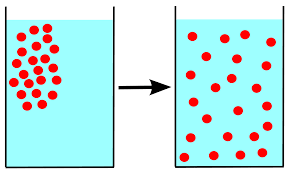
The picture below is an example of _________________.
a)
osmosis
b)
isotonic
c)
diffusion
d)
active transport
114.
During osmosis
a)
water moves from high to low concentration
b)
large or oddly shaped molecules move across a cell membrane
c)
water moves when energy is used
d)
proteins are built
115.
The diffusion of water through a semi-permeable membrane is called?
a)
Osmosis
b)
Cell wall
c)
Diffusion
d)
Respiration
116.
Which of the following was true about the dialysis bag that was placed in the beaker?
a)
it was permeable
b)
it was impermeable
c)
it was selectively permeable
117.
A cell will shrivel up if kept in a(n) ______ solution
a)
Hypotonic
b)
Hypertonic
c)
Isotonic
d)
Negative
118.
Ideally, your cells should be in a(n) _______ solution
a)
Hypertonic
b)
Hypotonic
c)
Isotonic
d)
Cola
119.
The energy molecule in a cell....
a)
ATP
b)
PGal
c)
TNT
d)
STP
Reset

