
 Worksheets
Cluster 4 CBA Review 2.0
Total questions: 71
Worksheet time: 2hrs 51mins
Name
Class
Date
1.
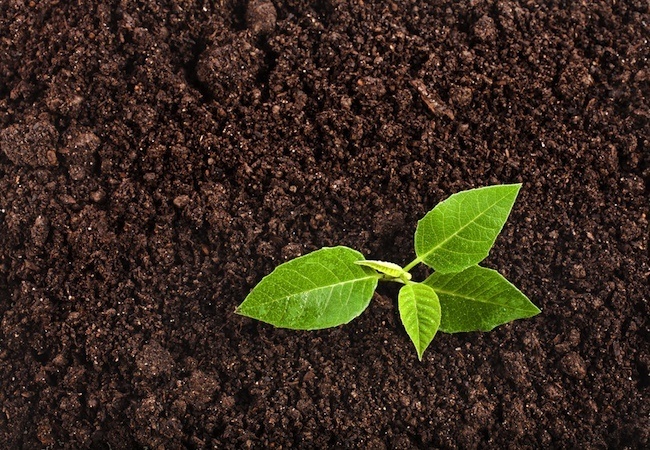
Which of the following is NOT one of the three types of soil?
a)
clay
b)
sand
c)
silt
d)
mud
2.
Ellen grabs a topsoil sample in her hand. She rolls it into a ball. The soil feels gritty and the ball falls apart. What part of the topsoil most likely made the topsoil feel gritty?
a)
clay
b)
sand
c)
silt
d)
humus
3.
When there are not enough plants to hold topsoil in place, water and _______ carry the topsoil away, leaving the subsoil exposed
a)
sunlight
b)
birds
c)
magnetic fields
d)
wind
4.
When plants, animals, and other organisms die, they break down and become part of the soil. What is this part of the soil called?
a)
sand
b)
silt
c)
clay
d)
humus
5.
Which of the following is the largest particle in soil?
a)
sand
b)
silt
c)
humus
d)
clay
6.
Many plants cannot grow in clay soil. Why is this true?
a)
Clay soil does not have many nutrients.
b)
Roots cannot easily push through clay soil.
c)
Water doesn't drain well through clay.
d)
All of these choices.
7.
You dig a small hole in the soil and the next day it rains. The hole fills with water, but does not empty even after several days of dry weather. What is the soil mostly made of?
a)
clay
b)
sand
c)
humus
d)
silt
8.
Many plants cannot grow in sandy soil. Why is this true?
a)
Sandy soil does not hold enough water.
b)
Oxygen cannot pass through sandy soil.
c)
Roots cannot easily push through clay soil.
d)
Sandy soil has too many nutrients.
9.

What is a soil problem all farmers face?
a)
soil hardening
b)
soil erosion
c)
soil spoiling
d)
soil pollution
10.
How would you describe the texture of "sandy" soil?
a)
sticky
b)
gritty
c)
smooth
d)
slimy
11.

Fertile soil is rich in _________.
a)
Conservation
b)
Bedrock
c)
Water
d)
Nutrients
12.
This type of soil is sticky when wet and hard when dry.
a)
clay
b)
silt
c)
sand
d)
gravel
13.
This type of soil is made of tiny pieces of rock.
a)
sand
b)
clay
c)
humus
d)
loam
14.
This type of soil is carried by water and left as sediment.
a)
bedrock
b)
loam
c)
silt
d)
clay
15.
What physical property of soil determines if it retains water?
a)
color
b)
particle size
c)
texture
d)
weight
16.
It is important for soil to retain water to
a)
withstand weathering
b)
erode more slowly
c)
help plants to grow
d)
keep it from being dry
17.
If soil particles are large, then
a)
more water is retained
b)
less water is retained
18.
How do you determine the texture of soil?
a)
use a spring scale
b)
observe color of particles
c)
rub particles between fingers
d)
taste particles
19.
The natural chemical or physical processes that breaks down rock on Earth's surface.
a)
weathering
b)
erosion
c)
deposition
d)
jackhammering
20.
How might a weathered mountain appear different than an unweathered mountain?
a)
Weathered mountain would be taller.
b)
Weathered mountain would be rounder and less jagged.
c)
Weathered mountain would be more jagged and less rounded.
d)
Weathered mountain would have no trees.
21.

A cliff formed near the ocean. Which statement best describes how this cliff formed?
a)
Warm air melted the rock.
b)
Sun rays evaporated the rock.
c)
Ocean waves washed away rock.
d)
Plant roots pushed away the rock.
22.

The diagrams shows a rock with water trapped in the cracks during the day and at night.
Which statement best explains why this process results in weathering?
Which statement best explains why this process results in weathering?
a)
frozen water acts as a solute
b)
water expands when it freezes
c)
the mass of water increases when it freezes
d)
frozen water dissolves most types of rock
23.

Which of the following probably did not cause this statue to wear down?
a)
Rain
b)
Wind
c)
Snow
d)
Animals
24.
How does freezing water cause the weathering of rocks? The freezing water—
a)
keeps the rocks in place
b)
makes the rocks last longer
c)
expands cracks and breaks rocks
d)
causes rocks to fall in landslides
25.

How do plants weather rocks?
a)
during photosynthesis
b)
when roots grow into cracks of rocks and expand the rock
c)
when the plant moves water from the roots to the leaves
26.
Rain washing away soil from a hillside
a)
Weathering
b)
Erosion
c)
Deposition
27.
Waves dropping sand on the beach
a)
Weathering
b)
Erosion
c)
Deposition
28.
Wind blowing sand from one location to another
a)
Weathering
b)
Erosion
c)
Deposition
29.
Muddy water being carried away by a fast-moving river
a)
Weathering
b)
Erosion
c)
Deposition
30.
Flood waters moving soil from one location to another
a)
Weathering
b)
Erosion
c)
Deposition
31.
Rocks being made smooth by tumbling across a streambed
a)
Weathering
b)
Erosion
c)
Deposition
32.
Wind blasting sand at rock and carving out arches
a)
Weathering
b)
Erosion
c)
Deposition
33.
What is the process of moving sediments from location to another?
a)
Deposition
b)
Erosion
c)
Weathering
d)
Compaction
34.
What is the major cause of weathering and erosion to form canyons?
a)
wind
b)
ice
c)
glaciers
d)
moving water
35.
What is the small broken down pieces of rock called?
a)
dirt
b)
grime
c)
sediment
d)
popcorn
36.
What force lays down sediment in new locations?
a)
Erosion
b)
Weathering
c)
Deposition
d)
Abrasion
37.
Renewable resources can be replaced
a)
In a reasonably short time
b)
by various manufacturing methods
c)
by scientists
d)
by the sun and wind
38.
Most important minerals and many fuels
a)
can be found in unlimited amounts
b)
form at about the same speed they are used
c)
cannot be replaced after they're used
d)
are found only in other countries of the world
39.
Fossil fuels are nonrenewable resources formed from
a)
coal and natural gas
b)
the remains of living organisms
c)
the ozone layer
d)
recycled materials
40.
To protect the Earth's water supply people can
a)
melt the glaciers
b)
store it in lakes and streams
c)
collect it in reservoirs
d)
use less water
41.
People can protect and conserve resources by
a)
replacing them
b)
using only renewable resources
c)
using less electricity
d)
recycling, reducing, reusing
42.
What is an inexhaustible resource?
a)
bauxite
b)
coal
c)
sun
d)
water
43.
What is a nonrenewable resource example?
a)
coal, bauxite
b)
water
c)
wind
d)
ocean water
44.

What is a natural resource?
a)
something that people make
b)
is anything that people can use which comes from nature
c)
something found in your house
45.

Which of the following resources is renewable?
a)
coal
b)
trees
c)
petroleum
d)
natural gas
46.

Which of these is a nonrenewable resource?
a)
Plants
b)
Animals
c)
Water
d)
Natural gas
47.
Johnny bought some new blankets. Which natural resource was MOST LIKELY used to make the blanket?
a)
Wood
b)
Fossil Fuels
c)
Cotton
d)
Metal
48.
Why would a student recycle a newspaper?
a)
To save the fish
b)
To save the pizza
c)
To save the trees
d)
To save the wind
49.
Which of these is an example of reusing a material?
a)
Recycle cans and bottles
b)
Buy less paper products.
c)
Using newspaper for an art project.
d)
Throwing away glass bottles.
50.
to use wisely, without waste; protect from destruction
a)
fossil fuels
b)
recycle
c)
conserve
d)
reduce
51.
a fuel, such as coal, oil, or natural gas, formed in the geological past from the decayed remains of ancient organisms, such as plants and animals
a)
fossil fuels
b)
conserve
c)
reduce
d)
conservation
52.
natural resources that are used up at a rate faster than they can be replaced
a)
renewable resource
b)
natural resource
c)
fossil fuels
d)
nonrenewable resource
53.
the protection, preservation, management, or restoration of natural resources
a)
renewable resource
b)
conservation
c)
nonrenewable resource
d)
natural resource
54.
Wind energy is
a)
generated from moving water
b)
starts with moving air and generates electricity
c)
starts with the sun
d)
comes from the earth
55.
Energy made from moving water or falling water is
a)
geothermal energy
b)
solar energy
c)
electrical energy
d)
hydro electrical energy
56.
Energy from the sun is called
a)
Biomass
b)
Solar
c)
Geothermal
d)
Hydro
57.
Oil, natural gas, and coal are called ________resources because they are not easy to replace.
a)
fossil fuels
b)
conservation
c)
natural resources
d)
nonrenewable
58.
Which of the following is a fossil fuel?
a)
Wind
b)
Coal
c)
Solar
d)
Biomass
59.
Takes millions of years to form.
a)
hydroelectric
b)
renewable
c)
solar
d)
fossil fuels
60.
A resource that can be easily replaced.
a)
renewable
b)
alternative
c)
nonrenewable
61.
Another name for oil.
a)
coal
b)
natural gas
c)
petroleum
d)
alternative
62.
Which of the following is an example of renewable energy?
a)
water
b)
sunlight
c)
wind
d)
all of the above
63.

Where are natural resources found?
a)
In our environment
b)
In your computer screen
c)
Hidden in an attic
d)
We don't have natural resources
64.

Which group includes ALL nonrenewable resources?
a)
coal, trees, water, and sun
b)
carbon, sun, water, oil
c)
oil, coal, natural gas
d)
water, wind, sun
65.

Animals are what type of resource?
a)
Renewable
b)
Nonrenewable
66.

Fossil fuels are considered nonrenewable resources because of -
a)
Where they come from
b)
How they are produced
c)
How useful they are
d)
How long they take to form
67.

Solar Power is a __________ energy resource.
a)
Renewable
b)
Nonrenewable
68.

Natural Gas is a __________ energy resource.
a)
Renewable
b)
Nonrenewable
69.

Wind is a __________ energy resource.
a)
Renewable
b)
Nonrenewable
70.
What does reduce mean?
a)
make bigger
b)
add things
c)
make smaller
d)
make different
71.
What does reuse mean?
a)
Use again
b)
Throw away
c)
To buy again
d)
To make again
100 %

