
 Worksheets
Clouds, Wind and the Water Cycle
Total questions: 50
Worksheet time: 54mins
Name
Class
Date
1.
What is the water cycle?
a)
the 3 forms of water
b)
the movement of water on, above, or below the surface of the Earth
c)
when water melts
d)
when clouds form
2.

What part of the water cycle does this picture show?
a)
condensation
b)
precipitation
c)
evaporation
3.
Which of these is an example of precipitation?
a)
snow
b)
air
c)
clouds
d)
vapor
4.
What is the energy source for the water cycle?
a)
the sun
b)
the earth
c)
water
d)
the moon
5.
Which best explains why runoff is important?
a)
It returns water to other locations on Earth
b)
It increases the chance of flooding
c)
It makes evaporation occur faster
d)
It increases condensation
6.
Snow, sleet, hail, and rain are all examples of ________________.
a)
evaporation
b)
condensation
c)
accumulation
d)
precipitation
7.
Clouds are made up of tiny drops of ______ or ice. The moisture in the cloud affects the weather.
a)
dust
b)
water
c)
cloud particles
d)
precipitation
8.
They are highest clouds in the sky. They look curly, white and feathery. Usually mean good weather.
a)
Cumulus
b)
Cumulonimbus
c)
Cirrus
d)
Stratus
9.
This is sometimes called a thunderhead cloud. It looks very tall like mountains and heavy rain comes from it.
a)
Cumulus
b)
Cirrus
c)
Stratus
d)
Cumulonimbus
10.
These clouds are puffy and white and sometimes appear to have a flat bottom.
a)
cumulus
b)
cumulonimbus
c)
cirrus
d)
stratus
11.
What causes wind to blow?
a)
Differences in longitude
b)
Shock waves from clouds
c)
Differences in air temperature and pressure
d)
The rotation of the earth
12.
Which term best describes how the earth's atmosphere is heated?
a)
Spirally
b)
Unevenly
c)
Circularly
d)
Kinetically
13.
What is the name for cooler air blowing from the sea to land?
a)
Sea Breeze
b)
Land Breeze
c)
Mountain Breeze
d)
None of the Above
14.
What is the name for cooler air blowing from the land to the sea?
a)
Sea Breeze
b)
Land Breeze
c)
Mountain Breeze
d)
None of the Above
15.

What kind of breeze is this and when would it form?
a)
Land breeze - daytime
b)
Land breeze - nighttime
c)
Sea breeze - daytime
d)
Sea breeze - nighttime
16.
What is the source of most surface water and groundwater?
a)
Snow
b)
Precipitation
c)
Run-off
d)
Wastewater
17.
Transpiration is a type of ______.
a)
Liquidation
b)
Condensation
c)
Evaporation
18.
Water is absorbed by the plant through the roots, and transpiration takes place as the water exits the ________.
a)
Leaves
b)
Roots
c)
Stem
19.
What is evaporation?
a)
The part of the water cycle when the sun heats up water, turning it from a liquid into water vapor or steam. It rises from the ground into the air.
b)
The part of the water cycle when the water vapor in the air gets cold. The water turns back into a liquid and forms clouds.
c)
The part of the water cycle when clouds get heavy and can no longer hold the liquid water. This causes the water to fall from the sky to the earth as rain, snow, sleet, or hail.
20.
What is condensation?
a)
The part of the water cycle when the sun heats up water, turning it from a liquid into water vapor or steam. It rises from the ground into the air.
b)
The part of the water cycle when the water vapor in the air gets cold. The water turns back into a liquid and forms clouds.
c)
The part of the water cycle when clouds get heavy and can no longer hold the liquid water. This causes the water to fall from the sky to the earth as rain, snow, sleet, or hail.
21.
What is precipitation?
a)
The part of the water cycle when the sun heats up water, turning it from a liquid into water vapor or steam. It rises from the ground into the air.
b)
The part of the water cycle when the water vapor in the air gets cold. The water turns back into a liquid and forms clouds.
c)
The part of the water cycle when clouds get heavy and can no longer hold the liquid water. This causes the water to fall from the sky to the earth as rain, snow, sleet, or hail.
22.
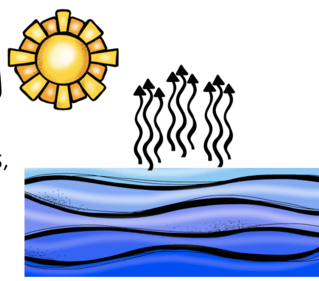
Evaporation happens when the sun ___________ water and turns it into vapor.
a)
cools
b)
heats up
c)
freezes
d)
lights up
23.

Does evaporation happen before or after condensation?
a)
before
b)
after
c)
during
24.
low gray clouds forms in layers, sometimes fog that brings rain or snow
a)
cumulus
b)
cirrus
c)
stratus
d)
cumulonimbus
25.
which cloud occurs at the highest altitude?
a)
cirrus
b)
stratus
c)
cumulus
d)
cumulonimbus
26.

What kind of breeze is this & what time of day/night would it form?
a)
Land breeze - daytime
b)
Land breeze - nighttime
c)
Sea breeze - daytime
d)
Sea breeze - nighttime
27.
What causes warm air to rise?
a)
the fact that it's less dense than cold air
b)
The fact that it weighs more than cold air
c)
The fact that it has higher pressure than cold
d)
the fact that its more dense than cold air
28.
How does freezing rain form
a)
by hail
b)
when the temperature is warm
c)
when the temperature is cold and it rains
d)
freezing rain
29.
what is the most common precipitation
a)
sleet
b)
freezing rain
c)
snow
d)
rain
30.
What can damage crops, homes, and cars?
a)
freezing rain
b)
sleet
c)
hail
d)
snow
31.
Characteristics of Precipitation
a)
liquids and solids
b)
appearance
c)
freezing rain
d)
hail
32.
Define Precipitation
a)
solids falling from the sky
b)
precipitation
c)
any form of water that falls from clouds and reaches earth's surface
d)
liquids falling from the sky
33.
Lvl 2: What is the measure of water vapor in the atmosphere?
a)
Evaporation
b)
Precipitation
c)
Barometric Pressure
d)
Humidity
34.
These clouds are lowest in altitude. They bring rain or snow and are layered like a blanket.
a)
Cirrus
b)
Stratus
c)
Cumulonimbus
d)
Cumulus
35.
Which cloud brings nice weather?
a)
Cumulonimbus
b)
Cumulus
c)
Stratus
36.
Cirrus clouds are associated with _______ clouds.
a)
Low level
b)
Mid level
c)
High level
d)
Clouds of Vertical Development
37.
What is the definition of CONDUCTION?
a)
When heat is transferred from objects like rays of light or electromagnetically.
b)
a hot liquid or air that expands, becomes less dense, and rises or becomes more dense, and sinks.
c)
When heat transfers from objects that are touching.
d)
When heat transfers through the heater or AC in your house.
38.
What is the definition of CONVECTION
a)
When heat transfers through waves.
b)
When heat transfers from objects that are touching.
c)
a hot liquid or air that expands, becomes less dense, and rises or becomes more dense, and sinks.
d)
Heat traveling from the sun
39.
What kind of heat transfer happens when the sun is heating your body?
a)
Conduction
b)
Radiation
c)
Convection
d)
Density
40.
What heat transfer happens when you burn your hand by touching a fire?
a)
Radiation
b)
Conduction
c)
Convectio
d)
I don't know!!!!!!!!!!!
41.

The way the heat is moving from the hot coffee is called...
a)
convection
b)
radiation
c)
insulation
d)
conduction
42.
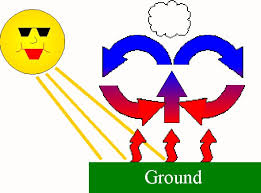
Warm air rises and the cool air sinks demonstrates this type of heat transfer.
a)
conduction
b)
convection
c)
radiation
d)
Insolation
43.
3 states of water found on earth
a)
solid, liquid & gas
b)
oceans, lakes & streams
c)
evaporation, transpiration
d)
rain, sleet & hail
44.
Evaporation occurs when water changes into
a)
transpiration
b)
snow
c)
solid
d)
vapor
45.
the change of state from a liquid to a gas
a)
water cycle
b)
evaporation
c)
precipitation
d)
condensation
46.
what is matter
a)
length width and hieght
b)
anything that has weight and takes up space
47.
what is a solid
a)
matter that has no definite size or shape
b)
matter that has a definite size and shape
48.
what is a liquid
a)
matter that has a definite size but no definite shape
b)
matter that has no definite size or shape
49.
Does Transpiration help the water cycle?
a)
it does help by getting the plants prepared for a storm
b)
It doesn't help because it kills plants by transferring water into the atmosphere.
c)
It does help because it moves water on plants into the atmosphere and into clouds
d)
all of the above
50.
The drops of water that appear on the outside of a glass of cold juice on a warm day are an example of?
a)
evaporation
b)
condensation
c)
sublimation
d)
All of the above
100 %

