
 Worksheets
DNA Mutations
Total questions: 35
Worksheet time: 22mins
Name
Class
Date
1.
What pairs with Adenine (A)?
a)
Guanine (G)
b)
Cytosine (C)
c)
Adenine (A)
d)
Thymine (T)
2.
What pairs with Thymine (T)?
a)
Adenine (A)
b)
Thymine (T)
c)
Guanine (G)
d)
Cytosine (C)
3.
What pairs with Guanine (G)?
a)
Adenine (A)
b)
Thymine (T)
c)
Cytosine (C)
d)
Guanine (G)
4.
What pairs with Cytosine (C)?
a)
Guanine (G)
b)
Cytosine (C)
c)
Adenine (A)
d)
Thymine
5.
What are the three types of mutation?
a)
Insertion, Deletion, Subsitution
b)
Deletion, Newstion, Subsitution
c)
Newstion, Deletion, Insertion
d)
Insertion, Newstion, Substitution
6.
Normal-
GAG-CTC-GAC-AGA
Mutant
GAG CTC-CAC-AGA
GAG-CTC-GAC-AGA
Mutant
GAG CTC-CAC-AGA
a)
no mutation
b)
substitution
c)
insertion
d)
deletion
7.
DNA molecule segment is : TTACGCAAG
The mutated DNA segment is TTCGCAAG. This is an example of ___ mutation.
The mutated DNA segment is TTCGCAAG. This is an example of ___ mutation.
a)
Substitution
b)
Deletion
c)
Insertion
d)
Inversion
8.
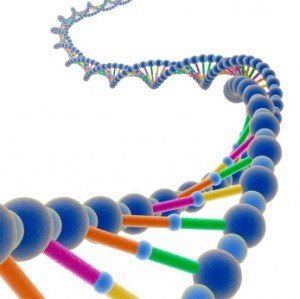
Which of the following best describes a DNA molecule?
a)
double helix
b)
contains ribose
c)
made of amino acids
d)
contains Uracil
9.
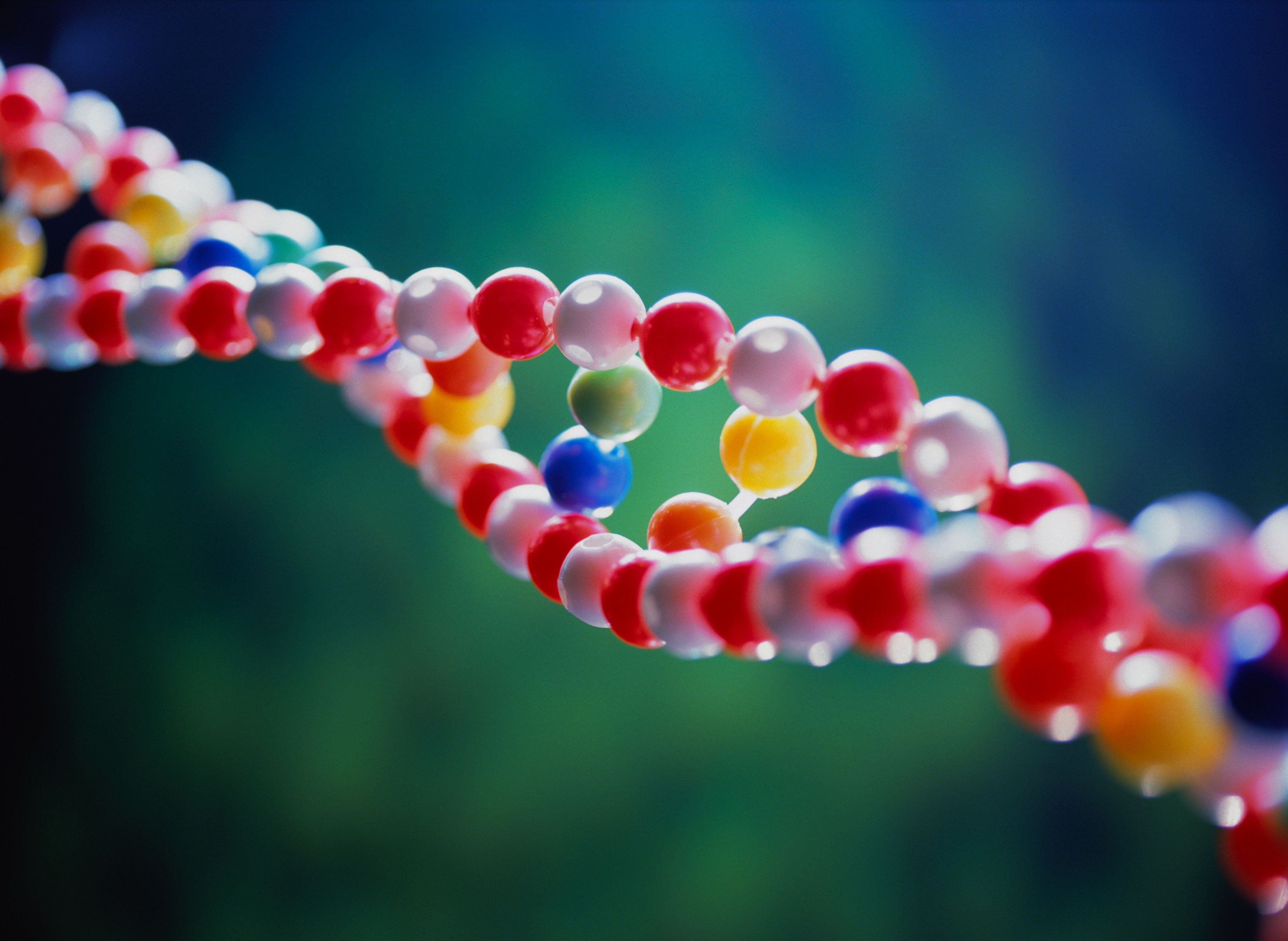
Why is DNA important?
a)
it is very small and very complicated
b)
it's in everything
c)
it serves as the blueprint for traits of all living things
d)
because we eat it every day for energy
10.
What do hurtful mutations do?
a)
Decrease chances of survival
b)
Increases changes of survival
c)
Decreases likelihood of developing cancer
d)
Increases likelihood of developing cancer
11.
Which of the following is an example of a hurtful mutation?
a)
Developing cancer
b)
Makes the organism faster
c)
Makes the organism a predator
d)
Develops sharp claws
12.
What do helpful mutations do?
a)
Increases chances of survival
b)
Decreases changes of survival
c)
Increases chances of developing cancer
d)
Decreases skills
13.
Which of the following is an example of a helpful mutation?
a)
Develops speed
b)
Decreases speed
c)
Increases weight gain
d)
Develops no camflauge
14.
What is the definition of DNA mutation?
a)
The original DNA strand
b)
The strand with four pairs
c)
A change in the DNA strand
d)
The strand in a double helix
15.
What mutation has occurred here?
T-G-A-C-C-A
T-G-A-G-C-A
T-G-A-C-C-A
T-G-A-G-C-A
a)
Substitution
b)
Deletion
c)
Insertion
d)
Frameshift
16.
DNA molecule segment is : TTACGCAAG
The mutated DNA segment is TTCGCAAG. This is an example of ___ mutation.
The mutated DNA segment is TTCGCAAG. This is an example of ___ mutation.
a)
Substitution
b)
Deletion
c)
Insertion
d)
Inversion
17.
Original: ATC CAT
Mutation: ATC GCAT
What mutation occurred?
Mutation: ATC GCAT
What mutation occurred?
a)
deletion
b)
insertion
c)
silent
d)
transverse
18.
DNA: A T T C G
RNA: U A A G C
What process made the RNA strand?
RNA: U A A G C
What process made the RNA strand?
a)
Transcription
b)
Translation
c)
Replication
d)
Mitosis
19.
Original: A A U U G G C C
Mutated: A U U U G G C C
What kind of mutation occurred?
Mutated: A U U U G G C C
What kind of mutation occurred?
a)
Substitution
b)
Addition
c)
Deletion
d)
Frameshift
20.
mRNA is read in chunks of three, called...
a)
quadralets
b)
anticodons
c)
codons
d)
capsids
21.
Point mutations are any mutation that affects just one base. Which of the following would NOT be considered a point mutation?
a)
Substitution
b)
Deletion
c)
Addition
d)
Having an extra chromosome
22.
DNA: T T A A G G
What is the matching mRNA strand?
What is the matching mRNA strand?
a)
A A U U C C
b)
U U A A C C
c)
A A T T C C
d)
T T A A C C
23.
If the codon is "CUU" what would be the complimentary tRNA anticodon?
a)
GAA
b)
CUU
c)
GTT
d)
CAA
24.
Exons are...
a)
... pieces of DNA that are silent (have no effect on the cell)
b)
... pieces of DNA that do not code for protein.
c)
... pieces of DNA that code for proteins.
d)
... pieces of DNA that are being actively deleted by the cell.
25.
What is the purpose of the sequences of Nitrogenous
Bases in DNA?
Bases in DNA?
a)
gives DNA the shape needed
b)
prevents mutations
c)
forms hydrogen bonds
d)
carries instructions for the traits
26.
Cell mutations are....?
a)
Unnatural and harmful
b)
Unnatural and always affect the organism
c)
Natural and produces genetic diversity
d)
Natural and always affect the organism
27.
What is transcription and where does it occur?
a)
I don't know
b)
The copying of RNA into mRNA; cytoplasm
c)
The copying of DNA into mRNA; nucleus
28.
What happens in Inversion?
a)
Its repeated
b)
They all get deleted
c)
A section of the chromosome gets flipped
d)
they start to cross-over
29.
What causes mutations?
a)
Mistakes in replication or environmental substances
b)
The amino acids
c)
Passed down by genetics
d)
It's how your born
30.
Where do mutations occur?
a)
DNA and RNA
b)
DNA
c)
RNA
d)
mRNA and tRNA
31.

What is shown in the diagram shown?
a)
DAN
b)
RAN
c)
DNA
d)
RNA
32.
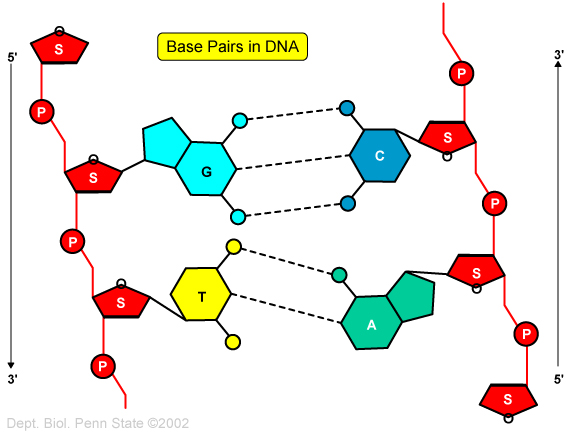
Nitrogenous bases are joined by which type of bond?
a)
polar bonds
b)
ionic bonds
c)
covalent bonds
d)
hydrogen bonds
33.
DNA replication results in two DNA molecules,
a)
each one with two original strands
b)
each one with two new strands
c)
each one with one new strand and one original strand
d)
one with two new strands and the other with two original strands
34.
What are the three components of a nucleotide?
a)
sugar, hydrogen, nitrogen base
b)
sugar, oxygen, nitrogen base
c)
sugar, phosphate, nitrogen base
d)
sugar, phosphate, protein
35.
A mutation that replaces one nitrogen base with a different one is called
a)
substitution
b)
insertion
c)
deletion
d)
inversion
100 %

