
 Worksheets
Review EHH- EEN 2.1.2- EEN 2.1.3
Total questions: 73
Worksheet time: 1hrs 17mins
Name
Class
Date
1.
Erosion is...
a)
materials begin moved across the Earth's surface by water and wind
b)
materials deposited into a new location as sediment
c)
rocks and other materials being broken down both physically and chemically
2.
The constant, slow movement of plates on the Earth's surface is probably caused by...
a)
earthquakes
b)
heat
c)
volcanoes
d)
rocks
3.
Hot gases and lava flow from...
a)
faults
b)
volcanoes
c)
glaciers
d)
earthquakes
4.
Which one of the following will improve soil quality?
a)
using too much fertilizer
b)
planting the same crops each year
c)
cutting everything down
d)
planting flowers and grass
5.
Which of these often occur as the Earth's crustal plates move?
a)
earthquakes
b)
floods
c)
tornadoes
d)
hurricanes
6.
Mountains are formed by...
a)
wind slowly building up rocks
b)
erosion
c)
lowering of the sea level
d)
folding and faulting of the Earth's crust
7.
Where are earthquakes and volcanoes likely to occur?
a)
anywhere
b)
at boundary plates (fault lines)
c)
on mountains
8.
When rock goes through weathering and erosion what forms?
a)
Sediment
b)
Magma
c)
Lava
d)
Boulders
9.
What is the moving of sediment by wind, water, or gravity?
a)
Mechanical weathering
b)
Chemical weathering
c)
Erosion
d)
Compaction
10.
What force causes geohazards like creep and mudslides?
a)
Gravity
b)
Wind
c)
Water
d)
Friction
11.
When rocks move suddenly down a slope.
a)
Mudslide
b)
Slump
c)
Creep
d)
Rockslide
12.
Organic material in soil
a)
Humus
b)
Ferns
c)
Parent material
d)
Climate
13.

The cooled and hardened magma from volcanoes form what rocks?
a)
igneous
b)
sedimentary
c)
metamorphic
d)
fossils
14.

What do earthquakes tell scientists about the history of the planet?
a)
Earth's climate is constantly changing.
b)
The continents of Earth are continually moving.
c)
Dinosaurs became extinct about 65 million years ago.
d)
The oceans are much deeper today than millions of years ago.
15.

What can be used to find the exact age of a rock specimen?
a)
ice cores
b)
index fossils
c)
radioactive dating
16.
States that younger rocks lie above older rocks if the layers have not been disturbed
a)
Law of crosscutting
b)
Law of superposition
c)
Relative Dating
d)
Unconformity
17.

Which of the following correctly lists the layers in order from oldest to youngest?
a)
A, B, C, D, E
b)
E, B, C, D, A
c)
E, D, C, B, A
d)
C, B, A, D, E
18.

The rock formation labeled "P" is a(n)...
a)
fault
b)
intrusion
c)
inclusion
d)
unconformity
19.

Composed of all the water on or near the earth
a)
Hydrosphere
b)
Biosphere
c)
Atmosphere
d)
Geosphere
20.

This is part of the....
a)
Geosphere
b)
Biosphere
c)
Hydrosphere
d)
Cryosphere
21.

Which stages does liquid water from the ocean turn into water vapor?
a)
condesantion
b)
evaporation
c)
precipitation
d)
run off
22.

What process is occurring here?
a)
sea-floor spreading
b)
mountain formation
c)
subduction
23.

What layer is shown by letter A?
a)
Crust
b)
Mantle
c)
Outer core
d)
Inner core
24.
What layer is shown by letter B?
a)
Crust
b)
Mantle
c)
Outer core
d)
Inner core
25.
What layer is shown by letter C?
a)
Crust
b)
Mantle
c)
Outer core
d)
Inner core
26.
What layer is shown by letter D?
a)
Crust
b)
Mantle
c)
Outer core
d)
Inner core
27.
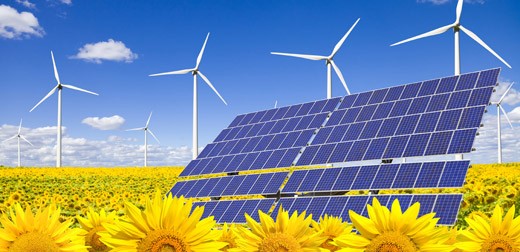
__________ is an energy resource that WILL NOT run out in the next several hundred years.
a)
Renewable Energy Resource
b)
Nonrenewable Energy Resource
28.
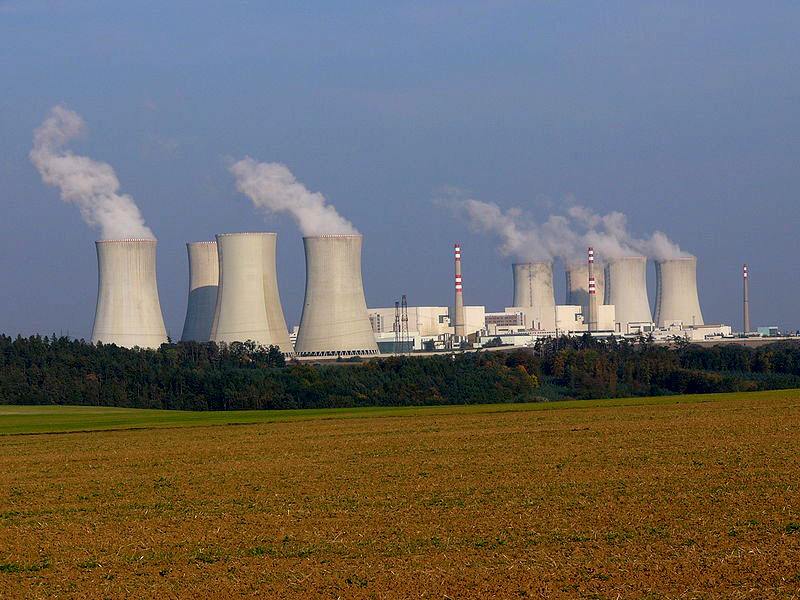
Nuclear Power is a __________ energy resource.
a)
Renewable
b)
Nonrenewable
29.

An underground layer of rock or sediment that holds water?
a)
Reservoir
b)
Aquifer
c)
Groundwater
d)
Watershed
30.
Same rocks in Texas as those in Antarctica, this is proof of-
a)
coastal erosion
b)
plate tectonics
c)
ocean currents
d)
glacial melting
31.

Sand Andreas Fault formed at this type of boundary-
a)
Transform Boundary
b)
Convergent Boundary
c)
Divergent Boundary
d)
Hot Spot
32.

Mid Ocean Ridge forms at type of boundary-
a)
Transform Boundary
b)
Convergent Boundary
c)
Divergent Boundary
d)
Hot Spot
33.

Islands form with at type of boundary-
a)
convergent ocean to ocean
b)
convergent continental to continental
c)
convergent ocean to continental
d)
transform
34.

Himalayan Mountains
a)
converging continent to continent
b)
earthquake in subduction zone
c)
converging ocean to continent
d)
transformational
35.

This is an example of -
a)
convergent
b)
divergent
c)
transform
36.

This is an example of -
a)
convergent
b)
divergent
c)
transform
37.
Fossils, land forms, glaciers, and puzzle were all evidence of-
a)
big bang theory
b)
tectonic plate theory
c)
sea floor spreading theory
d)
volcanic theory
38.

This is the theory that states that all the continents started as a single massive continent and have been MOVING apart for over 200 million years and the man that proposed it.
a)
The Big Bang Theory, Einstein
b)
The Pangea Theory, Hutton
c)
The Tectonic Plate Theory, Darwin
d)
The Continental Drift Theory, Wegner
39.

This is the driving force behind the movement of tectonic plates.
a)
Mantle convection currents
b)
Oceanic convection currents
c)
Atmospheric convection currents
d)
Solar convection currents
40.

The movement of plates at a divergent boundary
a)
move towards each other
b)
slide past each other
c)
move up and down
d)
move away from each other
41.
What is the name of the layer that contains the uppermost mantle and crust
a)
Asthenosphere
b)
Mesosphere
c)
Lithosphere
d)
Transosphere
42.

What special force is found in the asthenosphere?
a)
Wind
b)
Convection currents
c)
Tides
d)
Lava
43.

Name the boundary
a)
convergent boundary
b)
divergent boundary
c)
transform boundary
d)
sergent boundary
44.

Which city is most likely to experience an earthquake?
a)
Boston, Massachusetts
b)
Denver, Colorado
c)
Orlando, Florida
d)
San Francisco, California
45.
What is the method of measuring age that gives the most precise results?
a)
radioactive dating, when scientists measure the levels of an isotopic element inside of an object
b)
relative dating, when scientists fill an object with carbon and measure how much will fit
c)
rate of sedimentation, which dates layers of Earth based on their thickness
d)
law of superposition, which dates layers of Earth based on their order
46.

The figure below shows one type of physical evidence that scientists use to understand how Earth’s climate has changed in the past.
What type of physical evidence is shown in this figure?
What type of physical evidence is shown in this figure?
a)
copolite
b)
fossil
c)
ice core
d)
tree rings
47.
What is the approximate age of Earth?
a)
4.6 billion years
b)
4.6 million years
c)
46, 000 years
d)
4,600 years
48.

Identify the correct plate based on the letter given:
Plate J
Plate J
a)
North American
b)
Antartic
c)
African
d)
Eurasian
49.
Identify the correct plate based on the letter given:
Plate I
Plate I
a)
North American
b)
Indo-Australian
c)
African
d)
Eurasian
50.
Identify the correct plate based on the letter given:
Plate L
Plate L
a)
North American
b)
Indo-Australian
c)
African
d)
Eurasian
51.
Identify the correct plate based on the letter given:
Plate D
Plate D
a)
North American
b)
Indo-Australian
c)
South American
d)
Eurasian
52.
Identify the correct plate based on the letter given:
Plate G
Plate G
a)
North American
b)
Indo-Australian
c)
South American
d)
Eurasian
53.
Identify the correct plate based on the letter given:
Plate B
Plate B
a)
Pacific
b)
Antartic
c)
South American
d)
Eurasian
54.

Which of these events can ONLY happen on a DIVERGENT BOUNDARY?
a)
Rift Valley
b)
Mountain
c)
A peninsula
d)
An Insanely complex, long answer that you will click out of instinct.
55.

Why do volcanoes FORM where a plate carrying Oceanic Crust and a plate carrying Continental Crust MEET?
a)
The continental crust gets pushed up and folded as the plates collide.
b)
The continental crust breaks as it slides past the oceanic crust.
c)
The oceanic crust rides over the continental crust, which melts and forms magma.
d)
The oceanic crust moves beneathe the continental crust, melts, and becomes magma.
56.
How is it possible for new crust to be formed without increasing the surface area of the Earth?
a)
Crust is destroyed at the same time it is created
b)
New crust is underwater where it sinks
c)
New crust breaks more easily than old crust
57.
The hottest layer
a)
crust
b)
inner core
c)
mantle
d)
outer core
58.
The coolest layer
a)
crust
b)
inner core
c)
mantle
d)
outer core
59.
The thinest layer
a)
crust
b)
inner core
c)
mantle
d)
outer core
60.

Plate 1
a)
Indo-Australian
b)
Pacific Plate
c)
South American
d)
Eurasian
61.

Plate 2
a)
Indo-Australian Plate
b)
Pacific Plate
c)
South American Plate
d)
Eurasian Plate
62.

Plate 3
a)
North American Plate
b)
South American Plate
c)
African Plate
d)
Eurasian Plate
63.

Plate 4
a)
North American Plate
b)
African Plate
c)
Antarctic Plate
d)
Nazca Plate
64.

Plate 5
a)
Indo-Austrailian
b)
South American
c)
African
d)
North American
65.

Plate 6
a)
South American
b)
Antarctic
c)
African
d)
Nazca
66.

Plate 7
a)
Pacific Plate
b)
Eurasian Plate
c)
African Plate
d)
Nazca Plate
67.

Plate 8
a)
North American
b)
South American
c)
Antarctic Plate
d)
African
68.

Is a layer of soft mantle that is made of rock that flows slowly. Tectonic plates move on top of this layer.
a)
Inner Core
b)
Asthenosphere
c)
Lithosphere
d)
Outer Core
69.

Who is the person credited with developing the theory of continental drift?
a)
Harry Hess
b)
Galileo
c)
Alfred Wegener
d)
Newton
70.

The hottest layer is the ...
a)
crust
b)
inner core
c)
mantle
d)
outer core
71.

Ocean trenches always form at subduction zones where dense oceanic crust subducts.
a)
True
b)
False
72.

What was the name given to all the continents when they were joined as one super continent?
a)
Supreme Continent
b)
Eurasia
c)
Plate tectonics
d)
Pangea
73.
What are the two types of crust?
a)
Ocean and Basin
b)
Continental and Oceanic
c)
Lower and Upper
d)
Thick and Thin
100 %

