
 Worksheets
S1 Science (Past concepts)
Total questions: 80
Worksheet time: 47mins
What is Science?
Knowledge gained by observation, experimentation and analysis
A subject
Cousin of Mathematics
The intellectual and practical activity encompassing the systematic study of the structure and behaviour of the physical and natural world through observation and experiment.
What are the 3 major branches of Science?
Life Science
Earth Science
Physical Science
Social Science
Which of the following branches belong to Earth Sciences?
Geology
Meterorology
Astronomy
Biology
Botany
Which of the following branches belong to Life Sciences?
Geology
Meterorology
Zoology
Biology
Botany
Which of the following branches belong to Physical Sciences?
Physics
Thermodynamics
Chemistry
Mechanics
Inorganic Chemistry
Which branch of science deals with the study of matter and energy and the interactions between them?
Physics
Chemistry
Biology
Astronomy
Which branch of science deals with the composition, properties, reactions and the structure of matter?
Physics
Chemistry
Biology
Astronomy
Which branch of science deals with the study of the universe beyond the Earth's atmosphere?
Physics
Chemistry
Biology
Astronomy
Which branch of science deals with the study of plants?
Botany
Zoology
Genetics
Chemistry
Which branch of science deals with the study of animals?
Botany
Zoology
Genetics
Chemistry
Which branch of science deals with the study of heredity?
Botany
Zoology
Genetics
Chemistry
Which branch of science deals with the study of origin, history, and structure of the Earth and the physical, chemical and biological changes that it has experienced or is experiencing?
Geology
Oceanography
Palaeontology
Meteorology
Which branch of science deals with the exploration and study of the ocean?
Geology
Oceanography
Palaeontology
Meteorology
Which branch of science deals with the study of the forms of life that existed in prehistoric and geologic periods?
Geology
Oceanography
Palaeontology
Meteorology
Which branch of science deals with the study of the atmosphere and its phenomena, such as weather and climate?
Geology
Oceanography
Palaeontology
Meteorology
Who is the Father of Taxonomy?
Carl Linnaeus
Johannes Kepler
Who discovered that the planets revolved around the sun?
Carl Linnaeus
Johannes Kepler
Who discovered the 3 Laws of Motion?
Carl Linnaeus
Isaac Newton
Who is the Father of Genetics?
Gregor Mendel
Andre Ampere
Who discovered classical electromagnetism?
Antoine Lavoisier
Andre Ampere
Who identified the elements Hydrogen and Oxygen?
Antoine Lavoisier
Charles Darwin
Attitude of a Scientist:
"I am going to find out things and explore the world!"
Being curious
Being open-minded
Attitude of a Scientist:
"I think your ideas are great. We can work on that."
Being creative
Being open-minded
Attitude of a Scientist:
"I am wrong. My experiment should be repeated. "
Being humble
Being imaginative
Matter is anything that has _______________ & _______________.
mass
volume
Physical property:
Ability to support a heavy load without breaking
Strength
Hardness
Physical property:
Ability to scratch another material
Strength
Hardness
Physical property:
Ability to bend without breaking and return to its original shape.
Flexibility
Hardness
Physical property:
A measure of how easily electricity passes through it.
Electrical conductivity
Heat conductivity
Physical property:
A measure of how easily heat passes through it.
Electrical conductivity
Heat conductivity
Physical property:
The temperature at which it changes state from a solid to a liquid.
Melting point
Boiling point
Physical property:
The temperature at which it changes state from a liquid to a gas.
Melting point
Boiling point
Physical property:
Refers to how a material feels.
Texture
Lustre
Chemical property:
Breaking down due to the action of bacteria and fungi.
Rotting
Corrosion
Chemical property:
Slow destruction or wearing away of a material due to the action of substances such as air, water and acids.
Rotting
Corrosion
Si unit of length
metre
mile
Si unit of volume
cubic metre
cubic mile
Si unit of mass
kilogram
kilojoule
Si unit of density
kilogram per cubic metre
kilogram per cubic centimetre
Tick the statements that are TRUE for elements.
Basic building blocks of matter
Consists of only one kind of atom
a pure substance
cannot be broken down
In the Periodic Table, elements can be classified into:
metals
metalloids
non-metals
Chemical symbol of Magnesium
Ma
Mg
Chemical symbol of Aluminum
Al
A
Chemical symbol of Fluorine
Fl
F
Chemical symbol of Nitrogen
Ni
N
Chemical symbol of Tin
Ti
Sn
What are needed to create a solution?
solute
solvent
water



Identify the solvent
Sodium Fluoride

This is a ________________.
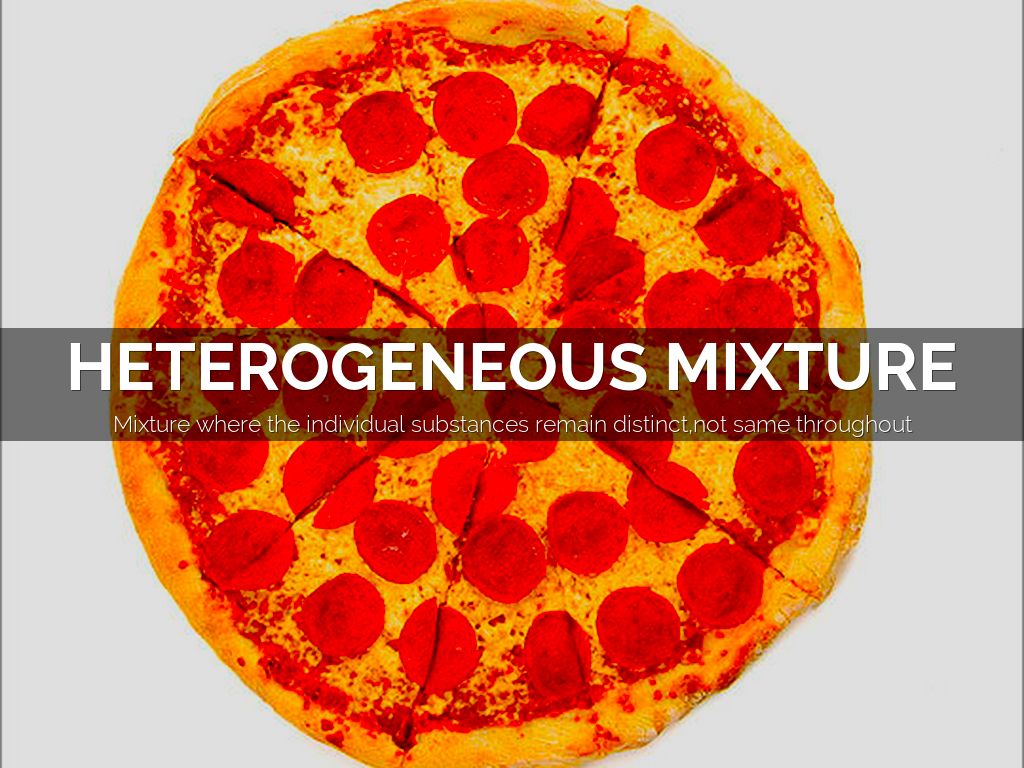
Mixture
Solution
Suspension
All of the above

This is a ____________.
Mixture
Solution
Suspension
Pure substance

This is a ____________________.
Mixture
Solution
Suspension
Pure Substance
BONUS QUESTION:
What is the colour of baby Andre's slippers?
red
yellow
green
blue
BONUS QUESTION:
In what hospital did t. Tashi give birth?
Olivarez General Hospital
St. Luke's Medical Center
Makati Medical Center
San Juan de Dios Hospital
BONUS QUESTION:
Who is the physicist who passed away this week?
Stephen Hawking
Albert Einstein
All of the above
None of the above
BONUS QUESTION:
What drink did T. Tashi want to consume the most during her pregnancy?
Nesfruta (Dalandan)
Gatorade (Blue bolt)
Water (Absolute)
Coke (in can)

