wayground logo

Free Printable Worksheets

NEW

Font size

S
M
L
XL
Worksheets

Heat and Air Pressure Review 2018

Total questions: 78

Worksheet time: 1hrs 3mins

Name
Class
Date
1.
What is the definition of CONDUCTION?
a)
When heat is transferred from objects like rays of light or electromagnetically.
b)
a  hot liquid or air that  expands, becomes less dense, and rises or becomes more dense, and sinks.
c)
When heat transfers from objects that are touching.
d)
When heat transfers through the heater or AC in your house.
2.
What is the definition of CONVECTION
a)
When heat transfers through waves.
b)
When heat transfers from objects that are touching.
c)
a  hot liquid or air that  expands, becomes less dense, and rises or becomes more dense, and sinks.
d)
Heat traveling from the sun
3.
What kind of heat transfer happens when the sun is heating your body?
a)
Conduction
b)
Radiation
c)
Convection
d)
Density
4.
What heat transfer happens when you burn your hand by touching a fire?
a)
Radiation
b)
Conduction
c)
Convectio
d)
I don't know!!!!!!!!!!!
5.

Which of the following is needed for convection to happen?

a)

Fluid/s

b)

Light in the form of rays

c)

Electromagnetic waves

d)

Fire

6.
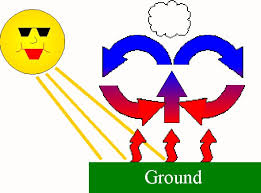
Warm air rises and the cool air sinks demonstrates this type of heat transfer. 
a)
conduction
b)
convection
c)
radiation
d)
Insolation 
7.
The baby chickens are kept warm from the heat lamps demonstrates this type of heat transfer. 
a)
conduction
b)
convection
c)
radiation
8.
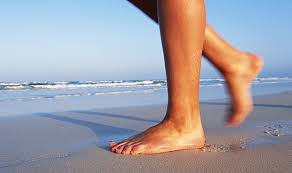
Walking on the warm sand sand with your bare feet demonstrates this type of heat transfer. 
a)
conduction
b)
convection
c)
radiation
9.
The Gulf Stream is a current that brings warm ocean water from the south to the north. What type of heat transfer is this?
a)
conduction
b)
convection
c)
radiation
d)
Insolation 
10.
Ironing a shirt is an example of...
a)
condensation
b)
conduction
c)
convection
d)
radiation
11.
Warm air is __________ dense than cold air and rises creating convection currents.
a)
more
b)
less
12.
A group of friends gather around a fire to stay warm.
a)
conduction
b)
convection
c)
radiation
13.
Transfer of thermal energy through "space"
a)
conduction
b)
convection
c)
radiation
14.
Near the ceiling of a room the air is warmer.  The warm air rises because of
a)
conduction
b)
convection
c)
radiation
15.
You get sunburned due to __________ from the sun.
a)
conduction
b)
convection
c)
radiation
16.
How many kinds of heat transfer are there?
a)
1
b)
2
c)
3
d)
4 or more
17.
Which statement is true?
a)
The quicker a molecule moves, the colder it is.
b)
The slower a molecule moves, the warmer it is.
c)
The quicker a molecule moves, the warmer it is
d)
The movement on molecule don�t affect its temperature
18.
The handle of a metal spoon warms up when it is placed in a hot bowl of soup because of
a)
Convection
b)
Conduction
c)
Radiation
d)
insulation.
19.
The candle will slowly heat the metal and transfer the heat directly to the mans hand.
a)
conduction
b)
convection
c)
radiation
20.
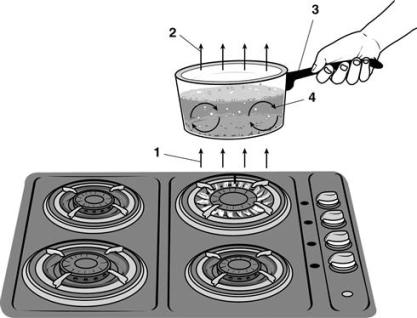
Which numbered part of the picture represents the way that energy from the sun reaches Earth?
a)
1
b)
2
c)
3
d)
4
21.
___________is the result of the weight of a column of air pushing on an area.
a)
air pressure
b)
density
c)
volume
d)
none of the above
22.
What does the air consist of?
a)
molecules
b)
helium
c)
density
d)
weather
23.
In what direction(s) does air exert pressure?
a)
everywhere
b)
no where
c)
there is no pressure
d)
downward
24.
A _____________ is the scientific  instrument used to measure air pressure.
a)
barometer
b)
thermometer
c)
mercury
d)
watch
25.
As you climb up a mountain what happens to the air pressure?
a)
decreases
b)
increases
c)
stays the same
26.
What happens to the amount of oxygen molecules as altitude increases?
a)
fewer molecules
b)
more molecules
c)
same amount of molecules
d)
nothing happens to the molecules
27.
Air pressure is greatest when near Earth's surface because?
a)
The air molecules are farther apart.
b)
The air molecules are closer together.
c)
Air molecules collide.
d)
Air molecules are tightly packed.
28.
Cold air exerts _____________ pressure than warm air.
a)
the same
b)
more
c)
less
29.
Altitude is greater __________.
a)
at the bottom of the mountain
b)
at the top of the mountain
c)
at the center of the mountain
30.
Air pressure does not crush objects on earth
a)
because more air pushes down than up
b)
because gravity keeps air pressure away
c)
because air pressure pushes in all directions
d)
because the Earth has an opposing force of gravity
31.
The amount of mass in a unit volume of a substance
a)
mass
b)
pressure
c)
volume
d)
density
32.
Why is it hard to breath at high altitudes?
a)
There is too much oxygen in this location.
b)
There is a higher density of air molecules.
c)
There is a low density of air molecules.
d)
The air pressure is greater than at low altitudes.
33.
If density of air is high, pressure is:
a)
high
b)
low
34.
If density of air is low, pressure is:
a)
high
b)
low
35.

What causes differences in air pressure?

a)

wind

b)

rain

c)

snow

d)

solar radiation

36.

Which of the following questions about air pressure is FALSE?

a)

The atmosphere is held to Earth by gravity.

b)

Air pressure is caused by gravity and the collision of air molecules.

c)

Air pressure only pushes down.

d)

Air pressure changes through the day due to temperature changes.

37.
High Pressure Systems on Earth's surface are caused by...
a)
air rising away from Earth's surface.
b)
air sinking towards Earth's surface.
c)
air not moving.
d)
air moving horizontally.
38.
Which book is under the greatest pressure?
a)
yellow book
b)
red book
c)
green book
d)
dark blue book
39.
Which book is under the least pressure?
a)
yellow book
b)
red book
c)
green book
d)
dark blue book
40.
What causes the pattern in air density throughout Earth's atmosphere?
a)
Gravity pulls air towards the center of Earth.
b)
Gravity pushes air towards the center of Earth.
c)
Wind blows air towards Earth's surface.
d)
Air is attracted to Earth's surface like a magnet.
41.
Air applys a force on an object.
a)
True
b)
False
42.
What prevented the water from rushing inside the upside-down and submerged boat in this Pirates of the Caribbean movie scene? 
a)
Trapped air pushing on the water.
b)
An invisible bubble seal.
c)
The magic of Hollywood.
d)
The water is less dense than air.
43.
Which container shows air particles experiencing higher pressure?
a)
Left Container
b)
Right Container
c)
Both Containers
d)
Neither Containers
44.
Which container shows air particles experiencing lower pressure?
a)
Left Container
b)
Right Container
c)
Both Containers
d)
Neither Containers
45.
Hot air ___________ and cold air __________
a)
Sinks, Rises
b)
Rises, Sink
c)
is fun, is lazy
46.

Air mattresses, balloons and bubbles are all examples of which property of air?

a)

Air takes up space

b)

Warm air expands

c)

Air has weight

d)

Air is a mixture of gases

47.
Cold air exerts _____________ pressure than warm air
a)
the same
b)
more
c)
less
48.

Why does air move out of an inflated balloon?

a)

air moves from high pressure to low pressure

b)

air moves from warm air to cold air

c)

air moves from low pressure to high pressure

d)

air moves from dry air to moist air

49.
The movement of thermal energy from a warmer object to a cooler object is called:
a)
heat
b)
temperature
c)
motion
d)
momentum
50.
Heat transfer occurs:
a)
in many directions
b)
both from warm objects to colder ones and from cold objects to warmer ones
c)
only from warm objects to colder ones
d)
only from cold objects to warmer ones
51.
When you touch something that feels cold, 
a)
heat from your hand moves into the cold substance.
b)
coldness moves from the cold substance into your hand.
c)
it melts.
d)
it freezes.
52.
heat is energy
a)
false
b)
true
53.
LT3: If two objects have different temperatures, heat will flow from the warmer object to the cooler one UNTIL ____________
a)
one reaches a temperature of zero
b)
they both have an equal temperature
c)
one runs out of energy
54.
When a popsicle melts, the particles  _____.
a)
gain thermal energy and speed up
b)
there are no particles in popsicles
c)
lose thermal energy and slow down
d)
stay the same
55.
Observe the diagram. Which statement is true about the kinetic energy of the molecules in the containers?
a)
The molecules are moving faster in Diagram A
b)
The molecules are moving slower in Diagram A
c)
The molecules are moving at the same rate in both diagrams
56.
4. If the atoms of an object are moving slow, the object would feel...
a)
cold or cool.
b)
hot or warm.
c)
unknown.
d)
smooth.
57.
3. If the atoms of an object are moving fast and continue to move faster the temperature would be...
a)
increasing.
b)
decreasing.
c)
staying the same.
d)
freezing.
58.
Which particles are moving fastest?
a)
Particles in ice.
b)
Particles in boiling water.
c)
Particles in water from the sink.
d)
Particles in steam.
59.
To find out how hot something is, we measure its            , or the average kinetic energy of its particles. 
a)
heat
b)
thermal energy
c)
conduction
d)
temperature
60.
Heat moves from higher temperatures to lower temperatures.
a)
True
b)
False
61.
Which is NOT a method of heat transfer?
a)
Convection
b)
Conduction
c)
Radiation
d)
Fission
62.
What is temperature?
a)
A measure of cold
b)
A measure of heat
c)
A measure of heat and cold
d)
The size of molecules
63.
Energy can...
a)
not be transferred
b)
be measured in Fahrenheit
c)
be transferred
d)
be lost
64.
A snowman has more thermal energy than a burning match?
a)
True
b)
False
65.
A fluid can be
a)
A solid
b)
A liquid
c)
A gas
d)
A liquid or a gas
66.
How do you now when thermal transfer has ended?
a)
Both objects reach the same temperature (equilibrium)
b)
When you can measure the amount of heat
c)
when the substance receiving the heat reaches boiling point
d)
it never ends
67.
The average amount of energy of motion of each particle in a substance?
a)
Thermometer
b)
Anemometer
c)
Temperature
d)
Convection
68.
Gas molecules have ___________ freedom of movement than other phases.
a)
greater
b)
less
69.
If temperature increases, what happens to the molecular movement?
a)
Particles slow down. 
b)
Particles speed up. 
c)
Particles stay the same. 
70.
If temperature decreases, what happens to the molecular movement?
a)
Particles speed up.
b)
Particles stay the same. 
c)
Particles slow down. 
71.
Like penguins, what happens to particles when they cool?  
a)
They contract.
b)
They expand.
c)
They stay the same. 
72.
Which direction is heat flowing in the picture?
a)
from the hand to the ice
b)
from the ice to the hand
c)
heat is not being transferred
d)
there is no way to tell
73.
Particles of a liquid
a)
are tightly packed together and vibrate in place
b)
have no viscosity.
c)
collide with one another
d)
can move over and around each other
74.
Molecules are closest together in a 
a)
Solid
b)
Liquid
c)
Gas
d)
plasma
75.
In a solid, the particles
a)
vibrate in place
b)
slide past one another
c)
overcome the strong attraction
76.
At higher temperatures
a)
particles in an object have less energy
b)
particles in an object move faster
c)
a gas contracts
d)
all particle motion stops
77.
Which of the following explains why gases are less dense than solids?
a)
Gases have free moving particles that are very close together.
b)
Gases particles that are very close together and can only vibrate.
c)
Gases have free moving particles that are far apart.
d)
Gas particles do not have enough energy to break their attractive forces.
78.
Place the following states of matter in order from least dense to most dense: 
a)
solid, liquid, gas
b)
gas, liquid, solid
c)
liquid, gas, solid
d)
solid, gas, liquid