wayground logo

Free Printable Worksheets

Font size

S
M
L
XL
Worksheets

TCAP Review

Total questions: 257

Worksheet time: 3hrs 31mins

Name
Class
Date
1.
What action did Emperor Constantine take that impacted Christians?
a)
He made Christians leave the empire
b)
He moved all Christians to Jerusulem
c)
He made Christianity legal in Rome
d)
He made Christian join the military
2.
The fall of the Roman Empire marks the beginning of the
a)
Crusades
b)
Dark Ages
c)
Renaissance
d)
Classical Period
3.
Emperor Diocletian divided the Roman Empire into Eastern and Western areas because the
a)
Empire was too large for a central government to rule.
b)
rulers could not agree upon a set of laws.
c)
East and West was constantly fighting each other.
d)
taxes were easier to collect in a divided empire.
4.
Who is considered the "Father of the Hebrews" and founder of Judaism?
a)
Jesus
b)
Abraham
c)
Moses
d)
Constantine
5.
What was Martin Luther studying to become prior to his epiphany?
a)
Doctor
b)
Lawyer
c)
Monk
d)
Priest
6.
What does Martin Luther's belief of Sola Fide mean?
a)
There is one God
b)
Catholicism is flawed
c)
The Bible is the ultimate authority
d)
Salvation by faith alone
7.
Who excommunicated Martin Luther with the Edict of Worms?
a)
Pope Francis I
b)
Pope Leo X
c)
Pope Constantine
d)
Charles V
8.
What did Martin Luther do while in hiding?
a)
Translated the Bible into Latin
b)
Translated the Bible into German
c)
Nothing
d)
Was murdered
9.
What does the concept of Sola Scriptura entail?
a)
The Bible is the ultimate authority
b)
Salvation through faith alone
c)
Two sacraments exist
d)
Consubstantiation
10.

What was the time in history when the Roman Catholic Church was questioned?

a)

Middle Ages

b)

Renaissance

c)

Reformation

d)

All of the Above

11.

How did the invention of the printing press help the Reformation?

a)

Bibles printed allowed more people to read them.

b)

People could read translations of the Bible in their language.

c)

It allowed reformers to spread their ideas.

d)

All of the Above

12.

Why did the Reformation begin?

a)

Luther wanted to start a new religion.

b)

The Church was poor and needed a new leader.

c)

Calvin wanted to head the Church.

d)

There were abuses in the Church that needed changing.

13.

Before the Reformation, Christian churches were ___________

a)

Jewish

b)

Roman Catholic

c)

Muslim

d)

None of the Above

14.

What was the Spanish Inquistion?

a)

Attempt to spread protestant beliefs

b)

Attempt to rid Spain of non-Catholic people

c)

Attempt to spread Judaism

d)

Attempt to rid Spain of Catholics

15.

What was the list of complaints against the Church called?

a)

95 Theses

b)

Peace of Augsburg

c)

Magna Carta

d)

New Testament

16.

Why did Luther disagree with the selling of indulgences?

a)

He believed they should cost more.

b)

He believed people had to work to earn salvation.

c)

He believed salvation was a gift of grace.

d)

He believed his 95 Theses could get people to Heaven.

17.

I was a reformer that encouraged people to reject Catholicism. Who am I?

a)

John Calvin

b)

John Knox

c)

Martin Luther

d)

Queen Mary

18.

I am a queen that tried to restore the people of England to the Catholic Church. Who am I?

a)

Elizabeth

b)

Isabella

c)

Mary

d)

None of Above

19.

If a person was accused of heresy, he/she could be kicked out of the church or ______________________.

a)

ordained

b)

crowned

c)

excommunicated

d)

reformed

20.
1.  After the death of Muhammad, what led to the split between the Sunni and Shia? 
a)
They could not agree on who should become leader.
b)
They could not agree if they were allowed to eat pork.
c)
They could not agree on how many times they should pray each day.
d)
They could not agree on how to make Greek fire.
21.
Like Christians and Jews, the Islamic religion is -
a)
monotheistic
b)
polytheistic
c)
nontheistic 
22.
The two major cities where Islam began are -
a)
Mecca & Medina
b)
Palestine & Jerusalem
c)
Israel & Syria
23.
The man who is considered the prophet who founded Islam is -
a)
Muhammad
b)
Jesus
c)
Allah
d)
Adam
24.
Muhammad received visions from ________, which commanded him to spread the message of Islam and create the Qur'an.
a)
Allah
b)
Brahmin
c)
Osama
25.
The Muslim holy book is called the -
a)
Qur'an
b)
Torah
c)
Bible
26.
Muslims beliefs are centered around the -
a)
Five Pillars
b)
Eightfold Path
c)
Ramadan
27.
Which of the following is NOT one of the 5 Pillars of Islam?
a)
Holy wars against Christians
b)
Allah is the one God
c)
Give money to the poor
d)
Fast during Ramadan
28.
Which of the following IS one of the Five Pillars of Islam?
a)
Pray five times a day facing Mecca
b)
Muhammad is a god to be worshipped
c)
Make a pilgrimage to Jerusalem
29.
One of the Five Pillars of Faith is give money to the ________.
a)
church
b)
poor
c)
true believers
d)
descendants of Muhammad
30.
Islam spread quickly to Asia, North Africa, and ports along the Mediterranean Sea through
a)
trade and military conquest
b)
the sharing of Muhammad's teachings by his apostles
c)
Christians being forced to convert
d)
missionaries sent by the Byzantine emperor
31.
Why did the Europeans want to go one the Crusades?
a)
pay taxes
b)
freedom of religion
c)
take back the Holy land
d)
fight Jews
32.
A negative effect of the Crusades was?
a)
Europeans murdered Jews
b)
new weapons
c)
new trade goods
d)
the kings power decreased
33.
The Reconquista?
a)
began in Portugal
b)
helped trade grow
c)
began in Spain
d)
helped Jews in Europe
34.
The Inquisition began in?
a)
Portugal
b)
Spain
c)
Italy
d)
France
35.
The leader of the Muslims was?
a)
Abbasiads
b)
Muhammad
c)
Richard the Lionhearted
d)
Saladin
36.
The Holy land includes?
a)
Byzantine Empire
b)
Jerusalem
c)
Spain
d)
Egypt
37.
The leader of the Inquisition was?
a)
Columbus
b)
King John
c)
Queen Isabella
d)
King Harold
38.
One of Pope Urban's reasons for sending Europeans on the Crusades was?
a)
stop the fighting in Palestine
b)
stop of the fighting in Europe between the lords and kings
c)
Byzantine Empire was occupied by Muslims
d)
Leaders of the Church wanted revenge
39.
Who was Mansa Musa's Grandfather?
a)
Sundiata, the Lion King
b)
Khalifa
c)
Wati
40.
Under Mansa Musa the of Empire of Mali _________.
a)
collapsed
b)
doubled in size
c)
was founded
41.
Mali controlled part of the _____________ Routes
a)
Silk Road Trade
b)
Trans-Sahara Trade
c)
Maritime Trade 
42.
What religion did Mansa Musa practice?
a)
Islam
b)
Christiantity
c)
Animism
43.
True or False
Mansa Musa did not accept other religions.
a)
True
b)
False
44.
 Why did Mansa Musa build a university in Timbuktu?
a)
He wanted to learned read.
b)
He wanted to build a school for his children.
c)
He wanted scholars to come to Mali.
45.
What did Mansa Musa give away on his journey to Mecca?
a)
gold
b)
sliver
c)
salt
46.
How far did Mansa Musa travel? 
a)
1,000 miles
b)
 2,000 miles
c)
3,000 miles
47.
What is Sundiata Keita's nickname?
a)
Tiger King
b)
Lion Prince
c)
King of the Lions
d)
King of the Turtles
48.
What Empires ruled wide-open savannas?
a)
Axum,Ghana,Mali
b)
Mali,Songhai,Zimbabwe
c)
Axum,Zimbabwe,Mali
d)
Ghana,Mali,Songhai
49.
griot
a)
storytellers
b)
an area of high flat land
c)
the sun
d)
Mali's last strong king
50.
What were the 3 largest West African Empires?
a)
Songhai, Mali, and Nigeria
b)
Mali, Songhai, and Ghana
c)
Ghana, Songhai, and Bachwezi
d)
Aksum, Ghana, Mali
51.
1. What is the Buddha's real name? 
a)
Gangas Khan 
b)
Asoka
c)
Siddartha Guatama 
d)
Finn
52.
What did the ascetics give up and do? 
a)
Their freedoms
b)
Their fasting
c)
Their meditation and fasting, no shelter, mediation
d)
Their sleep, shelter, food, holding their breath, and mediating. 
53.
Where does human suffering come from? 
a)
From nature
b)
From wanting what we cannot have
c)
From wanting what we cannot have, and keep what we like and already have 
d)
From wanting what we cannot have, keep what we like, and not wanting what we do have 
54.
What does the 8 fold path consist of? 
a)
Right thought, intent, speech, action, livelihood, effort, mindfulness, concentration. 
b)
Right decisions, choices, livelihood, no talking, be crazy 
c)
8 things that a dude said one day under a tree
d)
8 items that the Brahmins felt were very important to the Caste System. 
55.
What does the word "Buddha" mean? 
a)
One who has become free
b)
One who has become strong in the force
c)
One who has been driven to the dark side
d)
One who has become enlightened 
56.
What are the 2 major differences between Buddhism and Hinduism? 
a)
belief in deities and karma
b)
Belief in man, and dharma 
c)
Against deities, and Caste System
d)
Against Reincarnation, and the Vedas 
57.
What are the 4 Noble Truths? 
a)
Suffering and unhappiness, and no one can escape sorrow
b)
No one can escape sorrow, people cause their own misery
c)
No one can escape sorrow, we cause our own misery, we can reach nirvana, follow the 8 fold path
d)
Truth, Justice, and the American Way 
58.

Excluding the gods, how many main castes were there in India?

a)

1

b)

3

c)

5

d)

7

59.

What group was at the bottom of the Indian caste system?

a)

Vaishya

b)

Kshatryia

c)

Sudra

d)

Untouchables

60.

What were the holy texts the Brahmins wrote called?

a)

Sutras

b)

Vedas

c)

Vishnu

d)

Hindu

61.

Being reborn is the belief in __________________

a)

reincarnation

b)

purgatory

c)

holiness

d)

nirvana

62.
The effect of a person's actions in this and in previous lives. 
a)
karma
b)
dharma
c)
ahisma
d)
moksha
63.
The final goal for Hindus, liberation from reincarnation. 
a)
moksha
b)
epic poem
c)
Brahman
d)
guru
64.
Who conquered most of Europe after the fall of the Roman Empire?
a)
William the Conqueror
b)
the Pope
c)
Charlemagne
d)
King Henry VIII
65.
What is the name for the system of promises between lords and vassals that governed Europe in the Middle Ages?
a)
Christianity
b)
Feudalism
c)
Shinto
d)
Chivalry
66.
Which answer choice shows the order of Feudal Society from highest to lowest?
a)
peasants, knights, nobles, king
b)
king, nobles, knights, peasants
c)
knights, king, peasants, serfs
d)
merchants, knights, commoners, serfs
67.
What is the name for the large estate of land a knight lived on?
a)
castle
b)
manor
c)
chivalry
d)
land
68.
Who was responsible for farming the fields on a manor?
a)
knights
b)
peasants
c)
merchants
d)
nobles
69.
How are knights and samurai similar?
a)
They are from Europe.
b)
They have metal armor.
c)
They are Christian.
d)
They follow codes of honor.
70.
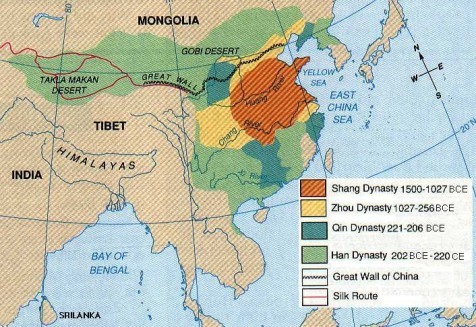
What did Emperor Qin build that allowed no one to leave, or invade, for thousands of years?
a)
a statue of himself
b)
a fortress
c)
The Great Wall
d)
a model of a dinosaur
71.
What was the natural border of China that was an ocean?
a)
Atlantic Ocean
b)
Pacific Ocean
c)
Arctic Ocean
d)
Indian Ocean
72.
What was the natural border of China that was a desert?
a)
Sahara
b)
Gobi
c)
Death Valley
d)
Antarctica
73.
What was the natural border of China that was a mountain range?
a)
Rocky Mountains
b)
Himalayan Mountains
c)
Appalachian Mountains
d)
Sierra-Nevada Mountains
74.
Confucius a very famous ____________, in Ancient China
a)
emperor
b)
philosopher
c)
army leader
d)
god
75.
What is contribution from the Ancient Chinese?
a)
wheelbarrow
b)
fireworks
c)
gunpowder
d)
All of them
76.
What is a contribution from Ancient China?
a)
silk
b)
spices
c)
bronze
d)
all of them
77.
What is a contribution of Ancient China?
a)
Rudders for boats
b)
motors for boats
c)
sails for boats
d)
oars for boats
78.
What is the major religion in China?
a)
Buddhism
b)
Hinduism
c)
Christianity
d)
Judaism
79.
Buddhism is ...
a)
polytheistic
b)
monotheistic
c)
non-theistic
d)
all of them
80.
Laozi (Lao Tzu) and Confucius (Kongfuzi), are said to have been living and writing during the _______
a)
first century BCE.
b)
third century BCE.
c)
fifth century BCE.
d)
sixth century BCE.
81.
In Daoist philosophy, the five elements that work in a cycle to create and control one another are _____
a)
water, fire, earth, gold, and metal.
b)
ice, fire, earth, wood, and metal.
c)
water, fire, earth, wood, and metal.
d)
water, fire, sand, wood, and metal.
82.
Laozi compiled his philosophy in a book we know as the ______
a)
Daoist Bible.
b)
I Ching.
c)
Daodejing.
d)
The Dao of the Way.
83.
Acting in harmony with nature is called _____
a)
dao-dao.
b)
flowing.
c)
yin and yang.
d)
wu wei.
84.
The goal in Daoism is to align oneself with the Dao, to be in harmony with the universe and to act as it does: spontaneously, naturally. In other words one should ____
a)
shine like the sun.
b)
flow like the wind.
c)
flow like water.
d)
think long and hard before acting.
85.
The Dao _____
a)
is in everything.
b)
is not affected by prayer.
c)
is not affected by hymns.
d)
all of these
86.
The trade route that connected China and Ancient Rome.
a)
The Silk Road
b)
The Cotton Trail
c)
The Sea Route
d)
The Great Canal
87.
The Chinese invention used to make weapons and fireworks.
a)
Gasoline
b)
Steel
c)
Gunpowder
d)
Coal
88.
Gunpowder led to
a)
fireworks
b)
porcelain
c)
rockets
d)
Both fireworks and rockets
89.
Paper led to
a)
silk
b)
 money
c)
books
d)
both books and money
90.
Silk is made from
a)
fiber from silkworm cocoons 
b)
the unhatched moths 
c)
mulberry leaf cocoons
d)
the hatched moths from silkworm cocoons
91.
What is a caravan?
a)
a van that drives like a car
b)
a car almost as big as a van
c)
a group of people traveling together
d)
a group of cars parked together
92.
What was the terrain/land like on the Silk Road?
a)
harsh deserts and mountains
b)
Coastal and wet
c)
farmland and jungle
d)
hills and valleys
93.
What invention was used on both the farm and on the battlefield?
a)
Compass
b)
Wheelbarrow
c)
Bronze
d)
Gunpowder
94.
What was the biggest threat to merchants traveling on the Silk Road?
a)
Diseases
b)
Getting lost
c)
Starvation
d)
Thieves
95.
Where was Mongolia in relation to China?
a)
north of China
b)
south of China
c)
near Tibet
d)
on the islands 
96.
What advantage did the Mongols have over surrounding peoples?
a)
They were mostly literate, unlike China who mostly was illiterate
b)
They had more equality than surrounding peoples
c)
Their calvary, fighting from horseback, unlike the Chinese who were not as well trained
d)
They didn't care about religion, where as the Chinese made Confucianism the official religion 
97.
How did the Mongols conquer the Chinese so easily?
a)
the Chinese were weakened by disease
b)
they had a military advantage
c)
they destroyed the Great Wall
d)
the Chinese lacked soldiers
98.
Who was the fiercest Mongol leader?
a)
Empress Wu
b)
Genghis Khan 
c)
Confucius
d)
Marco Polo
99.
What was one reason why Genghis Khan was so fierce? 
a)
He was really mean
b)
He was well trained in combat
c)
He led the capture of China, Central Asia, & Persia
d)
He killed many of his followers who did not listen
100.
How was Kublai Khan related to Genghis? 
a)
his son
b)
his grandson
c)
his brother
d)
his wife
101.
Overall, how did the Mongols affect China?
a)
China prospered
b)
China withered
c)
China experienced hardships, but endured
d)
China lost all its influence to the Mongols who replaced Chinese culture
102.
What did the Mongols do to improve economics?
a)
opened many jobs to the peasants in China
b)
they lowered taxes
c)
they used only paper money, creating an easy standard
d)
the continued to build the great wall
103.
a)
Genghis Khan
b)
Ögedei Khan
c)
Kublai Khan
d)
Möngke Khan
104.
___________ is considered to be the founder of Judaism.
a)
Abraham
b)
Saul
c)
David
d)
Goliath
105.
______ is a person who claims to be instructed by God.
a)
Proverb
b)
warrior
c)
king
d)
prophet
106.
Galileo was tried for heresy because he argued  
a)
That heaven did not exist
b)
That Earth revolved around the sun
c)
Against the law of gravity
d)
That the sun revolved around the Earth
107.
According to Copernicus, the sun  
a)
Revolved around the earth
b)
Was the center of the Universe
c)
Was the biggest star
d)
 Had many moons
108.
During the Scientific Revolution the heliocentric view of the universe was first proposed by __.
a)
Ptolemy
b)
Francis Bacon
c)
Isaac Newton
d)
Nicolaus Copernicus
109.
The Scientific Revolution challenged many medieval ideas about science. All of the following were astronomers during the Scientific Revolution except __.
a)
Nicolaus Copernicus
b)
Ptolemy
c)
Galileo Galilei
d)
Johannes Kepler
110.
The idea that the sun is the center of the universe is the ____________ theory.
a)
geocentric
b)
heliocentric
c)
solar
d)
sunny
111.
What is the first step to the scientific method?
a)
Make a hypothesis 
b)
State a question or problem
c)
Do the experiment
d)
Analyze the data 
112.
The idea that the sun is the center of the universe is the ____________ theory.
a)
geocentric
b)
heliocentric
c)
solar
d)
sunny
113.
What did the geocentric theory state?
a)
The sun was at the center of the universe
b)
The earth was at the center of the universe
114.
What did Kepler add to Copernicus’ heliocentric theory?  
a)
That Jupiter had four moons
b)
That the planets revolved around the earth 
c)
That the sun was the biggest star
d)
That the planets move in eliptical (oval shaped) orbits around the sun
115.
During the scientific  revolution people started using experiments to test theories rather than just believing the ___________
a)
King
b)
Family
c)
Church
d)
Sir Salami 
116.
What began to be questioned during the Scientific Revolution?
a)
The Church
b)
The Monarch
c)
The Government
d)
Science
117.
Scientists began using _____________ and _______________ instead of placing their beliefs in faith.
a)
History and faith
b)
Math and Science
c)
Math and History
d)
reason and logic
118.
Which of the following is a major reason why Constantinople was chosen to be the capital of the Byzantine Empire?
a)
It was the location of a Christian holy site
b)
It was at a crossroad of important trade routes
c)
It was close to the wealthy Russian Empire
d)
Many different religious groups lived there
119.
One reason people study the fall of the Roman Empire today is to
a)
strengthen the leadership of the current Roman Empire.
b)
cope Rome's methods of government and taxation.
c)
keep a similar decline from occurring in their own country.
d)
avoid a major war breaking our in Europe and the Middle East.
120.
____ became known as the Byzantine Empire
a)
Northern Rome
b)
Southern Rome
c)
Western Rome
d)
Eastern Rome
121.
A Byzantine-made version of the Ancient Roman legal code became known as the
a)
Twelve Tables
b)
Ten Commandments
c)
Byzantine Constitution
d)
Justinian Code
122.
The first major monotheistic religion was
a)
Judaism
b)
Christianity
c)
Islam
d)
Zeusism
123.
At first, how did Rome react to Christianity?
a)
They accepted the new religions
b)
They adopted Christianity as the new religion
c)
They hunted Christians and treated them as criminals
d)
They ignored Christianity
124.
Torah
a)
Christianity
b)
Judaism
c)
Both
125.
Synagogue
a)
Christianity
b)
Judaism
c)
Both
126.
This symbol
a)
Christianity
b)
Judaism
c)
Both
127.
The Silk Road was a
a)
Dynasty
b)
Major river
c)
Paved road
d)
Trade route
128.
What was the main idea of Confucianism?
a)
Respect
b)
Education
c)
Honor
d)
Truth
129.
Great Wall began during which dynasty?
a)
Shang
b)
Qin
c)
Han
130.
What were the time periods in ancient China broken up into?
a)
Dynasties
b)
Decades
c)
Cycles
d)
Kingdoms
131.
What is a dynasty?
a)
a succession of rulers from the same family
b)
A reality TV show
c)
Monarchy
d)
a family business
132.
Which dynasty developed a system of writing?
a)
XIA
b)
SHANG
c)
ZHOU
d)
HAN
133.
Why was Japan so closely linked to China?
a)
Due to its geographical location
b)
Due to its artistic abilities
c)
Due to its heritage
d)
Due to its spiritual philosophies
134.
Which is a unique geographical feature of Japan?
a)
A.  Home to the Plateau of Tibet
b)
 B.  Nation of islands surrounded by the Atlantic Ocean
c)
C.  Home of the world’s longest river, the Nile
d)
D.  Nation of islands surrounded by the Pacific Ocean
135.
Why did many Japanese follow both Buddhism & Shintoism?
a)
 A.  No other religions made sense 
b)
B.  The daimyo forced them to 
c)
C.  People were unsure of which was best 
d)
D.  Each focused on different key aspects
136.
Why did Japan feel it was a wise policy to remain isolated? 
a)
 A.  Experiences with hunter-gatherers
b)
B.  Experiences with the European 
c)
 C.  Experiences with the Greeks 
d)
D.  Experiences with the Athenians
137.
What is Japan’s organizational system where land was given for protection? 
a)
A.  Caste 
b)
 B.  Feudal 
c)
C.  Civil Service
d)
D.  Educational
138.
The Japanese were noted for poetry writing.  Which poem consists of 3 lines & has  a total of 17 syllables? 
a)
 A.  Shape 
b)
B. Tanka
c)
C. Haiku
d)
D. Limerick
139.
Who was in charge of the military in Feudal Japan?
a)
A. Vassal
b)
B. Daimyo
c)
C. Samurai
d)
D. Shogun
140.
In feudal Japan, the samurai were____
a)
A. warriors who fought for the emperor.
b)
B. more important than shoguns
c)
C. warriors who fought for their daimyos and protected their lands.
d)
D. at the bottom of Japan's feudal society
141.

How many wives did Henry VIII Tudor have ?

a)

3

b)

4

c)

5

d)

6

142.

Whom did he marry ?

a)

Anne Boleyn

b)

Mary Stuart

c)

Jane Seymour

d)

Eva Longoria

143.

Who succeded to Henry VIII ?

a)

Mary Stuart

b)

Edward VI

c)

Queen Victoria

d)

Elizabeth I

e)

George III

144.

How does Bloody Mary take the throne?

a)

Edward is too young

b)

Edward surreders the throne

c)

Edward gets sick and dies

d)

She was the oldest of Henry's 3 children

145.

Why is Mary so outraged with Henry, England, and Protestants?

a)

Because they killed her mom

b)

Because they burned 300 people

c)

Because Henry used the Protestant relgion to divorce Catherine of Aragon

d)

Because Sir Thomas Wyatt was in love with Anne Boleyn

146.

How does Mary Tudor earn her title "Bloody Mary."

a)

She killed her father for revenge

b)

She burned 300 Protestants

c)

By looking in the mirror and saying her name three times

d)

She killed 300 Spainiards for invading England

147.

By which method were Henry's executed wives killed?

a)

Hanging

b)

Beheading

c)

Burning

d)

Drowning

148.
How did Joan of Arc die?
a)
hung
b)
beheaded
c)
burned at the stake
d)
electrocuted
149.
How old was Joan of Arc when she died?
a)
20
b)
19
c)
17
d)
18
150.
What was the weapon that helped the English army win many important battles early on in the Hundred Years' War?
a)
Gun
b)
Cannon
c)
Bow and Arrow
d)
Longbow
151.
Who won the Hundred Years' War?
a)
England
b)
France
c)
Italy
d)
China
152.
In 1429, where was Joan of Arcs first major battle won?
a)
Paris
b)
Riems
c)
Orleans
153.
What was Joan of Arc accused of at trial?
a)
heresy and crossdressing
b)
heresy and treason
c)
treason and crossdressing
154.
Scandinavians who invaded Europe were called
a)
Magyars
b)
Huns
c)
Aryans
d)
Vikings
155.
Who was the French heroine that fought during the Hundred Years War?
a)
Joan of Arc
b)
Mary of Arc
c)
Joan of France
d)
Mary of France
156.
Which Spanish monarchs unified Spain?
a)
Elizabeth and James
b)
Mary and William
c)
Pablo and Isabel
d)
Ferdinand and Isabella
157.
What was the goal of the Crusades?
a)
Defeat the Islamic Religion
b)
Free the Holy Land
c)
Free Spain
d)
End the 100 years war
158.
How was the Black Death (plague) brought to Western Europe?
a)
Mongol invasions
b)
trade routes
c)
Crusades
d)
Vikings
159.
Who's power did the Magna Carta limit?
a)
Serfs
b)
The King
c)
Parliament
d)
Priests
160.
What animal spread the plague?
a)
Fleas
b)
Rats
c)
Mice
d)
Mosquitoes
161.
In 1066 William of Normandy won the nickname "William the Conqueror" and became King of England after which battle?
a)
Battle of  London
b)
Battle of Paris
c)
Battle of Canterbury
d)
Battle of Hastings
162.
Ferdinand and Isabella began to drive all of the Muslims out of southern Spain during the -
a)
Reconquista (Inquisition)
b)
Spanish Holy Muslim War
c)
Holy Catholic War
163.
Who were the two main leaders of the Crusades?
a)
William the Conquerer and Saladin
b)
Richard the Lionhearted and Saladin
c)
William the conquererr and Salaman
d)
Richard the Lionhearted and Salaman
164.
What was Edward the Confessor problem?
a)
He had no wife
b)
He was a bad King
c)
He had no child
d)
He hated William
165.
Where was William from?
a)
Holland
b)
Scotland
c)
Normandy
d)
Burgundy
166.
Cultural diffusion is best described as...
a)
sharing music from one culture to another
b)
Cultural margarine
c)
the spreading of religion
d)
the spreading of ideas, languages, and traditions from one culture to another
167.
Which of the following is NOT a part of culture?
a)
History
b)
Weather
c)
Language
d)
Food
168.

What statement is an example of cultural diffusion?

a)

Venezuela has large reserves of oil

b)

Texas has large amounts of oil

c)

students in China learn Chinese in school

d)

young people dance to rock music in Japan

169.
How has technology impacted cultural diffusion today? 
a)
trading is more challenging with the different languages and cultures 
b)
innovations such as the airplane, and engine have allowed for trade to increase 
c)
there are not any impacts from technology 
d)
Europe has monopolized the computer industry 
170.
Culture is spread by...
a)
Movement of people
b)
TV and Internet
c)
War and conquest
d)
All are correct
171.
This group was part of the lower or middle class. Common people.
a)
Patricians
b)
Plebeians
c)
Slaves
d)
Priests
172.
Composed of 300 men that advised consuls and dictated political appointments.
a)
Consuls
b)
Senate
c)
Tribunes
d)
Tribal Assembly
173.
We were posted in the Forum for all to see, the recorded laws of Rome
a)
The Ten Commandments
b)
Hammurabi's Code
c)
The Twelve Taboos
d)
The Twelve Tables
174.
What term describes an action taken by a leader in which they say no to a law?
a)
consul
b)
legion
c)
tribune
d)
veto
175.
What was one major benefit of living near the Mediterranean Sea
a)
winters were always very cold
b)
it was easy to get invaded
c)
it helped facilitate trade
d)
the sea was too rough for foreigners to navigate
176.

What was the hypogeum?

a)

A series of passages underneath the floor of the Colosseum

b)

A large awning that could be set up to keep rain or the sun off of the spectators

c)

It was the name for the entrances into the stadium

d)

A large statue situated just outside the main entrance

e)

A school for the best gladiators

177.

The capital city of the Eastern Roman Empire was

a)

Adrianople

b)

Constantinople

c)

Rome

d)

Spartacus

178.

The new Roman coins had less gold and silver, which reduced their

a)

images

b)

importance

c)

value

d)

texture

179.

While Rome’s empire grew weak, emperors had to

a)

bribe officials to support them.

b)

pay soldiers to support them.

c)

pray to the gods to support them.

d)

surrender to the will of the gods.

180.

Most gladiators were enslaved, criminals, prisoners of war, or

a)

artisans

b)

household servants

c)

poor

d)

rich

181.

A(n) ____ was a person who fought animals and other people as public amusement.

a)

senator

b)

gladiator

c)

emperor

d)

saint

182.

The Renaissance began in--

a)

England

b)

Italy

c)

France

d)

Spain

183.

Machiavelli supported absolute power of the--

a)

Church

b)

people

c)

parliament

d)

ruler

184.

The Roman Catholic Church had a rule against usury. This led to a--

a)

Widespread effort to assassinate the Pope

b)

Period of economic downturn and recession

c)

Patronage of the arts and architecture

d)

Decline in the membership of the church

185.

-Creative writer and poet

-Supporter of Renaissance humanism

-Scholar of Greek and Roman literature

Which individual is described by these characteristics?

a)

Raphael

b)

Donatello

c)

Petrarch

d)

Gutenberg

186.

Which political philosopher maintained that "the end justifies the means?"

a)

Miguel Cervantes

b)

Nicolo Machiavelli

c)

Plato

d)

Thomas Moore

187.

Which artist created this masterpiece?

a)

Michelangelo

b)

Petrarch

c)

Leonardo da Vinci

d)

Eduard Monet

188.

The Prince was written by--

a)

Martin Luther

b)

Leonardo da Vinci

c)

Nicolo Machiavelli

d)

Thomas Moore

189.

The artwork was created by which Renaissance artist?

a)

Donato Bardi

b)

Michelangelo

c)

Petrarch

d)

Leonardo da Vinci

190.

Which theory on governing would best be supported by this quote?

a)

The people should have the power to choose their leaders.

b)

Rulers should never use force on their subjects for fear of retaliation

c)

Rulers should have absolute power over their subjects.

d)

The people will look for any reason to remove an absolute ruler from power.

191.

What is a patron?

a)

A leader of the Humanist movement

b)

A religious missionary

c)

A wealthy supporter of the arts

d)

A male scientist

192.

Books are to the ___________ as goods are to trade routes

a)

Silk Road

b)

Royal Road

c)

Printing press

d)

Lateen sail

193.

This piece of sculpture embodies which Renaissance belief?

a)

Secularism

b)

Humanism

c)

Salvation

d)

Democracy

194.

Who was the artist that created this masterpiece?

a)

Eduard Manet

b)

Michelangelo

c)

Francesco Petrarca

d)

Leonardo da Vinci

195.

Which Chinese item was essential to the spread of ideas during the Northern Renaissance?

a)

Porcelain

b)

Silk for making printing patterns

c)

Paper for printing

d)

Tea

196.

This machine helped to spread new ideas during the Renaissance. It was invented by--

a)

Johann Gutenberg

b)

Desiderius Erasmus

c)

Sir Thomas More

d)

Niccolo Machiavelli

197.

This word means rebirth in French.

a)

secular

b)

Renaissance

c)

Medici

d)

location

198.

Many Renaissance works of art focused on ______, or worldly, topics.

a)

secular

b)

Renaissance

c)

religious

d)

Greek and Roman

199.

Italy was a collections of ________________ rather than a unified country.

a)

locations

b)

nobles

c)

wealth

d)

city-states

200.

Because of their central _____________, trade thrived in Italy's city-states.

a)

rivers

b)

government

c)

location

d)

religion

201.

He wrote a book that taught Europeans about Asia and its wealth.

a)

Medici

b)

Marco Polo

c)

Machiavelli

d)

Brunelleschi

202.

He built the dome (Il Duomo) on top of the Florence Cathedral.

a)

Michaelangelo

b)

Da Vinci

c)

Marco Polo

d)

Brunelleschi

203.

He ruled Florence in the late 1400s, and his family is well known in Florence for the banking industry.

a)

Lorenzo de Medici

b)

Filippo Brunelleschi

c)

Marco Polo

d)

Niccolò Machiavelli

204.
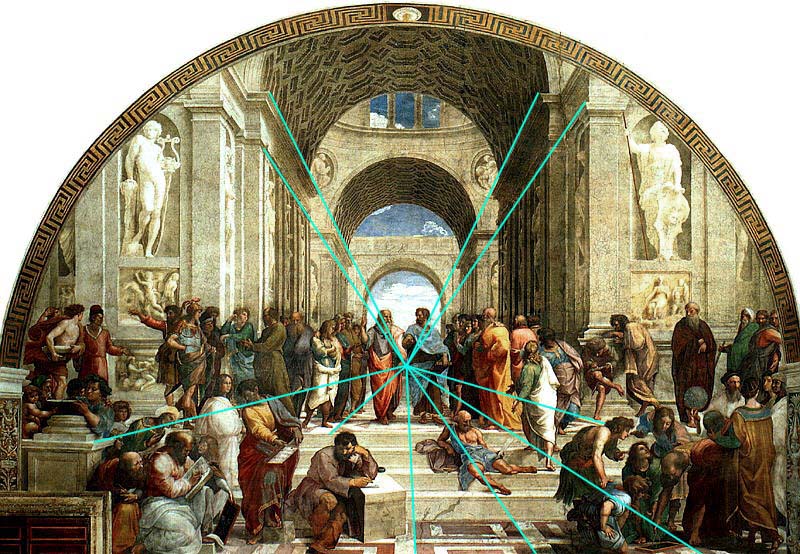
What is the artistic technique that is used to show depth and distance on a flat surface?
a)
realism
b)
perspective
c)
idealism
d)
distancism
205.
Raphael is best known for his creation of which of the following?
a)
Mona Lisa
b)
Last Supper
c)
Murals of the Sistine Chapel
d)
School of Athens
206.
"The end justifies the means" was a key belief of this man, who wrote "The Prince" 
a)
Machiavelli
b)
Castiglione
c)
Shakespeare 
d)
Petrarch
207.
The political, economic and cultural growth of Florence, led by the __________ family, helped it become an influential Italian city during the 15th century.
a)
Machiavelli
b)
Da Vinci
c)
Medici
d)
Petrarch
208.
The wealthy family of Florence that controlled the city-state and was a patron of Renaissance artists was the _________ family.
a)
Da Vinci
b)
Medici
c)
Petrach
d)
Orsini
209.
Michelangelo is famous for his work in what building?
a)
Westminster Abbey
b)
Tower of Pisa
c)
Notre Dame
d)
Sistine Chapel
210.
European society during the Renaissance differed from European society during the Middle Ages in that during the Renaissance
a)
The Church was no longer influential
b)
The emphasis on individual worth increased
c)
Economic activity declined
d)
Art no longer contained religious themes
211.
This is the belief that the individual can achieve great things.
a)
Individualism
b)
Humanism
c)
Renaissance
d)
Reformation
212.
This famous work is by  . . .
a)
Michelangelo
b)
da Vinci
213.
What Renaissance invention led to increased literacy rates? 
a)
the fax machine
b)
the compass
c)
paper
d)
the printing press
214.
Who invented the printing press? 
a)
Socrates
b)
Johannes Gutenberg
c)
Machiavelli
d)
Plato
215.
Which Renaissance person is responsible for this drawing?
a)
Leonardo da Vinci
b)
Alighieri
c)
Erasmus
d)
Michelangelo
216.
Artist who painted the ceiling of the Sistine Chapel in Rome 
a)
Michelangelo
b)
Leonardo Da Vinci
c)
Perspective
d)
Patron
217.
Which famous poet from Florence wrote "The Divine Comedy?" 
a)
Dante
b)
Michaelangelo
c)
Rafael
d)
Shakespeare
218.
a)
Italy
b)
Spain
c)
Greece
219.
How did life change for peasants after the Black Death? 
a)
there was an increase in Christianity 
b)
there was in increase in feudalism
c)
Peasants charged high rates for the same jobs. Most left the lord’s manor. Peasants were no longer working for the lord. 
d)
there was an increase in the population
220.
Which family were wealthy bankers and patrons (supporters) of the arts?
a)
The Simpsons
b)
The Medici
c)
The Brunelleschi
d)
The Donatello
221.
How did the Medici family make Florence the birthplace of the Renaissance?
a)
They built a Roman Catholic Church there
b)
They made the peasants work over time without extra pay
c)
They made Florence the capital of Europe
d)
They hired artists and architects (patrons).
222.
_________ were fought to free the _______ from Muslims. 
a)
Crusades / Holy Land
b)
Crusades  / Rome
c)
Magna Carta  /  Holy Land
d)
Plagues  /  Serfs
223.
All of the following are Abrahamic Religions EXCEPT
a)
Christianity
b)
Buddhism
c)
Islam
d)
Judaism
224.
Oldest of the 3 Religions?
a)
Islam
b)
Christianity
c)
Judaism
225.
Which is the ONLY religion that believed Jesus was the son of God and the messiah?
a)
Islam
b)
Christianity
c)
Judaism
226.
What are the set of religious rules called in both Judaism and Christianity?
a)
Ten Commandments
b)
The Bill of Rights
c)
The Tenakh
d)
The Bible
227.
Which religion believes in the Trinity, or three parts of God: the father, the son, and the holy spirit?
a)
Islam
b)
Judaism
c)
Christianity
d)
Hinduism
228.
Which was the name given to a network of trade routes, led to a search for a water route to Asia: (7-1.1)
a)
Cooper River Bridge 
b)
Bering Strait land bridge
c)
Great Silk Road
d)
Great Wall of China
229.

What device helped Europeans navigate at sea by using a magnetized needle that points to a coordinate direction?

a)

Steam Engine

b)

Compass

c)

Astrolabe

d)

Rudder

230.
Which of the following inventions, created by Chinese, contributed most to the European military domination of the foreign nations? (7-1.2)
a)
caravel 
b)
guillotine
c)
compass
d)
gunpowder
231.
Which navigational device invented by the Portuguese had a rudder, square and triangular sails, several masts, and could be used to travel close to the shore? (7-1.2)
a)
Caravel
b)
Astrolabe 
c)
Frigate
d)
Compass
232.
A (n)___________________ is one who makes maps.
a)
astronomer
b)
cartographer
c)
mapmetician 
d)
physicist
233.
Which country claims the land occupied by letter B?
a)
France
b)
England
c)
Spain
d)
Portugal
234.
Type of colony that grew in the South Eastern part of the Americas and the Caribbean
a)
Trade
b)
Settlement
c)
Plantation
d)
Essential
235.
Economic pattern that imported and exported goods among the West Indies, England, Africa and the 13 original colonies.
a)
Sea Commerce
b)
Economic Caravels
c)
Triangular Trade
d)
Three-port Dollar Route
236.
Which country claimed the most territory in the Americas?
a)
England
b)
Portugal
c)
France
d)
Spain
237.
A system in which people, rather than governments, own property and make goods
a)
capitalism
b)
money exchange
c)
global interdependence
d)
nationalism
238.
An economic policy where nations increased their wealth and power by obtaining large amounts of gold and silver and by selling more goods than they bought
a)
Socialism
b)
Imperialism
c)
Mercantilism
d)
Militarism
239.
The Enlightenment is
a)
a time of rebirth
b)
a time when science ruled
c)
a time with people used reason and logic to explain the world
d)
a time when technology ruled
240.
Government should reflect natural laws and encourage education/debate.
a)
True
b)
False
241.
Enlightenment philosopher who believed people had natural rights of life, liberty, and property.
a)
John Locke
b)
Montesquieu
c)
Rousseau
d)
Voltaire
242.
Enlightenment philosopher who believed to limit government, that it should be divided into separate branches that shared power.
a)
John Locke
b)
Montesquieu
c)
Rousseau
d)
Voltaire
243.
Enlightenment philosopher who believed people give the government to ability to rule and in return the government should protect will of the people.  
a)
John Locke
b)
Montesquieu
c)
Rousseau
d)
Voltaire
244.
Enlightenment philosphers believe that if government abuses power the people should change it.
a)
True
b)
False
245.
Natural Rights
a)
Life, Liberty, and the Pursuit of Happiness.
b)
Life, Liberty, and Property
c)
Freedom
d)
Rights to say what we want, when we want to.
246.
Social Contract
a)
Government protect people, people follow(give power) to the government
b)
Government protects people and people don't complain.
c)
People cannot trust a government.
d)
People must trust the government and in return they cannot have a say in government.
247.
Three motivations for European explorers: God, Gold, and ______.
a)
Grace
b)
Glory
c)
Greed
d)
Glaciers
248.
What did Queen Isabella do for Christopher Columbus?
a)
sponsored his exploration
b)
married him
c)
made him royalty
249.
How was Ferdinand Magellan able to prove the Earth was round?
a)
He circumnavigated the Earth by ship from Spain and back again
b)
He opened up a school of navigation to educate the people
c)
He came up with Magellan's Mathematical Equation to prove it
d)
Christopher Columbus confirmed his theory on his voyage
250.
What was Christopher Columbus' purpose for exploration before discovering the New World?
a)
To find a faster and safer trading route to Asia
b)
To circumnavigate the world in the name of Italy
c)
To launch a surprise attack the enemies of Spain by sea
d)
To find the city of gold in southern Africa
251.
What explorer sailed all the way around the world?
(He was credited with it, but in fact he died before his ship made it back.)

a)
Balboa
b)
Cabot
c)
Magellan
d)
De Soto
252.
Where did Columbus first take foot in the New World?
a)
Florida
b)
Virginia 
c)
Bahamas 
d)
New York
253.
Who was the Americas named after?
a)
Giovanni Cabato
b)
Amerigo Vespucci
c)
Henry Hudson
254.
How did many Native Americans die during the Exploration?
a)
They died from war.
b)
The conquistadors starved them
c)
Smallpox and other diseases
d)
Drowning in ships
255.
Which was traded from the New World to the Old World?
a)
major diseases
b)
horses
c)
potatoes and corn
d)
slaves
256.
As native populations decreased in the Americas from sickness and overwork, Europeans looked for new sources of labor by enslaving the ____________.
a)
Africans
b)
Spanish
c)
Portuguese
257.
What animal changed life for American Indians?
a)
pigs
b)
chickens
c)
horses
d)
cows