
 Worksheets
Ecology
Total questions: 43
Worksheet time: 7hrs 42mins
Name
Class
Date
1.
What is the original source of almost all energy in most ecosystems?
a)
carbohydrates
b)
sunlight
c)
water
d)
carbon
2.

What does a food web represent?
a)
All connections of energy flow throughout all organisms in a habitat.
b)
The specific ways that mutualism is carried out.
c)
A single pathway or energy flow between organisms.
d)
How carnivores get their food.
3.

The image provided is an example of a(n):
a)
Producer
b)
Autotroph
c)
Consumer
d)
Insect
4.
The general name for organisms like animals and fungi that get their energy from eating other organisms.
a)
Producers
b)
Consumers
c)
Carnivores
5.

The rabbit in this food web would be considered a:
a)
Decomposer
b)
Producer
c)
Secondary Consumer
d)
Primary Consumer
6.

What makes Fungi so unique when it comes to trophic levels?
a)
They are producers so they can be high or low
b)
They are consumers of only plants
c)
They are consumers of all types of organisms because they decompose
d)
They are consumers of only the primary trophic level
7.

In the energy pyramid here, which organisms have the most energy available?
a)
Producers
b)
Carnivores
c)
Herbivores
d)
Top Predator
8.
A local company dumped sewage into the wetlands. As a result, most fish in the wetlands died. This decrease in the number of fish will probably result in
a)
fewer mice
b)
fewer birds
c)
fewer spiders
d)
fewer insects
9.
Which order of these shows the food chain in the correct order?
a)
Zooplankton--->Bear--->Salmon
b)
Salmon--->Zooplankton--->Bear
c)
Zooplankton-->Salmon--->Bear
d)
Bear--->Zooplankton--->Salmon
10.
Which of the following organisms are typical decomposers?
a)
grasses and ferns
b)
bacteria and mushrooms
c)
mice and deer
d)
lions and snakes
11.
Green plants are
a)
producers
b)
consumers
c)
herbivores
d)
omnivores
12.
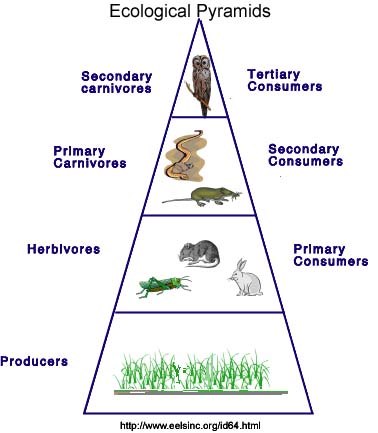
The largest group of organisms found in a food web would be:
a)
Primary Consumers
b)
Producers
c)
Decomposers
d)
Tertiary Consumers
13.

The fox in this food web would be considered a:
a)
Tertiary Consumer
b)
Producer
c)
Secondary Consumer
d)
Primary Consumer
14.

How are hardwood trees adapted to live in cold winters?
a)
They have long stems buried in mud.
They have long stems buried in mud.
They have long stems buried in mud.
b)
They live on tree islands.
c)
They lose their leaves in winter.
They lose their leaves in winter.
They lose their leaves in winter.
d)
They grow low to the ground.
15.
Which biome is characterized by low temperatures and low amounts of rainfall?
a)
tundra
b)
desert
c)
temperate deciduous forest
d)
tropical rain forest
16.
Which biome covers most of the land mass near the Earth's equator?
a)
tundra
b)
desert
c)
grassland
d)
tropical rainforest
17.
Which biome, because of its climate, has the largest number of species of plants and animals?
a)
tundra
b)
desert
c)
tropical rainforest
d)
pine forest
18.
Which major biome is home to cacti, mesquite, white thorn, pack rats, small reptiles, and coyotes?
a)
desert
b)
taiga
c)
tundra
d)
grassland
19.
Which of the following habitats probably has the greatest number of plant and animal species?
a)
the African savannah
b)
a rainforest in Brazil
c)
a temperate forest in China
d)
a temperate grassland in Kansas
20.
Which biome contains large populations of grazing herbivores, few species of birds, and deep, rich soil?
a)
taiga
b)
tundra
c)
deciduous forest
d)
grassland
21.
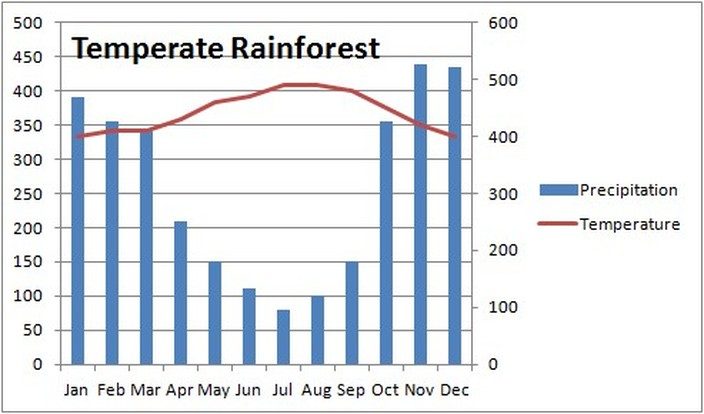
The most important abiotic factors when studying biomes are...
a)
Food and Water
b)
Water and Sunlight
c)
Temperature and Oxygen
d)
Water and Temperature
22.
The greatest biodiversity on earth is found in the __________ biome.
a)
taiga
b)
grassland
c)
temperate deciduous forest
d)
tropical rainforest
23.
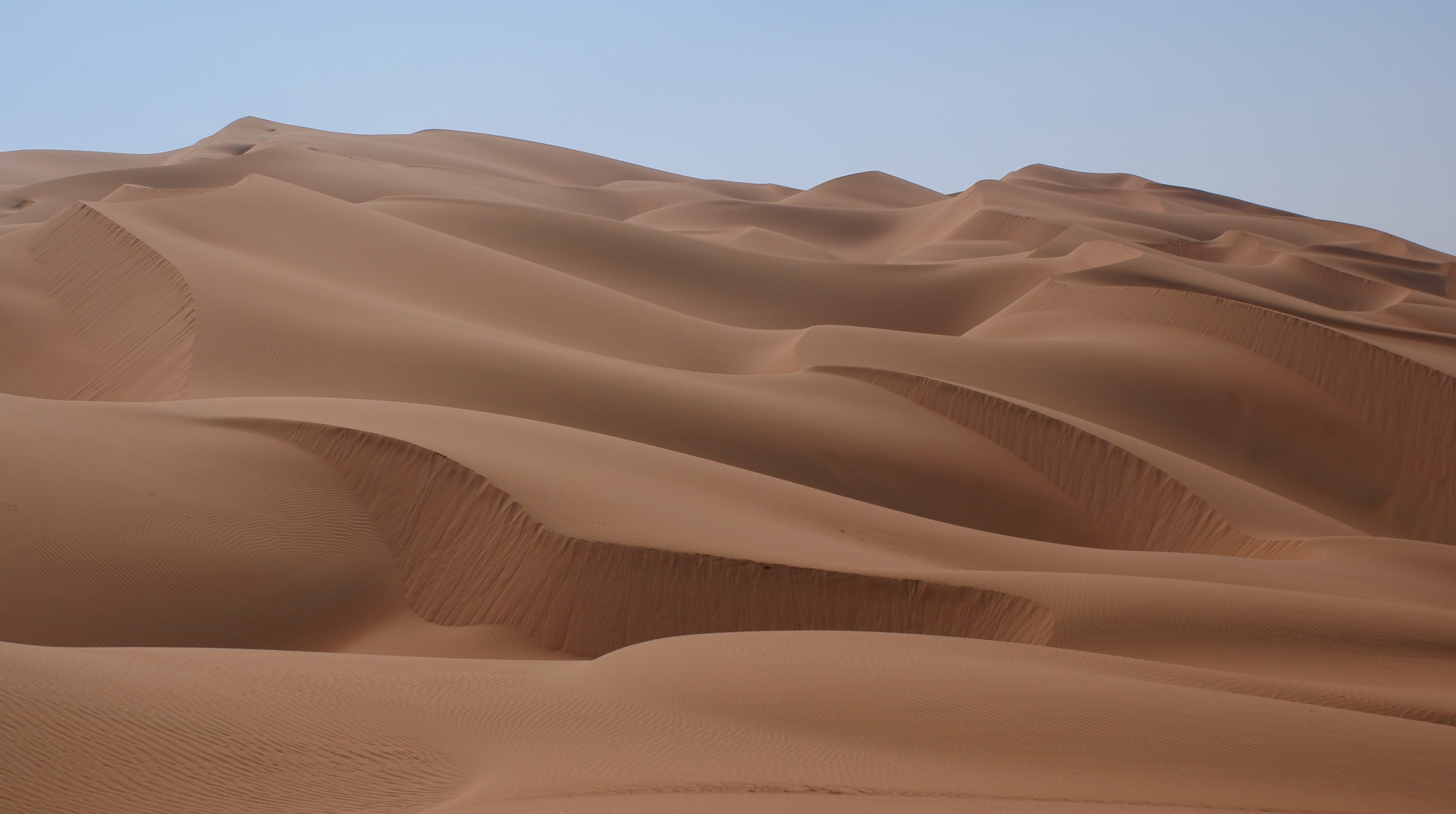
Which biome is MOST LIKE the "desert" in terms of precipitation?
a)
tropical rainforest
b)
temperate deciduous forest
c)
tundra
d)
coniferous forest
24.
What is an invasive species?
a)
A native (naturally found) species which are added to an area.
b)
A non-native (not naturally found) species added to an area.
c)
A keystone species in an environment
d)
none of the above
25.

What does biodiversity mean?
a)
Only one species in an area.
b)
The different amount of species in an area
c)
All abiotic life
d)
Nitrogen fixation
26.

A drought has hit this grassland biome. How will this effect the rabbit population?
a)
The rabbits will increase in number.
b)
The rabbit population will stay the same.
c)
The rabbit population will decrease.
d)
The rabbit population will become extinct immediately.
27.
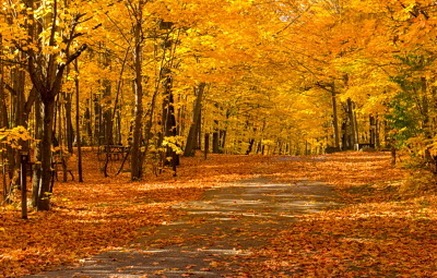
Which biome has deciduous trees (which lose their leaves)?
a)
Temperate Forest
b)
Rainforest
c)
Grasslands
d)
Taiga
28.
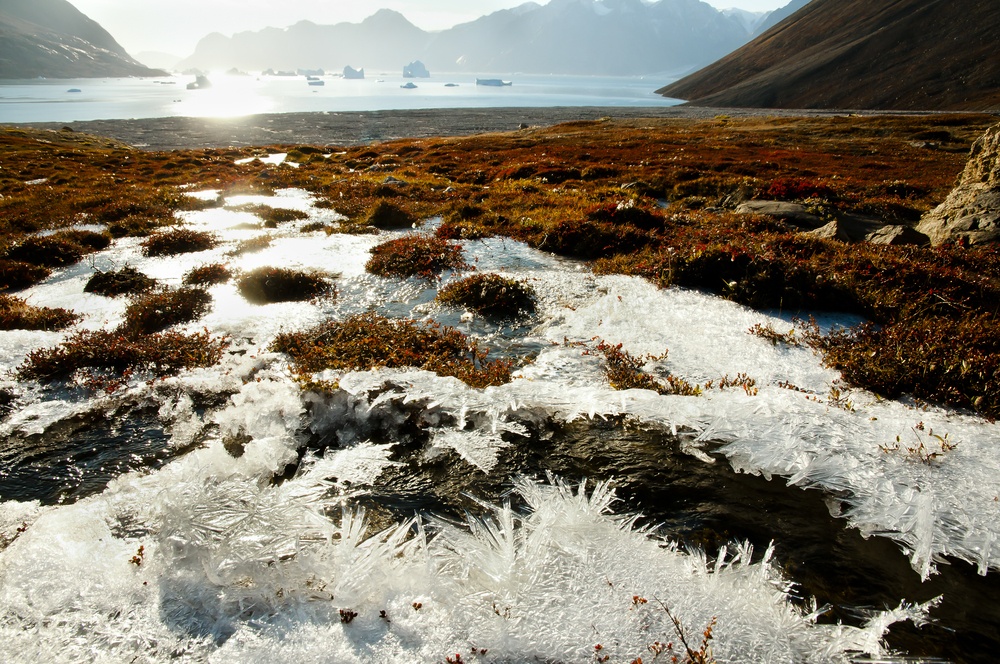
Which Biome has permafrost?
a)
Temperate Forest
b)
Rainforest
c)
Taiga
d)
Tundra
29.
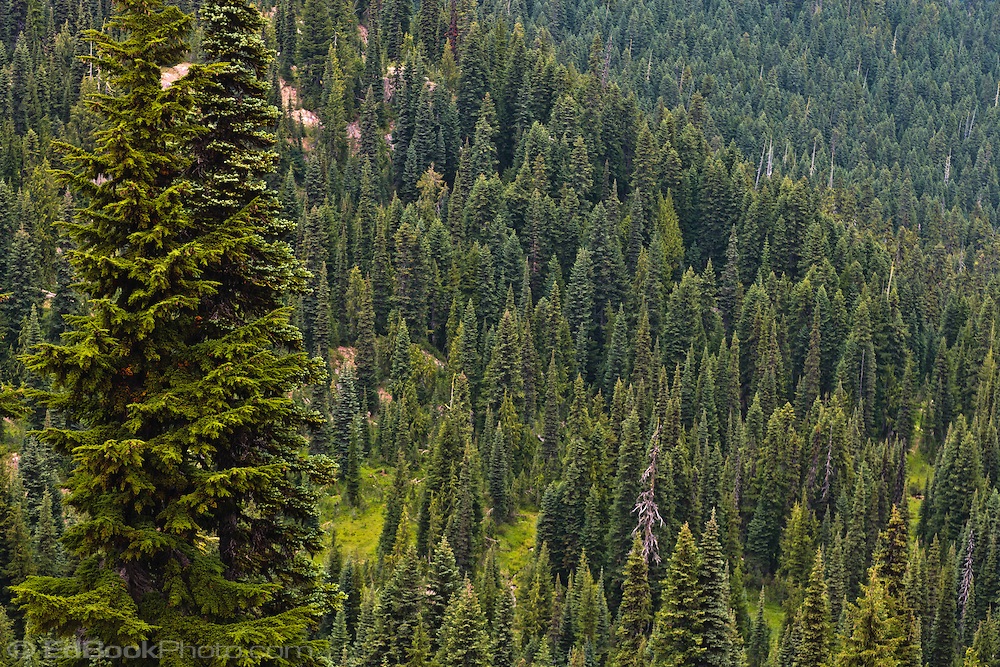
Which biome has coniferous trees (which don't lose their leaves)?
a)
Taiga
b)
Temperate Forest
c)
Tundra
d)
Grasslands
30.
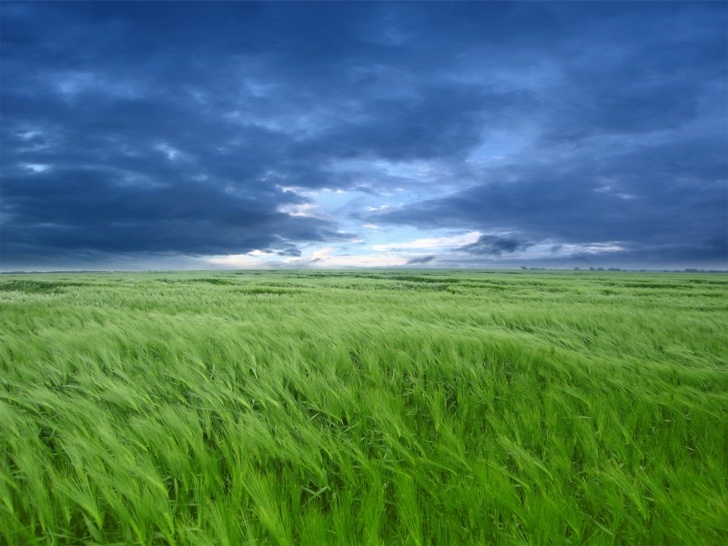
Which biome has wide-open fields of grass?
a)
Taiga
b)
Grasslands
c)
Temperate Forest
d)
Rainforest
31.
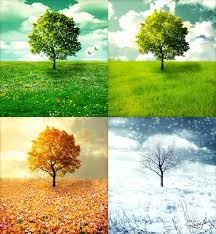
Which biome has 4 seasons?
a)
Taiga
b)
Tundra
c)
Grasslands
d)
Temperate Forest
32.
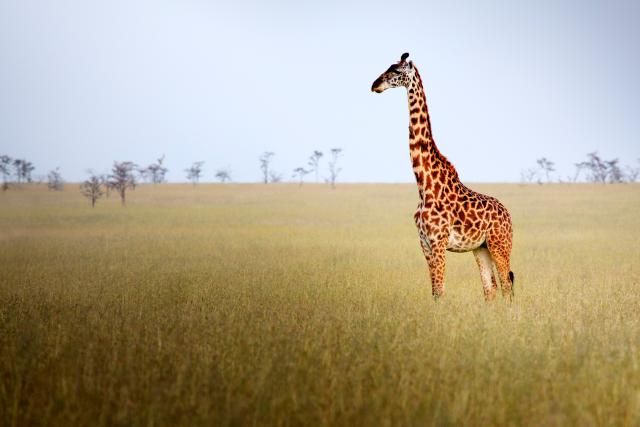
Which biome is home to lions, zebras, wildebeests, giraffes, and elephants?
a)
Grasslands
b)
Tundra
c)
Rainforest
d)
Temperate Forest
33.
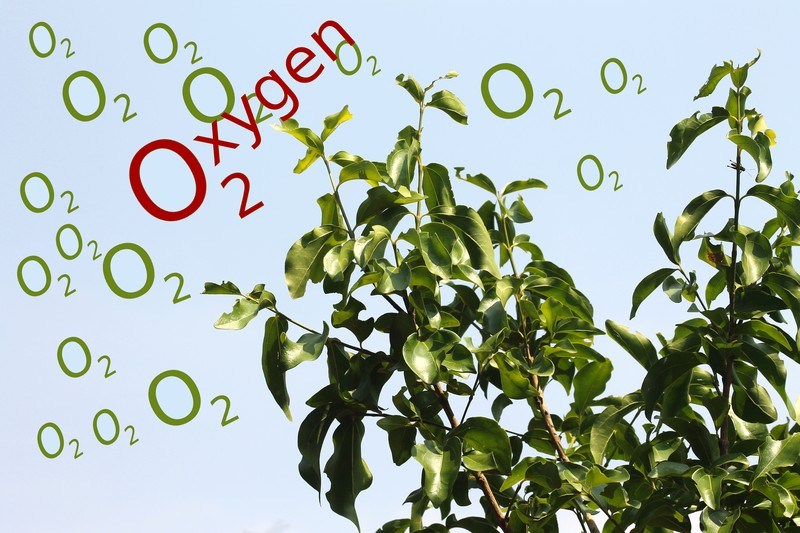
Which biome produces over 50% of the world's oxygen?
a)
Rainforest
b)
Temperate Forest
c)
Grasslands
d)
Taiga
34.

Which biome is more likely to survive a change in the environment?
a)
High (rich) biodiversity
b)
Low (poor) biodiversity
35.
An organism that obtains energy by consuming plants.
a)
Omnivore
b)
Herbivore
c)
Carnivore
36.
An organism that obtains energy by consuming plants and animals.
a)
Omnivores
b)
Carnivores
c)
Herbivores
37.
An organism that obtains energy from eating meats
a)
Omnivores
b)
Carnivores
c)
Herbivores
38.
Animals that eat primary producers (also known as herbivores)
a)
Producers
b)
Primary Consumers
c)
Secondary Consumers
d)
Tertiary Consumers
39.
Eat primary consumers (can be carnivores and omnivores)
a)
Tertiary Consumers
b)
Secondary Consumers
c)
Quaternary Consumers
d)
Top Predators
40.

Which of the following is a herbivore?
a)
cricket
b)
frog
c)
hawk
d)
shrew
41.
What is energy lost off the trophic pyramid as?
a)
heat
b)
water
c)
sunlight
d)
plants
42.
The efficiency of energy transfer from a lower trophic level to the next highest level is roughly
a)
1%
b)
10%
c)
100%
d)
1000%
43.

In the energy pyramid here, how much of the energy in each level gets lost as heat or used by the organism for survival?
a)
80%
b)
90%
c)
10%
d)
20%
100 %

