wayground logo

Free Printable Worksheets

Font size

S
M
L
XL
Worksheets

6th Grade Organisms and Environments

Total questions: 45

Worksheet time: 41mins
Name
Class
Date
1.
What is a example of a abiotic factor?
a)
Panda
b)
Turtle
c)
Butterfly
d)
weather
2.
What is an example of a biotic factor?
a)
skunk
b)
rocks
c)
soil
d)
water
3.
Temperature, light, air, water, and soil are all  _____  parts of the environment
a)
alive
b)
biotic 
c)
abiotic
d)
living
4.
A collection of organisms that belong to different populations but all live in the same area and interact with one another.
a)
Population
b)
Ecosystem
c)
Community
d)
Ecosphere
5.
A collection of organisms that make up a community as well as all of the nonliving aspects of the environment.
a)
Population
b)
Community
c)
Habitat
d)
Ecosystem
6.
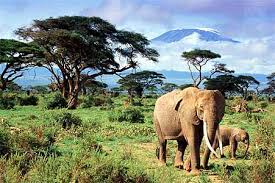
What are the biotic factors in this image?
a)
sunlight, elephants, and grasses
b)
sunlight, water,  and air
c)
elephants, plants, trees 
7.
What are the abiotic factors in this image? 
a)
water, sunlight, dirt, air
b)
birds and plants
c)
water, plants, and birds 
8.

Which of the following is a population?

a)

hawks, barred owls, and eagles on NC coast

b)

mountain stream

c)

all the frogs in a pond

d)

different lizards around a barn

9.
A nonliving element in an ecosystem is an 
a)
animal
b)
abiotic factor
c)
biotic factor
d)
organism
10.
A living or once-living organisms in an ecosystem is a
a)
population
b)
biotic factor
c)
abiotic factor
d)
community
11.
Lizards and cacti are biotic factors in a desert ecosystem that would rely on which abiotic factors?
a)
insects and sun
b)
water and insects
c)
snakes and temperature
d)
water and soil
12.
An ecosystem is made up of all the ___________ and _____________ factors in an area. 
a)
not/without
b)
Limiting Factor/ Carrying Capacity
c)
Living/ Nonliving
d)
life/ biotic factor
13.
The study of interactions in an ecosystem.
a)
ecology
b)
philosophy
c)
scientology
d)
biology
14.
A group of the same type of organisms living in the same place at the same time.
a)
threatened species
b)
populations
c)
community
d)
limiting factor
15.
Which statement is correct?
a)
A population is the same as a community
b)
A community is a group of populations
c)
A community is a part of a population
d)
A population is a group of communities
16.
Decomposers get their food by __________.
a)
making it themselves
b)
eating live organisms
c)
using dead organisms
d)
eating themselves
17.
All organisms of the same species living in the same area.
a)
Population
b)
Community
c)
Ecosystem
d)
Organism
18.
All of the different biotic organisms found in the same area.
a)
Organism
b)
Population
c)
Community
d)
Ecosystem
19.
Identify the examples as: a organism, population, community, or ecosystem.
All speckled sting-ray that live in the Pacific Ocean
a)
Organism
b)
Population
c)
Community
d)
Ecosystem
20.
Identify the examples as: a organism, population, community, or ecosystem.
A beautiful butterfly.
a)
Organism
b)
Population
c)
Community
d)
Ecosystem
21.
Identify the examples as: a organism, population, community, or ecosystem.
Water, Fish, Turtles, Oxygen, Rocks and Moss interacting in a river system.
a)
Organism
b)
Population
c)
Community
d)
Ecosystem
22.
The smallest level of ecological organization is called...........
a)
Organism
b)
Tissue
c)
Ecosystem
d)
Organ System
23.
The largest level of ecological organization which includes all biotic and abiotic factors.
a)
Ecosystem
b)
Organism
c)
Population
d)
Community
24.
Any ONE living thing.
a)
Organism
b)
Population
c)
Community
d)
Ecosystem
25.

Identify the examples as: a organism, population, community, or ecosystem.

Chicken, Cow, Grass, Buffalo, and Mouse living on farmland.

a)

Organism

b)

Community

c)

Population

d)

Ecosystem

26.
A collection of organisms that belong to different populations but all live in the same area and interact with one another.
a)
Population
b)
Ecosystem
c)
Community
d)
Ecosphere
27.
Term used to describe a one-celled organism is ________________
a)
multicellular
b)
cellular
c)
single organism
d)
unicellular
28.
Which describes an  organism that produces its own food
a)
heterotroph
b)
chef
c)
autotroph
d)
homeostasis
29.
What does "multicellular" mean?
a)
Has many animals
b)
made up of more than one cell
c)
 has one cell
d)
shows similar characteristics to other cells
30.
How many parents are necessary for asexual reproduction?
a)
2
b)
0
c)
3
d)
1
31.
How does a heterotroph get energy?
a)
by eating other organisms
b)
from photosynthesis
c)
from chemosynthesis
d)
they don't need energy
32.
How do we classify organisms into different Kingdoms?
a)
randomly sort organisms
b)
based on similar characteristics of the organisms
c)
grouped by how the organisms are different from one another
d)
based on how they reproduce
33.
Name the Kingdom:
multicellular, autotroph
a)
Anamalia
b)
Fungi
c)
Plantae
d)
Protista
34.
a)

Prokaryotic cell

b)

Eukaryotic cell

35.

No Nucleus

a)

Prokaryotic cell

b)

Eukaryotic cell

36.

How many parents are necessary for sexual reproduction?

a)

2

b)

0

c)

3

d)

1

37.

Characteristics

Multicellular

Autotrophic

Eukaryotic

Reproduce sexually

This organisms is most likely a member of which kingdom?

a)

Fungi

b)

Eubacteria

c)

Plantae

d)

Animalia

38.

Characteristics:

Single celled

Prokaryotic

Heterotrophic or Autotrophic

Reproduces asexually

Causes disease

This organism is most likely a member of which kingdom?

a)

animalia

b)

protista

c)

fungi

d)

eubacteria

39.

Characteristics:

Heterotroph

Multicellular

Eukaryotic

Cannot move on its own

This organism is most likely a member of which kingdom?

a)

Plantae

b)

Fungi

c)

Animalia

d)

Eubacteria

40.

Characteristics:

Heterotroph

Multicellular

Eukaryotic

Reproduces sexually

Is able to move itself

Which kingdom does this organism most likely belong too?

a)

Animalia

b)

Fungi

c)

Protista

d)

Eubacteria

41.

Characteristics:

Unicellular

Heterotroph or Autotroph

Reproduces asexually or sexually

Eukaryotic

This organism most likely belongs to which kingdom?

a)

Eubacteria

b)

Archaea

c)

Animalia

d)

Protista

42.

Characteristics:

Heterotrophic

Unicellular

Prokaryotic

Reproduces asexually

Lives in extreme environments

Which kingdom does this organism most likely belong to?

a)

Plantae

b)

Protista

c)

Archaea

d)

Fungi

43.

Characteristics:

Eukaryotic

Made of many cells

Heterotrophic -- feeds off of dead organisms

This organism most likely belongs to which kingdom?

a)

fungi

b)

Eubacteria

c)

Plantae

d)

Animalia

44.

Characteristics:

Autotrophic

Reproduces sexually

Multicellular

Eukaryotic

a)

Plantae

b)

fungi

c)

eubacteria

d)

archaea

45.
All living organisms are made up of ____.
a)
Cells
b)
Bacteria
c)
Organs
d)
Tissue