
 Worksheets
Year 10 Chemical Reactions
Total questions: 100
Worksheet time: 1hrs 19mins
Name
Class
Date
1.
all matter is made of what
a)
energy
b)
atoms
c)
electrons
d)
compounds
2.
The positive particles of an atom are
a)
electrons
b)
positrons
c)
neutrons
d)
protons
3.
the central region of an atom where its neutrons and protons are is its
a)
nucleus
b)
electron cloud
c)
core
d)
center
4.
an atom with atomic number 6 would have how many protons
a)
6
b)
12
c)
3
d)
cannot be determined
5.
True or False? Neutrons have a negative charge
a)
True
b)
False
6.
A particle that moves around the nucleus is a(n)...
a)
Proton
b)
Neutron
c)
Electron
d)
Quark
7.
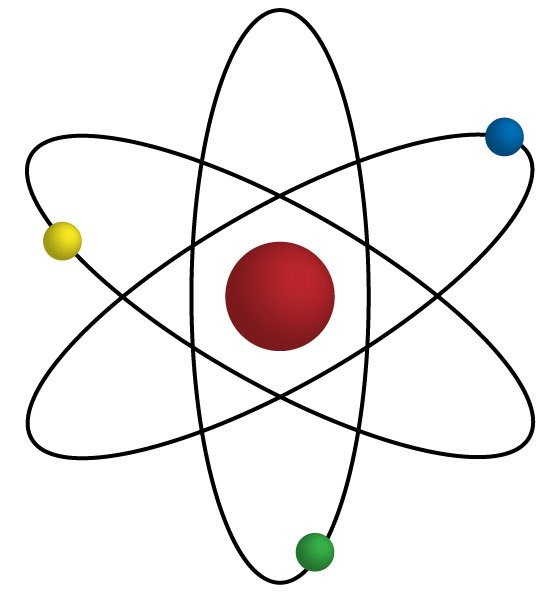
What are the 3 particles that make-up the atom?
a)
protons, neutrons, and isotopes
b)
neutrons, isotopes, and electrons
c)
positives, negatives, and electrons
d)
protons, neutrons, and electrons
8.
What is the atomic symbol for sodium?
a)
Na
b)
So
c)
NaCl
d)
S
9.
The chemical symbol for Oxygen is
a)
Ox
b)
Og
c)
O
d)
On
10.
Molecules are
a)
2 atoms bound together
b)
2 elements bound together
c)
2 or more atoms mixed together
d)
2 or more atoms bound together
11.
Which of the four following items are made up of one or more molecules?
a)
Gold
b)
Hydrogen
c)
Salt
d)
Neon
12.
Atoms make up
a)
Elements
b)
Molecules
c)
Compounds
d)
Protons Neutrons and Electrons
13.
Elements are made of
a)
Many types of atoms
b)
the Periodic Table
c)
One type of Atom
d)
Molecules
14.
Water compound
a)
NaCl
b)
H2O
c)
Protein
d)
CaCO
15.
How many elements are in HHe
a)
3
b)
4
c)
2
d)
5
16.
Is salt (NaCI) a compound or a element
a)
Compound
b)
element
17.
How are elements and compounds different?
a)
A compound is a combination of two or more types of matter, an element is one type.
b)
Compounds are represented by chemical symbols of one letter, elements by two.
c)
here are an infinite number of elements, but a limited number of compounds.
d)
Elements are always larger units of matter, and compounds are smaller.
18.
Oxygen
a)
element
b)
compound
19.

What is an ion?
a)
A Charged Atom
b)
A Large Atom
c)
A Small Atom
d)
A Cute Atom
20.

Why are ions formed?
a)
To make our lives difficult
b)
Because atoms want 8 valence electrons
c)
Because atoms have the same number of protons and electrons
d)
Because atoms gained neutrons
21.

Cations are...
a)
Positive
b)
Negative
c)
Neutral
d)
Purring
22.

Anions are...
a)
Positive
b)
Negative
c)
Neutral
d)
Crying
23.

An atom becomes _________ when it gains electrons.
a)
Positive
b)
Negative
c)
Neutral
d)
Invinsible
24.

An atom becomes _______ when it loses electrons.
a)
Positive
b)
Negative
c)
Neutral
d)
Invinsible
25.

Which particles change the charge in atoms when ions are formed?
a)
Protons
b)
Electrons
c)
Neutrons
d)
Kittens
26.
Metals tend to
a)
gain electrons
b)
lose electrons
27.
If my charge becomes 2+ what does that say about me?
a)
I am stealing 2 electrons
b)
I am losing 2 electrons
c)
I am in period 2
d)
I have an atomic # of 2
28.
If I gain electrons I become
a)
Positive because I've added to my atom
b)
negative because I've added electrons
c)
same because i'm balanced
d)
equal because now I have electrons
29.
When metals bond with non-metals they form what type of bonds
a)
covalent
b)
ionic
c)
cooperative
d)
lewis
30.
How do the following two elements bond together?
Na1+ F1-
Na1+ F1-
a)
NaF
b)
NaF3
c)
Na3F
d)
Na1F2
31.
How do the following two elements bond together?
Cr3+ O2-
Cr3+ O2-
a)
CrO
b)
Cr3O2
c)
Cr2O3
d)
CrO3
32.
How do the following two elements bond together?
K1+ S2-
K1+ S2-
a)
KS
b)
K8S
c)
K6S3
d)
K2S
33.
Nonmetals tend to
a)
gain electrons
b)
lose electrons
34.
AgF
a)
silver fluoride
b)
silver fluorine
c)
monosilver monofluoride
d)
silver monofluorine
35.
What kind of properties can only be observed when a substance changes into a different substance?
a)
physical properties
b)
chemical properties
c)
liquid properties
d)
real properties
36.
Which of the following is a sign that a chemical reaction has occurred?
a)
change in shape
b)
melting
c)
formation of a gas
d)
dissolving
37.
Is hammering wood together to build a house a chemical or physical change?
a)
chemical
b)
physical
38.
Is melting butter for popcorn a chemical or physical change?
a)
chemical
b)
physical
39.
Is bleaching your hair a physical or chemical change?
a)
physical
b)
chemical
40.

Is burning wood a chemical or physical change?
a)
chemical
b)
physical
41.
A change in the size, shape, or state of matter.
a)
chemical change
b)
physical change
c)
chemical reaction
d)
electron change
42.
what is the definition of chemical change?
a)
any change that results in the formation of new chemical substances.
b)
changing clothes
c)
matter cannot be created or destroyed, only change form
d)
changes affecting the form of a chemical substance, but not its chemical composition.
43.
which one is a chemical property?
a)
odor
b)
combustibility
c)
solubility
d)
all of the above
44.
what is digestion?
a)
body function
b)
chemical change
c)
physical change
45.
When a CHEMICAL reaction occurs, what is made?
a)
No new substance is made.
b)
A new substance is made with new atoms formed
c)
A new substance is made, with existing atoms rearranged
d)
All substances remain the same, but physical state may change.
46.

What does this word equation represent: Iron + oxygen → Iron oxide
a)
A physical change in iron (nothing new gets made)
b)
A chemical reactino between iron and oxygen, where rust (iron oxide) is produced
c)
A chemical reaction between iron and rust, where oxygen is produced
d)
A physical change between iron and oxygen that forms a red color
47.
Magnesium + hydrochloric acid --> _____________ + hydrogen
What is missing?
a)
Magnesium oxide
b)
Magnesium hydride
c)
Magnesium chloride
d)
Magnesium hydroxide
48.
Iron + ________________ --> iron sulphate + copper
What is missing?
a)
Copper oxide
b)
Copper sulphate
c)
Iron sulphate
d)
Iron oxide
49.
Magnesium + ________ --> magnesium oxide
What is missing?
a)
Hydrogen
b)
Sulphur
c)
Oxygen
d)
Oxide
50.
Calcium carbonate + hydrochloric acid --> __________ + carbon dioxide + water
What is missing?
a)
calcium chloride
b)
calcium oxide
c)
hydrogen
d)
calcium hydride
51.
Sodium hydroxide + _______________ --> sodium chloride + water
What is missing?
a)
sulphuric acid
b)
hydrogen
c)
hydrochloric acid
d)
oxygen
52.
In an exothermic reaction, heat is ...
a)
taken in
b)
given out
53.
In an endothermic reaction, heat is ,,,
a)
taken in
b)
given out
54.
What type of reaction occurs in a hand warmer
a)
exothermic
b)
endothermic
55.
If a chemical reaction is EXOTHERMIC, the temperature would....
a)
Stay the same
b)
Increase
c)
Decrease
56.
When iron nails get rusty, heat is released. What process is this?
a)
Exothermic
b)
Endothermic
57.
In an endothermic reaction the system is releasing energy.
a)
True
b)
False
58.
Is the combustion of gasoline endothermic or exothermic?
a)
Endothermic
b)
Exothermic
59.
During an endothermic reaction in a beaker if we are part of the surroundings and touched the beaker, it would feel _______.
a)
Warm
b)
Cold
60.
What is oxidation?
a)
A reaction involving oxygen
b)
A reaction involving non-metals
61.
What is corrosion?
a)
The release of oxygen
b)
Breakdown of a metal
62.
Reaction that involves the oxidation of a substance, usually a metal
a)
corroson
b)
corrosion
c)
corossion
d)
corrocion
63.
A substance that increases the rate of a chemical reaction
a)
catalyst
b)
cataylst
c)
catalist
d)
catals
64.
Reaction that involves a substance rapidly combining with oxygen, usually accompanied by a flame; burning
a)
combustion
b)
combastion
c)
combuston
d)
combusstion
65.
The substances present before a chemical reaction are called...
a)
reactants
b)
products
c)
catalysts
d)
none of these
66.
Products are found on the _ side of a chemical equation.
a)
left
b)
right
67.
What does (aq) mean in a chemical equation?
a)
solid
b)
liquid
c)
gas
d)
dissolved in water
68.
T/F? A catalyst is used up in a reaction.
a)
True
b)
False
69.
T/F? Atoms and/or mass can be created during a reaction.
a)
True
b)
False
70.
_ reactions occur when a solid is formed from two aqueous compounds.
a)
Single replacement
b)
Precipitation
c)
Decomposition
d)
Synthesis
71.

Which of these is the most reactive?
a)
Ca
b)
Mg
c)
Pb
d)
Cu
72.
_ shows realtive reactivities of metals.
a)
Activity series
b)
Solubility rules
c)
Balance equation
d)
none of these
73.
A substance that will dissolve in water is...
a)
soluble
b)
insoluble
74.
Which of the following word pairs correctly completes the sentence below?
_______ are corrosive substances characterized as having a strong smell, a sour taste, and a _______.
_______ are corrosive substances characterized as having a strong smell, a sour taste, and a _______.
a)
Acids; pH less than 7
b)
Acids; pH greater than 7
c)
Bases; pH greater than 7
d)
Bases; pH less than 7
75.
The esophagus is the tube that connects the mouth to the stomach. Heartburn occurs when some of the stomach juices flow backwards up the esophagus. To help relieve heartburn, a person should take medicine that is
a)
neutral
b)
basic
c)
acidic or basic.
acidic or basic.
d)
acidic
76.
If an acid is combined with a base of equal strength, the result will most likely be
a)
a neutral solution.
b)
a stronger acid.
c)
impossible to tell without testing the pH.
d)
a stronger base
77.
Holly has an unknown substance in a beaker. She wants to determine the relative pH of the unknown substance. She places a piece of blue litmus paper into the substance, and the litmus paper stays blue.
The substance in the beaker
The substance in the beaker
a)
is a base.
b)
has a neutral pH.
c)
is an acid.
d)
does not have a pH.
78.
Which of the following is a base?
a)
orange juice
b)
water
c)
vinegar
d)
dishwashing detergent
79.
Litmus paper can be used to determine the _______ of a substance.
a)
relative volume
b)
temperature
c)
relative pH
d)
chemical formula
80.
Which of the following statements is correct?
a)
Blue litmus paper turns red when placed in a base.
b)
Red litmus paper turns blue when placed in a base.
c)
Blue litmus paper stays blue when placed in an acid.
d)
Red litmus paper stays red when placed in a base.
81.
Which of the following is an acid?
a)
shampoo
b)
baking soda
c)
orange juice
d)
water
82.
The pH of a solution is tested, and it is found to be a basic solution. Of the following choices, what could the pH have been?
a)
3
b)
9
c)
7
d)
5
83.
Human blood has a pH between 7.35 and 7.45. Which of the following best describes human blood?
a)
strongly acidic
b)
slightly acidic
c)
strongly basic
d)
slightly basic
84.
When using pH paper, the pH of a solution can be determined by looking at the _______ of the paper.
a)
texture
b)
color
c)
length
d)
mass
85.
What would be considered the weakest base?
a)
8
b)
14
c)
7.8
d)
11.6
86.
Many cleaning solutions are bases. Which of the following is a property of most bases?
a)
feels slippery
b)
white color
c)
can only be liquid
d)
tastes sour
87.
Pure water has a pH of 7. Pure water _______.
a)
is a base
b)
is a neutral substance
c)
could be either an acid or a base
d)
is an acid
88.
What is the pH of the chemical made when you mix an equal strength acid and alkali together?
a)
4
b)
7
c)
9
d)
12
89.
What are the names of the products when you mix an equal strength acid and alkali together?
a)
Water and Sodium Hydroxide
b)
Water and Salt
c)
Water and Hydrochloric Acid
d)
Water and Hydrochloric Acid
90.
What is the name of the process where an equal strength acid and alkali cancel each other out?
a)
Cancelisation
b)
Neutralisation
c)
Neutralology
d)
Waterification
91.
What salt would be made if you mixed hydrochloric acid with sodium hydroxide?
a)
sodium ethanoate
b)
sodium chloride
c)
magnesium nitrate
d)
sodium hydrochloride
92.
Which acid was used to make the salt magnesium sulphate?
a)
hydrochloric acid
b)
sulphuric acid
c)
nitric acid
d)
formic acid
93.
Which of these is the correct spelling?
a)
newtralisation
b)
neutralisation
c)
neutrailsaton
d)
newtraleyesashon
94.
What is the correct scale used for measuring the concentration of acids and alkalis?
a)
a) Acidity
b)
b) pH
c)
c) Litmus
d)
d) Stength
95.
Which of the following is the colour indicated by universal indicator solution for a Weak acid?
a)
a) Green
b)
b) Red
c)
c) Yellow/Orange
d)
d) Purple
96.
Which of the following is the colour indicated by universal indicator solution for a Strong acid?
a)
a) Green
b)
b) Red
c)
c) Yellow/Orange
d)
d) Purple
97.
Which of the following is the colour indicated by universal indicator solution for a neither an acid or alkali/base?
a)
a) Green
b)
b) Red
c)
c) Yellow/Orange
d)
d) Purple
98.
A neutralization reaction will always produce...
a)
water & salt
b)
water
c)
salt
d)
water & carbon
99.
If there is excess hydrogen ions, the solution will be...
a)
acidic
b)
basic
100.
Complete the following reaction:
Hydrochloric acid + magnesium hydroxide -->
Hydrochloric acid + magnesium hydroxide -->
a)
Magnesium chloride + water
b)
Magnesium + water
c)
Magnesium chloride + hydrogen gas
d)
Magnesium chloride + water + carbon dioxide
100 %

