
 Worksheets
Fall Semester Review
Total questions: 95
Worksheet time: 2hrs 25mins
(2 points) Based on your understanding of atomic structure, explain why we no longer accept Dalton’s theory that atoms of the same element are all the same.
(1 point) In a sample of pure copper, all atoms have
the same atomic number and the same number of protons.
a different atomic number and a different number of protons.
a different atomic number but the same number of protons.
the same atomic number but a different number of protons.
(1 point) One atom contains 29 protons and 34 neutrons. A second atom of the same element has a mass number of 65. How many protons and neutrons does the second atom have?
28 protons, 37 neutrons
29 protons, 36 neutrons
29 protons, 35 neutrons
31 protons, 34 neutrons
(3 points) An ion of sulfur has a negative two (-2) charge and a mass number of 34. How many of each subatomic particle are present in this ion?

(2 points) Which of the following represent pairs of isotopes?
How many periods are in the periodic table?
18
13
7
22
The horizontal rows in the periodic table are called __.
shells
layers
regions
periods
Elements in the periodic table are listed in order of their ___.
number of electrons
density
atomic number
discovery
What is the symbol for copper?
Co
Cu
Ag
CU
A group also be called a family.
True
False
Elements are substances that can be broken down into simple substances.
True
False
Elements in the same periods share similar properties.
True
False
How many groups make up the periodic table?
4
10
18
8
Alkali and Alkaline Metals are .....
Reactive
Non Reactive
Dense
Non-Dense
Group ____ make up the halogen family.
17
Transition Metals
10
Noble Gases
Transition Metals are very ____.
reactive
full of matter
dense
little
Families or Groups have elements with similar ____ and ____ properties.
Physical, Luster
Physical, Chemical
Chemical, Volume
Physical, Color
What is the symbol for Iron?
Fe
K
Pb
I
Noble gases on the periodic table ______.
don't react
react
change color
are less dense
___ invented the periodic table.
Joe Biden
Albert Einstein
Dmitri Mendeleev
Pierre Currie
As the number of bonds between two carbon atoms increases, which of the following increases?
Bond length
Bond strength
Both bond length and bond strength
Neither bond length nor bond strength
What is a Bohr Model?
a simplified representation of an atom
vertical column in periodic table
horizontal row in periodic table
Only shows the element symbol and it's outer most electron shell
What are the names of the 2 models that we have been using?
Bohr and Newton Structures
Lewis and Caroll Models
Bohr Model & Lewis Dot Structure
Element & Atom structures
Electron live in something called __________.
nucleus
orbits
Shells or Energy levels
Valences
How many electrons can go in the Second energy level?
2
8
18
32
What is the the outermost shell with electrons?
Shells
Isotope
Orbit
Valence
What is the drawing of an atom that only has the symbol and the valence electrons?
Lewis Dot Diagram
Bohr Diagram
Thompson Diagram
Dalton Diagram


Is this a correct dot diagram for fluorine (F)
Yes
No

Is this a correct dot diagram for magnesium (Mg)
Yes
No

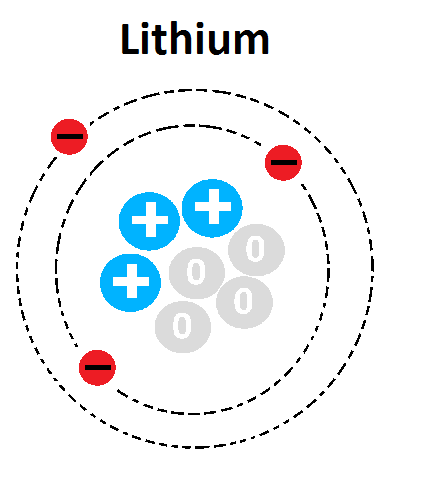
What element is represented in this Bohr Model?
Carbon
Hydrogen
Aluminum
Lithium


What is the atomic number of this element?
17
18
35
35.453
positive charged subatomic particles found in the nucleus
Nucleus
Proton
Electron
Neutron
neutral charged subatomic particles found in the nucleus
Nucleus
Proton
Electron
Neutron
negatively charged subatomic particles found in the area surrounding the nucleus
Nucleus
Proton
Electron
Neutron
The weaker the intermolecular forces of a substance the _____________ the boiling point
higher
lower
Which is the stronger intermolecular force present in I2, Br2, and Cl2.
dipole dipole
H-bond
dispersion
metallic
The melting points and boiling points of substances can lead to inferences about the intermolecular attraction of the atoms of these substances because higher melting and boiling points indicate that
the atomic mass of the substances is smaller.
the substances produce exothermic reactions.
atomic radii increases heat is added.
more energy is needed to separate molecules.
Group 18 elements are called
Alkali metals
Alkaline Earth metals
Halogens
Noble gases
Transition metals
Which group has 1 valence electron (ve-)?
Alkali metals
Alkaline Earth metals
Halogens
Noble gases
Transition, Lanthanide, and Actinide metals
Great conductors of heat and electricity
Alkali metals
Alkaline Earth metals
Halogens
Noble gases
Transition metals

water is attracted to water
adhesion
cohesion
nuclear fusion
erosion

the specific amount of heat needed to raise a substance's temperature by one degree Celsius
surface tension
polarity
specific heat
solubility

Is water MORE dense as a liquid or solid?
liquid
solid

Having two opposite tendencies or two opposite electrical charges
density
cohesion
polarity
solubility

Why does oil float on top of water?
Oil is polar, water is not
Oil is less dense than water
Oil is more dense than water
None of the above

Why could we get more drops of tap water on a penny than drops of soapy water?
Adding soap broke the water's surface tension.
Adding soap made the water's surface tension stronger.
Soap is polar, water is not.
What is the electron configuration for Fe?
What atom has the most electronegativity?
What is the electron configuration of Chromium?
What is the electron configuration of Zirconium?

1s22s22p63s23p64s23d10


the basic building block of matter that makes up everything
Bohr Model
Atom
Electron
Proton
a diagram that shows an atom’s nucleus and number of protons, surrounded by electron rings
Bohr Model
Atom
Electron Cloud
Lewis diagram
Name the compound: N2O5.
dinitrogen pentaoxide
binitrogen pentaoxide
nitrogen oxide
pentanitrogen dioxide
Name the compound: Cu(NO3)2
copper nitrate
copper(II) nitrate
copper(II) dinitrate
copper dinitrogen hepaoxide
Name the compound: SO3
sulfur trioxide
sulfite ion
sulfur oxide
sodium trioxide
Name the compound: P4O8
tetraphosphorus octoxide
phosphorus oxide
tetrapotassium octoxide
potassium oxide
Write the formula: iodine heptafluoride
IF7
I2F14
IHF7
IF6
Write the formula: tetraarsenic decoxide
As4O10
As10O4
As6O9
AsO
Write the formula: carbon monoxide
CO
CO2
OC
C2O4
Write the formula: lead(IV) sulfite
Pb2(SO3)4
Pb(SO3)2
Pb2(SO4)4
Pb(SO4)2
What is Covalent Bonding?
Bonding that is the result of two nonmetals sharing electrons
Bonding between two metals
Bonding that is the result of a nonmetal and a metal exchanging electrons
Bonding between more than two elements
What is ionic bonding?
Bonding that is the result of two elements sharing electrons
Bonding involving only one atom
Bonding that is the result of an exchange of electrons between a metal and a nonmetal
Bonding between two metals
Which particle is responsible for bonding?
Protons
Electrons
Neutrons
Nucleus
Which of the following is true about Covalent (non-polar) bonds? (select ALL true options)
High melting point
Low melting point
Can dissolve in water
Cannot dissolve in water
Can conduct electricity
What is a Lewis Dot Structure?
It shows all of the particles in the atom.
Contains protons and neutrons
Only shows the element symbol and it's outer most electron shell
Contains protons and electrons
What is the drawing of an atom that only has the symbol and the valence electrons?
Lewis Dot Diagram
Bohr Diagram
Thompson Diagram
Dalton Diagram
What is the correct Lewis Dot Structure for ammonia NH3


Which is the correct molecular structure for carbon dioxide?


Which of the following compounds has only single bonds?
I only
II only
III only
I and III
III and IV

Which atom will never be in the middle of a Lewis Dot structure?
N
C
H
P
Hydrogen being an exception to the octet rule, needs _____ electrons in its outer energy level to be stable.
4
6
8
2
A covalent bond is
a bond that shares electrons metallicaly
A bond that shares electrons between non metals
Metalloids bonding
metals and nonmetals bonding

When drawing Lewis structures, only __________ electrons are used.
inner shell
core
valence
stable

This could be the dot diagram of
Mg
Cl
C
O

