
 Worksheets
Energy in Chemical Changes Super Review
Total questions: 100
Worksheet time: 2hrs 40mins
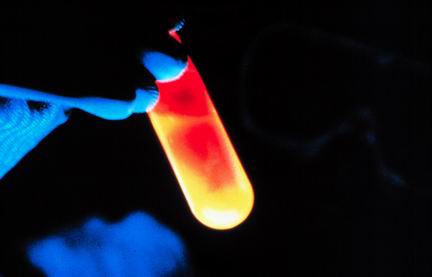
Which of the following is an example that includes evidence of a chemical reaction?
A sample of zinc is placed in water and it settles to the bottom
A solid block of ice is heated and it completely melts into a liquid.
Sugar that is burned gives off an odor and turns brown and then black.
A tomato is placed into a blender and chopped up into smaller pieces.
Which of the following is an example that includes evidence of a chemical reaction?
A sample of zinc is placed in water and it settles to the bottom
A solid block of ice is heated and it completely melts into a liquid.
Sugar that is burned gives off an odor and turns brown and then black.
A tomato is placed into a blender and chopped up into smaller pieces.
Which of the following examples shows that a chemical reaction has occurred?
A rock breaks into smaller pieces when it is struck with a hammer.
Rust forms on a hammer that has been left outside to long.
A cup of water turns pink when a few drops of red food coloring are added.
A solid is formed when heat is removed from a sample of water.
In a ___________change, a substance changes into a different substance.
Physical
Chemical
What is the number before a chemical formula called?
Ex: 2H2 + O2 --> 2H2O
Coefficient
Subscript
Atom
Equation
What is the little number after an element in a chemical equation called.
Example: H2
Coefficient
Subscript
Atom
Equation
What is the role of the arrow sign in a chemical reaction?
Making sure atom counts on each side are the same.
Separating products and reactants.
Showing which substances were in the container first and which substances were added later.
Showing which substances are solids and which are liquids or gases.
Identify the product(s) in the following chemical reaction:
Chromium oxide + Carbon → Chromium + Carbon monoxide
Chromium and carbon.
Chromium and carbon monoxide.
Chromium and carbon dioxide.
Chromium oxide and carbon.
Identify the reactants(s) in the following chemical reaction:
Chromium oxide + Carbon → Chromium + Carbon monoxide
Chromium and carbon.
Chromium and carbon monoxide.
Chromium and carbon dioxide.
Chromium oxide and carbon.
Are the number of atoms of each elements of the reactants the same as the products ?...
Al + O2 --> Al2O3
Yes!
No!
Balance this equation:
MgCl2 --> Mg4+ Cl2
It's already balanced.
4MgCl2 --> Mg4+ 4Cl2
4MgCl2 --> Mg4+ 5Cl2
Balance this equation:
2Li + Cl2 -> LiCl
2Li + Cl2 -> 4LiCl2
2Li + Cl2 -> LiCl2
2Li + Cl2 -> 2LiCl
Is the following equation balanced or unbalanced ?
N2 +3 H2 --> 2NH3
Balanced
Unbalanced
Al + O2 --> Al2O3
_ H2 + O2 -> 2 H2O
Which chemical equation best represents the Law of Conservation of Mass?
H + O → H2O
H2 + O2 → H2O
2H2 + O2 → 2H2O
H2 + O2 → 2H2O2

Observe the reaction shown here. The formula for this equation is N2 + H2 → NH3 . Does this represent a balanced equation that obeys the Law of Conservation of Mass?
No. The reactants and products are not equal in numbers of atoms of each element.
Yes. The reactants and products are equal in numbers of atoms of each element.

Is this equation balanced?
Yes
No
__NaClO3 --> __NaCl + __O2
2,2,2
2,2,3
3,2,2
1,2,3
__Na + __Cl2 --> __NaCl
1,1,2
2,1,2
2,1,1
already balanced
Combustion reactions will always involve
Oxygen and a solid
Liquid nitrogen and heat
Oxygen and heat/energy
CO and H2O
Which phrase describes what happens to atoms in a chemical reaction?
never lost or gained, just rearranged
sometimes lost, never rearranged
sometimes lost, gained, or rearranged
lost or gained, never rearranged
The energy required to start a chemical reaction is ___.
endothermic
exothermic
activation
released
Energy is _____ when new bonds form.
absorbed
released
lost
gained
Energy is ______ when bonds break.
gained
lost
released
absorbed
An _______ reaction is when more thermal energy is released than is absorbed.
endothermic
endergonic
exothermic
exergonic
An _______ reaction is when more thermal energy is absorbed than is released.
endothermic
endergonic
exothermic
exergonic

What is the measure of how fast molecules are moving?
Speedometer
Volume
Temperature
Thermometer

In EXOTHERMIC reactions, energy is _____ from the reaction to the surroundings.
Absorbed
Released
Eliminated
Evaporated

In ENDOTHERMIC reactions, energy is _____ by the reaction system from the surroundings.
Absorbed
Released
Eliminated
Obliterated

Temperature usually _____ in EXOthermic reactions.
Stays the same
Increases
Decreases

Photosynthesis is an _____ reaction.
EXOthermic
ENDOthermic

Cooking and baking are _____ reactions.
EXOthermic
ENDOthermic

Fireworks are an _____ reaction.
EXOthermic
ENDOthermic

The starting temperature of a reaction was 21 degrees Celsius and the ending temperature was 44 degrees Celsius. What type of reaction occurred?
EXOthermic
ENDOthermic

A chemist is doing an ENDOthermic reaction. The starting temperature was 25 degrees Celsius. Which of the following would be a reasonable ending temperature
44 degrees
30 degrees
15 degrees
25 degrees

If a chemical reaction produces light or sound, it is likely a _____ reaction.
EXOthermic
ENDOthermic

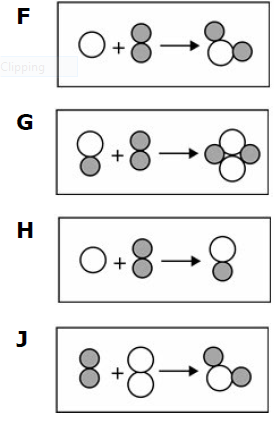
What are the reactants in the chemical equation pictured?
CH4 and CO2
CH4 and O2
CO2 and H2O
O2 and H2O

What are the products of the chemical reaction pictured?
CH4 and CO2
CH4 and O2
CO2 and H2O
O2 and H2O
Combustion reactions will always involve
Oxygen and a solid
Liquid nitrogen and heat
Oxygen and heat/energy
CO and H2O
When Lead Nitrate reacts with potassium iodide, Yellow precipitate of ............. is formed
PbI2
KNO3
Pb(NO3)2
PbIO3
Balancing this reaction:
____ CH4 + ____ O2 ---> ___ CO2 + ____ H2O
2,1,3,1
1,2,1,2
1,2,2,1
2,1,1,2
Balance this reaction:
____ Na3PO4 + ____ KOH ---> ____ NaOH + ____ K3PO4
1,3,3,1
1,3,2,1
2,3,3,1
1,1,3,1
Balance this reaction:
____ NaF + ____ Br2 ---> ___ NaBr + ____ F2
3,1,2,1
1,2,3,4
2,1,2,1
1,2,1,2


Two chemicals reacted and one of the products stays dissolved in the solution. What symbol is used to indicate this?
(s)
(l)
(aq)
(g)
Predict the products if Calcium Carbonate reacts with Silver Sulfate.
CaCO3 + Ag2SO4 → ?
Ag2CO3 + Ca2SO4
AgCO3 + CaSO4
CaSO4 + Ag2CO3
Ag(CO3)2 + CaSO4
Predict the products for this substance: Al2O3 → ? + ?
Al + O2
O2 + Al3
Al2 + O3
Al + O
Al3 + O
C2H4 + 2 O2 -->
Mg + Al(OH)3 →
CaCO3 represents a chemical
formula
subscript
symbol
reaction
The minimum amount of energy needed to start a reaction is the.......
activation energy
exothermic energy
chemical energy
endothermic energy
In chemical reactions, what does the law of conservation of mass mean/
Matter is not created or destroyed.
The total mass of the reactants is greater than the total mass of the products.
The total mass of the reactants is less than the total mass of the poducts.
Matter is not changed.
C6H12O6
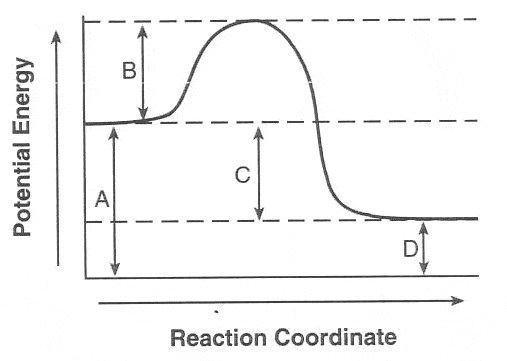
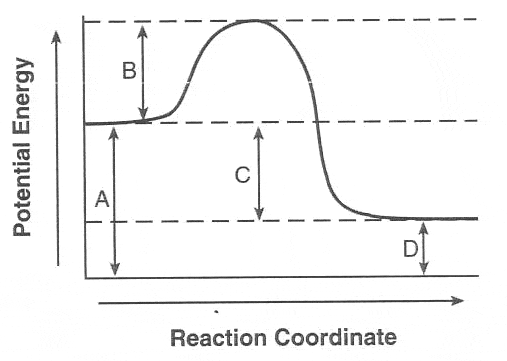
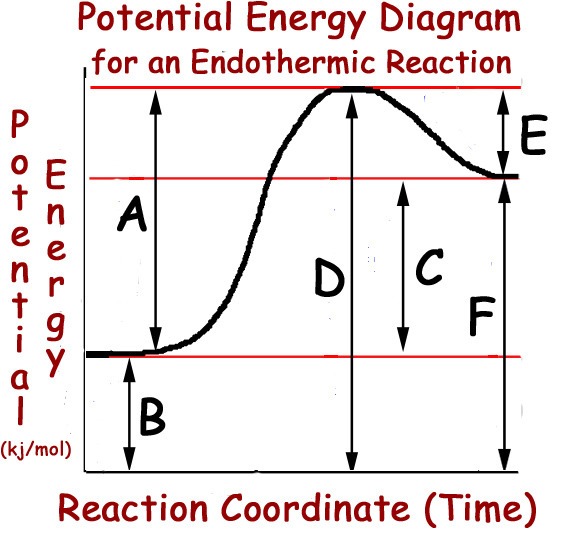
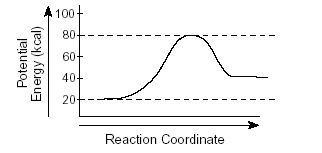

Which of the following reactions would NOT be representative of this graph?
H2 (g) + O2 (g) --> H2O (l) + heat
burning gasoline
CaCO3 (s) --> CaO (s) + CO2 (g)
the reaction between Mg and HCl (aq) - (done in lab)
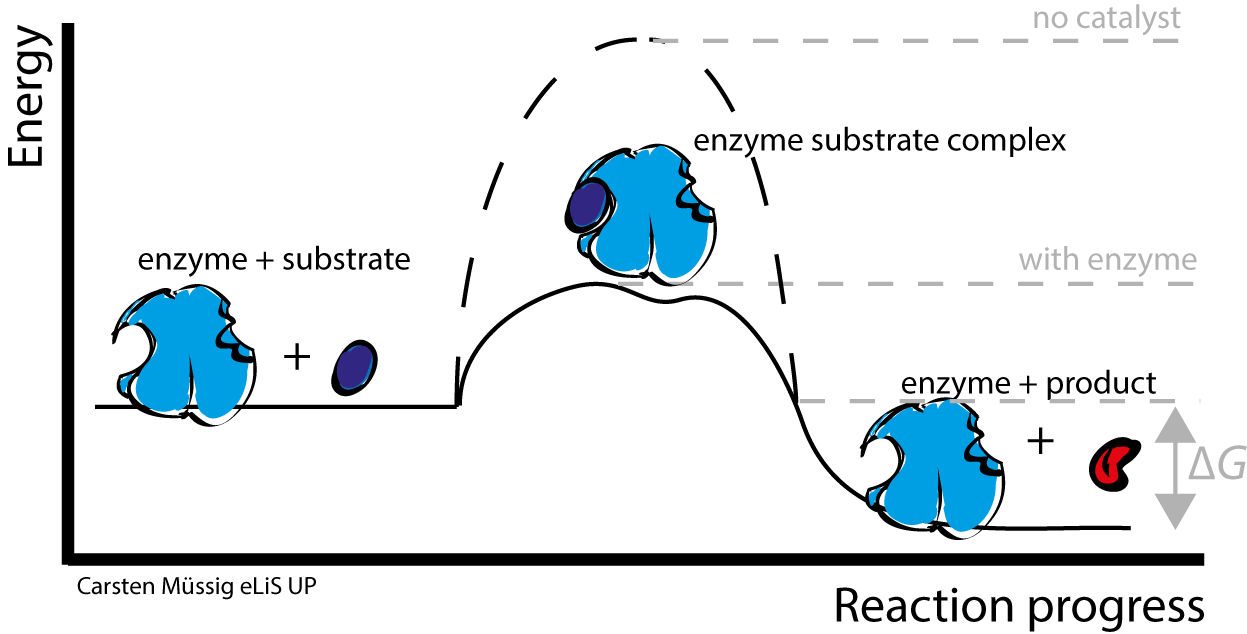

Compare the two pathways, which pathway shows the reaction that has taken place with the help of an enzyme?
Pathway 1
Pathway 2
You cannot tell from these graphs.
Both reactions involved an enzyme.

At the end of this reaction, has energy been released or absorbed?
Absorbed
Released
There is not enough information to tell.
There is not change in the amount of energy in the system.

Looking at the graph, how would you know which reaction took place with the help of an enzyme?
The peak for the activation energy is lower.
The peak for the activation energy is higher.
There is less energy in the products than the reactants.
There is no way to really tell which line on the graph shows a reaction that takes place with a reaction.
What does the symbol (aq) stand for?
Aquatic
Aqueous
Aqua
Aquarium
What does the symbol Δ represent?
Change in energy
Change in shape
Change in color
Change in attitude
In the reaction of 1 mol of solid carbon with oxygen gas, the energy of the carbon dioxide gas produced is 393 kJ less than that of the reactants.
Is the reaction exothermic or endothermic?
exothermic
endothermic
not enough information given.
In the reaction of 1 mol of solid carbon with oxygen gas, the energy of the carbon dioxide gas produced is 393 kJ less than that of the reactants.
What is the value, in kilojoules, for the heat of reaction?
ΔH = 393 kJ
ΔH = −393 kJ
True or false: ΔH for an endothermic reaction is a positive value.
True
False
Examine the equation below. Is the reaction endothermic or exothermic, bond making or bond breaking, and why?
NaCl + AgF + energy -----> NaF + AgCl
Exothermic reaction; no energy is shown on the product side so the energy will be released by the reactants to the products to help them make their bonds.
Exothermic reaction; no energy is shown on the product side so the energy will be released by the reactants to the products to help the products break their bonds.
Endothermic reaction; energy is a reactant so energy is being released by the reactants to the products to help them break their bonds.
Endothermic reaction; energy is a reactant so energy is being taken in by the reactants to help them break their bonds.
Examine the following reaction. Is it endothermic or exothermic and how do you know?
MgO + CaS ----> CaO + MgS + 200 kJ
exothermic; energy is written on the product side
endothermic; energy is written on the reactant side.
exothermic; energy is written on the reactant side
endothermic; energy is written on the product side.
If it takes more energy to make bonds than break bonds the reaction is which of the following?
Exothermic
Endothermic
If it takes more energy to break bonds than to make bonds the reaction is said to be which of the following?
Endothermic
Exotermic
If energy is on the reactant side of a chemical equation, the reaction is which of the following?
endothermic
exothermic
List four factors that affects the rate of a reaction
temperature
concentration
surface area
volume
catalysts
A temperature increase causes the particles ......
to slow down
move faster
collide higher
in the right order
Why does a higher concentration increase the rate of reaction?
it increases the amount of reactants
it lowers the activation energy
it increases the energy of particle collisions
it increases the frequency of particle collisions
Why does a higher temperature increase the rate of a reaction?
it increases both the frequency and energy of particle collisions
it only increases the frequency of particle collisions
it only increases the energy of particle collisions
it reduces the activation energy of the reaction
The minimum amount of energy needed for colliding particles to react is called
Chemical Energy
Kinetic Energy
Activation Energy
Potential Energy
6MgF2


