wayground logo

Free Printable Worksheets

Font size

S
M
L
XL
Worksheets

Chemistry Midterm JS

Total questions: 99

Worksheet time: 6hrs 35mins
Name
Class
Date
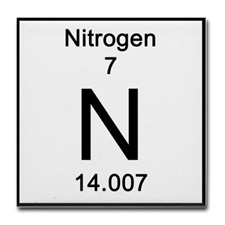
1.
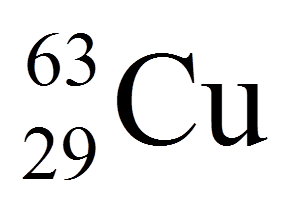
What is the number of protons that the element in this image contain?
a)
14
b)
7
c)
15
d)
18
2.
What is the atomic mass of "F"
a)
9
b)
18
c)
17
d)
19
3.
all matter is made of what 
a)
energy 
b)
atoms 
c)
electrons 
d)
compounds 
4.
The positive particles of an atom are 
a)
electrons 
b)
positrons 
c)
neutrons 
d)
protons 
5.
the central region of an atom where its neutrons and protons are is its 
a)
nucleus 
b)
electron cloud
c)
core 
d)
center 
6.
electrons have this type of charge?
a)
negative
b)
positive
c)
neutral
7.

What is the correct definition for isotopes?

a)

atoms with the same number of protons and neutrons

b)

Atoms with the same number of protons but different number of neutrons

c)

Atoms with the same number of neutrons but different number of protons

d)

Atoms with no mass

8.
a)

The atomic number indicates the number of neutrons

b)

The atomic number indicates the isotope number

c)

The atomic number indicates the number of protons

d)

The atomic number indicates the number of protons and neutrons
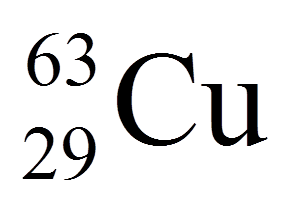
9.

The bottom number in this isotope notation represent

a)

the mass number

b)

the proton number

c)

the element symbol

d)

the neutron number

10.

According to the isotopic notation for copper-63, how many neutrons are present in copper-63 atom?

a)

29

b)

34

c)

63

d)

92

11.
Which has the LONGEST wavelength and, therefore, the lowest frequency/energy
a)
Gamma Rays
b)
Radio Waves
c)
Visible Light
d)
Infrared rays
12.
Which has the SHORTEST wavelength and, therefore, the highest frequency/most energy
a)
Radio waves
b)
Ultraviolet Rays
c)
Gamma Rays
d)
X-rays
13.
The blue section of the wave is measuring _________________.
a)
wavelength
b)
crest
c)
trough
d)
amplitude 
14.
Light behaves like both a particle and a ______.
a)
Mass
b)
Wave
c)
Current
15.

A compound containing potassium (K), chlorine (Cl) and oxygen (O) has the chemical formula KClO3. Which best represents a balanced chemical reaction showing the breakdown of KClO3 into simpler substances?

a)

a) 2KClO3 -> 2KCl

b)

b) 2KClO3 -> Cl2 + 3O2

c)

c) 2KClO3 -> 2K + 3O2

d)

d) 2KClO3 -> 2KCL + 3O2

16.

What is the Identity of this element

(a)  

17.

How many Valance Electrons does the following element have?

(a)  

18.
What is the name of this element?
a)
Lithium
b)
Boron
c)
Carbon
d)
Neon
19.
What's a valence electron?
a)
electrons in the second energy level
b)
electrons in the outermost energy level
c)
the atomic number
d)
electrons in the first level
20.

What electron configuration matches an oxygen atom?

a)

1s22s22p63s2, 3p64s23d104p5

b)

1s22s22p4

c)

1s22s22p6

d)

1s22s22p63s23p64s23d1

21.

Identify the Electron Configuration for Aluminum (Al)

a)

1s2 2s2 2p6 3s2 3p1

b)

1s2 2s2 2p6 3s2 3p3

c)

1s2 2s2 2p6 3s2 4p1

22.

What atom matches this electron configuration?

1s22s22p63s2

a)

Neon

b)

Magnesium

c)

Aluminum

d)

Potassium

23.

Valence electrons are located...

a)

inside the nucleus

b)

in outer space

c)

on the outermost orbit of an atom

24.

This is a correct dot diagram for fluorine (F)

a)

true

b)

false

25.

What form of energy is emitted when an excited electron returns to the ground state?

a)

Photon (light)

b)

Heat

c)

Kinetic

d)

Potential

26.

How do electrons become excited?

a)

Emitting light/energy

b)

Absorbing light/energy

c)

Going down an orbital/energy level

d)

Going up an orbital/energy level

27.

How is the alpha particle written in a nuclear equation?

a)

42He

b)

24He

c)

0-1e

d)

00γ

28.
A helium nucleus with two protons and two neutrons is called a(n) ____.  
a)
alpha particle
b)
electroscope
c)
beta particle
d)
gamma ray
29.
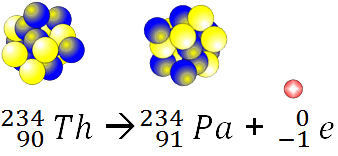
Which type of nuclear radiation is being emitted here?
a)
Alpha
b)
beta
c)
gamma 
d)
none
30.
Solve this equation for alpha decay.
85209At = ___ + 24He
a)
83205Bi
b)
86209Rn
c)
81207Tl
d)
85208At
31.

Gamma rays have

a)

no mass

b)

a huge mass

c)

a small mass

d)

an average mass

32.
Solve this equation for beta decay.
614C = ___ + -10e
a)
410Be
b)
714N
c)
210He
d)
613C
33.
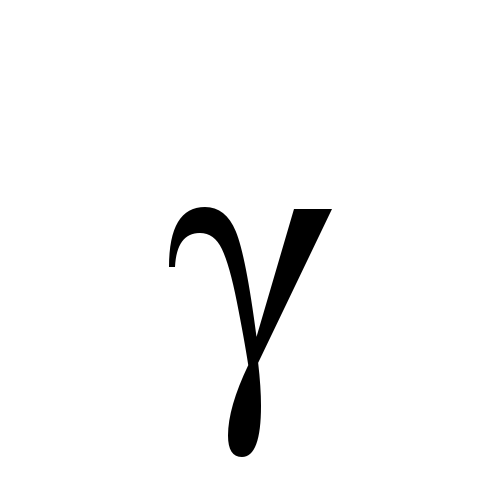
Has the symbol
a)
Alpha
b)
Beta 
c)
Gamma
34.
Has the lowest penetrating power.  Can only penetrate 0.05 mm into the body and can be stopped by a piece of paper or clothing.
a)
Alpha
b)
Beta
c)
Gamma
35.
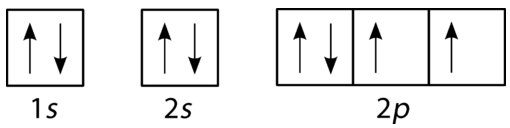
This orbital diagram represents:  
a)
C
b)
B
c)
N
d)
O
36.
After the third half-life, how much of the sample is left?
a)
1/2
b)
1/3
c)
1/16
d)
1/8
37.
If 10 mg of iodine 131 is given to a patient, how much is left after 24 days? The half-life of iodine-131 is 8 days.
a)
1.25mg
b)
1.25g
c)
10g
d)
10mg
38.
If 10 mg of iodine 131 is given to a patient, how much is left after 24 days? The half-life of iodine-131 is 8 days.
a)
1.25mg
b)
1.25g
c)
10g
d)
10mg
39.
The type of bond where valence electrons are SHARED is called: 
a)
Covalent
b)
Ionic
c)
Hydrogen
d)
Isotope 
40.
The type of bond where valence electrons are TRANSFERRED is called: 
a)
Covalent
b)
Ionic
c)
Hydrogen
d)
Isotope
41.
Between metals and nometals
a)
Ionic Bonds
b)
Covalent Bonds
c)
Both bonds
d)
Neither bond
42.
Between  nonmetals
a)
Ionic Bonds
b)
Covalent Bonds
c)
Both bonds
d)
Neither bond
43.
H2O
a)
Ionic Bond
b)
Covalent Bond
c)
Both bonds
d)
Neither bond
44.
NaCl
a)
Ionic Bond
b)
Covalent Bond
c)
Both bonds
d)
Neither bond
45.
LiF
a)
Ionic Bond
b)
Covalent Bond
c)
Both bonds
d)
Neither bond
46.
Which of the following is an example of a COVALENT COMPOUND?
a)
H2S
b)
KI
c)
CaCl2
d)
MgO
47.

The name of FeCl₂ is

a)

iron chloride

b)

iron (II) chloride

c)

iron (I) chloride

d)

iron dichloride

48.

LiBr is called

a)

lithium bromine

b)

lithium (I) bromine

c)

lithium bromide

d)

lithuim (I) bromide

49.

Name the ionic compound SnSe2

a)

Tin diselenide

b)

Tin (IV) Selenide

c)

Tin selenide

d)

Tin (II) triselenide

50.

Name the following ionic compound: BeCl2

a)

beryllium chlorine

b)

beryllium II chloride

c)

beryllium chloride

d)

beryllium dichloride

51.

Name the following ionic compound: Cs2S

a)

cesium sulfide

b)

cesium sulfate

c)

cesium II sulfate

d)

cesium II sulfide

52.
What is the correct name for C4H6?
a)
Carbon Hexahydride
b)
Pentacarbon Pentahydride
c)
Hexacarbon Tetrahydride
d)
Tetracarbon Hexahydride
53.
What is the correct name for NO?
a)
Mononitrogen Monoxide
b)
Nitrogen Monoxide
c)
Mononitrogen Dioxide
d)
Nitrogen Oxide
54.
What is the formula for Tricarbon Octahydride?
a)
Ca3O
b)
C2H8
c)
C3H8
d)
Ca3H8
55.
What is Sulfur Trichloride?
a)
SCl3
b)
SiCl3
c)
SCl4
d)
Si3Cl
56.

True or False: Shorter bonds are stronger bonds with larger bond energy.

a)

True

b)

False

57.

Which of these would require the least energy in order to break the bonds?

a)

single bond

b)

double bond

c)

triple bond

58.

Which of these is the shortest bond?

a)

single bond

b)

double bond

c)

triple bond

59.

Which of these is the strongest bond?

a)

single bond

b)

double bond

c)

triple bond

60.

Which of these has the largest bond energy?

a)

single bond

b)

double bond

c)

triple bond

61.
What is the VSEPR theory used to predict?
a)
Bond Strength
b)
Polarity
c)
Molecular Shape
d)
Electronegativity
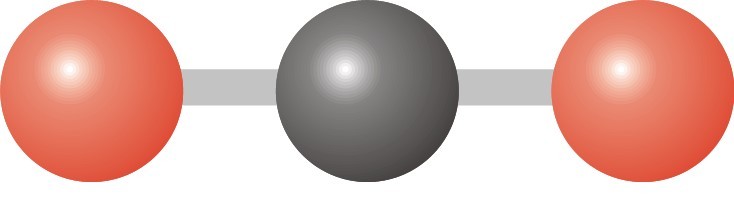
62.
Which molecule would have this molecular geometry?
a)
BF3
b)
CH4
c)
PCl5
d)
CO2
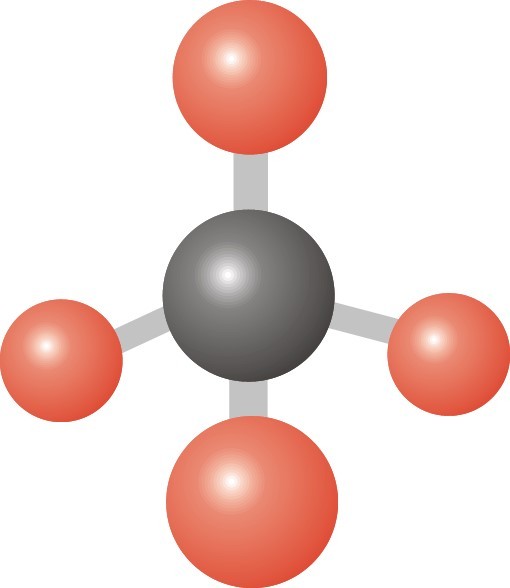
63.
Who could this molecule be?
a)
CH4
b)
CO2
c)
PCl5
d)
BF3
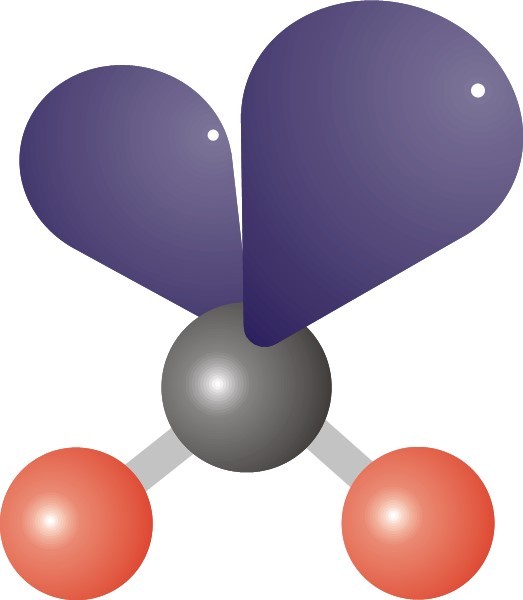
64.
Who could this be? 
a)
CO2
b)
NH3
c)
H2S
d)
CH4
65.
If a liquid has high viscosity, it probably has:
a)
strong IMF
b)
weak IMF
66.
How many electrons are shared between two atoms that are triple bonded?
a)
6
b)
2
c)
4
d)
8
67.
The force of attraction between nonpolar molecules:
a)
Hydrogen Bonding
b)
Dipole - Dipole Forces
c)
LDF
d)
Ionic Forces
68.
The bond formed between atoms of the same element:
a)
nonpolar covalent
b)
polar covalent
c)
ionic bond
d)
hydrogen bond
69.

Which type of IMF is responsible for the attraction pictured above?

a)

Dipole-Dipole Interaction

b)

Ion-Dipole Interaction

c)

Hydrogen Bonds

d)

Covalent Bond

e)

Ionic Bond

70.

List the strongest to weakest IMFs.

a)

Hydrogen Bond, London Dispersion, Dipole-dipole

b)

London Dispersion, Dipole-dipole,

Hydrogen Bond

c)

Hydrogen Bond, Dipole-dipole, London Dispersion

d)

Dipole-dipole, Hydrogen Bond, London Dispersion

71.

A strong IMF increases

a)

boiling point

b)

solubility

c)

flammability

d)

malleability

72.

Predict the IMF

a)

London Dispersion

b)

Dipole-dipole

c)

Hydrogen Bond

73.
Ionization energy is the...
a)
energy needed to remove the outermost electron.
b)
ability of an atom to attract electrons from another atom.
74.
Electronegativity is the...
a)
energy needed to remove the outermost electron.
b)
ability of an atom to attract electrons from another atom.
75.
Which element has the smaller atomic radius: potassium (K) or bromine (Br)?
a)
potassium (K)
b)
bromine (Br)
76.
Which element has the greatest ionization energy: Aluminum (Al)    or    Chlorine (Cl)?
a)
Aluminum (Al)
b)
Chlorine (Cl)
77.
Which element has the greatest electronegativity: Nitrogen (N) or Arsenic (As)?
a)
Nitrogen (N)
b)
Arsenic (As)
78.
How many Hydrogen are in 4H2O?
a)
6
b)
8
c)
2
d)
4
79.
Which of the following shows the correct way to balance the chemical equation?
Fe + O2 -> Fe2O3
a)
4Fe + 3O2 -> 2Fe2O3
b)
2 Fe + 3O2 -> Fe2O6
c)
4 Fe + O6 -> 2Fe2O3
d)
None of the options are correctly balanced.
80.
What does the Law of Conservation of Mass state?
a)
Matter cannot be gained or lost in a chemical reaction.
b)
Matter can only be lost in a chemical reaction.
c)
Matter can only be gained in a chemical reaction.
d)
Matter can be gained and lost in a chemical reaction. 
81.
Balance this equation-
__P+ __O--> __P2O3
a)
it is already balanced
b)
2, 1, 3
c)
1, 2, 3
d)
1, 3, 2
82.
Balance this equation
_Al +_HCl --> _H+_AlCl3
a)
2, 6, 3, 2
b)
it is already balanced
c)
4, 12, 3, 4
d)
2, 1, 4, 5
83.

If an element is diatomic it should have a subscript of___

a)

1, always

b)

2, only when it is an element

c)

it shouldn't have a subscript, it should have a coefficent

d)

2, when bonded in a compound

84.

The symbol for a substance dissolved in solution is ______

a)

(s)

b)

(l)

c)

(aq)

d)

(g)

85.

Fill in the blank. (Copper has a charge of 2+)

Cu+ AgNO3 → Ag + _____

a)

Cu(NO3)2

b)

CuNO3

c)

CuAg

d)

Cu

86.

Predict the products of this synthesis reaction: H2 + Cl2

a)

HCl

b)

H2Cl2

c)

H2Cl

d)

HCl2

87.

What type of reaction is this?

2 C6H14 + 19 O2 → 12 CO2 + 14 H2O

a)

Single Replacement

b)

Double Replacement

c)

Combustion

d)

Decomposition

88.

Predict the products for the this Single Replacement reaction:

K + HCl →

a)

KCl + H2

b)

KHCl

c)

KH + Cl2

d)

HCl + K2

89.

Predict the products for the this Double Replacement reaction:

AgNO3 + KCl →

a)

AgCl + KNO3

b)

AgK + ClNO3

c)

KAg + NO3Cl

d)

AgCl + 3 KNO

90.

Complete the balanced equation for this Double Replacement reaction.

3 NaOH + Fe(NO3)3

a)

NaFe + OH(NO3)3

b)

NaNO3 + Fe(OH)3

c)

3 NaNO3 + Fe(OH)3

d)

3 NaFe + 3 (OH)NO3

91.

In a ___________change, a substance changes into a different substance.

a)

Physical

b)

Chemical

92.
The reactants are on the left side of the chemical equation.
a)
True
b)
False
93.

What are products?

a)

The chemicals that start the reaction.

b)

The chemicals that the reaction produced.

c)

The chemicals that are on the left side of the arrow.

94.

What type of reaction involves the breaking down of a substance into simpler substances?

a)

Single Displacement Reaction

b)

Double Displacement Reaction

c)

Synthesis Reaction

d)

Decomposition Reaction

95.

What type of chemical reaction is this one?

C2H2 + O2 --> CO2 + H2O

a)

Decomposition

b)

Combustion

c)

Synthesis

d)

Single Replacement

96.

Evidence of a chemical reaction include:

a)

Phase change

b)

No new substance

c)

Bubbles forming

d)

Shape change

97.

3KOH + H3PO4 --> K3PO4 + 3H2O

a)

Combination

b)

Decomposition

c)

Single replacement

d)

Double replacement

98.

When a scientist mixed two chemicals, an exothermic reaction takes place. Which of the following would be proof that the reaction was exothermic?

a)

a change of color

b)

a change of state

c)

a temperature decrease

d)

a temperature increase

99.

2Na +S → Na2S

a)

Double Replacement

b)

Decomposition

c)

Combustion

d)

Synthesis