
 Worksheets
Ecology
Total questions: 100
Worksheet time: 59mins

The difference between weather and climate is that climate is:
The average, year-to-year conditions
The day-to-day conditions
Described in terms of months at a time
B and C are both correct

What is the greenhouse effect?
It is a phenomenon where the sun’s rays are absorbed by clouds.
It is a phenomenon that occurs when heat escapes into space.
It is when heat is trapped by gases, then sent back to earth’s surface.
It describes the atmosphere’s composition.

Barnacles are animals that cannot move. In order to get food, they attach to whales and catch any floating plankton in the water. The whale is neither helped nor harmed in the interaction. What type of symbiosis is this?
Mutualism
Commensalism
Parasitism
Neutralism

In the wild, some alligators gets their teeth cleaned by birds. The birds gets their food from the alligators' teeth.
What type of symbiosis is this?
Mutualism
Commensalism
Parasitism
Neutralism

In an ecosystem, there are populations of moose, rabbits, grass, and pine trees. Suddenly, a fire blazes through the area, which kills all of the populations. As the months go on, new species of grass begin to take root. This attracts animals, and eventually the ecosystem is restored.
What type of ecological succession happened?
Primary succession
Secondary succession
Tertiary succession
None of the above

In this photo, what is an abiotic factor?
Deer
Grass
rain

A bee receives nectar from a flower and carries the pollen to other flowers:
predation
parasitism
mutualism
commensalism
Mistletoe grows and spreads on trees, taking their nutrients:
predation
parasitism
mutualism
commensalism
What would happen within a few months after the formation of a volcanic island?
pioneer species would grow
no pioneer species would grow
trees and large plants would grow
rich, organic soil would be present
What would be a good example of a primary consumer?
carnivore
detrivore
decomposer
herbivore

Which organisms would be at the top or last trophic level?
plant
herbivore
omnivore
carnivore

The monkey would be a
decomposer
producer
primary consumer
secondary consumer
Introduced species disrupt ecosystems because they are a/an
Keystone Species
Endemic Species
Invasive Species
Native Species
Which is an example of where primary succession could occur?
a glacier melts and exposes new rocks
natural fire burns a prairie
a corn field is abandoned and left to overgrow
flood covers a piece of land

Mice might grow in population and destroy the community by eating all of the berry bushes if
wolves and snakes were removed from the food web
another predator migrated in to the community
the snake population grew
none of these

Barnacles do not affect whales as they grow, but receive the benefit of a food source. This is
parasitism
mutualism
commensalism
neutralism

These organisms are often not shown in a food chain, but are important for recycling nutrients
producers
decomposers
primary consumers
carnivores
A lion that eats a zebra that eats grass is a
primary consumer
secondary consumer
tertiary consumer
quaternary consumer

90% of the energy that gets lost as you move up a food pyramid or chain gets lost as
pollution to the environment
heat to the environment
energy for decomposers
gets recycled
What percentage of energy is passed on to the next trophic level?
5%
10%
50%
90%


What is the correct order for this food chain?
Owl, Mouse, Grasshopper, Grass
Grass, Mouse, Owl, Grasshopper
Grass, Owl, Grasshopper, Mouse
Grass, Grasshopper, Mouse, Owl

Which of these organisms is the secondary consumer?
Owl
Mouse
Grass
Grasshopper

Which of these organisms is the producer?
Owl
Mouse
Grasshopper
Grass
What do herbivores eat?
Animals
Plants and Animals
Plants
Dead Animals
What do omnivores eat?
Animals
Plants and Animals
Plants
Dead Animals
Place the levels of environment in the correct order.
biome, biosphere, population, organism, ecosystem,community
organism, ecosystem, biosphere, population, community, biome
organism, population, community, ecosystem, biome, biosphere
population, community, organism, biome, ecosystem, biosphere

What is the hawk in the food web?
Producer
Primary consumer
Secondary consumer
Tertiary consumer
Which of these is an aquatic biome?
Savanna
Tropical Rainforest
Marine
Tundra
How much energy is transferred between trophic levels?
25%
20%
10%
90%
Which of these is an autotroph?
Consumer
Producer
Decomposer
Volcano erupting would be an example of what type of succession?
Primary
Secondary
Tertiary
What was NOT a part of the water cycle?
Condensation
Precipitation
Decompostition
Evaporation


____________________ is the maintenance of a constant internal environment in response to changes in either internal or external conditions.
Hemostat
Changing environment
Homeostasis
Ecology
Homeostasis is achieved ______________ when the animal or plant has particular physical features which help its survival in an otherwise hostile environment.
Structurally
Behaviorally
Functionally
Naturally
Homeostasis is achieved ______________ by the metabolism of the animal or plant is able to adjust to changes in conditions as they are detected.
Structurally
Functionally
Behaviorally
Naturally
__________________________ is when the response diminishes the original stimulus.
Negative Feedback
Positive Feedback
___________ the change from ideal or resting conditions.
Stimulus
Receptor
Relay
Effector
______________ is the cells or tissue which detects the change due to the stimulus.
Stimulus
Receptor
Relay
Effector
________________ is the consequence of the response on the stimulus. May be positive or negative.
Stimulus
Effector
Receptor
Feedback
_______________ is an action, at cell, tissue or whole organism level which would not have occurred in the absence of the stimulus.
Renewal
Feedback
Response
Stimulus
Negative feedback is most common in biological systems.
True
False
Insulin regulating blood glucose levels is an example of positive or negative feedback.
Positive Feedback
Negative Feedback
Which of the following is not regulated by homeostasis?
body temperature
blood sugar
blood pH
body movements
____________________ helps warm the human body when we are cold.
sweating
shivering
inhaling oxygen
exhaling carbon dioxide
The group of organisms that use the process of homeostasis includes
mammals, only
animals, only
plants and animals
all living things

The ultimate cause of death
Over Heating
Diabetes
Bad Hair
Loss of Homeostasis
When the body temperature drop below normal ranges, arterioles in the skin will
dilate to allow less blood to flow to skin surface
constrict to allow less blood to flow to skin surface
dilate to allow more blood to flow to skin surface
constrict to allow more blood to flow to skin surface

The graph above shows changes in body temperature of an endotherm with time.
Which one of the following accurately describes the regulatory mechanism shown in the graph?
A - Negative feedback
B - Positive feedback
C - Thermoregulation
Both A and C
Which best describes the stimulus-response model?
Stimulus -> receptor -> effector -> control center -> response
Stimulus -> receptor -> control centre -> effector -> response
Stimulus -> effector -> control center -> receptor -> response
When blood glucose is high, the negative feedback mechanism is to produce which hormone?
Glucagon
Glycogen
Insulin
Basal Insulin

What type of feedback system does the model represent?
positive
negative
neutral
glyogen

What is the stimulus in the model above?
body temperature
increase in body temperature
decrease in body temperature
blood vessels dilating
What is the sensor in the model above?
Hypothalamus
muscles
thermoreceptors
Blood vessels
What is the control center in the model above?
Hypothalamus
muscles
thermoreceptors
Blood vessels
What is an effector in the model above?
Hypothalamus
sweat glands
thermoreceptors
sweating
What is a response (not the result) in the model above?
body temperature increasing
sweat glands
thermoreceptors
sweating

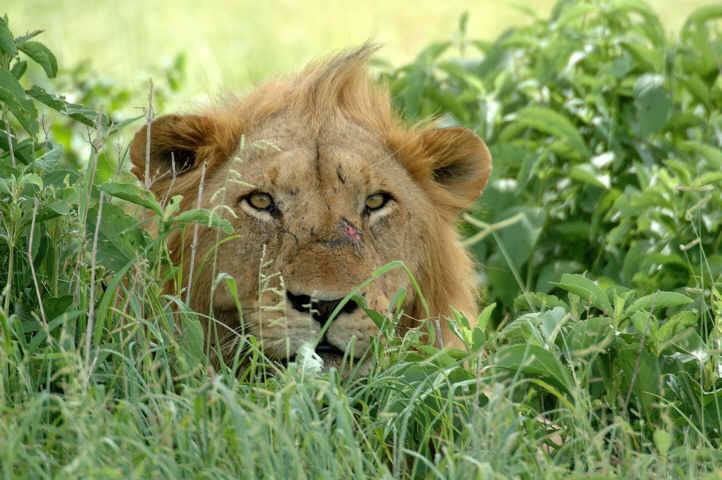
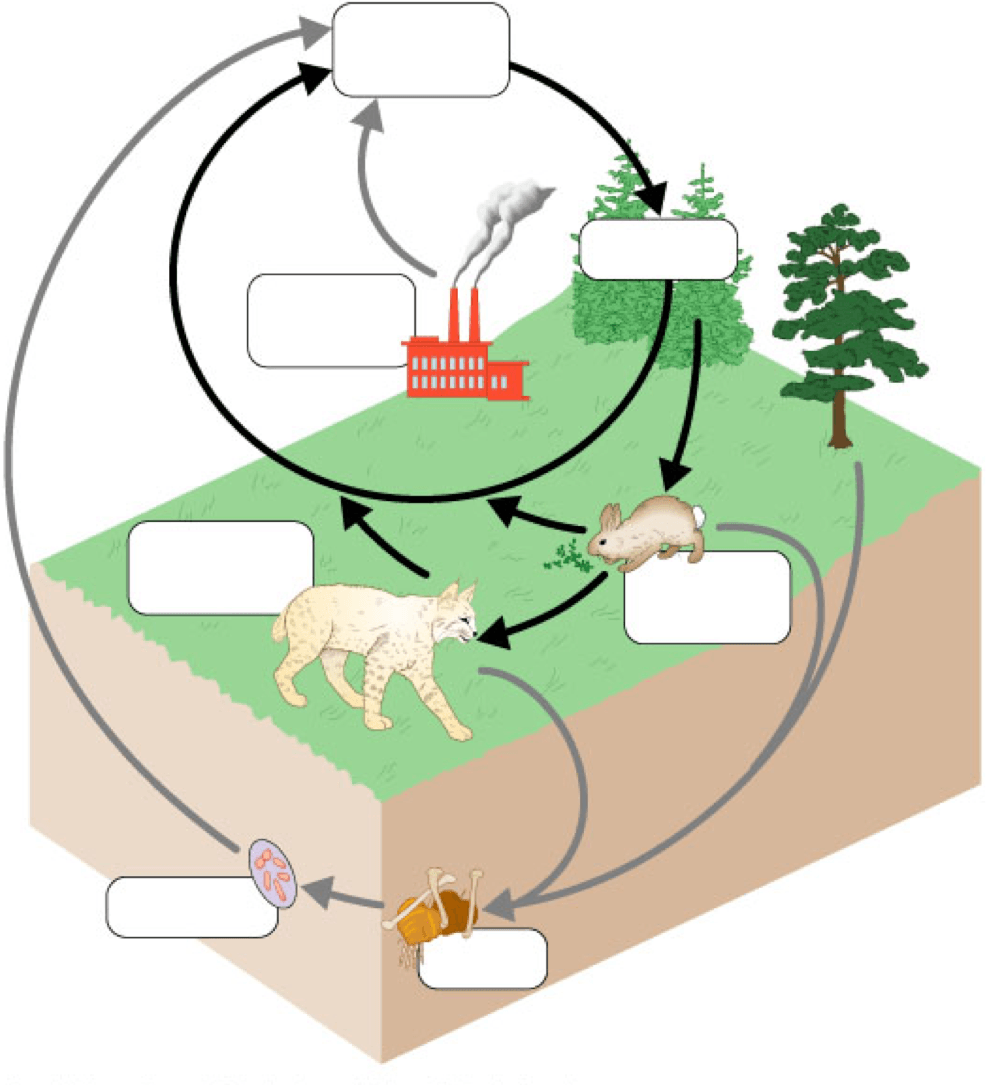
Which is a true statement?
Humans depend on oxygen, plants depend on carbon dioxide
Plants produce carbon dioxide
Humans depend on carbon dioxide, plants depend on oxygen
Humans don't depend on plants for the air they need
How do plants affect the air that animals and people breathe?
Plants use oxygen from the air to make their own food
Plants release pollution into the air
Plants take in carbon dioxide and release oxygen
Plants take in oxygen and release carbon dioxide

