
 Worksheets
Epic Chemistry Revision Quiz
Total questions: 104
Worksheet time: 54mins

This is John Newland's periodic table. Which of the following is something this table has in common with the modern periodic table? Choose two answers.
Li, Na, and K are in the same group.
H and Li are in the same period.
H, F, and Cl are in the same group
C and Si are in the same group
This is John Newland's periodic table. Which of the following is something on this table that is different to the modern periodic table? Choose two answers.
Li, Na, and K are in the same group.
hydrogen is in Group 1 on Newland's table
Li, Na, and K are in Group 2 on Newland's table
C and Si are in the same group
This is John Newland's periodic table. How was this table arranged from left to right?
By atomic weight
By atomic number
By electron number
In order of increasing boiling points
An atom has an atomic number of 15 and a mass number of 31. How many protons are there in the atom?
15
31
16
47


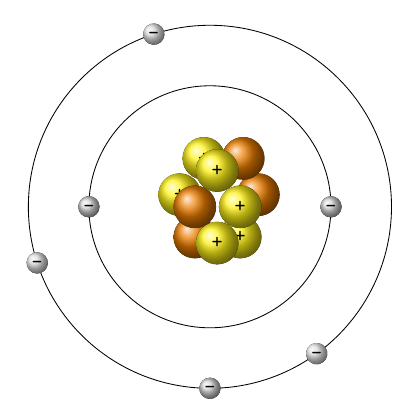
How many protons does this atom have?
3
6
4
2


A horizontal row of elements in the periodic table
Molecule
Period
Family
Atom
You see an model of a particle with 5 protons and 4 electrons. What is this?
positive ion
negative ion
neutral ion
strange ion

A
B
C
D
Chlorine, Cl2, can exist as a:
solid only
liquid only
gas only
solid, liquid, and gas
Overall, the boiling points of group 0 elements are
very low
very high

What is the boiling point of hydrogen?
-252 °C
0°C
-259 °C
-269 °C
What is the boiling point of aluminium?
2470 °C
1330 °C
100 °C
2400 °C
What is the boiling point of water?
0 °C
1330 °C
100 °C
2400 °C
What is the melting point of water?
0 °C
1330 °C
100 °C
2400 °C
At which temperature does water start to change from a solid to a liquid?
0 °C
-10 °C
100 °C
90 °C
At which temperature does water finish changing from a solid to a liquid?
0 °C
10 °C
100 °C
90 °C
At which temperature does water start to change from a liquid to a gas?
0 °C
-10 °C
100 °C
90 °C
At which temperature does water finish changing from a liquid to a gas?
0 °C
-10 °C
100 °C
110 °C
At which temperature could water be a liquid?
-20 °C
-5 °C
85°C
130 °C
At which temperature could water be a solid?
-20 °C
5 °C
85 °C
130 °C
At which temperature could oxygen be a solid?
-250 °C
-210 °C
-190 °C
-5 °C
At which temperature could oxygen be a liquid?
-250 °C
-210 °C
-100 °C
-5 °C
At which temperature could oxygen be a gas?
-250 °C
-210 °C
-120 °C
-190 °C
At which temperature could water be a gas?
146 °C
95 °C
4 °C
-42 °C
At which temperature could lithium be a gas?
1446 °C
295 °C
853 °C
10 °C
Which of the following is liquid over the greatest temperature range?
gallium
water
helium
zinc

This is Mendeleev's table. What are the blank spaces for?
soluble elements
metal elements
undiscovered elements
reactive elements
This is Mendeleev's table. How are the elements ordered from left to right?
by increasing atomic weight
by increasing atomic number
by increasing electron number
by increasing melting point
This is John Newland's periodic table. How were the elements grouped into columns?
By similar properties
By similar atomic number
By similar outer electron number
By similar atomic weight

This is Mendeleev's periodic table. How were the elements grouped into columns?
By similar properties
By similar atomic number
By similar outer electron number
By similar atomic weight

Shown are three isotopes of lithium. Which is the most common isotope, based on the fact that its mass is given on the periodic table.
lithium-7
lithium-6
lithium-8
Shown are three isotopes of lithium. What do all three have in common?
same number of protons
same number of neutrons
same atomic mass
same half-life
Shown are three isotopes of lithium. How do we know that each isotope is in fact lithium
number of protons
number of neutrons
atomic mass
half-life
Give the number of neutrons in 12C.
6
5
7
8
Give the number of neutrons in 13C.
6
5
7
8
Give the number of neutrons in 14C.
6
5
7
8
What is the mass of 14C?
6
14
7
8
What is the mass of 13C?
6
13
7
8

What is the mass of the isotope shown?
22
48
24
26
How many neutrons are in an atom of the isotope shown?
22
48
24
26
How many protons are in an atom of the isotope shown?
22
48
24
26
How many electrons are in an atom of the isotope shown?
22
48
24
26
How many electrons are in a 2+ ion of the isotope shown?
22
48
20
26

How many electrons are in the ion shown in the image?
10
13
14
27
How many neutrons are in atom of the isotope shown in the image?
10
13
14
27
What is the mass of the isotope shown in the image?
10
13
14
27

Which of the following elements are metals?
5
2
6
8
Which of the following elements has a full outer shell of electrons?
8
1
9
6
Which of the following pairs of elements have the same number of electrons in their outer shells?
1 and 4
1 and 5
9 and 6
9 and 3
Which of the following pairs of elements have the same number of shells?
1 and 4
1 and 5
9 and 2
9 and 3
Which of the following elements is a non-metal?
1
7
6
3
Which of the following elements is a transition metal?
1
7
6
3
Which of the following elements is a halogen?
8
7
6
3
Which of the following elements is an alkali metal?
4
7
5
3

Whose model suggested that negative particles were mixed in with positively charged material - like seeds in a watermelon?
J.J. Thomson
Ernest Rutherford
Niels Bohr
Albert Einstein
Who discovered that the atom had an small, dense, positively charged center?
Ernest Rutherford
J.J Thomson
Robert Millikan
John Dalton
Place the following atomic models in order, from earliest to latest:
A) Rutherford B) Thomson C) Dalton
B, C, A
C, A, B
A, C, B
C, B, A
Who named the positive center of the atom the "nucleus?"
Democritus
Dalton
Thomson
Rutherford
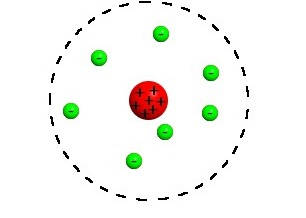

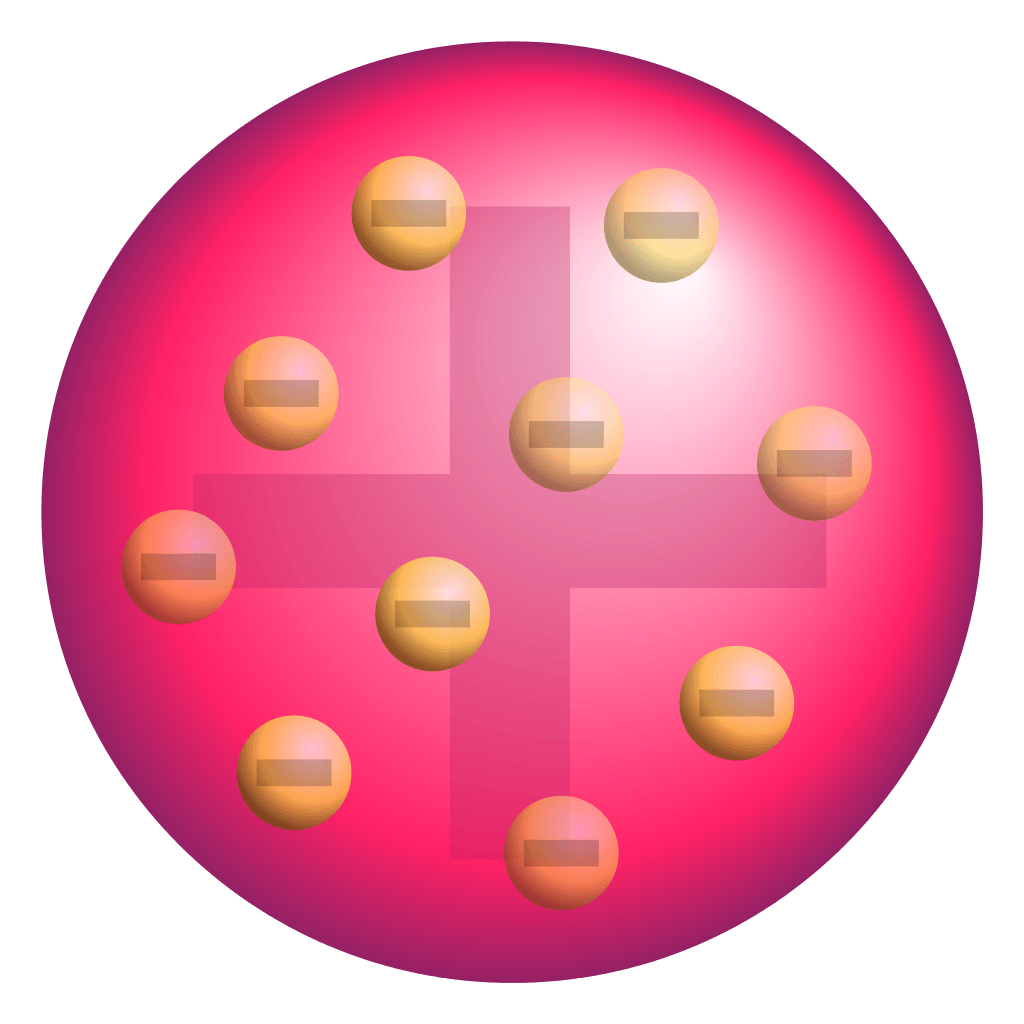


Which model of the atom is denoted as the "plum pudding" model?
A
B
C
D
E
Chadwick is credited with discovering which part of the atom?
nucleus
protons
electrons
neutrons

Who is credited with developing model D?
Thomson
Dalton
Bohr
Rutherford
What subatomic particle represents the "plums" in the "plum pudding" model?
neutrons
protons
electrons
Which of the following statements are true about the nucleus?
It is neutrally charged
It is positively charged
It contains most of the mass of the atom
It is almost empty space

Where is number two pointing at?
Nucleus
Protons
Neutrons
Electron cloud

Where is number one pointing at?
Nucleus
Protons
Neutrons
Electron cloud

Who established that "electrons move around the nucleus at fixed distances called orbitals"?
Dalton
Thomson
Rutherford
Bohr
Subatomic particles with a negative charge
Electrons
Neutrons
Protons
Quarks


What was the name of the model pictured behind this question?
Oatmeal Model
Rutherford Model
Bohr Model
Plum Pudding Model



